The Canadian Oil Sands are often described by its detractors as “dirty oil” because it produces...
The Canadian Oil Sands are often described by its detractors as “dirty oil” because it produces more greenhouse gases than conventional oil. To be precise, over the entire cycle from mining to use by a consumer, mined bitumen produces 2% more greenhouse gases than conventional oil, and SAGD extracted bitumen produces 5% more greenhouse gases. new technologies are available, or are being developed, that could significantly reduce the environmental impact of producing petroleum products from the oil sands. Please describe which technologies you think should be implemented to reduce the environmental impact of the oil sands, and describe what will be the impact of using these technologies. (2-2.5page)
question contains 25 marks. so please give answer between 2 to 2.5page. please type the answer do not write on the paper and paste it.
Homework Answers
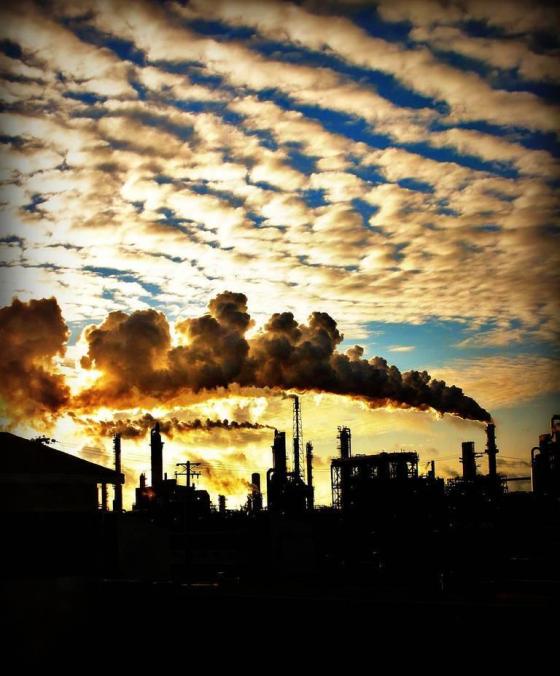
You might not know this, but Canada has oil reserves of 170 billion barrels, more than Iran and Nigeria combined. This fact is not widely known since much of that oil has been considered “not economically recoverable,” lying deep underground in a mixture of bitumen, a thick, tarry substance, sand and water known as oil sands or tar sands. Development of these tar sands, located near the Athabasca River, by Suncor Energy, began in the 1960s but has been conducted at a relatively small scale because of the costs involved. Only recently, with declining supplies and increasing prices have attempts begun to try and ramp up production, especially after PetroChina acquired a 60 percent interest in two major wells in Alberta in 2009. This was followed in 2010 by Sinopec paying $4.65 billion for a 9 percent stake in Syncrude Canada Ltd.
Chinese investors find this resource to be attractive, since Canada is considered to be a low political risk when compared with, say, the Middle East. As of 2010, the three biggest of many players were Syncrude Canada, Suncor, and Albian Sands, a joint venture of Chevron, Shell Canada and Marathon Oil. BP also has a substantial stake, with a 75 percent interest in Terre de Grace, which it also operates.
Projections made after slowdowns in offshore production show that as much as 36 percent of American oil could be coming from Canadian oil sands by 2030. According to oil expert Daniel Yergin, “Canadian oil sands…have gone from being a fringe energy source to being one of strategic importance.’’
Sounds good so far, but not so fast; there are numerous major environmental problems and risks associated with this technology.
For starters, extracting this oil requires a good deal more energy than conventional drilling, which means more greenhouse gases before the oil even reaches the pump. The net energy return on energy invested ratio of tar sands oil by the time it is converted to gasoline is roughly half that of the equivalent process for conventional crude oil. It is the largest source of carbon emissions in Canada, making Alberta, with only 10 percent of the population, the highest emitting province.
The Canadian government has invested heavily in the use of Carbon Capture and Storage (CCS) for the tar sands recovery process, but this technology is yet unproven. The process requires also vast amounts of water and chemicals to wash the sands. Anywhere from 2 to 4.5 times the amount of water is required for each barrel of oil produced. The discharge that accumulates in highly toxic waste ponds pose a huge threat to wildlife. In one incident, a flock of 1,600 ducks mistakenly landed in one of these ponds and they all died. Now, propane cannons, using even more energy, are used to frighten away wildlife. Tailing pools now cover 50 square miles adjoining the Athabasca River, in the middle of the world’s largest intact forest, a key absorber of CO2 and wildlife habitat. The projects have also been a mixed blessing for the numerous First Nations people living in the area. While it has brought a significant number of jobs and economic activity, the developers not only pollute the area, but they don’t take First Nations’ interests into account, destroying hunting and fishing, habitat and bringing a number of health risks to the region.
Recently, a number of environmental groups and 23 First Nations groups have asked for a moratorium on new tar sands development. They are also asking to halt the Keystone XL pipeline which would strongly encourage further development of the Tar Sands, by allowing the oil to be shipped from Texas to China, where most of it will be used.
Pros
- Very large supply. Second largest oil field in the world.
- Economically recoverable at today’s oil prices
- Will help keep oil prices relatively low
- Enormous growth potential. Less than 5 percent has been produced.
- Big economic driver in Alberta. Jobs for Native Americans.
- Stable source country (a rarity for oil)
- GHG emissions could potentially be minimized through CCS
Cons
- Enormous GHG emissions. Oil sands are already Canada’s largest source of CO2 emissions.
- Relatively low net energy return compared to other sources
- Alberta, with only 10 percent of the population, emits the most GHG emissions of any province. Provincial government has been slow to respond.
- Large amounts of water required: roughly 3:1
- Water pollution. Roughly 3 million gallons of toxic runoff per day. Fifty square miles now covered in toxic pools
- Destructive to major boreal forest, an important carbon sink
- Widespread habitat destruction, both on land and water
- Destructive to ancestral lands
- Requires expensive and risky pipeline to reach faraway markets
In summary, tar sands oil has a cost/benefit profile that is similar in many ways to coal, except that coal is used for electricity while oil is used for transportation. At the present, there are probably more alternatives for electricity than there are for transportation. This could begin to shift if we see tractor-trailers trucks being converted to natural gas, as T. Boone Pickens predicts. Of course, the current historically low natural gas prices, combined with high oil prices has, at least for the moment, rearranged the whole energy picture.
The similarities between tar sands oil and coal are the large supply on the one hand and the massive environmental problems on the other. I would have to say that, as bad as the environmental impacts of coal are, these tar sands might even be worse, despite what the developers might say. There is no question that the approval of the Keystone XL pipeline will encourage expansion of this resource, while bringing questionable benefits to the US, since most of the oil will be shipped to China. Mostly though, I think the whole conversation is really about price and Americans’ desire to live in a world where gas is cheap and no one bothers them to worry about global warming. That world may have existed in the 1950s and 60s, but it certainly doesn’t exist anymore.
Aiso, The world’s second largest country by area, Canada is also home to the oil sands, the third largest proven oil reserve on the planet, according to its government. The Canadian government adds that the oil sands are home to 166.3 billion barrels of the country’s 171 billion barrels of proven reserves.
The scale of the work being done at the oil sands is considerable. According to Alberta Energy, oil sands production is set to increase to 4 million barrels per day by 2024, up from 2.3 million barrels per day in 2014.
For their part, Canadian authorities acknowledge that annual production growth “presents several environmental challenges to land, water, air, and energy conservation.”
Canada’s Oil Sands Innovation Alliance (COSIA) is made up of oil sands producers who want to work together to accelerate the speed of “improvement in environmental performance” in the oil sands.
Dan Wicklum is the alliance’s chief executive. “We have 10 members that account for about 90 percent of the daily oil sands production in Canada,” he told Sustainable Energy.
“It was launched by the most senior leaders of these companies – the CEOs – as a sign of personal commitment, and a commitment of their companies to work together, to accelerate environmental performance improvement,” he added.
Members of the alliance are pooling their ideas to find ways to mitigate the impact of their work.
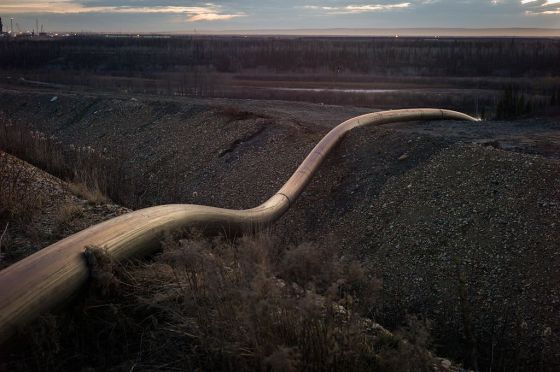
Ian Willms | Getty Images
“To date, the COSIA members have shared about 938 discreet individual technologies or innovations,” Wicklum said, before going on to list one example of the collaborative work being undertaken.
“We set a goal in 2012 to reduce our freshwater use intensity by 50 percent by 2022, and since 2012 the companies have reduced their freshwater use by 38 percent,” he added.
Another initiative is using a satellite – called GHGSat but also known as Claire – to measure the impact of work being carried out at the oil sands.
“It’s about the size of a microwave and it circles the Earth, goes over that oil sands region about once every two weeks,” Wickum said. The satellite enabled more accurate and frequent measurements, he went on to say, giving companies the ability to see whether the technologies they’re using for greenhouse gas reduction are working effectively
Add Answer to:
The Canadian Oil Sands are often described by its detractors as
“dirty oil” because it produces...
First, read the article on "The Delphi Method for Graduate Research." ------ Article is posted below...
First, read the article on "The Delphi Method for Graduate Research." ------ Article is posted below Include each of the following in your answer (if applicable – explain in a paragraph) Research problem: what do you want to solve using Delphi? Sample: who will participate and why? (answer in 5 -10 sentences) Round one questionnaire: include 5 hypothetical questions you would like to ask Discuss: what are possible outcomes of the findings from your study? Hint: this is the conclusion....
Most questions answered within 3 hours.
-
Where is the error in this code sequence?
String s1 = "Hello";
String s2 = "ello";...
asked 11 months ago -
Financial data for Joel de Paris, Inc., for last year
follow:
Joel de Paris, Inc.
Balance...
asked 11 months ago -
Consider this reaction:
Al2(SO4)3 (aq)+ BaCl3
(aq) Al2Cl6 (aq)- +
3BaSO4(s) . What is the...
asked 11 months ago -
Suppose that Savneet is considering increasing her
recent random sample from 20 car rentals to 40...
asked 11 months ago -
Trucks arrive at an unloading terminal at an average rate of 120
per hour.
Trucks arrive...
asked 11 months ago -
Why are methanol and ethanol completely soluble in water while
octanol is not very little soluble....
asked 11 months ago -
A facilities manager at a university reads in a research report
that the mean amount of...
asked 11 months ago -
When the CuSO4 is rehydrated by adding water to the anhydrous
compound, is this an endothermic...
asked 11 months ago -
A ray of sunlight is passing from diamond into crown glass; the
angle of incidence is...
asked 11 months ago -
A block of mass 0.249 kg is placed on top of a light, vertical
spring of...
asked 11 months ago -
how do the kidneys compensate in the presences of acidosis
a) trigger hyperventilate
b) reserve acid...
asked 11 months ago -
Question 501 pts
The rental rate of capital to the firm increases. Which of the
following...
asked 11 months ago