A potential difference of 3.28 nV is set up across a 2.34 cm length of copper...
A potential difference of 3.28 nV is set up across a 2.34 cm length of copper wire that has a radius of 2.32 mm. How much charge drifts through a cross section in 3.27 ms? Assume that the resistivity of copper is 1.69 × 10⁻⁸ Ω·m.
Homework Answers

Add Answer to:
A potential difference of 3.28 nV is set up across a 2.34 cm
length of copper...
1a) An insulating sphere of radius 2.0 m contains +50 μC of electric charge uniformly distributed...
1a) An insulating sphere of radius 2.0 m contains +50 μC of electric charge uniformly distributed throughout the volume of the sphere. i) What is the electric field 1.5 m away from the center of the sphere? ii) What is the volume charge density? iii) What is the electric field 3.0 m away from the center of the sphere? 1b) A potential difference of 6.00 nV is set up across a 5.00 cm length of copper wire that has a...
A heating element is made by maintaining a potential difference of 66.0 V across the length...
A heating element is made by maintaining a potential difference of 66.0 V across the length of a Nichrome wire that has a 3.15 × 10⁻⁶ m2 cross section. Nichrome has a resistivity of 5.00 × 10⁻⁷ Ω·m. (a) If the element dissipates 4910 W, what is its length? (b) If 113 V is used to obtain the same dissipation rate, what should the length be?
The figure gives the electric potential V(x) along a copper wire carrying uniform current, from a...
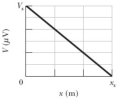 The figure gives the electric potential V(x) along a copper wire
carrying uniform current, from a point of higher potential Vs =
13.0 μV at x = 0 to a point of zero potential at xs = 3.20 m. The
wire has a radius of 1.70 mm, and copper has a resistivity of 1.69
× 10-8 Ω·m. What is the current in the wire?
V (V) 0 Xs x (m)
The figure gives the electric potential V(x) along a copper wire
carrying uniform current, from a point of higher potential Vs =
13.0 μV at x = 0 to a point of zero potential at xs = 3.20 m. The
wire has a radius of 1.70 mm, and copper has a resistivity of 1.69
× 10-8 Ω·m. What is the current in the wire?
V (V) 0 Xs x (m)
You have a piece of copper wire of length L = 15.0 cm and radius R...
You have a piece of copper wire of length L = 15.0 cm and radius R = 0.5 mm. Given that the resistivity of copper is 1.68 X 10^-8 Ohm*m, what is: a. The resistance of your piece of wire? b. If a current of i = 0.5 mA is set up in the wire, what is the magnitude of the current density of the wire? c. With a current of i = 0.5 mA, what is the change in...
Physics with Cal 2 A copper wire has radius of 0.2 cm and length of 400n...
 Physics with Cal 2
A copper wire has radius of 0.2 cm and length of 400n m, what is the resistance of this copper wire? When a 200-V potential difference is applied over the wire, what is the current through the wire and what is the electric power? If the current is uniformly distributed, what is the current density? If the drift speed is 10 m/s, what is the number density of electrons in the wire? (Given copper's resistivity as...
Physics with Cal 2
A copper wire has radius of 0.2 cm and length of 400n m, what is the resistance of this copper wire? When a 200-V potential difference is applied over the wire, what is the current through the wire and what is the electric power? If the current is uniformly distributed, what is the current density? If the drift speed is 10 m/s, what is the number density of electrons in the wire? (Given copper's resistivity as...
An aluminum bar 3.68 m long has a rectangular cross section 1.01 cm by 5.17 cm...
An aluminum bar 3.68 m long has a rectangular cross section 1.01 cm by 5.17 cm . a. What is it's resistance? (I got 1.987x10^-4 but the program says this is wrong) b. What is the length of a copper wire 1.50 mm in diameter having the same resistance? (I got 0.02041 but it also was wrong) A 14.0 gauge copper wire of diameter 1.628 mm carries a current of 11.0 mA. What is the potential difference across a 2.25...
A copper wire has cross section area 0.002 m' and length of 400 m, what is...
 A copper wire has cross section area 0.002 m' and length of 400 m, what is the resistance of this copper wire? When a 200-V potential difference is applied over the wire, what is the current through the wire and what is the electric power? If the current is uniformly distributed, what is the current density? If the drift speed is 10 m/s, what is the number density of electrons in the wire? (Given copper's resistivity as 2x10 s2 m)....
A potential difference of 100 V is maintained across the two ends of a nickel wire of radius 2 mm and length 10 m.
 A potential difference of 100 V is maintained across the two ends of a nickel wire of radius 2 mm and length 10 m. Calculate (a) the electric field intensity, (b) the current density, and (c) the electric current through the wire
4a. The resistance of a 5.0 meter length of 14-gauge copper wire is 8.1 x 10...
 4a. The resistance of a 5.0 meter length of 14-gauge copper wire is 8.1 x 10 ohms/meter. How much energy loss occurs per second in the wire when a current of 20.0 amps is applied? Assume that the cross-sectional area is 2.1 mm', what is the shortest time in which the applied current could heat the wire by 15.0°C? You may assume that the density of copper is 8.92 x 10 kg/m and its molar heat capacity is 6.0 calories/mole/K....
a.) A 33.9-m length of copper wire at 20.0°C has a radius of 0.31 mm. If...
a.) A 33.9-m length of copper wire at 20.0°C has a radius of 0.31 mm. If a potential difference of 7.00 V is applied across the length of the wire, determine the current in the wire. b.) If the wire is heated to 40.0°C while the 7.00-V potential difference is maintained, what is the resulting current in the wire?
 The figure gives the electric potential V(x) along a copper wire
carrying uniform current, from a point of higher potential Vs =
13.0 μV at x = 0 to a point of zero potential at xs = 3.20 m. The
wire has a radius of 1.70 mm, and copper has a resistivity of 1.69
× 10-8 Ω·m. What is the current in the wire?
V (V) 0 Xs x (m)
The figure gives the electric potential V(x) along a copper wire
carrying uniform current, from a point of higher potential Vs =
13.0 μV at x = 0 to a point of zero potential at xs = 3.20 m. The
wire has a radius of 1.70 mm, and copper has a resistivity of 1.69
× 10-8 Ω·m. What is the current in the wire?
V (V) 0 Xs x (m)
 Physics with Cal 2
A copper wire has radius of 0.2 cm and length of 400n m, what is the resistance of this copper wire? When a 200-V potential difference is applied over the wire, what is the current through the wire and what is the electric power? If the current is uniformly distributed, what is the current density? If the drift speed is 10 m/s, what is the number density of electrons in the wire? (Given copper's resistivity as...
Physics with Cal 2
A copper wire has radius of 0.2 cm and length of 400n m, what is the resistance of this copper wire? When a 200-V potential difference is applied over the wire, what is the current through the wire and what is the electric power? If the current is uniformly distributed, what is the current density? If the drift speed is 10 m/s, what is the number density of electrons in the wire? (Given copper's resistivity as...
 A copper wire has cross section area 0.002 m' and length of 400 m, what is the resistance of this copper wire? When a 200-V potential difference is applied over the wire, what is the current through the wire and what is the electric power? If the current is uniformly distributed, what is the current density? If the drift speed is 10 m/s, what is the number density of electrons in the wire? (Given copper's resistivity as 2x10 s2 m)....
 A potential difference of 100 V is maintained across the two ends of a nickel wire of radius 2 mm and length 10 m. Calculate (a) the electric field intensity, (b) the current density, and (c) the electric current through the wire
 4a. The resistance of a 5.0 meter length of 14-gauge copper wire is 8.1 x 10 ohms/meter. How much energy loss occurs per second in the wire when a current of 20.0 amps is applied? Assume that the cross-sectional area is 2.1 mm', what is the shortest time in which the applied current could heat the wire by 15.0°C? You may assume that the density of copper is 8.92 x 10 kg/m and its molar heat capacity is 6.0 calories/mole/K....
Most questions answered within 3 hours.
-
Where is the error in this code sequence?
String s1 = "Hello";
String s2 = "ello";...
asked 10 months ago -
Financial data for Joel de Paris, Inc., for last year
follow:
Joel de Paris, Inc.
Balance...
asked 10 months ago -
Consider this reaction:
Al2(SO4)3 (aq)+ BaCl3
(aq) Al2Cl6 (aq)- +
3BaSO4(s) . What is the...
asked 10 months ago -
Suppose that Savneet is considering increasing her
recent random sample from 20 car rentals to 40...
asked 10 months ago -
Trucks arrive at an unloading terminal at an average rate of 120
per hour.
Trucks arrive...
asked 10 months ago -
Why are methanol and ethanol completely soluble in water while
octanol is not very little soluble....
asked 10 months ago -
A facilities manager at a university reads in a research report
that the mean amount of...
asked 10 months ago -
When the CuSO4 is rehydrated by adding water to the anhydrous
compound, is this an endothermic...
asked 10 months ago -
A ray of sunlight is passing from diamond into crown glass; the
angle of incidence is...
asked 10 months ago -
A block of mass 0.249 kg is placed on top of a light, vertical
spring of...
asked 10 months ago -
how do the kidneys compensate in the presences of acidosis
a) trigger hyperventilate
b) reserve acid...
asked 10 months ago -
Question 501 pts
The rental rate of capital to the firm increases. Which of the
following...
asked 10 months ago