3. Identify the basic salt. (a)sodium bicarbonate (b)iron(III) chloride (c)magnesium iodide (d)ammonium chloride (e)potassium hydrogen sulfate...
3. Identify the basic salt. (a)sodium bicarbonate (b)iron(III) chloride (c)magnesium iodide (d)ammonium chloride (e)potassium hydrogen sulfate I am very confused and could really use some help. Thank you in advanc
Homework Answers

Add Answer to:
3. Identify the basic salt. (a)sodium bicarbonate (b)iron(III)
chloride (c)magnesium iodide (d)ammonium chloride (e)potassium
hydrogen sulfate...
ANSWER CHOICES ARE: NEUTRAL ACIDIC BASIC Question 2 Sodium sulfate, Na2SO4, is classified as a/an (Select]...
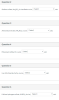 ANSWER CHOICES ARE:
NEUTRAL
ACIDIC
BASIC
Question 2 Sodium sulfate, Na2SO4, is classified as a/an (Select] Question 3 Ammonium nitrate, NH4NO3, is a/an Select ] salt. Question 4 Potassium iodide, Kl, is a/an (Select] salt. Question 5 Iron (III) chloride, FeCl3, is a/an (Select] salt. Question 6 Lithium hydrogen sulfate, LIHSO4, is a/an (Select]
ANSWER CHOICES ARE:
NEUTRAL
ACIDIC
BASIC
Question 2 Sodium sulfate, Na2SO4, is classified as a/an (Select] Question 3 Ammonium nitrate, NH4NO3, is a/an Select ] salt. Question 4 Potassium iodide, Kl, is a/an (Select] salt. Question 5 Iron (III) chloride, FeCl3, is a/an (Select] salt. Question 6 Lithium hydrogen sulfate, LIHSO4, is a/an (Select]
Write formulas for the following compounds. -Sodium phosphate -Magnesium hydrogen sulfate -Manganese(II) chloride -Chromium(III) carbonate Write...
Write formulas for the following compounds. -Sodium phosphate -Magnesium hydrogen sulfate -Manganese(II) chloride -Chromium(III) carbonate Write formulas for the following binary compounds. -Potassium chloride -Tin(II) bromide -Calcium oxide -Barium chloride -Aluminum hydride
Q43. Write formulas for the following cations: a. Potassium: b. calcium: c. ammonium: d. lead(II) :...
Q43. Write formulas for the following cations: a. Potassium: b. calcium: c. ammonium: d. lead(II) : e. copper(I) : f. zinc: g. titanium(IV) : h. silver: i. nickel(III): j. hydrogen: k. tin(II) : l. mercury(II) : m. iron(III) : Q44. Write formulas for the following anions: a. fluoride: b. oxide: c. iodide: d. carbonate: e. hydrogen carbonate: f. phosphate: g. sulfide: h. sulfate: i. nitride: j. nitrate: k. phosphide: l. chloride:
Part E – Ionic Compounds Name Formula Formula Name Silver (I) chloride KNO2 Sodium acetate CrCl3...
Part E – Ionic Compounds Name Formula Formula Name Silver (I) chloride KNO2 Sodium acetate CrCl3 Calcium fluoride Mg(IO3)2 Iron (III) oxide CuBr2 Cobalt (III) sulfite NaNO3 Magnesium sulfide Al2O3 Zinc (II) phosphate NaHCO3 Nickel (II) bromide BaS Iron (II) carbonate MnO2 Sodium sulfate KH2PO4 Lithium nitrate CuCO3 Barium phosphate NaI Chromium (VI) bromate Fe(IO4)3 Potassium hydrogen carbonate MgF2 Titanium (IV) chloride Co(ClO2)3 Magnesium nitrite LiC2H3O2 Zinc (II) sulfite Ni(HSO4)2 Sodium hypobromite KCN Calcium carbonate Fe(OH)2
please help Description Balance Equation states on the prodeets) I. Aqueous sodium sulfate is placed in...
 please help
Description Balance Equation states on the prodeets) I. Aqueous sodium sulfate is placed in a beaker containing aqueous plumbous acetate 2.Butanol (CH,OH) gas burns Dovble Re ingle 3. Aqueous lithium chloride is placed LiClca) AgNsLNAgclcDisa in a beaker containing aqueous silver nitrate 4. Aquous nickel ID sulfate is placed in a beaker containing reuchen magnesium metal 5. Aqueous calcium hydroxide is placed in an Erlenmeyer fnask reuction containing nitric acid 6 Perchloric acid is added to a beaker...
please help
Description Balance Equation states on the prodeets) I. Aqueous sodium sulfate is placed in a beaker containing aqueous plumbous acetate 2.Butanol (CH,OH) gas burns Dovble Re ingle 3. Aqueous lithium chloride is placed LiClca) AgNsLNAgclcDisa in a beaker containing aqueous silver nitrate 4. Aquous nickel ID sulfate is placed in a beaker containing reuchen magnesium metal 5. Aqueous calcium hydroxide is placed in an Erlenmeyer fnask reuction containing nitric acid 6 Perchloric acid is added to a beaker...
Which of the following pairs of elements are likely to form ionic compounds: A) helium and oxygen B) magnesium and chlorine C) chlorine and bromine D) potassium and sulfur E) sodium and potassium F) nitrogen and oxygen I believe the answ
Which of the following pairs of elements are likely to form ionic compounds: A) helium and oxygen B) magnesium and chlorine C) chlorine and bromine D) potassium and sulfur E) sodium and potassium F) nitrogen and oxygen I believe the answer is d and f Would appreciate a verification and as to why I might be wrong or right instead of a link saying what is an ionic compound thank you
2. Write the chemical formulas for the following: b. aluminum a. copper c. hydrochloric acid e....
 2. Write the chemical formulas for the following: b. aluminum a. copper c. hydrochloric acid e. copper(II) chloride g. sodium hydroxide i. hydrogen k. carbon dioxide m. calcium carbonate o. aluminum chloride q. calcium chloride d. magnesium sulfate – f. sodium bicarbonate h. methane j. sodium chloride 1. oxygen n. magnesium hydroxide p. sodium carbonate — r. water t. carbon monoxide S. sodium v. iron u. sulfur w.iron (II) sulfide y. sulfuric acid x. magnesium chloride z. sodium sulfate 3....
need help, convert them like below pic S. OH- t. 10 w. CIO2 2- X. CO24...
 need help, convert them like below pic
S. OH- t. 10 w. CIO2 2- X. CO24 y. HSO3 z. CIO, u. HCO3- v. 104 5. Ionic Compounds with Polyatomic lons & Constant Charge lons a. CaCO3 i. potassium hydroxide b. KCIO j. beryllium hydroxide C. CASO k. strontium acetate d. Li2SO3 I. ammonium oxide e. Ag3PO4 m. silver cyanide f. NH,F n. zinc carbonate g. Al(NO2)3 0. aluminum bicarbonate h. Ba(HCO3)2- p. magnesium phosphate b. NiP04 6. Tonic Compounds with...
need help, convert them like below pic
S. OH- t. 10 w. CIO2 2- X. CO24 y. HSO3 z. CIO, u. HCO3- v. 104 5. Ionic Compounds with Polyatomic lons & Constant Charge lons a. CaCO3 i. potassium hydroxide b. KCIO j. beryllium hydroxide C. CASO k. strontium acetate d. Li2SO3 I. ammonium oxide e. Ag3PO4 m. silver cyanide f. NH,F n. zinc carbonate g. Al(NO2)3 0. aluminum bicarbonate h. Ba(HCO3)2- p. magnesium phosphate b. NiP04 6. Tonic Compounds with...
This lab is the ten test tube mystery The ten solutions are as followed: 1: ammonium...
 This lab is the ten test tube mystery The ten solutions are as
followed:
1: ammonium chloride, NH4Cl
2:barium chloride, BaCl2
3:copper sulfate, CuSO4
4:salt hydrochloric acid, HCl
5:potassium iodide, KI
6:silver nitrate, AgNO3
7:salt sodium bromide, NaBr
8:sodium hydroxide, NaOH
9:sodium sulfide, Na2S
10:sulfuric acid, H2SO4
I am just totally lost as it wants me to test all the reactions
and say which solution is what, if you could please just answer
which solution goes where and possibly fill...
This lab is the ten test tube mystery The ten solutions are as
followed:
1: ammonium chloride, NH4Cl
2:barium chloride, BaCl2
3:copper sulfate, CuSO4
4:salt hydrochloric acid, HCl
5:potassium iodide, KI
6:silver nitrate, AgNO3
7:salt sodium bromide, NaBr
8:sodium hydroxide, NaOH
9:sodium sulfide, Na2S
10:sulfuric acid, H2SO4
I am just totally lost as it wants me to test all the reactions
and say which solution is what, if you could please just answer
which solution goes where and possibly fill...
1. Add hydrochloric acid (HCl) to magnesium metal in a test tube. Observations: &
1. Add hydrochloric acid (HCl) to magnesium metal in a test tube. Observations: Reactants: Products: Chemical Equation: 2. Add calcium nitrate to sodium carbonate in a test tube. Observations: Reactants: Products: Chemical Equation: 3. Add iron (III) nitrate to sodium hydroxide in a test tube. Observations: Reactants: Products: Chemical Equation: 4. Add copper (II) nitrate to ammonium hydroxide in a test tube. For writing the equation, the Roman numeral indicates the charge of copper. Caution: ammonium hydroxide produces very pungent...
 ANSWER CHOICES ARE:
NEUTRAL
ACIDIC
BASIC
Question 2 Sodium sulfate, Na2SO4, is classified as a/an (Select] Question 3 Ammonium nitrate, NH4NO3, is a/an Select ] salt. Question 4 Potassium iodide, Kl, is a/an (Select] salt. Question 5 Iron (III) chloride, FeCl3, is a/an (Select] salt. Question 6 Lithium hydrogen sulfate, LIHSO4, is a/an (Select]
ANSWER CHOICES ARE:
NEUTRAL
ACIDIC
BASIC
Question 2 Sodium sulfate, Na2SO4, is classified as a/an (Select] Question 3 Ammonium nitrate, NH4NO3, is a/an Select ] salt. Question 4 Potassium iodide, Kl, is a/an (Select] salt. Question 5 Iron (III) chloride, FeCl3, is a/an (Select] salt. Question 6 Lithium hydrogen sulfate, LIHSO4, is a/an (Select]
 please help
Description Balance Equation states on the prodeets) I. Aqueous sodium sulfate is placed in a beaker containing aqueous plumbous acetate 2.Butanol (CH,OH) gas burns Dovble Re ingle 3. Aqueous lithium chloride is placed LiClca) AgNsLNAgclcDisa in a beaker containing aqueous silver nitrate 4. Aquous nickel ID sulfate is placed in a beaker containing reuchen magnesium metal 5. Aqueous calcium hydroxide is placed in an Erlenmeyer fnask reuction containing nitric acid 6 Perchloric acid is added to a beaker...
please help
Description Balance Equation states on the prodeets) I. Aqueous sodium sulfate is placed in a beaker containing aqueous plumbous acetate 2.Butanol (CH,OH) gas burns Dovble Re ingle 3. Aqueous lithium chloride is placed LiClca) AgNsLNAgclcDisa in a beaker containing aqueous silver nitrate 4. Aquous nickel ID sulfate is placed in a beaker containing reuchen magnesium metal 5. Aqueous calcium hydroxide is placed in an Erlenmeyer fnask reuction containing nitric acid 6 Perchloric acid is added to a beaker...
 2. Write the chemical formulas for the following: b. aluminum a. copper c. hydrochloric acid e. copper(II) chloride g. sodium hydroxide i. hydrogen k. carbon dioxide m. calcium carbonate o. aluminum chloride q. calcium chloride d. magnesium sulfate – f. sodium bicarbonate h. methane j. sodium chloride 1. oxygen n. magnesium hydroxide p. sodium carbonate — r. water t. carbon monoxide S. sodium v. iron u. sulfur w.iron (II) sulfide y. sulfuric acid x. magnesium chloride z. sodium sulfate 3....
 need help, convert them like below pic
S. OH- t. 10 w. CIO2 2- X. CO24 y. HSO3 z. CIO, u. HCO3- v. 104 5. Ionic Compounds with Polyatomic lons & Constant Charge lons a. CaCO3 i. potassium hydroxide b. KCIO j. beryllium hydroxide C. CASO k. strontium acetate d. Li2SO3 I. ammonium oxide e. Ag3PO4 m. silver cyanide f. NH,F n. zinc carbonate g. Al(NO2)3 0. aluminum bicarbonate h. Ba(HCO3)2- p. magnesium phosphate b. NiP04 6. Tonic Compounds with...
need help, convert them like below pic
S. OH- t. 10 w. CIO2 2- X. CO24 y. HSO3 z. CIO, u. HCO3- v. 104 5. Ionic Compounds with Polyatomic lons & Constant Charge lons a. CaCO3 i. potassium hydroxide b. KCIO j. beryllium hydroxide C. CASO k. strontium acetate d. Li2SO3 I. ammonium oxide e. Ag3PO4 m. silver cyanide f. NH,F n. zinc carbonate g. Al(NO2)3 0. aluminum bicarbonate h. Ba(HCO3)2- p. magnesium phosphate b. NiP04 6. Tonic Compounds with...
 This lab is the ten test tube mystery The ten solutions are as
followed:
1: ammonium chloride, NH4Cl
2:barium chloride, BaCl2
3:copper sulfate, CuSO4
4:salt hydrochloric acid, HCl
5:potassium iodide, KI
6:silver nitrate, AgNO3
7:salt sodium bromide, NaBr
8:sodium hydroxide, NaOH
9:sodium sulfide, Na2S
10:sulfuric acid, H2SO4
I am just totally lost as it wants me to test all the reactions
and say which solution is what, if you could please just answer
which solution goes where and possibly fill...
This lab is the ten test tube mystery The ten solutions are as
followed:
1: ammonium chloride, NH4Cl
2:barium chloride, BaCl2
3:copper sulfate, CuSO4
4:salt hydrochloric acid, HCl
5:potassium iodide, KI
6:silver nitrate, AgNO3
7:salt sodium bromide, NaBr
8:sodium hydroxide, NaOH
9:sodium sulfide, Na2S
10:sulfuric acid, H2SO4
I am just totally lost as it wants me to test all the reactions
and say which solution is what, if you could please just answer
which solution goes where and possibly fill...
Most questions answered within 3 hours.
-
Where is the error in this code sequence?
String s1 = "Hello";
String s2 = "ello";...
asked 10 months ago -
Financial data for Joel de Paris, Inc., for last year
follow:
Joel de Paris, Inc.
Balance...
asked 10 months ago -
Consider this reaction:
Al2(SO4)3 (aq)+ BaCl3
(aq) Al2Cl6 (aq)- +
3BaSO4(s) . What is the...
asked 10 months ago -
Suppose that Savneet is considering increasing her
recent random sample from 20 car rentals to 40...
asked 10 months ago -
Trucks arrive at an unloading terminal at an average rate of 120
per hour.
Trucks arrive...
asked 10 months ago -
Why are methanol and ethanol completely soluble in water while
octanol is not very little soluble....
asked 10 months ago -
A facilities manager at a university reads in a research report
that the mean amount of...
asked 10 months ago -
When the CuSO4 is rehydrated by adding water to the anhydrous
compound, is this an endothermic...
asked 10 months ago -
A ray of sunlight is passing from diamond into crown glass; the
angle of incidence is...
asked 10 months ago -
A block of mass 0.249 kg is placed on top of a light, vertical
spring of...
asked 10 months ago -
how do the kidneys compensate in the presences of acidosis
a) trigger hyperventilate
b) reserve acid...
asked 10 months ago -
Question 501 pts
The rental rate of capital to the firm increases. Which of the
following...
asked 10 months ago