A thin, 52 cm long metal bar with mass 755 g rests on, but is not...
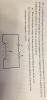
A thin, 52 cm long metal bar with mass 755 g rests on, but is not attached to, two metallic supports in a uniform 0.41 T magnetic field, as shown in the figure. A battery and a 29 Ω resistor in series are connected to the supports. What is the highest voltage the battery can have without breaking the circuit at the supports? The acceleration due to gravity is g = 9.8 m/s2. (Give your answer in decimal using "V" as unit)
Homework Answers

Add Answer to:
A thin, 52 cm long metal bar with mass 755 g rests on, but is
not...
Exercise 27.37 Part A A thin, 52.0 cm long metal bar with mass 740 g rests...
 Exercise 27.37 Part A A thin, 52.0 cm long metal bar with mass 740 g rests on but is not attached to, two metallic supports in a uniform magnetic field with a magnitude of 0.460 T, as shown in the figure (Fi resistance 21.0 Ω are connected in series to the supports What is the largest voltage the battery can have without breaking the circuit at the supports? attery and a resistor of Submit My Answers Give Up Figure 1...
1) Rall Gun". A metal bar with mass of 2 kg., 1.5 m long and having a resistance of 10 Ω rests ho...
 1) Rall Gun". A metal bar with mass of 2 kg., 1.5 m long and having a resistance of 10 Ω rests horizontally on wires of a unclosed circuit comprising a 120V DC power supply connected in series with a 25 Ω resistor and a switch in a uniform magnetic fleld of 1.6 T orthogonal to the plane of the circuit. What is the acceleration of the bar right after the switch is closed?
1) Rall Gun". A metal bar...
1) Rall Gun". A metal bar with mass of 2 kg., 1.5 m long and having a resistance of 10 Ω rests horizontally on wires of a unclosed circuit comprising a 120V DC power supply connected in series with a 25 Ω resistor and a switch in a uniform magnetic fleld of 1.6 T orthogonal to the plane of the circuit. What is the acceleration of the bar right after the switch is closed?
1) Rall Gun". A metal bar...
#3 - A metal bar of length 51.0 cm and mass 740 g sits on par...
 #3 - A metal bar of length 51.0 cm and mass 740 g sits on par of length 51.0 cm and mass 740 g sits on wire as shown in the figure below. The bar is free to lift off the wire if given enough force. An external magnetic field of magnitude of 0.43 A battery and a resistor (R = 22.0 2) are connected as shown. a) What is the largest voltage the battery can have without lifting the...
A 60 g horizontal metal bar, 12 cm long, is free to slide up and down...
A 60 g horizontal metal bar, 12 cm long, is free to slide up and down between two tall, vertical metal rods that are 12 cm apart. A 0.080 T magnetic field is directed perpendicular to the plane of the rods. The bar is raised to near the top of the rods, and a 1.5 Ω resistor is connected across the two rods at the top. Then the bar is dropped. What is the terminal speed at which the bar...
Two parallel metal rods form a plane inclined at 20.0° to the horizontal. The upper end...
Two parallel metal rods form a plane inclined at 20.0° to the horizontal. The upper end of the rods are connected together by a resistor of 122.0 Ω. The lower end of the rods are held in an electrically insulating block. They are separated horizontally by a distance of 20.0 cm There is a uniform magnetic field of 0.100 T directed vertically upward. A metal bar of mass 0.10 g is sliding down the metal rods. What is the maximum...
A conductive bar 52 cm long slides on two parallel metal bars placed within it a...
 A conductive bar 52 cm long slides on two parallel metal bars placed within it a magnetic field (directed inward) of magnitude 1077 G, as indicated in the figure. The ends of the bars are connected to two resistors, R1 = 101 Ω and R2 = 157 Ω. The conductive bar moves to the left at a constant speed of 6 m / s as shown in the figure.
a) determine magnitud of current that circulates trough R1 (in
mA)....
A conductive bar 52 cm long slides on two parallel metal bars placed within it a magnetic field (directed inward) of magnitude 1077 G, as indicated in the figure. The ends of the bars are connected to two resistors, R1 = 101 Ω and R2 = 157 Ω. The conductive bar moves to the left at a constant speed of 6 m / s as shown in the figure.
a) determine magnitud of current that circulates trough R1 (in
mA)....
A 55 g horizontal metal bar, 10-cm-long, is free to slide up and down between two...
A 55 g horizontal metal bar, 10-cm-long, is free to slide up and down between two tall, vertical metal rods that are 10 cm apart. A 5.0×10⁻² T magnetic field is directed perpendicular to the plane of the rods. The bar is raised to near the top of the rods, and a 1.2 Ω resistor is connected across the two rods at the top. Then the bar is dropped. Part A What is the terminal speed at which the bar...
ocer long metal bar with a mass of 50-kg is falling with a constant velocity of...
 ocer long metal bar with a mass of 50-kg is falling with a constant velocity of 20 m/s towards the earth. The bar is attached to two conducting rails as shown. Ignoring air resistance and friction, determine the emf in the circuit if there is a uniform magnetic field directed perpendicular to the motion of the bar. The resistor has a value of 100. Vertical Conducting Resistor
A 0.392 m long metal bar is pulled to the left by an force F ....
A 0.392 m long metal bar is pulled to the left by an force F . The bar rides on parallel metal rails connected through a 48.4 Ω resistor, as shown in the following figure(Figure 1), so the apparatus makes a complete circuit. You can ignore the resistance of the bar and rails. The circuit is in a uniform 0.638 T magnetic field that is directed out of the plane of the figure. At the instant when the bar is...
A 35.0 g horizontal metal bar, 8.50 cm long, is free to slide up and down...
A 35.0 g horizontal metal bar, 8.50 cm long, is free to slide up and down along two tall, vertical metal rods that are 8.50 cm apart. A 0.250 resistor is connected across the two rods at the top and a 0.600 T magnetic field is directed perpendicular to the plane of the rods (out of the page). The metal bar is raised to the top of the rods and then released. Assume that the bar remains horizontal and...
 Exercise 27.37 Part A A thin, 52.0 cm long metal bar with mass 740 g rests on but is not attached to, two metallic supports in a uniform magnetic field with a magnitude of 0.460 T, as shown in the figure (Fi resistance 21.0 Ω are connected in series to the supports What is the largest voltage the battery can have without breaking the circuit at the supports? attery and a resistor of Submit My Answers Give Up Figure 1...
 1) Rall Gun". A metal bar with mass of 2 kg., 1.5 m long and having a resistance of 10 Ω rests horizontally on wires of a unclosed circuit comprising a 120V DC power supply connected in series with a 25 Ω resistor and a switch in a uniform magnetic fleld of 1.6 T orthogonal to the plane of the circuit. What is the acceleration of the bar right after the switch is closed?
1) Rall Gun". A metal bar...
1) Rall Gun". A metal bar with mass of 2 kg., 1.5 m long and having a resistance of 10 Ω rests horizontally on wires of a unclosed circuit comprising a 120V DC power supply connected in series with a 25 Ω resistor and a switch in a uniform magnetic fleld of 1.6 T orthogonal to the plane of the circuit. What is the acceleration of the bar right after the switch is closed?
1) Rall Gun". A metal bar...
 #3 - A metal bar of length 51.0 cm and mass 740 g sits on par of length 51.0 cm and mass 740 g sits on wire as shown in the figure below. The bar is free to lift off the wire if given enough force. An external magnetic field of magnitude of 0.43 A battery and a resistor (R = 22.0 2) are connected as shown. a) What is the largest voltage the battery can have without lifting the...
 A conductive bar 52 cm long slides on two parallel metal bars placed within it a magnetic field (directed inward) of magnitude 1077 G, as indicated in the figure. The ends of the bars are connected to two resistors, R1 = 101 Ω and R2 = 157 Ω. The conductive bar moves to the left at a constant speed of 6 m / s as shown in the figure.
a) determine magnitud of current that circulates trough R1 (in
mA)....
A conductive bar 52 cm long slides on two parallel metal bars placed within it a magnetic field (directed inward) of magnitude 1077 G, as indicated in the figure. The ends of the bars are connected to two resistors, R1 = 101 Ω and R2 = 157 Ω. The conductive bar moves to the left at a constant speed of 6 m / s as shown in the figure.
a) determine magnitud of current that circulates trough R1 (in
mA)....
 ocer long metal bar with a mass of 50-kg is falling with a constant velocity of 20 m/s towards the earth. The bar is attached to two conducting rails as shown. Ignoring air resistance and friction, determine the emf in the circuit if there is a uniform magnetic field directed perpendicular to the motion of the bar. The resistor has a value of 100. Vertical Conducting Resistor
Most questions answered within 3 hours.
-
Where is the error in this code sequence?
String s1 = "Hello";
String s2 = "ello";...
asked 11 months ago -
Financial data for Joel de Paris, Inc., for last year
follow:
Joel de Paris, Inc.
Balance...
asked 11 months ago -
Consider this reaction:
Al2(SO4)3 (aq)+ BaCl3
(aq) Al2Cl6 (aq)- +
3BaSO4(s) . What is the...
asked 11 months ago -
Suppose that Savneet is considering increasing her
recent random sample from 20 car rentals to 40...
asked 11 months ago -
Trucks arrive at an unloading terminal at an average rate of 120
per hour.
Trucks arrive...
asked 11 months ago -
Why are methanol and ethanol completely soluble in water while
octanol is not very little soluble....
asked 11 months ago -
A facilities manager at a university reads in a research report
that the mean amount of...
asked 11 months ago -
When the CuSO4 is rehydrated by adding water to the anhydrous
compound, is this an endothermic...
asked 11 months ago -
A ray of sunlight is passing from diamond into crown glass; the
angle of incidence is...
asked 11 months ago -
A block of mass 0.249 kg is placed on top of a light, vertical
spring of...
asked 11 months ago -
how do the kidneys compensate in the presences of acidosis
a) trigger hyperventilate
b) reserve acid...
asked 11 months ago -
Question 501 pts
The rental rate of capital to the firm increases. Which of the
following...
asked 11 months ago