Gay-Lussac's Law A sample of air, at 1.001 atm and 17.5 °C, is enclosed in a...
Gay-Lussac's Law
A sample of air, at 1.001 atm and 17.5 °C, is enclosed in a rigid
container. Use Gay-Lussac's Law to predict the pressure of the air
in the container when the temperature is increased to 65.5 °C.
| Tries 0/5 |
Homework Answers

Add Answer to:
Gay-Lussac's Law
A sample of air, at 1.001 atm and 17.5 °C, is enclosed in a...
According to Amontons’s law or Gay-Lussac's law, which states that the pressure of a gas is...
According to Amontons’s law or Gay-Lussac's law, which states that the pressure of a gas is proportional to the temperature of the gas, what would be the pressure of a gas at absolute zero? Select the correct answer below: 0 1 atm ∞ depends on the gas
Perform calculations using Gay-Lussac's Law Question A gas in a sealed container has an initial pressure...
 Perform calculations using Gay-Lussac's Law Question A gas in a sealed container has an initial pressure of 125 kPa at 25.0°C. If the pressure is increased to 150.0 kPa, what will the new temperature be? • Report your answer with three significant figures. • Use -273.15°C for absolute zero. Provide your answer below:
1.Gay-Lussac's Law A gas container is initially at 47 mm Hg and 77 K (liquid nitrogen...
1.Gay-Lussac's Law A gas container is initially at 47 mm Hg and 77 K (liquid nitrogen temperature.) What will the pressure be when the container warms up to room temperature of 25 ˚C? 2. A container of gas is initially at 0.500 atm and 25 ˚C. What will the pressure be at 125 ˚C? 3.A toy balloon has an internal pressure of 1.05 atm and a volume of 5.0 L. If the temperature where the balloon is released is 200...
Perform calculations using Gay-Lussac's Law Question A gas in a sealed container has an initial pressure...
 Perform calculations using Gay-Lussac's Law Question A gas in a sealed container has an initial pressure of 125 kPa at 25.0° C. If the pressure is increased to 150.0 kPa, what will the new temperature be? Report your answer with three significant figures. Use -273.15°C for absolute zero. Provide your answer below: degrees Celsius FEEDBACK MORE INSTRUCTION SUBMIT Content attribution
Gay-Lussac's law states that the pressure of a gas is directly related to its absolute temperature
 Gay-Lussac's law states that the pressure of a gas is directly related to its absolute temperature, provided the volume and number of moles of the gas remain the same: (Figure 1) Part A A sample of ideal gas is in a sealed container. The pressure of the gas is 145 torr, and the temperature is 39 °C. If the temperature changes to 80 °C with no change in volume or amount of gas, what is the new pressure, P2, of the gas...
T1 T2 Gay-Lussac's Law: Don't forget to convert 'C to K 1. 9.0L of a gas...
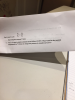 T1 T2 Gay-Lussac's Law: Don't forget to convert 'C to K 1. 9.0L of a gas is exerts a pressure of 83.0 kPa at 35.0°C. What would be the required temperature (in ℃elsius) to change the pressure to standard pressure? 4
Gay-Lussac's Law: Ti T Don't forget to convert 'C to K obni 1. 9.0L of a...
 Gay-Lussac's Law: Ti T Don't forget to convert 'C to K obni 1. 9.0L of a gas is exerts a pressure of 83.0 kPa at 35.0°C. What would be the required temperature (in ℃elsius) to change the pressure to standard pressure? 4
4. a) Define Gay-Lussac's law. b) In equation form, Gay-Lussae's law is 5. A Chem 1314...
 4. a) Define Gay-Lussac's law. b) In equation form, Gay-Lussae's law is 5. A Chem 1314 student determines the mass of an unknown gas to be 0.99 grams at 43 °C and 745 mm Hg in a 200 mL container. What is the molecular mass of the unknown gas? [show work] The "unknown" gas (among the following) is most probably a) propane, CH. b) sulfur hexafluoride, SF6c) Xenon, Xe d) pentane, CHia CHEM1314-YEAR 2019-2020
o. Pi P2 Gay-Lussac's Law: Ti T2 Don't forget to convert °C to K 1. 9.0...
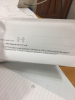 o. Pi P2 Gay-Lussac's Law: Ti T2 Don't forget to convert °C to K 1. 9.0 L of a gas is exerts a pressure of 83.0 kPa at 35.0°C. What would be the required temperature (in °Celsius) to change the pressure to standard pressure?
According to the ideal gas law, a 1.001 mol sample of argon gas in a 1.589...
According to the ideal gas law, a 1.001 mol sample of argon gas in a 1.589 L container at 270.1 K should exert a pressure of 13.96 atm. What is the percent difference between the pressure calculated using the van der Waals' equation and the ideal pressure? For Ar gas, a = 1.345 L2atm/mol2 and b = 3.219×10⁻² L/mol.
 Perform calculations using Gay-Lussac's Law Question A gas in a sealed container has an initial pressure of 125 kPa at 25.0°C. If the pressure is increased to 150.0 kPa, what will the new temperature be? • Report your answer with three significant figures. • Use -273.15°C for absolute zero. Provide your answer below:
 Perform calculations using Gay-Lussac's Law Question A gas in a sealed container has an initial pressure of 125 kPa at 25.0° C. If the pressure is increased to 150.0 kPa, what will the new temperature be? Report your answer with three significant figures. Use -273.15°C for absolute zero. Provide your answer below: degrees Celsius FEEDBACK MORE INSTRUCTION SUBMIT Content attribution
 Gay-Lussac's law states that the pressure of a gas is directly related to its absolute temperature, provided the volume and number of moles of the gas remain the same: (Figure 1) Part A A sample of ideal gas is in a sealed container. The pressure of the gas is 145 torr, and the temperature is 39 °C. If the temperature changes to 80 °C with no change in volume or amount of gas, what is the new pressure, P2, of the gas...
 T1 T2 Gay-Lussac's Law: Don't forget to convert 'C to K 1. 9.0L of a gas is exerts a pressure of 83.0 kPa at 35.0°C. What would be the required temperature (in ℃elsius) to change the pressure to standard pressure? 4
 Gay-Lussac's Law: Ti T Don't forget to convert 'C to K obni 1. 9.0L of a gas is exerts a pressure of 83.0 kPa at 35.0°C. What would be the required temperature (in ℃elsius) to change the pressure to standard pressure? 4
 4. a) Define Gay-Lussac's law. b) In equation form, Gay-Lussae's law is 5. A Chem 1314 student determines the mass of an unknown gas to be 0.99 grams at 43 °C and 745 mm Hg in a 200 mL container. What is the molecular mass of the unknown gas? [show work] The "unknown" gas (among the following) is most probably a) propane, CH. b) sulfur hexafluoride, SF6c) Xenon, Xe d) pentane, CHia CHEM1314-YEAR 2019-2020
 o. Pi P2 Gay-Lussac's Law: Ti T2 Don't forget to convert °C to K 1. 9.0 L of a gas is exerts a pressure of 83.0 kPa at 35.0°C. What would be the required temperature (in °Celsius) to change the pressure to standard pressure?
Most questions answered within 3 hours.
-
Where is the error in this code sequence?
String s1 = "Hello";
String s2 = "ello";...
asked 11 months ago -
Financial data for Joel de Paris, Inc., for last year
follow:
Joel de Paris, Inc.
Balance...
asked 11 months ago -
Consider this reaction:
Al2(SO4)3 (aq)+ BaCl3
(aq) Al2Cl6 (aq)- +
3BaSO4(s) . What is the...
asked 11 months ago -
Suppose that Savneet is considering increasing her
recent random sample from 20 car rentals to 40...
asked 11 months ago -
Trucks arrive at an unloading terminal at an average rate of 120
per hour.
Trucks arrive...
asked 11 months ago -
Why are methanol and ethanol completely soluble in water while
octanol is not very little soluble....
asked 11 months ago -
A facilities manager at a university reads in a research report
that the mean amount of...
asked 11 months ago -
When the CuSO4 is rehydrated by adding water to the anhydrous
compound, is this an endothermic...
asked 11 months ago -
A ray of sunlight is passing from diamond into crown glass; the
angle of incidence is...
asked 11 months ago -
A block of mass 0.249 kg is placed on top of a light, vertical
spring of...
asked 11 months ago -
how do the kidneys compensate in the presences of acidosis
a) trigger hyperventilate
b) reserve acid...
asked 11 months ago -
Question 501 pts
The rental rate of capital to the firm increases. Which of the
following...
asked 11 months ago