Biochemistry 4. What are the two models for the interconversion of inactive and active during protein...
Biochemistry 4. What are the two models for the interconversion of inactive and active during protein cooperative ligand binding ?
Homework Answers
Two models are-
1) sequential model (also known as KNF model)
This describes cooperativity of protein subunits. According to this model protein conformation changes with each binding of ligand. This model follows structural theory of induced fit model of substrates binding to enzyme, any or slight change in confirmation of enzyme improves it's binding affinity to transition state of ligand. Two main assumptions of this models are -
•The protein exists in single state of either low or high affinity for ligand,when not bound to the ligand
• When ligand binds on site, a confirmational changes is produced in that region of protein and this may influence the conformation of nearby binding sites on same protein. Hence changing their affinity for ligand.
2) Monod-Wyman-Changeux model (also known as symmetry model)
According to this model the concept of two distinct symmetric states is the main postulate. The regulated protein, such as many enzymes and receptors, exist in different interconvertible states in absence of any regulator. The conformational states is determined by thermal equilibrium.
Add Answer to:
Biochemistry 4. What are the two models for the
interconversion of inactive and active during protein...
Place the following into the correct order to represent the action of CAMP. Inactive protein kinase...
 Place the following into the correct order to represent the action of CAMP. Inactive protein kinase Inactive enzymes Enzyme subs Enzyme products Activated protein kinase Activated enzymes Various metabolic affects Adenylate D onector de actives aG pro protan atas adale case 3 Adenyat produces CAMP AMP active protein Homework #2 Saved Help Save & Exit Adenyat Hormone-otor binding 1.66 points 20 procesa Adele c e produces CAMP CAMP (5) Protein kinase phosphory eachers Addres wwe mbo rections we range of...
Activity 4. Receptor signaling pathway A model of a G protein receptor signaling pathway is represented...
 Activity 4. Receptor signaling pathway A model of a G protein receptor signaling pathway is represented below. Activation of the signaling pathway results in a cell secreting a neurotransmitter through exocytosis. Activated - Activated adenylyl receptor cyclase GTP АТР CAMP Active G protein Protein- kinase A Inactive Active Protein targets Phosphate group A. Different steps in a signaling pathway can amplify the initial signal of one ligand binding to one receptor. Choose one step in the pathway below that results...
biochemistry 4) Using resources from outside of class and the following numerical list of characteristics, place...
 biochemistry
4) Using resources from outside of class and the following numerical list of characteristics, place each number in order from smallest to largest) which accurately describes the specific receptor (on next page). located at cell surface associated with the protein, Clathrin ligand binding activates phospholipase C a transmembrane protein a DNA binding protein located in the interior of a cell receptor-ligand complex moves to the lysosome receptor-ligand complex becomes concentrated in the nucleus 9. receptor activation can inhibit the...
biochemistry
4) Using resources from outside of class and the following numerical list of characteristics, place each number in order from smallest to largest) which accurately describes the specific receptor (on next page). located at cell surface associated with the protein, Clathrin ligand binding activates phospholipase C a transmembrane protein a DNA binding protein located in the interior of a cell receptor-ligand complex moves to the lysosome receptor-ligand complex becomes concentrated in the nucleus 9. receptor activation can inhibit the...
Please help! 4. (3 points) Which set of binding data is likely to represent cooperative ligand...
 Please help!
4. (3 points) Which set of binding data is likely to represent cooperative ligand binding to an oligomeric protein? Explain! (Note: Yor Theta is the percent saturation of receptor with ligand) a. | [Ligand] (mM) | Y 0.1 0.2 0.4 0.7 0.3 0.5 0.7 0.9 b. 0.3 0.4 0.6 0.3 0.6 0.8
Please help!
4. (3 points) Which set of binding data is likely to represent cooperative ligand binding to an oligomeric protein? Explain! (Note: Yor Theta is the percent saturation of receptor with ligand) a. | [Ligand] (mM) | Y 0.1 0.2 0.4 0.7 0.3 0.5 0.7 0.9 b. 0.3 0.4 0.6 0.3 0.6 0.8
Biochemistry need help on question 2. I'm not sure if question 1 plays a part in...
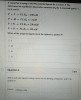 Biochemistry
need help on question 2. I'm not sure if question 1
plays a part in question 2 , thanks in advance!
A researcher is trying to identify potential ligands for a protein, P. She determines the equilibrium dissociation constants (Kd) for 4 proposed ligands-L M, N, and O: P + L → PL Kd= 100 μM P +N → PLKd = 100 mM P + O → PL Kd = 100 nM Which of the proposed ligands binds the...
Biochemistry
need help on question 2. I'm not sure if question 1
plays a part in question 2 , thanks in advance!
A researcher is trying to identify potential ligands for a protein, P. She determines the equilibrium dissociation constants (Kd) for 4 proposed ligands-L M, N, and O: P + L → PL Kd= 100 μM P +N → PLKd = 100 mM P + O → PL Kd = 100 nM Which of the proposed ligands binds the...
Biochemistry What is the advantage of activating D using the strategy shown in the figure? Why...
 Biochemistry
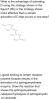
What is the advantage of activating D using the strategy shown in the figure? Why is the strategy shown more effective than a simple activation of D that occurs in one step? Ligand binding to certain receptor tyrosine kinases results in the activation of a sphingomyelinase enzyme. Draw the reaction that shows the sphingomyelinase catalyzed hydrolysis of sphingomyelin to ceramide.
Biochemistry
What is the advantage of activating D using the strategy shown in the figure? Why is the strategy shown more effective than a simple activation of D that occurs in one step? Ligand binding to certain receptor tyrosine kinases results in the activation of a sphingomyelinase enzyme. Draw the reaction that shows the sphingomyelinase catalyzed hydrolysis of sphingomyelin to ceramide.
A binding protein binds to a ligand L with a K_d of 400 nM. What is...
A binding protein binds to a ligand L with a K_d of 400 nM. What is the concentration of ligand when is a) 0.25, b) 0.6, c) 0.95?
A (non-allosteric) protein binds its ligand with a Kd of 2.5 mM. What proportion of the...
A (non-allosteric) protein binds its ligand with a Kd of 2.5 mM. What proportion of the ligand-binding sites will be occupied at a protein concentration of 1.0 mM and a ligand concentration of 1.5 mM? The answer is 37.5%, but how do you find this answer?
What is the correct answer? And please explain in 2-3 sentences on why it is the...
 What is the correct answer? And please explain
in
2-3 sentences on why it is the correct answer for each,
thank you !
15. Which statement below about the interconversion of the alpha and beta anomers of D-glucopyranose is true? The interconversion requires an enzyme called an isomerase The interconversion is spontaneous in water because the acetal functionality is labile The interconversion is spontaneous in water but is slow which is why we typically draw glucose having one anomeric form...
What is the correct answer? And please explain
in
2-3 sentences on why it is the correct answer for each,
thank you !
15. Which statement below about the interconversion of the alpha and beta anomers of D-glucopyranose is true? The interconversion requires an enzyme called an isomerase The interconversion is spontaneous in water because the acetal functionality is labile The interconversion is spontaneous in water but is slow which is why we typically draw glucose having one anomeric form...
 Place the following into the correct order to represent the action of CAMP. Inactive protein kinase Inactive enzymes Enzyme subs Enzyme products Activated protein kinase Activated enzymes Various metabolic affects Adenylate D onector de actives aG pro protan atas adale case 3 Adenyat produces CAMP AMP active protein Homework #2 Saved Help Save & Exit Adenyat Hormone-otor binding 1.66 points 20 procesa Adele c e produces CAMP CAMP (5) Protein kinase phosphory eachers Addres wwe mbo rections we range of...
 Activity 4. Receptor signaling pathway A model of a G protein receptor signaling pathway is represented below. Activation of the signaling pathway results in a cell secreting a neurotransmitter through exocytosis. Activated - Activated adenylyl receptor cyclase GTP АТР CAMP Active G protein Protein- kinase A Inactive Active Protein targets Phosphate group A. Different steps in a signaling pathway can amplify the initial signal of one ligand binding to one receptor. Choose one step in the pathway below that results...
 biochemistry
4) Using resources from outside of class and the following numerical list of characteristics, place each number in order from smallest to largest) which accurately describes the specific receptor (on next page). located at cell surface associated with the protein, Clathrin ligand binding activates phospholipase C a transmembrane protein a DNA binding protein located in the interior of a cell receptor-ligand complex moves to the lysosome receptor-ligand complex becomes concentrated in the nucleus 9. receptor activation can inhibit the...
biochemistry
4) Using resources from outside of class and the following numerical list of characteristics, place each number in order from smallest to largest) which accurately describes the specific receptor (on next page). located at cell surface associated with the protein, Clathrin ligand binding activates phospholipase C a transmembrane protein a DNA binding protein located in the interior of a cell receptor-ligand complex moves to the lysosome receptor-ligand complex becomes concentrated in the nucleus 9. receptor activation can inhibit the...
 Please help!
4. (3 points) Which set of binding data is likely to represent cooperative ligand binding to an oligomeric protein? Explain! (Note: Yor Theta is the percent saturation of receptor with ligand) a. | [Ligand] (mM) | Y 0.1 0.2 0.4 0.7 0.3 0.5 0.7 0.9 b. 0.3 0.4 0.6 0.3 0.6 0.8
Please help!
4. (3 points) Which set of binding data is likely to represent cooperative ligand binding to an oligomeric protein? Explain! (Note: Yor Theta is the percent saturation of receptor with ligand) a. | [Ligand] (mM) | Y 0.1 0.2 0.4 0.7 0.3 0.5 0.7 0.9 b. 0.3 0.4 0.6 0.3 0.6 0.8
 Biochemistry
need help on question 2. I'm not sure if question 1
plays a part in question 2 , thanks in advance!
A researcher is trying to identify potential ligands for a protein, P. She determines the equilibrium dissociation constants (Kd) for 4 proposed ligands-L M, N, and O: P + L → PL Kd= 100 μM P +N → PLKd = 100 mM P + O → PL Kd = 100 nM Which of the proposed ligands binds the...
Biochemistry
need help on question 2. I'm not sure if question 1
plays a part in question 2 , thanks in advance!
A researcher is trying to identify potential ligands for a protein, P. She determines the equilibrium dissociation constants (Kd) for 4 proposed ligands-L M, N, and O: P + L → PL Kd= 100 μM P +N → PLKd = 100 mM P + O → PL Kd = 100 nM Which of the proposed ligands binds the...
 Biochemistry
What is the advantage of activating D using the strategy shown in the figure? Why is the strategy shown more effective than a simple activation of D that occurs in one step? Ligand binding to certain receptor tyrosine kinases results in the activation of a sphingomyelinase enzyme. Draw the reaction that shows the sphingomyelinase catalyzed hydrolysis of sphingomyelin to ceramide.
Biochemistry
What is the advantage of activating D using the strategy shown in the figure? Why is the strategy shown more effective than a simple activation of D that occurs in one step? Ligand binding to certain receptor tyrosine kinases results in the activation of a sphingomyelinase enzyme. Draw the reaction that shows the sphingomyelinase catalyzed hydrolysis of sphingomyelin to ceramide.
 What is the correct answer? And please explain
in
2-3 sentences on why it is the correct answer for each,
thank you !
15. Which statement below about the interconversion of the alpha and beta anomers of D-glucopyranose is true? The interconversion requires an enzyme called an isomerase The interconversion is spontaneous in water because the acetal functionality is labile The interconversion is spontaneous in water but is slow which is why we typically draw glucose having one anomeric form...
What is the correct answer? And please explain
in
2-3 sentences on why it is the correct answer for each,
thank you !
15. Which statement below about the interconversion of the alpha and beta anomers of D-glucopyranose is true? The interconversion requires an enzyme called an isomerase The interconversion is spontaneous in water because the acetal functionality is labile The interconversion is spontaneous in water but is slow which is why we typically draw glucose having one anomeric form...
Most questions answered within 3 hours.
-
Where is the error in this code sequence?
String s1 = "Hello";
String s2 = "ello";...
asked 10 months ago -
Financial data for Joel de Paris, Inc., for last year
follow:
Joel de Paris, Inc.
Balance...
asked 10 months ago -
Consider this reaction:
Al2(SO4)3 (aq)+ BaCl3
(aq) Al2Cl6 (aq)- +
3BaSO4(s) . What is the...
asked 10 months ago -
Suppose that Savneet is considering increasing her
recent random sample from 20 car rentals to 40...
asked 10 months ago -
Trucks arrive at an unloading terminal at an average rate of 120
per hour.
Trucks arrive...
asked 10 months ago -
Why are methanol and ethanol completely soluble in water while
octanol is not very little soluble....
asked 10 months ago -
A facilities manager at a university reads in a research report
that the mean amount of...
asked 10 months ago -
When the CuSO4 is rehydrated by adding water to the anhydrous
compound, is this an endothermic...
asked 10 months ago -
A ray of sunlight is passing from diamond into crown glass; the
angle of incidence is...
asked 10 months ago -
A block of mass 0.249 kg is placed on top of a light, vertical
spring of...
asked 10 months ago -
how do the kidneys compensate in the presences of acidosis
a) trigger hyperventilate
b) reserve acid...
asked 10 months ago -
Question 501 pts
The rental rate of capital to the firm increases. Which of the
following...
asked 10 months ago