define a 2 element struct Census. The first member of the struct is an integer value...
define a 2 element struct Census. The first member of the struct is an integer value and the second member is n, where n is the number of times value appears in a vector.
struct Census
{
int value;
int n;
}
write an test a function that returns the number of times that a particular element of a vector appears in a vector. The function's prototype is
Census count(const vector<int> v, int k);
where v is the vector and k is the position of the particular element in the vector.
Upload your solution to canvas.
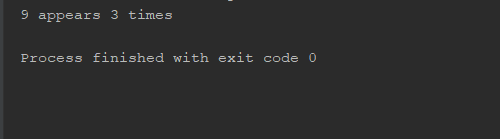
for example if v is {4, 9, 17, 23, 15, 9, 22, 8, 9, 2} and k is 5 then function returns {9, 5} because 9 is the 5th element in the vector and 9 appears 3 times in the vector.
Note: I need help to write out this problem in C++ while using Visual Studio 2017
Homework Answers
#include <iostream>
#include <vector>

using namespace std;

struct Census {
    int value;
    int n;
};

Census count(const vector<int> v, int k);

int main() {
    vector<int> v{4, 9, 17, 23, 15, 9, 22, 8, 9, 2};
    Census c = count(v, 5);
    cout << c.value << " appears " << c.n << " times" << endl;
    return 0;
}

Census count(const vector<int> v, int k) {
    int num = v[k];
    int count = 0;
    for (int i = 0; i < v.size(); ++i) {
        if (num == v[i]) {
            ++count;
        }
    }
    Census c;
    c.value = num;
    c.n = count;
    return c;
}
Add Answer to:
define a 2 element struct Census. The first member of the struct
is an integer value...
C++ Assume that you have a structure Node as follows: struct Node { int value; Node*...
 C++
Assume that you have a structure Node as follows: struct Node { int value; Node* next; Node(int v, Node* n = nullptr) { // constructor value = v; next = n; } }; Question 1 (20 points) Write a function "count" that counts the number of elements in a given linked list. The prototype of this function is as follows: int count_elements(Node*); Question 2 (20 points) Write a function “average" that calculates the average of all the elements in...
C++
Assume that you have a structure Node as follows: struct Node { int value; Node* next; Node(int v, Node* n = nullptr) { // constructor value = v; next = n; } }; Question 1 (20 points) Write a function "count" that counts the number of elements in a given linked list. The prototype of this function is as follows: int count_elements(Node*); Question 2 (20 points) Write a function “average" that calculates the average of all the elements in...
C++ / Visual Studio Implement the member function below that returns true if the given value...
C++ / Visual Studio Implement the member function below that returns true if the given value is in the container, and false if not. Your code should use iterators so it works with any type of container and data. template< typename Value, class Container > bool member( const Value& val, const Container& cont ); just implement this function in the code below #include <iostream> #include <array> #include <deque> #include <list> #include <set> #include <string> #include <vector> using namespace std; #define...
2) (10 pts) Write a function that takes in a pointer to a linked list of...
 2) (10 pts) Write a function that takes in a pointer to a linked list of nodes storing integers and a variable named value, and returns the number of nodes in the list storing that value. For example, if a list pointed to by listPtr stores 2, 6, 2, 3, 4, 2, 6, and 6 and value = 6, your function should return 3, since 6 appears in the list 3 times. Please use the struct and function prototype provided...
C Programming Language 2(a) Define a struct with 1 int array named i, 1 float array...
C Programming Language 2(a) Define a struct with 1 int array named i, 1 float array named f, and one double array named d, each of size M. (b)Declare array x with N of those structs. (c)Write a void function to traverse array x (using a pointer) assigning to each element in each array d (in each struct in array x) the sum of the corresponding elements in arrays i and f (in the same struct). Use 3 pointers (of...
Write a generic function int find_lower_bound(T seq[], int n, const T& value). The function returns the...
Write a generic function int find_lower_bound(T seq[], int n, const T& value). The function returns the index of the largest element in the given sequence that is less than the given value. If multiple elements satisfy, return the one with smallest index. Return -1 if no such element exists. //main.cpp #include<iostream> #include<string> #include<vector> #include<algorithm> using namespace std; #include "source.h" struct Point{ int x,y; bool operator<(const Point& p) { return (x<p.x || (x==p.x&&y<p.y)); } }; int...
How do I pass values to this function? class DynIntQueue { struct QueueNode { int value;...
How do I pass values to this function? class DynIntQueue { struct QueueNode { int value; QueueNode *next; QueueNode(int value1, QueueNode *next1 = nullptr) { value = value1; next = next1; } }; // These track the front and rear of the queue QueueNode *front; QueueNode *rear; public: // Constructor and Destructor DynIntQueue(); ~DynIntQueue(); // Member functions void enqueue(int); void dequeue(int &); bool isEmpty() const; void clear(); }; main #include <iostream> #include "DynIntQueue.h" using namespace std; int main() {DynIntQueue list;...
in c++ Program 1 Write a program that sorts a vector of names alphabetically using the...
 in c++
Program 1 Write a program that sorts a vector of names alphabetically using the selection sort and then searches the vector for a specific name using binary search. To do that, you need to write three functions I. void selSort (vector string &v: sorts the vector using selection sort 2. void display (const vector <string & v): displays the vector contents . int binSearch (const vector <ing& v, string key): searches the vector for a key returns the...
in c++
Program 1 Write a program that sorts a vector of names alphabetically using the selection sort and then searches the vector for a specific name using binary search. To do that, you need to write three functions I. void selSort (vector string &v: sorts the vector using selection sort 2. void display (const vector <string & v): displays the vector contents . int binSearch (const vector <ing& v, string key): searches the vector for a key returns the...
C ++Write a function, anyThree (int a[], int n), that returns true if the value 3...
 C ++Write a function, anyThree (int a[], int n), that returns
true if the value 3 appears in the array exactly 3 times, and no
3's are next to each other. The parameter n will be greater than or
equal to 0.
Write a function, anyThree (int all, int n), that returns true if the value 3 appears in the array exactly 3 times, and no 3's are next to each other. The parameter n will be greater than or...
C ++Write a function, anyThree (int a[], int n), that returns
true if the value 3 appears in the array exactly 3 times, and no
3's are next to each other. The parameter n will be greater than or
equal to 0.
Write a function, anyThree (int all, int n), that returns true if the value 3 appears in the array exactly 3 times, and no 3's are next to each other. The parameter n will be greater than or...
Example program #include <string> #include <iostream> #include <cmath> #include <vector> using namespace std; vector<int> factor(int n)...
 Example program
#include <string>
#include <iostream>
#include <cmath>
#include <vector>
using namespace std;
vector<int> factor(int n)
{
vector <int> v1;
// Print the number of 2s that divide n
while (n%2 == 0)
{
printf("%d ", 2);
n = n/2;
v1.push_back(2);
}
// n must be odd at this point. So we can
skip
// one element (Note i = i +2)
for (int i = 3; i <=...
Example program
#include <string>
#include <iostream>
#include <cmath>
#include <vector>
using namespace std;
vector<int> factor(int n)
{
vector <int> v1;
// Print the number of 2s that divide n
while (n%2 == 0)
{
printf("%d ", 2);
n = n/2;
v1.push_back(2);
}
// n must be odd at this point. So we can
skip
// one element (Note i = i +2)
for (int i = 3; i <=...
I have to a C++ program I need help with. Can you break it into the...
I have to a C++ program I need help with. Can you break it into the two steps provided below. Suppose MAX_SIZE is a global constant int variable that has been declared and initialized to an appropriate positive value. 1. int maxValue(const array<int, MAX_SIZE>&, int); is the prototype for a function that returns the value of the largest element in the array parameter. The array may be only partially filled. The int parameter indicates how many items are actually in...
 C++
Assume that you have a structure Node as follows: struct Node { int value; Node* next; Node(int v, Node* n = nullptr) { // constructor value = v; next = n; } }; Question 1 (20 points) Write a function "count" that counts the number of elements in a given linked list. The prototype of this function is as follows: int count_elements(Node*); Question 2 (20 points) Write a function “average" that calculates the average of all the elements in...
C++
Assume that you have a structure Node as follows: struct Node { int value; Node* next; Node(int v, Node* n = nullptr) { // constructor value = v; next = n; } }; Question 1 (20 points) Write a function "count" that counts the number of elements in a given linked list. The prototype of this function is as follows: int count_elements(Node*); Question 2 (20 points) Write a function “average" that calculates the average of all the elements in...
 2) (10 pts) Write a function that takes in a pointer to a linked list of nodes storing integers and a variable named value, and returns the number of nodes in the list storing that value. For example, if a list pointed to by listPtr stores 2, 6, 2, 3, 4, 2, 6, and 6 and value = 6, your function should return 3, since 6 appears in the list 3 times. Please use the struct and function prototype provided...
 in c++
Program 1 Write a program that sorts a vector of names alphabetically using the selection sort and then searches the vector for a specific name using binary search. To do that, you need to write three functions I. void selSort (vector string &v: sorts the vector using selection sort 2. void display (const vector <string & v): displays the vector contents . int binSearch (const vector <ing& v, string key): searches the vector for a key returns the...
in c++
Program 1 Write a program that sorts a vector of names alphabetically using the selection sort and then searches the vector for a specific name using binary search. To do that, you need to write three functions I. void selSort (vector string &v: sorts the vector using selection sort 2. void display (const vector <string & v): displays the vector contents . int binSearch (const vector <ing& v, string key): searches the vector for a key returns the...
 C ++Write a function, anyThree (int a[], int n), that returns
true if the value 3 appears in the array exactly 3 times, and no
3's are next to each other. The parameter n will be greater than or
equal to 0.
Write a function, anyThree (int all, int n), that returns true if the value 3 appears in the array exactly 3 times, and no 3's are next to each other. The parameter n will be greater than or...
C ++Write a function, anyThree (int a[], int n), that returns
true if the value 3 appears in the array exactly 3 times, and no
3's are next to each other. The parameter n will be greater than or
equal to 0.
Write a function, anyThree (int all, int n), that returns true if the value 3 appears in the array exactly 3 times, and no 3's are next to each other. The parameter n will be greater than or...
 Example program
#include <string>
#include <iostream>
#include <cmath>
#include <vector>
using namespace std;
vector<int> factor(int n)
{
vector <int> v1;
// Print the number of 2s that divide n
while (n%2 == 0)
{
printf("%d ", 2);
n = n/2;
v1.push_back(2);
}
// n must be odd at this point. So we can
skip
// one element (Note i = i +2)
for (int i = 3; i <=...
Example program
#include <string>
#include <iostream>
#include <cmath>
#include <vector>
using namespace std;
vector<int> factor(int n)
{
vector <int> v1;
// Print the number of 2s that divide n
while (n%2 == 0)
{
printf("%d ", 2);
n = n/2;
v1.push_back(2);
}
// n must be odd at this point. So we can
skip
// one element (Note i = i +2)
for (int i = 3; i <=...
Most questions answered within 3 hours.
-
Where is the error in this code sequence?
String s1 = "Hello";
String s2 = "ello";...
asked 10 months ago -
Financial data for Joel de Paris, Inc., for last year
follow:
Joel de Paris, Inc.
Balance...
asked 10 months ago -
Consider this reaction:
Al2(SO4)3 (aq)+ BaCl3
(aq) Al2Cl6 (aq)- +
3BaSO4(s) . What is the...
asked 10 months ago -
Suppose that Savneet is considering increasing her
recent random sample from 20 car rentals to 40...
asked 10 months ago -
Trucks arrive at an unloading terminal at an average rate of 120
per hour.
Trucks arrive...
asked 10 months ago -
Why are methanol and ethanol completely soluble in water while
octanol is not very little soluble....
asked 10 months ago -
A facilities manager at a university reads in a research report
that the mean amount of...
asked 10 months ago -
When the CuSO4 is rehydrated by adding water to the anhydrous
compound, is this an endothermic...
asked 10 months ago -
A ray of sunlight is passing from diamond into crown glass; the
angle of incidence is...
asked 10 months ago -
A block of mass 0.249 kg is placed on top of a light, vertical
spring of...
asked 10 months ago -
how do the kidneys compensate in the presences of acidosis
a) trigger hyperventilate
b) reserve acid...
asked 10 months ago -
Question 501 pts
The rental rate of capital to the firm increases. Which of the
following...
asked 10 months ago