Consider two bodies sliding in relative motion. With increase in load and/or sliding speed between the...
Consider two bodies sliding in relative motion. With increase in load and/or sliding speed between the two bodies, will the surface temperature during the steady-state sliding always show an increase? Justify your answer.
Homework Answers

Add Answer to:
Consider two bodies sliding in relative motion. With increase in
load and/or sliding speed between the...
Question 3 Which of the following produces an attractive force between two large bodies gravitation positive...
 Question 3 Which of the following produces an attractive force between two large bodies gravitation positive charge on each negative charge on each north magnetic poles facing each other south magnetic poles facing each other Question4 If an object has some energy it always is in motion is able to do work is electrically charged is in a steady state must have a net force acting on it. Question 5 Which of the following colors corresponds to the longest wavelength...
Consider two masses sliding across a frictionless surface about to undergo a head-on collision as shown...
 Consider two masses sliding across a frictionless surface about to undergo a head-on collision as shown in the figure. The first mass (m1 =3 kg) is travelling to the right with a speed of v1 = 8 m/s. The speed of the second mass (m2 = 5 kg) is unknown. After the masses collide, ma rebounds moving off at a speed of v = 2 m/s in the opposite direction, while mz is motionless. a)(10 pts.) At what velocity, v2...
Consider two masses sliding across a frictionless surface about to undergo a head-on collision as shown...
 Consider two masses sliding across a frictionless surface about to undergo a head-on collision as shown in the figure. The first mass (m1 = 3 kg) is travelling to the right with a speed of V1 = 8 m/s. The speed of the second mass (m2 = 5 kg) is unknown. After the masses collide, m1 rebounds moving off at a speed of v = 2 m/s in the opposite direction, while m2 is motionless. a)(10 pts.) At what velocity,...
Consider a pipe consisting of two layers: Consider a pipe consisting of two layers: • an...
 Consider a pipe consisting of two layers:
 • an inner layer of AISI 1010 steel with thickness 2 cm, and • an outer layer of insulation (k = 0.034 W/(m · K)) with thickness 4 cm The pipe's contents keep the inner surface at a constant temperature of 120 °C, while the outside experiences convection with overall convection coefficient h 30 W/(m²K) to the surroundings at T = 25°C. The pipe's inner diameter...
Consider a pipe consisting of two layers:
Consider a pipe consisting of two layers: • an inner layer of AISI 1010 steel with thickness 2 cm, and • an outer layer of insulation (k = 0.034 W/(m · K)) with thickness 4 cm The pipe's contents keep the inner surface at a constant temperature of 120 °C, while the outside experiences convection with overall convection coefficient h 30 W/(m²K) to the surroundings at T = 25°C. The pipe's inner diameter...
Referring to Figure 1 (in separate file), calculate the relative speed (in km/h) between the two...
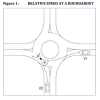 Referring to Figure 1 (in separate file), calculate the relative
speed (in km/h) between the two vehicles at Point A assuming that
at this point the speed of vehicle V1 is 44km/h, the speed of
vehicle V2 is 34km/h and the angle of incidence ? is 41°. Express
you answer to the nearest whole number. 1,682
Figure 1: RELATIVE SPEED ATA ROUNDABOUT V1 (0 V2
Referring to Figure 1 (in separate file), calculate the relative
speed (in km/h) between the two vehicles at Point A assuming that
at this point the speed of vehicle V1 is 44km/h, the speed of
vehicle V2 is 34km/h and the angle of incidence ? is 41°. Express
you answer to the nearest whole number. 1,682
Figure 1: RELATIVE SPEED ATA ROUNDABOUT V1 (0 V2
Consider a two-stage turbine operating at steady state with reheat at constant pressure between the stages....
Consider a two-stage turbine operating at steady state with reheat at constant pressure between the stages. Show that the maximum work is developed when the pressure ratio is the same across each stage. Use a cold air-standard analysis, assuming the inlet state and the exit pressure are specified, each expansion process is isentropic, and the temperature at the inlet to each turbine stage is the same. Kinetic and potential energy effects can be ignored.
Work Done by Normal Force Consider an object sliding along the surface shown below. Choose and...
 Work Done by Normal Force Consider an object sliding along the surface shown below. Choose and show a direction of motion for the object and show the direction of the normal force. Use this figure to do the scalar product given below. oM bns av W, n-s Is the work done by the normal force exerted between two colliding objects also zero? Explain. Work Done by Weight Unlike the normal and kinetic friction forces, the direction of an object's motion...
x Incorrect. An object, with mass m and speed vi relative to an observer, explodes into...
 x Incorrect. An object, with mass m and speed vi relative to an observer, explodes into two pieces, one 3 times as massive as the other; the explosion takes place in deep space. The less massive piece stops relative to the observer. How much kinetic energy is added to the system during the explosion, as measured in the observer's reference frame? State your answer in terms of the given variables. Click here to enter or edit your answer 4(K. E)-6...
Consider two-dimensional, steady-state conduction in a square cross section with prescribed surfa...
 need help with c and d
Consider two-dimensional, steady-state conduction in a square cross section with prescribed surface temperatures shown in the figure. 2) 100°C a) Determine the temperatures at nodes 1, 2, 3, and 4 Estimate the midpoint temperature. Reducing the mesh size by a factor of 2, determine the corresponding nodal temperatures. Compare your results with those from the coarser grid. b) 50°C 200°c c) If the body generates heat at a rate of 20,000 W/m determine the...
need help with c and d
Consider two-dimensional, steady-state conduction in a square cross section with prescribed surface temperatures shown in the figure. 2) 100°C a) Determine the temperatures at nodes 1, 2, 3, and 4 Estimate the midpoint temperature. Reducing the mesh size by a factor of 2, determine the corresponding nodal temperatures. Compare your results with those from the coarser grid. b) 50°C 200°c c) If the body generates heat at a rate of 20,000 W/m determine the...
In last week's written HW you used a voltage to generate motion in a sliding metal...
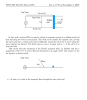 In last week's written HW you used a voltage to generate motion
in a sliding metal rail
that slid along two wires on the ground. This week you'll
consider the opposite case, moving
the rail to generate a voltage and power a lightbulb. Again the
rail is free to move along the
wires without any friction. The fixed wires are now 1 m apart
and at t = 0 the rail is 2 m
from the bulb.
This circuit will...
In last week's written HW you used a voltage to generate motion
in a sliding metal rail
that slid along two wires on the ground. This week you'll
consider the opposite case, moving
the rail to generate a voltage and power a lightbulb. Again the
rail is free to move along the
wires without any friction. The fixed wires are now 1 m apart
and at t = 0 the rail is 2 m
from the bulb.
This circuit will...
 Question 3 Which of the following produces an attractive force between two large bodies gravitation positive charge on each negative charge on each north magnetic poles facing each other south magnetic poles facing each other Question4 If an object has some energy it always is in motion is able to do work is electrically charged is in a steady state must have a net force acting on it. Question 5 Which of the following colors corresponds to the longest wavelength...
 Consider two masses sliding across a frictionless surface about to undergo a head-on collision as shown in the figure. The first mass (m1 =3 kg) is travelling to the right with a speed of v1 = 8 m/s. The speed of the second mass (m2 = 5 kg) is unknown. After the masses collide, ma rebounds moving off at a speed of v = 2 m/s in the opposite direction, while mz is motionless. a)(10 pts.) At what velocity, v2...
 Consider two masses sliding across a frictionless surface about to undergo a head-on collision as shown in the figure. The first mass (m1 = 3 kg) is travelling to the right with a speed of V1 = 8 m/s. The speed of the second mass (m2 = 5 kg) is unknown. After the masses collide, m1 rebounds moving off at a speed of v = 2 m/s in the opposite direction, while m2 is motionless. a)(10 pts.) At what velocity,...
 Consider a pipe consisting of two layers:
 • an inner layer of AISI 1010 steel with thickness 2 cm, and • an outer layer of insulation (k = 0.034 W/(m · K)) with thickness 4 cm The pipe's contents keep the inner surface at a constant temperature of 120 °C, while the outside experiences convection with overall convection coefficient h 30 W/(m²K) to the surroundings at T = 25°C. The pipe's inner diameter...
Consider a pipe consisting of two layers:
Consider a pipe consisting of two layers: • an inner layer of AISI 1010 steel with thickness 2 cm, and • an outer layer of insulation (k = 0.034 W/(m · K)) with thickness 4 cm The pipe's contents keep the inner surface at a constant temperature of 120 °C, while the outside experiences convection with overall convection coefficient h 30 W/(m²K) to the surroundings at T = 25°C. The pipe's inner diameter...
 Referring to Figure 1 (in separate file), calculate the relative
speed (in km/h) between the two vehicles at Point A assuming that
at this point the speed of vehicle V1 is 44km/h, the speed of
vehicle V2 is 34km/h and the angle of incidence ? is 41°. Express
you answer to the nearest whole number. 1,682
Figure 1: RELATIVE SPEED ATA ROUNDABOUT V1 (0 V2
Referring to Figure 1 (in separate file), calculate the relative
speed (in km/h) between the two vehicles at Point A assuming that
at this point the speed of vehicle V1 is 44km/h, the speed of
vehicle V2 is 34km/h and the angle of incidence ? is 41°. Express
you answer to the nearest whole number. 1,682
Figure 1: RELATIVE SPEED ATA ROUNDABOUT V1 (0 V2
 Work Done by Normal Force Consider an object sliding along the surface shown below. Choose and show a direction of motion for the object and show the direction of the normal force. Use this figure to do the scalar product given below. oM bns av W, n-s Is the work done by the normal force exerted between two colliding objects also zero? Explain. Work Done by Weight Unlike the normal and kinetic friction forces, the direction of an object's motion...
 x Incorrect. An object, with mass m and speed vi relative to an observer, explodes into two pieces, one 3 times as massive as the other; the explosion takes place in deep space. The less massive piece stops relative to the observer. How much kinetic energy is added to the system during the explosion, as measured in the observer's reference frame? State your answer in terms of the given variables. Click here to enter or edit your answer 4(K. E)-6...
 need help with c and d
Consider two-dimensional, steady-state conduction in a square cross section with prescribed surface temperatures shown in the figure. 2) 100°C a) Determine the temperatures at nodes 1, 2, 3, and 4 Estimate the midpoint temperature. Reducing the mesh size by a factor of 2, determine the corresponding nodal temperatures. Compare your results with those from the coarser grid. b) 50°C 200°c c) If the body generates heat at a rate of 20,000 W/m determine the...
need help with c and d
Consider two-dimensional, steady-state conduction in a square cross section with prescribed surface temperatures shown in the figure. 2) 100°C a) Determine the temperatures at nodes 1, 2, 3, and 4 Estimate the midpoint temperature. Reducing the mesh size by a factor of 2, determine the corresponding nodal temperatures. Compare your results with those from the coarser grid. b) 50°C 200°c c) If the body generates heat at a rate of 20,000 W/m determine the...
 In last week's written HW you used a voltage to generate motion
in a sliding metal rail
that slid along two wires on the ground. This week you'll
consider the opposite case, moving
the rail to generate a voltage and power a lightbulb. Again the
rail is free to move along the
wires without any friction. The fixed wires are now 1 m apart
and at t = 0 the rail is 2 m
from the bulb.
This circuit will...
In last week's written HW you used a voltage to generate motion
in a sliding metal rail
that slid along two wires on the ground. This week you'll
consider the opposite case, moving
the rail to generate a voltage and power a lightbulb. Again the
rail is free to move along the
wires without any friction. The fixed wires are now 1 m apart
and at t = 0 the rail is 2 m
from the bulb.
This circuit will...
Most questions answered within 3 hours.
-
Where is the error in this code sequence?
String s1 = "Hello";
String s2 = "ello";...
asked 11 months ago -
Financial data for Joel de Paris, Inc., for last year
follow:
Joel de Paris, Inc.
Balance...
asked 11 months ago -
Consider this reaction:
Al2(SO4)3 (aq)+ BaCl3
(aq) Al2Cl6 (aq)- +
3BaSO4(s) . What is the...
asked 11 months ago -
Suppose that Savneet is considering increasing her
recent random sample from 20 car rentals to 40...
asked 11 months ago -
Trucks arrive at an unloading terminal at an average rate of 120
per hour.
Trucks arrive...
asked 11 months ago -
Why are methanol and ethanol completely soluble in water while
octanol is not very little soluble....
asked 11 months ago -
A facilities manager at a university reads in a research report
that the mean amount of...
asked 11 months ago -
When the CuSO4 is rehydrated by adding water to the anhydrous
compound, is this an endothermic...
asked 11 months ago -
A ray of sunlight is passing from diamond into crown glass; the
angle of incidence is...
asked 11 months ago -
A block of mass 0.249 kg is placed on top of a light, vertical
spring of...
asked 11 months ago -
how do the kidneys compensate in the presences of acidosis
a) trigger hyperventilate
b) reserve acid...
asked 11 months ago -
Question 501 pts
The rental rate of capital to the firm increases. Which of the
following...
asked 11 months ago