2: Resonance Structures
 For each resonance atructureuse curved arrows to show the delocalization of electron pairs that transforms the structure into the next one (to the right) .
Homework Answers
The resonance structure of a compound is given whose curved arrow mechanism needs to be shown for the generation of the next resonance structure mentioned. Resonance structures are formed by the delocalization of the electrons and the lone pair of electron either towards the electron deficient species or towards the more electronegative atom.
• Resonance structure can be drawn by the delocalization of electron and lone pair of electrons present in a system. Resonance structures are shown by double headed arrow.
The delocalization of electron and lone pair in a molecule lowers the resonance energy and thus, the molecule is stabilized.
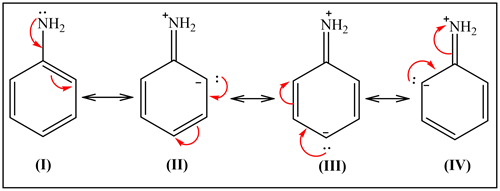
Consider the following example for drawing the resonance structure by delocalization of lone pair and double bond as shown by curved arrows:
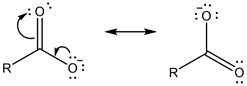
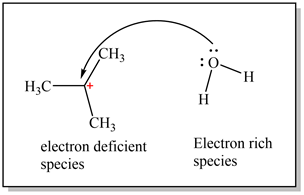
• Generally, an arrow starts from a nucleophile and ends to an electrophile showing the attack, that is, from a high electron density region to low electron density region. A leaving group leave by taking the electron density.
The direction of arrow basically shows the movement of electrons as shown below:
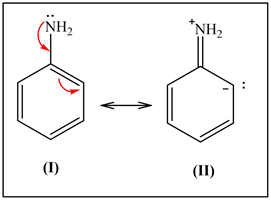
Use the curved arrows to show the conversion of first resonance structure into second without changing any charges as shown below:
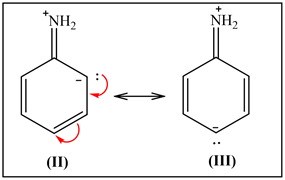
Use the curved arrows to show the conversion of second resonance structure into third without changing any charges as shown below:
Use the curved arrows to show the conversion of third resonance structure into fourth without changing any charges as shown below:
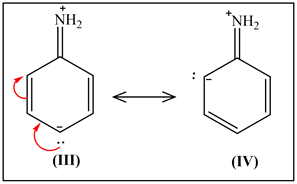
Use the curved arrows to show the conversion of fourth resonance structure to regenerate the original structure without any formal charges as shown below:
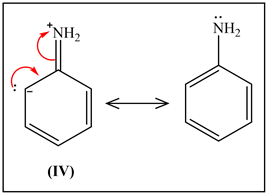
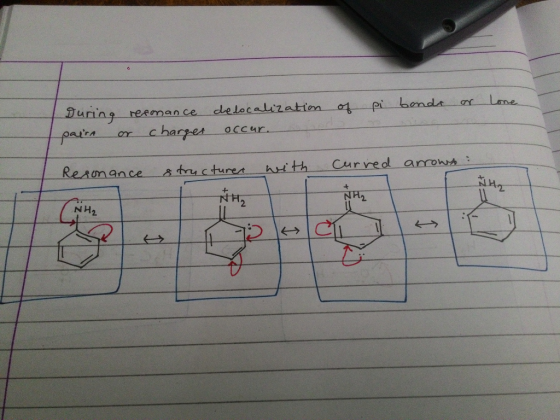
Hence, the delocalization of electrons to form the given resonance structures can be shown using curved arrows as follows:
Draw a major resonance structure for the following enolate. Use curved arrows in both structures to...
 Draw a major resonance structure for the following enolate. Use
curved arrows in both structures to show the delocalization of
electron pairs. Include lone pairs of electrons, formal charges,
and hydrogen atoms.
Draw a major resonance structure for the following enolate. Use curved arrows in both structures to show the delocalization of electron pairs. Include lone pairs of electrons, formal charges, and hydrogen atoms.
Draw a major resonance structure for the following enolate. Use
curved arrows in both structures to show the delocalization of
electron pairs. Include lone pairs of electrons, formal charges,
and hydrogen atoms.
Draw a major resonance structure for the following enolate. Use curved arrows in both structures to show the delocalization of electron pairs. Include lone pairs of electrons, formal charges, and hydrogen atoms.
methyl isocyanate, shown as resonance structure 1
 (a) Draw two resonance structures of the cation shown, shifting only one clectron pair in each step. Be sure to include the formal charge on structures B and C. Only move one double bond. Each resonance structure should contain only one charge -a positive charge. (b) Use curved-arrow notation on the given structure A to show its conversion to structure B, and then on structure B to show its conversion to structure C. 1. Draw curved arrows to show conversion of resonance...
Add curved arrows to both resonance structures of nitromethane to show the delocalization of electron pairs....
 Add curved arrows to both resonance structures of nitromethane to show the delocalization of electron pairs. A curved arrow starts at an electron source (lone pair or bond) and points to an electron sink.
1. Add curved arrows to both structures to show the delocalization of electron pairs needed to...
 1. Add curved arrows to both structures
to show the delocalization of electron pairs needed to form the
other resonance contributor.
2a.) Draw the predominant resonance
contributor for the following compound; include lone pairs of
electrons, formal charges, and hydrogen atoms.
b) Add curved arrows to both structures
to show the delocalization of electron pairs.
1. Add curved arrows to both structures
to show the delocalization of electron pairs needed to form the
other resonance contributor.
2a.) Draw the predominant resonance
contributor for the following compound; include lone pairs of
electrons, formal charges, and hydrogen atoms.
b) Add curved arrows to both structures
to show the delocalization of electron pairs.
EO 3- resonance structures, formal charges, stability 1. Draw ONE possible significant additional resonance structure for...
 EO 3- resonance structures, formal charges, stability
1. Draw ONE possible significant additional resonance structure for each of the following ions. Use curved arrows to show the movement of electrons that creates each new resonance structure. (Hint: lone pairs are not shown. Start by drawing in all one pairs, and include all lone pairs and formal charges in your additional resonance structure.) Page 1 of 3 2. For each structure, draw the resonance structure that is indicated by the curved...
EO 3- resonance structures, formal charges, stability
1. Draw ONE possible significant additional resonance structure for each of the following ions. Use curved arrows to show the movement of electrons that creates each new resonance structure. (Hint: lone pairs are not shown. Start by drawing in all one pairs, and include all lone pairs and formal charges in your additional resonance structure.) Page 1 of 3 2. For each structure, draw the resonance structure that is indicated by the curved...
Add curved arrows to both structures to show the delocalization of electron pairs needed to form...
 Add curved arrows to both structures to show the delocalization of
electron pairs needed to form the other resonance
contributor.
Add curved arrows to both structures to show the delocalization of
electron pairs needed to form the other resonance
contributor.
Need clear drawing. 1) Draw the other significant resonance contributor for the following compound; include lone...
 Need clear drawing.
1) Draw the other significant resonance contributor for the following compound; include lone pairs of electrons, formal charges, and hydrogen atoms. 2) Add curved arrows to both structures to show the delocalization of electron pairs.
Need clear drawing.
1) Draw the other significant resonance contributor for the following compound; include lone pairs of electrons, formal charges, and hydrogen atoms. 2) Add curved arrows to both structures to show the delocalization of electron pairs.
2. Draw electron-dot formulas for all the contributors to the resonance hybrid structures of the carbonate...
 2. Draw electron-dot formulas for all the contributors to the resonance hybrid structures of the carbonate ion, Co2 What is the charge on each atom in each contributor? Using curved arrows, show how the electron pairs move to interconvert the three structures.
3. Draw the important resonance contributors for each structure below (Hint - only 3-4 required for...
 3. Draw the important resonance contributors for each structure below (Hint - only 3-4 required for each). Include resonance arrows as necessary, and use the curved arrows to show electron movement. Also be sure to show all relevant lone pairs and formal charges. :0: H3CNCH CH3
4) Provide all the Resonance structures of the Cycloheptatrienyl Cation, using arrows show the flow of...
 4) Provide all the Resonance structures of the Cycloheptatrienyl Cation, using arrows show the flow of electrons (delocalization) in each resonance structure. (2 points)
 Draw a major resonance structure for the following enolate. Use
curved arrows in both structures to show the delocalization of
electron pairs. Include lone pairs of electrons, formal charges,
and hydrogen atoms.
Draw a major resonance structure for the following enolate. Use curved arrows in both structures to show the delocalization of electron pairs. Include lone pairs of electrons, formal charges, and hydrogen atoms.
Draw a major resonance structure for the following enolate. Use
curved arrows in both structures to show the delocalization of
electron pairs. Include lone pairs of electrons, formal charges,
and hydrogen atoms.
Draw a major resonance structure for the following enolate. Use curved arrows in both structures to show the delocalization of electron pairs. Include lone pairs of electrons, formal charges, and hydrogen atoms.
 Add curved arrows to both resonance structures of nitromethane to show the delocalization of electron pairs. A curved arrow starts at an electron source (lone pair or bond) and points to an electron sink.
 1. Add curved arrows to both structures
to show the delocalization of electron pairs needed to form the
other resonance contributor.
2a.) Draw the predominant resonance
contributor for the following compound; include lone pairs of
electrons, formal charges, and hydrogen atoms.
b) Add curved arrows to both structures
to show the delocalization of electron pairs.
1. Add curved arrows to both structures
to show the delocalization of electron pairs needed to form the
other resonance contributor.
2a.) Draw the predominant resonance
contributor for the following compound; include lone pairs of
electrons, formal charges, and hydrogen atoms.
b) Add curved arrows to both structures
to show the delocalization of electron pairs.
 EO 3- resonance structures, formal charges, stability
1. Draw ONE possible significant additional resonance structure for each of the following ions. Use curved arrows to show the movement of electrons that creates each new resonance structure. (Hint: lone pairs are not shown. Start by drawing in all one pairs, and include all lone pairs and formal charges in your additional resonance structure.) Page 1 of 3 2. For each structure, draw the resonance structure that is indicated by the curved...
EO 3- resonance structures, formal charges, stability
1. Draw ONE possible significant additional resonance structure for each of the following ions. Use curved arrows to show the movement of electrons that creates each new resonance structure. (Hint: lone pairs are not shown. Start by drawing in all one pairs, and include all lone pairs and formal charges in your additional resonance structure.) Page 1 of 3 2. For each structure, draw the resonance structure that is indicated by the curved...
 Add curved arrows to both structures to show the delocalization of
electron pairs needed to form the other resonance
contributor.
Add curved arrows to both structures to show the delocalization of
electron pairs needed to form the other resonance
contributor.
 Need clear drawing.
1) Draw the other significant resonance contributor for the following compound; include lone pairs of electrons, formal charges, and hydrogen atoms. 2) Add curved arrows to both structures to show the delocalization of electron pairs.
Need clear drawing.
1) Draw the other significant resonance contributor for the following compound; include lone pairs of electrons, formal charges, and hydrogen atoms. 2) Add curved arrows to both structures to show the delocalization of electron pairs.
 2. Draw electron-dot formulas for all the contributors to the resonance hybrid structures of the carbonate ion, Co2 What is the charge on each atom in each contributor? Using curved arrows, show how the electron pairs move to interconvert the three structures.
 3. Draw the important resonance contributors for each structure below (Hint - only 3-4 required for each). Include resonance arrows as necessary, and use the curved arrows to show electron movement. Also be sure to show all relevant lone pairs and formal charges. :0: H3CNCH CH3
 4) Provide all the Resonance structures of the Cycloheptatrienyl Cation, using arrows show the flow of electrons (delocalization) in each resonance structure. (2 points)
Most questions answered within 3 hours.
-
Where is the error in this code sequence?
String s1 = "Hello";
String s2 = "ello";...
asked 10 months ago -
Financial data for Joel de Paris, Inc., for last year
follow:
Joel de Paris, Inc.
Balance...
asked 10 months ago -
Consider this reaction:
Al2(SO4)3 (aq)+ BaCl3
(aq) Al2Cl6 (aq)- +
3BaSO4(s) . What is the...
asked 10 months ago -
Suppose that Savneet is considering increasing her
recent random sample from 20 car rentals to 40...
asked 10 months ago -
Trucks arrive at an unloading terminal at an average rate of 120
per hour.
Trucks arrive...
asked 10 months ago -
Why are methanol and ethanol completely soluble in water while
octanol is not very little soluble....
asked 10 months ago -
A facilities manager at a university reads in a research report
that the mean amount of...
asked 10 months ago -
When the CuSO4 is rehydrated by adding water to the anhydrous
compound, is this an endothermic...
asked 10 months ago -
A ray of sunlight is passing from diamond into crown glass; the
angle of incidence is...
asked 10 months ago -
A block of mass 0.249 kg is placed on top of a light, vertical
spring of...
asked 10 months ago -
how do the kidneys compensate in the presences of acidosis
a) trigger hyperventilate
b) reserve acid...
asked 10 months ago -
Question 501 pts
The rental rate of capital to the firm increases. Which of the
following...
asked 10 months ago