
Homework Answers

Add Answer to:
R y 0 equations and the assocdate Tboundanyy conditions the aas Cons bont nutio nal fena
Solve the system of differential equations dx/dt = x-y, dy/dt = 2x+y subject to the initial conditions x(0)= 0 and y(0) = 1.
Solve the system of differential equations dx/dt = x-y, dy/dt = 2x+y subject to the initial conditions x(0)= 0 and y(0) = 1.
am Problem 3 Given the system of linear differential equations and initial condi- tions Initial conditions x(0), y(0)0 a. Use Cramer's rule (i.e. Matrix method) to obtain differential equations f...
 am Problem 3 Given the system of linear differential equations and initial condi- tions Initial conditions x(0), y(0)0 a. Use Cramer's rule (i.e. Matrix method) to obtain differential equations for x and y.
am Problem 3 Given the system of linear differential equations and initial condi- tions Initial conditions x(0), y(0)0 a. Use Cramer's rule (i.e. Matrix method) to obtain differential equations for x and y.
am Problem 3 Given the system of linear differential equations and initial condi- tions Initial conditions x(0), y(0)0 a. Use Cramer's rule (i.e. Matrix method) to obtain differential equations for x and y.
4x - y, = 2x + y. Solve the system of differential equations with initial conditions...
 4x - y, = 2x + y. Solve the system of differential equations with initial conditions x(0)=1, y(0)=2.
Incorrect Mechanism Na + 0 H YA+ R' + - 0 oNaR -OH + Nal
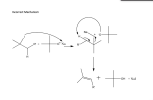 Incorrect Mechanism Na + 0 H YA+ R' + - 0 oNaR -OH + Nal
Consider the 1D wave equation Ye = a?yrz (1) with boundary conditions y(x 0,t) 0; y(x...
 Consider the 1D wave equation Ye = a?yrz (1) with boundary conditions y(x 0,t) 0; y(x = L, t) = 0; y(r, t = 0) - f(x); y(r,t 0) 0. (2) Use separation of variables to convert the PDE into 2 ODEs. Clearly state the boundary conditions for the 2 ODEs
Consider the 1D wave equation Ye = a?yrz (1) with boundary conditions y(x 0,t) 0; y(x = L, t) = 0; y(r, t = 0) - f(x); y(r,t 0)...
Consider the 1D wave equation Ye = a?yrz (1) with boundary conditions y(x 0,t) 0; y(x = L, t) = 0; y(r, t = 0) - f(x); y(r,t 0) 0. (2) Use separation of variables to convert the PDE into 2 ODEs. Clearly state the boundary conditions for the 2 ODEs
Consider the 1D wave equation Ye = a?yrz (1) with boundary conditions y(x 0,t) 0; y(x = L, t) = 0; y(r, t = 0) - f(x); y(r,t 0)...
4. Find the value of x(0.3) for the coupled first order differential equations together with initial conditions dx x(0) 0 and y(0)=1 sint, dt 4. Find the value of x(0.3) for the coupled first...
 4. Find the value of x(0.3) for the coupled first order differential equations together with initial conditions dx x(0) 0 and y(0)=1 sint, dt
4. Find the value of x(0.3) for the coupled first order differential equations together with initial conditions dx x(0) 0 and y(0)=1 sint, dt
4. Find the value of x(0.3) for the coupled first order differential equations together with initial conditions dx x(0) 0 and y(0)=1 sint, dt
Solve the next differential equation with initial conditions y(0) = 1 and y'(0) = 1 by...
 Solve the next differential equation with initial
conditions y(0) = 1 and y'(0) = 1 by reducing it in order
−24y′ y′′ = −16y
OPTIONS
y= (1 3 y= (1+3) y = (1 + x) y (1 r) alic
y= (1 3 y= (1+3) y = (1 + x) y (1 r) alic
Solve the next differential equation with initial
conditions y(0) = 1 and y'(0) = 1 by reducing it in order
−24y′ y′′ = −16y
OPTIONS
y= (1 3 y= (1+3) y = (1 + x) y (1 r) alic
y= (1 3 y= (1+3) y = (1 + x) y (1 r) alic
Consider the problem minimize 1[r(-)] = 2 / r,(t)2 dt subject to the conditions r(0) - r(T)0 and ...
 Consider the problem minimize 1[r(-)] = 2 / r,(t)2 dt subject to the conditions r(0) - r(T)0 and the constraint 0 r(t)2 dt 1. = Suppose that r : [0, π] R is a C2 function that! solves the above Let y : [0, π] R be any other C2 function such that y(0) Define problem a(s): (r(t) + sy(t))2 dt and a(s) a. Explain why a(0) 1 and i'(0) 0. b. Show that i'(0)= | z'(t) y' (t) dt-X...
y"- y = 0 Subject to the initial conditions y(0) = 2 and y'(O) = 1...
 y"- y = 0 Subject to the initial conditions y(0) = 2 and y'(O) = 1 y"+y'-12y = 0 Subject to the initial conditions y(0) = 2 and y'(0) = 1
A polar curve r = f() has parametric equations x = f(0) cos(8), y = f(0)...
 A polar curve r = f() has parametric equations x = f(0) cos(8), y = f(0) sin(8). Then, dy f() cos(0) + f (0) sin(e) d/ where / --f(8) sin(0) + / (8) cos(8) do Use this formula to find the equation in rectangular coordinates of the tangent line to r = 4 cos(30) at 0 = (Use symbolic notation and fractions where needed.)
 am Problem 3 Given the system of linear differential equations and initial condi- tions Initial conditions x(0), y(0)0 a. Use Cramer's rule (i.e. Matrix method) to obtain differential equations for x and y.
am Problem 3 Given the system of linear differential equations and initial condi- tions Initial conditions x(0), y(0)0 a. Use Cramer's rule (i.e. Matrix method) to obtain differential equations for x and y.
am Problem 3 Given the system of linear differential equations and initial condi- tions Initial conditions x(0), y(0)0 a. Use Cramer's rule (i.e. Matrix method) to obtain differential equations for x and y.
 4x - y, = 2x + y. Solve the system of differential equations with initial conditions x(0)=1, y(0)=2.
 Incorrect Mechanism Na + 0 H YA+ R' + - 0 oNaR -OH + Nal
 Consider the 1D wave equation Ye = a?yrz (1) with boundary conditions y(x 0,t) 0; y(x = L, t) = 0; y(r, t = 0) - f(x); y(r,t 0) 0. (2) Use separation of variables to convert the PDE into 2 ODEs. Clearly state the boundary conditions for the 2 ODEs
Consider the 1D wave equation Ye = a?yrz (1) with boundary conditions y(x 0,t) 0; y(x = L, t) = 0; y(r, t = 0) - f(x); y(r,t 0)...
Consider the 1D wave equation Ye = a?yrz (1) with boundary conditions y(x 0,t) 0; y(x = L, t) = 0; y(r, t = 0) - f(x); y(r,t 0) 0. (2) Use separation of variables to convert the PDE into 2 ODEs. Clearly state the boundary conditions for the 2 ODEs
Consider the 1D wave equation Ye = a?yrz (1) with boundary conditions y(x 0,t) 0; y(x = L, t) = 0; y(r, t = 0) - f(x); y(r,t 0)...
 4. Find the value of x(0.3) for the coupled first order differential equations together with initial conditions dx x(0) 0 and y(0)=1 sint, dt
4. Find the value of x(0.3) for the coupled first order differential equations together with initial conditions dx x(0) 0 and y(0)=1 sint, dt
4. Find the value of x(0.3) for the coupled first order differential equations together with initial conditions dx x(0) 0 and y(0)=1 sint, dt
 Solve the next differential equation with initial
conditions y(0) = 1 and y'(0) = 1 by reducing it in order
−24y′ y′′ = −16y
OPTIONS
y= (1 3 y= (1+3) y = (1 + x) y (1 r) alic
y= (1 3 y= (1+3) y = (1 + x) y (1 r) alic
Solve the next differential equation with initial
conditions y(0) = 1 and y'(0) = 1 by reducing it in order
−24y′ y′′ = −16y
OPTIONS
y= (1 3 y= (1+3) y = (1 + x) y (1 r) alic
y= (1 3 y= (1+3) y = (1 + x) y (1 r) alic
 Consider the problem minimize 1[r(-)] = 2 / r,(t)2 dt subject to the conditions r(0) - r(T)0 and the constraint 0 r(t)2 dt 1. = Suppose that r : [0, π] R is a C2 function that! solves the above Let y : [0, π] R be any other C2 function such that y(0) Define problem a(s): (r(t) + sy(t))2 dt and a(s) a. Explain why a(0) 1 and i'(0) 0. b. Show that i'(0)= | z'(t) y' (t) dt-X...
 y"- y = 0 Subject to the initial conditions y(0) = 2 and y'(O) = 1 y"+y'-12y = 0 Subject to the initial conditions y(0) = 2 and y'(0) = 1
 A polar curve r = f() has parametric equations x = f(0) cos(8), y = f(0) sin(8). Then, dy f() cos(0) + f (0) sin(e) d/ where / --f(8) sin(0) + / (8) cos(8) do Use this formula to find the equation in rectangular coordinates of the tangent line to r = 4 cos(30) at 0 = (Use symbolic notation and fractions where needed.)
Most questions answered within 3 hours.
-
Where is the error in this code sequence?
String s1 = "Hello";
String s2 = "ello";...
asked 10 months ago -
Financial data for Joel de Paris, Inc., for last year
follow:
Joel de Paris, Inc.
Balance...
asked 10 months ago -
Consider this reaction:
Al2(SO4)3 (aq)+ BaCl3
(aq) Al2Cl6 (aq)- +
3BaSO4(s) . What is the...
asked 10 months ago -
Suppose that Savneet is considering increasing her
recent random sample from 20 car rentals to 40...
asked 10 months ago -
Trucks arrive at an unloading terminal at an average rate of 120
per hour.
Trucks arrive...
asked 10 months ago -
Why are methanol and ethanol completely soluble in water while
octanol is not very little soluble....
asked 10 months ago -
A facilities manager at a university reads in a research report
that the mean amount of...
asked 10 months ago -
When the CuSO4 is rehydrated by adding water to the anhydrous
compound, is this an endothermic...
asked 10 months ago -
A ray of sunlight is passing from diamond into crown glass; the
angle of incidence is...
asked 10 months ago -
A block of mass 0.249 kg is placed on top of a light, vertical
spring of...
asked 10 months ago -
how do the kidneys compensate in the presences of acidosis
a) trigger hyperventilate
b) reserve acid...
asked 10 months ago -
Question 501 pts
The rental rate of capital to the firm increases. Which of the
following...
asked 10 months ago