
Homework Answers
Add Answer to:
For the engine system of Prob. 15.C3 of Chap. 15, the masses of piston P and the connecting rod B...
In the engine system shown, 1 - 160 mm and b 60 mm. Knowing that crank AB rotates with a constant...
 can you work it out step by step please. I really need
help
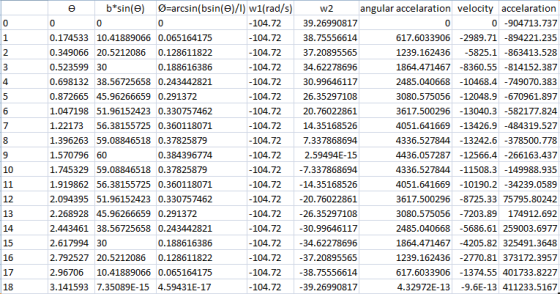
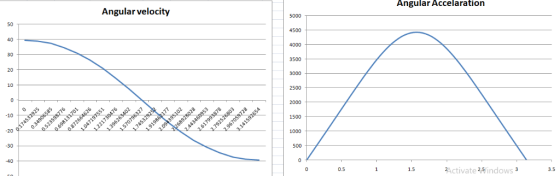
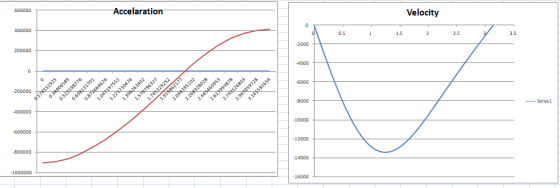
In the engine system shown, 1 - 160 mm and b 60 mm. Knowing that crank AB rotates with a constant angular velocity of 1000 rpm clockwise, use computational software to determine and plot for values of 0 from 0 to 180° and using 10° increments, (a) the angular velocity and angular acceleration of rod BD, (b) the velocity and acceleration of the piston F.
In the...
can you work it out step by step please. I really need
help
In the engine system shown, 1 - 160 mm and b 60 mm. Knowing that crank AB rotates with a constant angular velocity of 1000 rpm clockwise, use computational software to determine and plot for values of 0 from 0 to 180° and using 10° increments, (a) the angular velocity and angular acceleration of rod BD, (b) the velocity and acceleration of the piston F.
In the...
Please show ALL work and answer ALL parts In the engine system shown -250 mm and b 100 mm. The connecting rod BD is assumed to be a 1.2-kg uniform slender rod and is attached to the 1.8-kg piston...
 Please show ALL work and answer ALL parts
In the engine system shown -250 mm and b 100 mm. The connecting rod BD is assumed to be a 1.2-kg uniform slender rod and is attached to the 1.8-kg piston P. The AB rod is rotating counterclockwise at a constant angular velocity of 15 rads/s. Determine all the reactionary forces as a function of θ and plot these forces as a function of θ. At what angle(s) is the reaction force...
Please show ALL work and answer ALL parts
In the engine system shown -250 mm and b 100 mm. The connecting rod BD is assumed to be a 1.2-kg uniform slender rod and is attached to the 1.8-kg piston P. The AB rod is rotating counterclockwise at a constant angular velocity of 15 rads/s. Determine all the reactionary forces as a function of θ and plot these forces as a function of θ. At what angle(s) is the reaction force...
15.C1 The disk shown has a constant angular velocity of 500 rpm coun terclockwise. Knowing that...
 15.C1 The disk shown has a constant angular velocity of 500 rpm coun terclockwise. Knowing that rod BD is 250 mm long, use computational software to determine and plot for values of θ from 0 to 360° and using 30° increments, the velocity of collar D and the angular velocity of rod BD. Determine the two values of θ for which the speed of collar D is zero. 150 mm Fig. P15.C1
0 Required information Problem 16.138 General plane motion: System of rigid bodies: Rod and piston DEPENDENT...
 0 Required information Problem 16.138 General plane motion: System of rigid bodies: Rod and piston DEPENDENT MULTI PART PROBLEM - ASSIGN ALL PARTS NOTE: This is a multi-part question. Once an answer is submitted, you will be unable to return to this part. In the engine system shown, /=250 mm and b=100 mm. The connecting rod BD is assumed to be a 1.7-kg uniform slender rod and is attached to the 1.8-kg piston During a test of the system, crank...
Problem 3.3 In the engine system shown, the crank AB has a constant counterclockwise angular velocity of 200 rad/s...
 Problem 3.3 In the engine system shown, the crank AB has a constant counterclockwise angular velocity of 200 rad/s. Assume that AB-75mm and BD-200 mm. For the crank position indicated determine (a) the angular velocity of the connecting rod BD, (b) the angular acceleration of the connecting rod BD and (c) the velocity and the acceleration of point D. Problem 3.4 A thin homogeneous wire with Determine the period of small oscillation if the wire (a) is suspended as shown,...
In the en gine system shown, I -160 mm and b- 60 mm. Knowing that the crank AB rotates with a con...
 In the en gine system shown, I -160 mm and b- 60 mm. Knowing that the crank AB rotates with a constant angular velocity of 12 rads/s clockwise. Determine all the reactionary forces as a function of θ and plot these forces as a function of θ At what angle(s) is the reaction force at point D a maxmum? Also, plot the accelerations of the points B and D. The piston has a mass of3 kg, rod BD has mass...
Fig. P16.135 and P16.136 150 rad/scounterclockwise, determine (a) the couple M, (b) the components of the...
 Fig. P16.135 and P16.136 150 rad/scounterclockwise, determine (a) the couple M, (b) the components of the force exerted at C on rod BC. 16.137 In the engine system shown 1 = 250 mm and b = 100 mm. The connecting rod BD is assumed to be a 1.2-kg uniform slender rod and is attached to the 1.8-kg piston P. During a test of the system, crank AB is made to rotate with a constant angular velocity of 600 rpm clockwise...
8. In the engine system shown 1= 150 mm and b = 50 mm. The crank...
 8. In the engine system shown 1= 150 mm and b = 50 mm. The crank AB rotates with a constant angular velocity of 100 rad/s in the clockwise direction. Use motion analysis to answer the following when 0=30°: i) Show the coordinate system for the motion analysis ii) Find the velocity of point B iii) Find the angular velocity of connecting rod BD iv) Find the velocity of point D (30 points) P D B А
Could i get help writing the code for this question in matlab? An internal combustion engine...
 Could i get help writing the code for this question in
matlab?
An internal combustion engine slider-crank mechanism is shown in the figure. Crank AB rotates in selected clockwise positive direction as shown. Piston position is Y=AD. o(t) is angular position of the crank, 0(t) is angular velocity of the crank, ő is angular acceleration of the crank. Crank AB rotates with a constant angular velocity of 5 rad/s clockwise in positive O direction as shown. Perform computer simulations using...
Could i get help writing the code for this question in
matlab?
An internal combustion engine slider-crank mechanism is shown in the figure. Crank AB rotates in selected clockwise positive direction as shown. Piston position is Y=AD. o(t) is angular position of the crank, 0(t) is angular velocity of the crank, ő is angular acceleration of the crank. Crank AB rotates with a constant angular velocity of 5 rad/s clockwise in positive O direction as shown. Perform computer simulations using...
An internal combustion engine slider-crank mechanism is shown in the figure. Crank AB rotates in selected...
 An internal combustion engine slider-crank mechanism is shown in the figure. Crank AB rotates in selected clockwise positive direction as shown. Piston position is Y=AD. e(t) is angular position of the crank, ó(t) is angular velocity of the crank, ő is angular acceleration of the crank, 4) Crank AB rotates starting from rest with a constant angular acceleration of 0.25 rad/sec? ( = 0.25 rad/sec² ) clockwise in positive 0 direction as shown Perform computer simulations using above formulas to...
 can you work it out step by step please. I really need
help
In the engine system shown, 1 - 160 mm and b 60 mm. Knowing that crank AB rotates with a constant angular velocity of 1000 rpm clockwise, use computational software to determine and plot for values of 0 from 0 to 180° and using 10° increments, (a) the angular velocity and angular acceleration of rod BD, (b) the velocity and acceleration of the piston F.
In the...
can you work it out step by step please. I really need
help
In the engine system shown, 1 - 160 mm and b 60 mm. Knowing that crank AB rotates with a constant angular velocity of 1000 rpm clockwise, use computational software to determine and plot for values of 0 from 0 to 180° and using 10° increments, (a) the angular velocity and angular acceleration of rod BD, (b) the velocity and acceleration of the piston F.
In the...
 Please show ALL work and answer ALL parts
In the engine system shown -250 mm and b 100 mm. The connecting rod BD is assumed to be a 1.2-kg uniform slender rod and is attached to the 1.8-kg piston P. The AB rod is rotating counterclockwise at a constant angular velocity of 15 rads/s. Determine all the reactionary forces as a function of θ and plot these forces as a function of θ. At what angle(s) is the reaction force...
Please show ALL work and answer ALL parts
In the engine system shown -250 mm and b 100 mm. The connecting rod BD is assumed to be a 1.2-kg uniform slender rod and is attached to the 1.8-kg piston P. The AB rod is rotating counterclockwise at a constant angular velocity of 15 rads/s. Determine all the reactionary forces as a function of θ and plot these forces as a function of θ. At what angle(s) is the reaction force...
 15.C1 The disk shown has a constant angular velocity of 500 rpm coun terclockwise. Knowing that rod BD is 250 mm long, use computational software to determine and plot for values of θ from 0 to 360° and using 30° increments, the velocity of collar D and the angular velocity of rod BD. Determine the two values of θ for which the speed of collar D is zero. 150 mm Fig. P15.C1
 0 Required information Problem 16.138 General plane motion: System of rigid bodies: Rod and piston DEPENDENT MULTI PART PROBLEM - ASSIGN ALL PARTS NOTE: This is a multi-part question. Once an answer is submitted, you will be unable to return to this part. In the engine system shown, /=250 mm and b=100 mm. The connecting rod BD is assumed to be a 1.7-kg uniform slender rod and is attached to the 1.8-kg piston During a test of the system, crank...
 Problem 3.3 In the engine system shown, the crank AB has a constant counterclockwise angular velocity of 200 rad/s. Assume that AB-75mm and BD-200 mm. For the crank position indicated determine (a) the angular velocity of the connecting rod BD, (b) the angular acceleration of the connecting rod BD and (c) the velocity and the acceleration of point D. Problem 3.4 A thin homogeneous wire with Determine the period of small oscillation if the wire (a) is suspended as shown,...
 In the en gine system shown, I -160 mm and b- 60 mm. Knowing that the crank AB rotates with a constant angular velocity of 12 rads/s clockwise. Determine all the reactionary forces as a function of θ and plot these forces as a function of θ At what angle(s) is the reaction force at point D a maxmum? Also, plot the accelerations of the points B and D. The piston has a mass of3 kg, rod BD has mass...
 Fig. P16.135 and P16.136 150 rad/scounterclockwise, determine (a) the couple M, (b) the components of the force exerted at C on rod BC. 16.137 In the engine system shown 1 = 250 mm and b = 100 mm. The connecting rod BD is assumed to be a 1.2-kg uniform slender rod and is attached to the 1.8-kg piston P. During a test of the system, crank AB is made to rotate with a constant angular velocity of 600 rpm clockwise...
 8. In the engine system shown 1= 150 mm and b = 50 mm. The crank AB rotates with a constant angular velocity of 100 rad/s in the clockwise direction. Use motion analysis to answer the following when 0=30°: i) Show the coordinate system for the motion analysis ii) Find the velocity of point B iii) Find the angular velocity of connecting rod BD iv) Find the velocity of point D (30 points) P D B А
 Could i get help writing the code for this question in
matlab?
An internal combustion engine slider-crank mechanism is shown in the figure. Crank AB rotates in selected clockwise positive direction as shown. Piston position is Y=AD. o(t) is angular position of the crank, 0(t) is angular velocity of the crank, ő is angular acceleration of the crank. Crank AB rotates with a constant angular velocity of 5 rad/s clockwise in positive O direction as shown. Perform computer simulations using...
Could i get help writing the code for this question in
matlab?
An internal combustion engine slider-crank mechanism is shown in the figure. Crank AB rotates in selected clockwise positive direction as shown. Piston position is Y=AD. o(t) is angular position of the crank, 0(t) is angular velocity of the crank, ő is angular acceleration of the crank. Crank AB rotates with a constant angular velocity of 5 rad/s clockwise in positive O direction as shown. Perform computer simulations using...
 An internal combustion engine slider-crank mechanism is shown in the figure. Crank AB rotates in selected clockwise positive direction as shown. Piston position is Y=AD. e(t) is angular position of the crank, ó(t) is angular velocity of the crank, ő is angular acceleration of the crank, 4) Crank AB rotates starting from rest with a constant angular acceleration of 0.25 rad/sec? ( = 0.25 rad/sec² ) clockwise in positive 0 direction as shown Perform computer simulations using above formulas to...
Most questions answered within 3 hours.
-
Where is the error in this code sequence?
String s1 = "Hello";
String s2 = "ello";...
asked 11 months ago -
Financial data for Joel de Paris, Inc., for last year
follow:
Joel de Paris, Inc.
Balance...
asked 11 months ago -
Consider this reaction:
Al2(SO4)3 (aq)+ BaCl3
(aq) Al2Cl6 (aq)- +
3BaSO4(s) . What is the...
asked 11 months ago -
Suppose that Savneet is considering increasing her
recent random sample from 20 car rentals to 40...
asked 11 months ago -
Trucks arrive at an unloading terminal at an average rate of 120
per hour.
Trucks arrive...
asked 11 months ago -
Why are methanol and ethanol completely soluble in water while
octanol is not very little soluble....
asked 11 months ago -
A facilities manager at a university reads in a research report
that the mean amount of...
asked 11 months ago -
When the CuSO4 is rehydrated by adding water to the anhydrous
compound, is this an endothermic...
asked 11 months ago -
A ray of sunlight is passing from diamond into crown glass; the
angle of incidence is...
asked 11 months ago -
A block of mass 0.249 kg is placed on top of a light, vertical
spring of...
asked 11 months ago -
how do the kidneys compensate in the presences of acidosis
a) trigger hyperventilate
b) reserve acid...
asked 11 months ago -
Question 501 pts
The rental rate of capital to the firm increases. Which of the
following...
asked 11 months ago