
Homework Answers
The pressure distribution is obtained using Bernoulli's Equation applied on the surface and a point far upstream, which is given by:
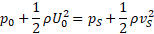
where ρ is the density of the fluid and vs is the velocity on surface.
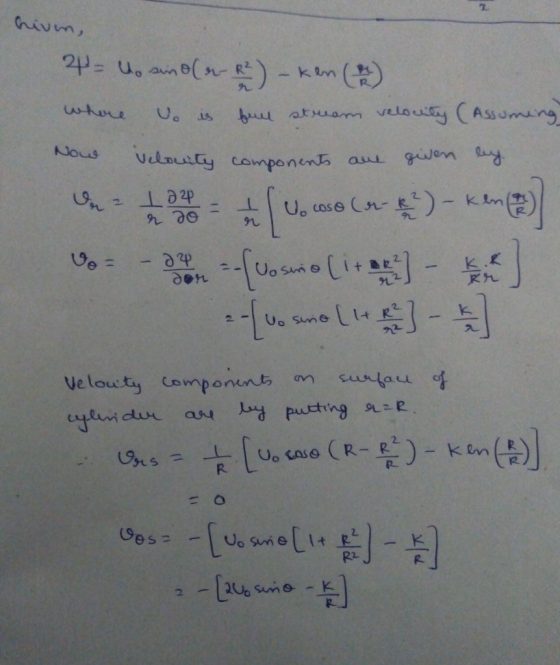
In order to apply the Bernoulli Equation the velocities at the surface was required. The velocities were found using the relation between the stream function and velocities given by:


Then the substitution r=R is made to obtain the velocity on the surface, this results in radial term becoming zero.
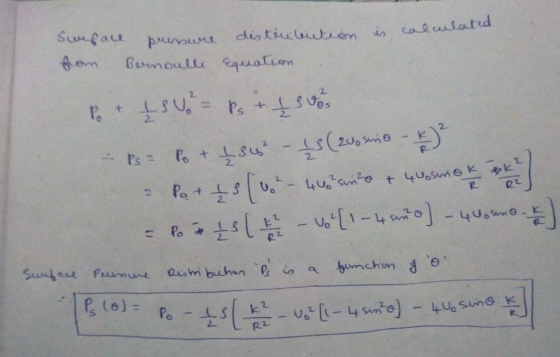
This velocity is then substituted back into the Bernoulli equation to obtain the pressure distribution.
The pressure distribution is obtained as a function of θ as:

Refer to the images below for further understanding.
Add Answer to:
2. (30 points) The figure below shows the streamlines for the flow past a spinning circular cylin...
ME420 Intermediate Fluid Mechanics Name B. Long answer questions (20 points each). 1. The figure below shows the streamlines for the flow past a spinning circular cylinder. In the cylindrical coo...
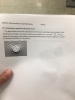 ME420 Intermediate Fluid Mechanics Name B. Long answer questions (20 points each). 1. The figure below shows the streamlines for the flow past a spinning circular cylinder. In the cylindrical coordinates, the stream function can be written as ψ Uosine (r-7/-Kln (5). where R is the radius of the cylinder. Assuming that the pressure in the far upstream is po. find the pressure distribution on the surface.
ME420 Intermediate Fluid Mechanics Name B. Long answer questions (20 points each). 1....
ME420 Intermediate Fluid Mechanics Name B. Long answer questions (20 points each). 1. The figure below shows the streamlines for the flow past a spinning circular cylinder. In the cylindrical coordinates, the stream function can be written as ψ Uosine (r-7/-Kln (5). where R is the radius of the cylinder. Assuming that the pressure in the far upstream is po. find the pressure distribution on the surface.
ME420 Intermediate Fluid Mechanics Name B. Long answer questions (20 points each). 1....
Question 1 (40 points) From potential flow theory, the combination of a doublet and a uniform flow gives the flowfi...
 Question 1 (40 points) From potential flow theory, the combination of a doublet and a uniform flow gives the flowfield around a cylinder. The resulting velocity potential for the flow is given by: A cos Ur cos e The resulting velocity field in cylindrical coordinates is given by - = 4 r ae ar where e, and eo are the unit vectors in cylindrical polar coordinates, Uo is the free-stream velocity and A an arbitrary parameter. a) (10 points) Determine...
The potential function, ф, of the flow past a corner is provided by the following equation,...
 The potential function, ф, of the flow past a corner is provided by the following equation, where n is a constant that depends on the angle between the two walls (see Figure below) 600 Figure 2: Stream function in proximity of two walls at an angle of 60° . Determine the stream function, ψ, associated to the potential function and discuss the relationship between ψ and φ. . Determine the constant n corresponding to an angle of 60° between the...
QUESTION 2 In an experiment to measure approaching uniform flow, U.to a non-rotating circular cylinder as...
 QUESTION 2 In an experiment to measure approaching uniform flow, U.to a non-rotating circular cylinder as shown in Figure Q2, a small hole is to be drilled at the stagnation point on the cylinder surface. (a) Determine the location of the drilled hole on the cylinder surface using potential flow theory by combining a doublet with a uniform flow. (3.5 marks) (b) Determine the theoretical pressure distribution expression on the cylinder surface, Pc and plot or sketch a graph of...
a) Derive the general stream function of a potential flow around a cylinder of radius R given the stream functions Y of a uniform flow and a doublet are uniformUy 'doublet where Uis the speed of...
 a) Derive the general stream function of a potential flow around a cylinder of radius R given the stream functions Y of a uniform flow and a doublet are uniformUy 'doublet where Uis the speed of the uniform flow and C is the strength of the doublet. (5 marks) b) Find the specific stream function assuming the streamline on the surface of the cylinder is Ψ-0 (5 marks) c) Find the velocities at two points (-3R, 0 and (-2R, 0)....
Consider a circular cylinder of radius a whose central axis is stationary. The cylinder is surrounded by a fluid that i...
 Consider a circular cylinder of radius a whose central axis is stationary. The cylinder is surrounded by a fluid that is moving with a uniform steady velocity Uk far from the cylinder; the cylinder axis is in the z-direction The cylinder is also spinning on its axis with constant angular velocity, Ω2, where x, у and z are the usual Cartesian unit vectors We wish to model this 2D flow using an inviscid approximation. This is achieved by first calculating...
don’t us excel please Problem 3. (30 points) From inviscid potential flow analysis, as a uniform stream approaches...
 don’t us excel please
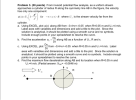
Problem 3. (30 points) From inviscid potential flow analysis, as a uniform stream approaches a cylinder of radius R along the symmetry line AB in the figure, the velocity has only one component: u(x)U for 0<xs-R where U, is the stream velocity far from the cylinder. a. Using EXCEL, plot u(x) along AB from -0.4<x<-0.05 when R-0.05 m and U,-4 m/s. Label axes with variables and dimensions and add a title to the plot. Since the...
don’t us excel please
Problem 3. (30 points) From inviscid potential flow analysis, as a uniform stream approaches a cylinder of radius R along the symmetry line AB in the figure, the velocity has only one component: u(x)U for 0<xs-R where U, is the stream velocity far from the cylinder. a. Using EXCEL, plot u(x) along AB from -0.4<x<-0.05 when R-0.05 m and U,-4 m/s. Label axes with variables and dimensions and add a title to the plot. Since the...
Now evaluate the mass and momentum into and out of the CV shown with 1.0s y Rs 1.5 at (2) Let p 1...
 Now evaluate the mass and momentum into and out of the CV shown with 1.0s y Rs 1.5 at (2) Let p 1200 kg/m2, Uoo- 20 m/s and cylinder radius R 0.01 m 1 cm and Az 1 m Note: The flow does not cross streamlines, so there is no flow across the side boundaries. Exit (2) NO SCALE Variable u vs y at x2-0 Inlet (1) y- H1 and v 0 constant u Uo constant v0 A) Find mass...
2. -1 points My Notes Ask Your Teacher The figure below shows, in cross section, three...
 2. -1 points My Notes Ask Your Teacher The figure below shows, in cross section, three solid cylinders, each of length L and uniform charge Q. Concentric with each cylinder is a cylindrical Gaussian surface, with all three surfaces having the same radius. Cylinder Gaussian Rank the Gaussian surfaces according to the electric field at any point on the surface, greatest first. (Use only >orsymbols. If any elements are equal, show their equality in alphabetic order - for example: a>b-c.)...
The figure below shows a circular wire loop of radius R = 4,5 m that carries...
 The figure below shows a circular wire loop of radius R = 4,5 m that carries a constant clockwise current of 7 = 2.02 A and it have a cons ant mass per length of 1 = 0.003 kg/m. Below the fixed horizontal line in the figure there is a constant magnetic field of strength B = 0.1 T that is pointing into the page and above this fixed horizontal line there is no magnetic field. No B Here No...
 ME420 Intermediate Fluid Mechanics Name B. Long answer questions (20 points each). 1. The figure below shows the streamlines for the flow past a spinning circular cylinder. In the cylindrical coordinates, the stream function can be written as ψ Uosine (r-7/-Kln (5). where R is the radius of the cylinder. Assuming that the pressure in the far upstream is po. find the pressure distribution on the surface.
ME420 Intermediate Fluid Mechanics Name B. Long answer questions (20 points each). 1....
ME420 Intermediate Fluid Mechanics Name B. Long answer questions (20 points each). 1. The figure below shows the streamlines for the flow past a spinning circular cylinder. In the cylindrical coordinates, the stream function can be written as ψ Uosine (r-7/-Kln (5). where R is the radius of the cylinder. Assuming that the pressure in the far upstream is po. find the pressure distribution on the surface.
ME420 Intermediate Fluid Mechanics Name B. Long answer questions (20 points each). 1....
 Question 1 (40 points) From potential flow theory, the combination of a doublet and a uniform flow gives the flowfield around a cylinder. The resulting velocity potential for the flow is given by: A cos Ur cos e The resulting velocity field in cylindrical coordinates is given by - = 4 r ae ar where e, and eo are the unit vectors in cylindrical polar coordinates, Uo is the free-stream velocity and A an arbitrary parameter. a) (10 points) Determine...
 The potential function, ф, of the flow past a corner is provided by the following equation, where n is a constant that depends on the angle between the two walls (see Figure below) 600 Figure 2: Stream function in proximity of two walls at an angle of 60° . Determine the stream function, ψ, associated to the potential function and discuss the relationship between ψ and φ. . Determine the constant n corresponding to an angle of 60° between the...
 QUESTION 2 In an experiment to measure approaching uniform flow, U.to a non-rotating circular cylinder as shown in Figure Q2, a small hole is to be drilled at the stagnation point on the cylinder surface. (a) Determine the location of the drilled hole on the cylinder surface using potential flow theory by combining a doublet with a uniform flow. (3.5 marks) (b) Determine the theoretical pressure distribution expression on the cylinder surface, Pc and plot or sketch a graph of...
 a) Derive the general stream function of a potential flow around a cylinder of radius R given the stream functions Y of a uniform flow and a doublet are uniformUy 'doublet where Uis the speed of the uniform flow and C is the strength of the doublet. (5 marks) b) Find the specific stream function assuming the streamline on the surface of the cylinder is Ψ-0 (5 marks) c) Find the velocities at two points (-3R, 0 and (-2R, 0)....
 Consider a circular cylinder of radius a whose central axis is stationary. The cylinder is surrounded by a fluid that is moving with a uniform steady velocity Uk far from the cylinder; the cylinder axis is in the z-direction The cylinder is also spinning on its axis with constant angular velocity, Ω2, where x, у and z are the usual Cartesian unit vectors We wish to model this 2D flow using an inviscid approximation. This is achieved by first calculating...
 don’t us excel please
Problem 3. (30 points) From inviscid potential flow analysis, as a uniform stream approaches a cylinder of radius R along the symmetry line AB in the figure, the velocity has only one component: u(x)U for 0<xs-R where U, is the stream velocity far from the cylinder. a. Using EXCEL, plot u(x) along AB from -0.4<x<-0.05 when R-0.05 m and U,-4 m/s. Label axes with variables and dimensions and add a title to the plot. Since the...
don’t us excel please
Problem 3. (30 points) From inviscid potential flow analysis, as a uniform stream approaches a cylinder of radius R along the symmetry line AB in the figure, the velocity has only one component: u(x)U for 0<xs-R where U, is the stream velocity far from the cylinder. a. Using EXCEL, plot u(x) along AB from -0.4<x<-0.05 when R-0.05 m and U,-4 m/s. Label axes with variables and dimensions and add a title to the plot. Since the...
 Now evaluate the mass and momentum into and out of the CV shown with 1.0s y Rs 1.5 at (2) Let p 1200 kg/m2, Uoo- 20 m/s and cylinder radius R 0.01 m 1 cm and Az 1 m Note: The flow does not cross streamlines, so there is no flow across the side boundaries. Exit (2) NO SCALE Variable u vs y at x2-0 Inlet (1) y- H1 and v 0 constant u Uo constant v0 A) Find mass...
 2. -1 points My Notes Ask Your Teacher The figure below shows, in cross section, three solid cylinders, each of length L and uniform charge Q. Concentric with each cylinder is a cylindrical Gaussian surface, with all three surfaces having the same radius. Cylinder Gaussian Rank the Gaussian surfaces according to the electric field at any point on the surface, greatest first. (Use only >orsymbols. If any elements are equal, show their equality in alphabetic order - for example: a>b-c.)...
 The figure below shows a circular wire loop of radius R = 4,5 m that carries a constant clockwise current of 7 = 2.02 A and it have a cons ant mass per length of 1 = 0.003 kg/m. Below the fixed horizontal line in the figure there is a constant magnetic field of strength B = 0.1 T that is pointing into the page and above this fixed horizontal line there is no magnetic field. No B Here No...
Most questions answered within 3 hours.
-
Where is the error in this code sequence?
String s1 = "Hello";
String s2 = "ello";...
asked 10 months ago -
Financial data for Joel de Paris, Inc., for last year
follow:
Joel de Paris, Inc.
Balance...
asked 10 months ago -
Consider this reaction:
Al2(SO4)3 (aq)+ BaCl3
(aq) Al2Cl6 (aq)- +
3BaSO4(s) . What is the...
asked 10 months ago -
Suppose that Savneet is considering increasing her
recent random sample from 20 car rentals to 40...
asked 10 months ago -
Trucks arrive at an unloading terminal at an average rate of 120
per hour.
Trucks arrive...
asked 10 months ago -
Why are methanol and ethanol completely soluble in water while
octanol is not very little soluble....
asked 10 months ago -
A facilities manager at a university reads in a research report
that the mean amount of...
asked 10 months ago -
When the CuSO4 is rehydrated by adding water to the anhydrous
compound, is this an endothermic...
asked 10 months ago -
A ray of sunlight is passing from diamond into crown glass; the
angle of incidence is...
asked 10 months ago -
A block of mass 0.249 kg is placed on top of a light, vertical
spring of...
asked 10 months ago -
how do the kidneys compensate in the presences of acidosis
a) trigger hyperventilate
b) reserve acid...
asked 10 months ago -
Question 501 pts
The rental rate of capital to the firm increases. Which of the
following...
asked 10 months ago