
Homework Answers
Hey
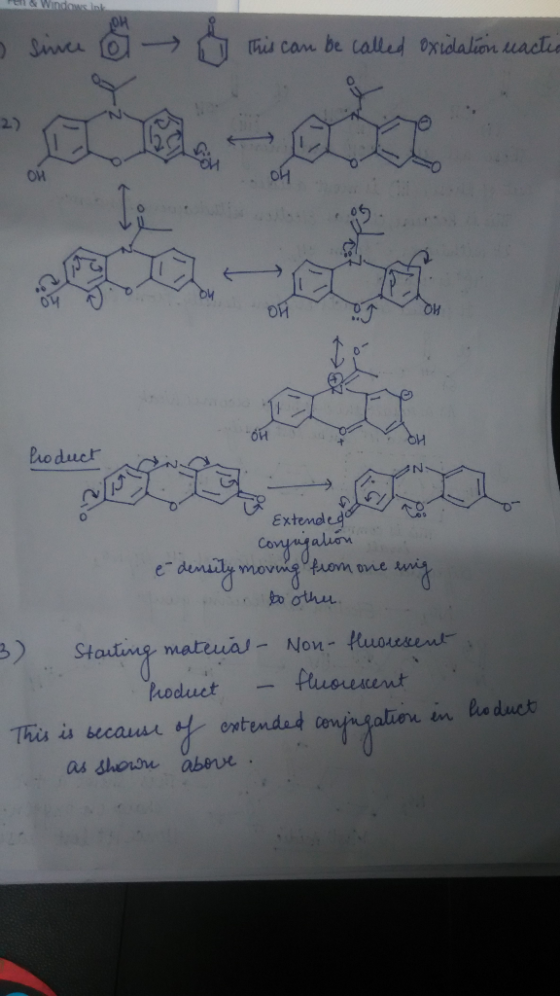
Hope it helped
Thanks!
Add Answer to:
1. What types of organic reactions are involved in the 2. Show the resonance structures of the st...
what are the common types of resonance structures in organic chemistry. please provide an illustration for...
what are the common types of resonance structures in organic chemistry. please provide an illustration for these types
1) Draw two resonance structures for nitrobenzene depicting the deactivation of the benzene ring. Include any...
 1) Draw two resonance structures for nitrobenzene depicting the deactivation of the benzene ring. Include any formal charges in your drawing. 2) In step 17, methanol dissolved the starting material but not the product. Explain why the presence of a nitro group makes a compound less soluble in organic solvents.
1) Draw structures for compounds named below. A) (2)-1-bromo-2-chloro-1-heptene B) 4-chloro-4-fluoro-2-octyne 2) Gi...
 1) Draw structures for compounds named below. A) (2)-1-bromo-2-chloro-1-heptene B) 4-chloro-4-fluoro-2-octyne 2) Give IUPAC name for the following structure. 3) For each reaction below, indicate which starting material is the Nucleophile and which is the Electrophile. Show arrows to demonstrate how the transformation occurs. →^_^tts a Porto ~ onde gi 4) Draw a mechanism for the conversion of the shown starting material to the corresponding product. 5) In the transformation below, a starting material is treated with HCl to form...
Write the structures of the organic products formed in the following oxidation reactions: d) (4 pts)...
 Write the structures of the organic products formed in the
following oxidation reactions:
d) (4 pts) Write the structures of the organic products formed in the following oxidation reactions: KMnO4 HO, pH <7 PCC Хон Рcc . H2Cr04 OH PCC
Write the structures of the organic products formed in the
following oxidation reactions:
d) (4 pts) Write the structures of the organic products formed in the following oxidation reactions: KMnO4 HO, pH <7 PCC Хон Рcc . H2Cr04 OH PCC
1. a. Draw the structures of A and B (resonance structures), and C (tetrahedral intermediate). Us...
 Please help!!
1. a. Draw the structures of A and B (resonance structures), and C (tetrahedral intermediate). Use curved arrows to show how each structure is formed b. Draw the structure of the Nu: you would use to make CompoundD O (tetrahedral intermediate) он c. (i) Explain why H does not react with a pi bond in the ring in Compound Z. (ii) Which resonance structure, A or B, shows why reacting H with the ketone makes the more reactive?...
Please help!!
1. a. Draw the structures of A and B (resonance structures), and C (tetrahedral intermediate). Use curved arrows to show how each structure is formed b. Draw the structure of the Nu: you would use to make CompoundD O (tetrahedral intermediate) он c. (i) Explain why H does not react with a pi bond in the ring in Compound Z. (ii) Which resonance structure, A or B, shows why reacting H with the ketone makes the more reactive?...
For each of the following reactions supply the missing starting material(s) or final organic product(s) in...
 For each of the following reactions supply the missing starting
material(s) or final organic product(s) in the bobxes provided.
HO Ph 1) LiAlH4 2) H20 Me Me Mel Br2 H30 1) PBr3, Br2 2) H20 OH excess NaOH 1) excess Br2 2) H30 Reaction Name:
For each of the following reactions supply the missing starting
material(s) or final organic product(s) in the bobxes provided.
HO Ph 1) LiAlH4 2) H20 Me Me Mel Br2 H30 1) PBr3, Br2 2) H20 OH excess NaOH 1) excess Br2 2) H30 Reaction Name:
4. There are four general types of organic reactions (addition, elimination, substitution, rearrangement). Identify the types...
 4. There are four general types of organic reactions (addition, elimination, substitution, rearrangement). Identify the types of reactions found in the examples below. (4 marks) Heat OH MeONa + H20 MeOH КОН + KBT HO 1) CH3MgBr 2) H30
II. Reactions: Predict the major organic product(s) or write the appropriate reagents/starting materials for the following...
 II. Reactions: Predict the major organic product(s) or write the appropriate reagents/starting materials for the following reactions. Indicate stereochemistry and regiochemistry when appropriate. Indicate reactions that are expected to result in a racemic mixture of products DBr 1. Н.О, CHCI он HSO, heat кон 1) вн, THF 3. 2) H202. HO 1) Hg(OAc)2, CH,OH 2) NaBH, OH 5. Br2 SH 6. HIO4 OH THF, H2O "он III. Synthesis: Starting from the alkenyl bromide below, devise a synthesis that produces the...
1. Write structures for the lettered organic product(s) in the following reactions: (4 pts each) H,...
 1. Write structures for the lettered organic product(s) in the following reactions: (4 pts each) H, CH2OH A 1) CHCI B 2) OH OH O== + с D + E Conc. KMnO4 OH/H,0 OH PBrz F CH2CH MgBr CH3MgBr H H30 1) 03 2) Zn, H20 2Eq. HBT H3C-CEC-H NaH H3C-C=C-H K
1) Provide a detailed electron pushing mechanism for the below transformation. Show ALL relevant resonance structures...
 1) Provide a detailed electron pushing mechanism for the below transformation. Show ALL relevant resonance structures to help explain why the para product is the major organic product. (Note: your electron pushing mechanism should include formation of the electrophile) (4 points) Cl AICl3
 1) Draw two resonance structures for nitrobenzene depicting the deactivation of the benzene ring. Include any formal charges in your drawing. 2) In step 17, methanol dissolved the starting material but not the product. Explain why the presence of a nitro group makes a compound less soluble in organic solvents.
 1) Draw structures for compounds named below. A) (2)-1-bromo-2-chloro-1-heptene B) 4-chloro-4-fluoro-2-octyne 2) Give IUPAC name for the following structure. 3) For each reaction below, indicate which starting material is the Nucleophile and which is the Electrophile. Show arrows to demonstrate how the transformation occurs. →^_^tts a Porto ~ onde gi 4) Draw a mechanism for the conversion of the shown starting material to the corresponding product. 5) In the transformation below, a starting material is treated with HCl to form...
 Write the structures of the organic products formed in the
following oxidation reactions:
d) (4 pts) Write the structures of the organic products formed in the following oxidation reactions: KMnO4 HO, pH <7 PCC Хон Рcc . H2Cr04 OH PCC
Write the structures of the organic products formed in the
following oxidation reactions:
d) (4 pts) Write the structures of the organic products formed in the following oxidation reactions: KMnO4 HO, pH <7 PCC Хон Рcc . H2Cr04 OH PCC
 Please help!!
1. a. Draw the structures of A and B (resonance structures), and C (tetrahedral intermediate). Use curved arrows to show how each structure is formed b. Draw the structure of the Nu: you would use to make CompoundD O (tetrahedral intermediate) он c. (i) Explain why H does not react with a pi bond in the ring in Compound Z. (ii) Which resonance structure, A or B, shows why reacting H with the ketone makes the more reactive?...
Please help!!
1. a. Draw the structures of A and B (resonance structures), and C (tetrahedral intermediate). Use curved arrows to show how each structure is formed b. Draw the structure of the Nu: you would use to make CompoundD O (tetrahedral intermediate) он c. (i) Explain why H does not react with a pi bond in the ring in Compound Z. (ii) Which resonance structure, A or B, shows why reacting H with the ketone makes the more reactive?...
 For each of the following reactions supply the missing starting
material(s) or final organic product(s) in the bobxes provided.
HO Ph 1) LiAlH4 2) H20 Me Me Mel Br2 H30 1) PBr3, Br2 2) H20 OH excess NaOH 1) excess Br2 2) H30 Reaction Name:
For each of the following reactions supply the missing starting
material(s) or final organic product(s) in the bobxes provided.
HO Ph 1) LiAlH4 2) H20 Me Me Mel Br2 H30 1) PBr3, Br2 2) H20 OH excess NaOH 1) excess Br2 2) H30 Reaction Name:
 4. There are four general types of organic reactions (addition, elimination, substitution, rearrangement). Identify the types of reactions found in the examples below. (4 marks) Heat OH MeONa + H20 MeOH КОН + KBT HO 1) CH3MgBr 2) H30
 II. Reactions: Predict the major organic product(s) or write the appropriate reagents/starting materials for the following reactions. Indicate stereochemistry and regiochemistry when appropriate. Indicate reactions that are expected to result in a racemic mixture of products DBr 1. Н.О, CHCI он HSO, heat кон 1) вн, THF 3. 2) H202. HO 1) Hg(OAc)2, CH,OH 2) NaBH, OH 5. Br2 SH 6. HIO4 OH THF, H2O "он III. Synthesis: Starting from the alkenyl bromide below, devise a synthesis that produces the...
 1. Write structures for the lettered organic product(s) in the following reactions: (4 pts each) H, CH2OH A 1) CHCI B 2) OH OH O== + с D + E Conc. KMnO4 OH/H,0 OH PBrz F CH2CH MgBr CH3MgBr H H30 1) 03 2) Zn, H20 2Eq. HBT H3C-CEC-H NaH H3C-C=C-H K
 1) Provide a detailed electron pushing mechanism for the below transformation. Show ALL relevant resonance structures to help explain why the para product is the major organic product. (Note: your electron pushing mechanism should include formation of the electrophile) (4 points) Cl AICl3
Most questions answered within 3 hours.
-
Where is the error in this code sequence?
String s1 = "Hello";
String s2 = "ello";...
asked 11 months ago -
Financial data for Joel de Paris, Inc., for last year
follow:
Joel de Paris, Inc.
Balance...
asked 11 months ago -
Consider this reaction:
Al2(SO4)3 (aq)+ BaCl3
(aq) Al2Cl6 (aq)- +
3BaSO4(s) . What is the...
asked 11 months ago -
Suppose that Savneet is considering increasing her
recent random sample from 20 car rentals to 40...
asked 11 months ago -
Trucks arrive at an unloading terminal at an average rate of 120
per hour.
Trucks arrive...
asked 11 months ago -
Why are methanol and ethanol completely soluble in water while
octanol is not very little soluble....
asked 11 months ago -
A facilities manager at a university reads in a research report
that the mean amount of...
asked 11 months ago -
When the CuSO4 is rehydrated by adding water to the anhydrous
compound, is this an endothermic...
asked 11 months ago -
A ray of sunlight is passing from diamond into crown glass; the
angle of incidence is...
asked 11 months ago -
A block of mass 0.249 kg is placed on top of a light, vertical
spring of...
asked 11 months ago -
how do the kidneys compensate in the presences of acidosis
a) trigger hyperventilate
b) reserve acid...
asked 11 months ago -
Question 501 pts
The rental rate of capital to the firm increases. Which of the
following...
asked 11 months ago