
Homework Answers
a. The IS curve is given by the following equation:

Differentiating completely, we get

where, 

b.
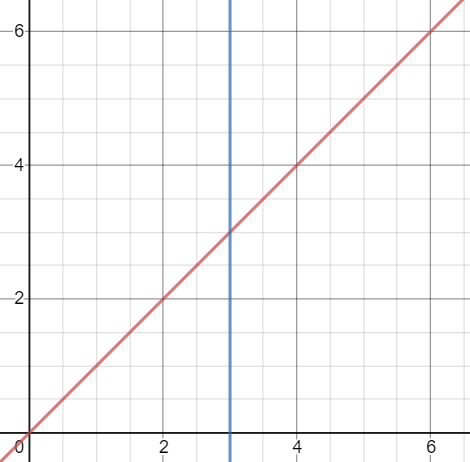
The red line is the LM curve. When both marginal propensity to consume and interest sensitivity of investment spending are very low (close to zero), the IS curve is vertical and expansionary monetary policy is ineffective in increasing output level.
 .
.
When the marginal propensity to consume and interest sensitivity of investment spending both are very high, the IS curve is a horizontal line parallel to the x axis and an increase in money supply (monetary expansion) is very effective in increasing output level.
Add Answer to:
a) Explain how, i) the interest sensitivity of private spending and ii) marginal propensity to consume, determine the s...
7. Consider a closed economy where the marginal propensity to consume is 0.85. Technological progress increases...
 7. Consider a closed economy where the marginal propensity to consume is 0.85. Technological progress increases GDP by 20 billion pesos. Expansionary fiscal policy results in a $10 billion decrease in tax revenue and a $12 billion increase in the government budget deficit. (a) Calculate the (dollar) change in government spending. (b) Calculate the approximate (dollar) changes in private, public, and na- tional saving (c) Will the equilibrium real interest rate increase, decrease, or stay the same? Use a supply-demand...
5) A) What is the government spending multiplier? Give a numerical example when the marginal propensity...
5) A) What is the government spending multiplier? Give a numerical example when the marginal propensity to consume is 0.8. B) What are the reasons given in your text for why unemployment is higher in the Europe than the US? 10) A) What variables are you assuming are constant in the above IS curve? B) Relate PI/PC to the slope of the PPC curve and explain how an decrease in it will affect the supply of investment goods using the...
For a real Keynesian model of a mixed economy with a marginal propensity to consume equal...
For a real Keynesian model of a mixed economy with a marginal propensity to consume equal to .8 and autonomous consumption equals 600 billion, planned investment equals 100 billion, government spending equals 300 billion, and taxes equal 300 billion: a. Calculate the equilibrium level of Ye or real output. b. Draw a diagram that illustrates the equilibrium condition for the model, the equilibrium level of output, and the level of autonomous spending. Be sure to carefully label your diagram, including...
(i) Explain the difference between the nominal and real interest rate. (ii) How does the Reserve...
(i) Explain the difference between the nominal and real interest rate. (ii) How does the Reserve Bank of Australia control the interest rate? (iii) You hear a news report that output growth and inflation are lower than expected. How do you expect that report to affect market interest rates? Explain why. (iv) The Reserve Bank faces a large recessionary gap. How would you expect it to respond? Explain step by step how its policy change is likely to affect the...
Explain how fiscal policy (government spending and taxes) and monetary policy (determining interest rates) affect the...
Explain how fiscal policy (government spending and taxes) and monetary policy (determining interest rates) affect the level of output and employment in the economy according to Keynesian theory. What fiscal and monetary policies should the government follow to pull the economy out of a recession?
Currently, a government's budget is balanced. The marginal propensity to consume is 0.80. The government has...
Currently, a government's budget is balanced. The marginal propensity to consume is 0.80. The government has determined that each additional $10 Billion in new government debt it issues to finance a budget deficit pushes up the market interest rate by 0.1 percentage point. It has also determined that every 0.1 percentage point change in the market interest rate generates a change in investment expenditures equal to $2 Billion. Finally, the government knows that to close a recessionary gap and take...
1,2,3,4,5,6,7,8,9,10 1.Explain the effect of a discretionary cut in taxes of $40 billion on the economy when the economy’s marginal propensity to consume is .75. How does this discretionary fiscal po...
1,2,3,4,5,6,7,8,9,10 1.Explain the effect of a discretionary cut in taxes of $40 billion on the economy when the economy’s marginal propensity to consume is .75. How does this discretionary fiscal policy differ from a discretionary increase in government spending of $40 billion? 2.Explain what is meant by a built-in stabilizer and give two examples. 3.Differentiate between discretionary fiscal policy and nondiscretionary or built-in stabilization policy. 4.What does the “standardized budget” measure and of what significance is this concept? 6.What are...
21. If the marginal propensity to consume is 4/5, then the multiplier is: a. 5 b....
21. If the marginal propensity to consume is 4/5, then the multiplier is: a. 5 b. 1 c. 1/5 d. 5/4 22. Crowding out negatively affects the economy by: a. decreasing government borrowing b. decreasing consumption c. increasing private borrowing d. reducing investment spending on physical capital 23. The “classical” position is when the economy is in a recessionary gap, prices and wages will: a. never fall b. take such a long time to adjust that the economy cannot be...
Assume unemployment is high and is a major problem in the United States. In an effort...
Assume unemployment is high and is a major problem in the United States. In an effort to get unemployment back to its natural rate, the Federal Reserve enacts an expansionary monetary policy by purchasing $10 million in U.S. Treasury bonds. If the reserve ratio is 10 percent, what is the maximum increase in money supply that may occur as a result of the Fed’s open market operation? Give one reason why money supply may not increase by the amount given...
1. Assume unemployment is high and is a major problem in the United States. (a) In...
 1. Assume unemployment is high and is a major problem in the United States. (a) In an effort to get unemployment back to its natural rate, the Federal Reserve enacts an expansionary monetary policy by purchasing $10 million in U.S. Treasury bonds. i. If the reserve ratio is 10 percent, what is the maximum increase in money supply that may occur as a result of the Fed's open market operation? Answer: ii. Give one reason why money supply may not...
 7. Consider a closed economy where the marginal propensity to consume is 0.85. Technological progress increases GDP by 20 billion pesos. Expansionary fiscal policy results in a $10 billion decrease in tax revenue and a $12 billion increase in the government budget deficit. (a) Calculate the (dollar) change in government spending. (b) Calculate the approximate (dollar) changes in private, public, and na- tional saving (c) Will the equilibrium real interest rate increase, decrease, or stay the same? Use a supply-demand...
 1. Assume unemployment is high and is a major problem in the United States. (a) In an effort to get unemployment back to its natural rate, the Federal Reserve enacts an expansionary monetary policy by purchasing $10 million in U.S. Treasury bonds. i. If the reserve ratio is 10 percent, what is the maximum increase in money supply that may occur as a result of the Fed's open market operation? Answer: ii. Give one reason why money supply may not...
Most questions answered within 3 hours.
-
Where is the error in this code sequence?
String s1 = "Hello";
String s2 = "ello";...
asked 10 months ago -
Financial data for Joel de Paris, Inc., for last year
follow:
Joel de Paris, Inc.
Balance...
asked 10 months ago -
Consider this reaction:
Al2(SO4)3 (aq)+ BaCl3
(aq) Al2Cl6 (aq)- +
3BaSO4(s) . What is the...
asked 10 months ago -
Suppose that Savneet is considering increasing her
recent random sample from 20 car rentals to 40...
asked 10 months ago -
Trucks arrive at an unloading terminal at an average rate of 120
per hour.
Trucks arrive...
asked 10 months ago -
Why are methanol and ethanol completely soluble in water while
octanol is not very little soluble....
asked 10 months ago -
A facilities manager at a university reads in a research report
that the mean amount of...
asked 10 months ago -
When the CuSO4 is rehydrated by adding water to the anhydrous
compound, is this an endothermic...
asked 10 months ago -
A ray of sunlight is passing from diamond into crown glass; the
angle of incidence is...
asked 10 months ago -
A block of mass 0.249 kg is placed on top of a light, vertical
spring of...
asked 10 months ago -
how do the kidneys compensate in the presences of acidosis
a) trigger hyperventilate
b) reserve acid...
asked 10 months ago -
Question 501 pts
The rental rate of capital to the firm increases. Which of the
following...
asked 10 months ago