Part III – Designing an epidemiologic study to test the hypothesis To identify the source of the outbreak, the investiga...
Part III – Designing an epidemiologic study to test the hypothesis
To identify the source of the outbreak, the investigators chose to undertake a retrospective cohort study among bus drivers who drove the morning shift of the bus route. Data were collected from January 15- 19.
Investigators defined a confirmed case of botulism as a bus driver from the morning shift of the bus route with a serum or stool sample that demonstrated botulinum toxin or yielded Clostridium botulinumwith onset of symptoms between January 5 and 15. A probable case was defined as acute cranial nerve dysfunction (e.g., blurred vision, double vision, drooping eyelids, problems swallowing) with no laboratory confirmation in this group of drivers during the same period. The comparison group consisted of all bus drivers from the morning shift of the implicated bus route who had no acute neurologic symptoms suggestive of botulism.
After consultation with the local health department where the terminal stop of the bus route was located and the bus company management, investigators developed a structured questionnaire for the epidemiologic study.
Question: What general types of information would you include in the questionnaire?
Investigators conducted interviews with each of the drivers of the morning shift of the bus route to complete the questionnaires.
Homework Answers
Research Questions:
1. Do you have any problems in visual acuity?
2. Are you suffered with any binocular vision problems?
3. have experienced any color blindness?
4. Whether you are suffering with night blindness?
5. Do you any problems with increased ICP?
6. Do you have chronic illnesses like diabetes and hypertension?
7. Are you experiencing double vision while driving?
8. Have you experienced tunnel vision?
9. Is there any glare while driving?
10. Can you explain the difficulties of your driving?
Add Answer to:
Part III – Designing an epidemiologic study to test the hypothesis To identify the source of the outbreak, the investiga...
Part II – Descriptive epidemiology and hypothesis generation Staff members from the local health department where the te...
 Part II – Descriptive
epidemiology and hypothesis generation
Staff members from the local health department where the
terminal stop of the bus route was located were invited to
participate in the investigation.
In addition, physicians attending to the cases of botulism were
asked to provide demographic and clinical information on their
patients. (Table 1)
In addition to identifying the most likely time period of
exposure, the hypothesis-generating interviews with cases and other
bus drivers, identified eating at the terminal home...
Part II – Descriptive
epidemiology and hypothesis generation
Staff members from the local health department where the
terminal stop of the bus route was located were invited to
participate in the investigation.
In addition, physicians attending to the cases of botulism were
asked to provide demographic and clinical information on their
patients. (Table 1)
In addition to identifying the most likely time period of
exposure, the hypothesis-generating interviews with cases and other
bus drivers, identified eating at the terminal home...
Part II – Descriptive epidemiology and hypothesis generation Staff members from the local health department where the te...
 Part II – Descriptive
epidemiology and hypothesis generation
Staff members from the local health department where the
terminal stop of the bus route was located were invited to
participate in the investigation.
In addition, physicians attending to the cases of botulism were
asked to provide demographic and clinical information on their
patients. (Table 1)
Question: Given the available data, what would you
hypothesize was the most likely period of exposure among these
cases?
Table 1: Characteristics of cases of botulism,...
Part II – Descriptive
epidemiology and hypothesis generation
Staff members from the local health department where the
terminal stop of the bus route was located were invited to
participate in the investigation.
In addition, physicians attending to the cases of botulism were
asked to provide demographic and clinical information on their
patients. (Table 1)
Question: Given the available data, what would you
hypothesize was the most likely period of exposure among these
cases?
Table 1: Characteristics of cases of botulism,...
Part II – Descriptive epidemiology and hypothesis generation Staff members from the local health department where the te...
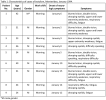 Part II – Descriptive
epidemiology and hypothesis generation
Staff members from the local health department where the
terminal stop of the bus route was located were invited to
participate in the investigation.
In addition, physicians attending to the cases of botulism were
asked to provide demographic and clinical information on their
patients. (Table 1)
Question: Using the data presented in Table 1, first,
briefly summarize the demographic and clinical information on these
patients and second, draw an epidemic curve.
Table...
Part II – Descriptive
epidemiology and hypothesis generation
Staff members from the local health department where the
terminal stop of the bus route was located were invited to
participate in the investigation.
In addition, physicians attending to the cases of botulism were
asked to provide demographic and clinical information on their
patients. (Table 1)
Question: Using the data presented in Table 1, first,
briefly summarize the demographic and clinical information on these
patients and second, draw an epidemic curve.
Table...
Foodborne botulism is a severe illness that results from the ingestion of a preformed toxin produced by a bacterium, Clo...
Foodborne botulism is a severe illness that results from the ingestion of a preformed toxin produced by a bacterium, Clostridium botulinum, in contaminated food. Death can occur in up to 60% of untreated cases; supportive care and prompt administration of antitoxin have reduced mortality in the United States to less than 10%. Outbreaks of botulism have been linked to improperly preserved vegetables, fruits, and meats including fermented fish products, sausages, smoked meat, and seafood. On January 12, 1994, an infectious...
The 2 patients, still in the hospital, were interviewed by a MoH epidemiologist. The interviews revealed...
The 2 patients, still in the hospital, were interviewed by a MoH epidemiologist. The interviews revealed that both patients were drivers for the same bus company and drove the same route and shift. The patients knew each other but worked on different days of the week. The MoH contacted all employees of the bus company the patients worked for to identify others with similar symptoms suggestive of botulism. Hospitals in the area of Montevideo, where the cases occurred, were asked...
 Part II – Descriptive
epidemiology and hypothesis generation
Staff members from the local health department where the
terminal stop of the bus route was located were invited to
participate in the investigation.
In addition, physicians attending to the cases of botulism were
asked to provide demographic and clinical information on their
patients. (Table 1)
In addition to identifying the most likely time period of
exposure, the hypothesis-generating interviews with cases and other
bus drivers, identified eating at the terminal home...
Part II – Descriptive
epidemiology and hypothesis generation
Staff members from the local health department where the
terminal stop of the bus route was located were invited to
participate in the investigation.
In addition, physicians attending to the cases of botulism were
asked to provide demographic and clinical information on their
patients. (Table 1)
In addition to identifying the most likely time period of
exposure, the hypothesis-generating interviews with cases and other
bus drivers, identified eating at the terminal home...
 Part II – Descriptive
epidemiology and hypothesis generation
Staff members from the local health department where the
terminal stop of the bus route was located were invited to
participate in the investigation.
In addition, physicians attending to the cases of botulism were
asked to provide demographic and clinical information on their
patients. (Table 1)
Question: Given the available data, what would you
hypothesize was the most likely period of exposure among these
cases?
Table 1: Characteristics of cases of botulism,...
Part II – Descriptive
epidemiology and hypothesis generation
Staff members from the local health department where the
terminal stop of the bus route was located were invited to
participate in the investigation.
In addition, physicians attending to the cases of botulism were
asked to provide demographic and clinical information on their
patients. (Table 1)
Question: Given the available data, what would you
hypothesize was the most likely period of exposure among these
cases?
Table 1: Characteristics of cases of botulism,...
 Part II – Descriptive
epidemiology and hypothesis generation
Staff members from the local health department where the
terminal stop of the bus route was located were invited to
participate in the investigation.
In addition, physicians attending to the cases of botulism were
asked to provide demographic and clinical information on their
patients. (Table 1)
Question: Using the data presented in Table 1, first,
briefly summarize the demographic and clinical information on these
patients and second, draw an epidemic curve.
Table...
Part II – Descriptive
epidemiology and hypothesis generation
Staff members from the local health department where the
terminal stop of the bus route was located were invited to
participate in the investigation.
In addition, physicians attending to the cases of botulism were
asked to provide demographic and clinical information on their
patients. (Table 1)
Question: Using the data presented in Table 1, first,
briefly summarize the demographic and clinical information on these
patients and second, draw an epidemic curve.
Table...
Most questions answered within 3 hours.
-
Where is the error in this code sequence?
String s1 = "Hello";
String s2 = "ello";...
asked 11 months ago -
Financial data for Joel de Paris, Inc., for last year
follow:
Joel de Paris, Inc.
Balance...
asked 11 months ago -
Consider this reaction:
Al2(SO4)3 (aq)+ BaCl3
(aq) Al2Cl6 (aq)- +
3BaSO4(s) . What is the...
asked 11 months ago -
Suppose that Savneet is considering increasing her
recent random sample from 20 car rentals to 40...
asked 11 months ago -
Trucks arrive at an unloading terminal at an average rate of 120
per hour.
Trucks arrive...
asked 11 months ago -
Why are methanol and ethanol completely soluble in water while
octanol is not very little soluble....
asked 11 months ago -
A facilities manager at a university reads in a research report
that the mean amount of...
asked 11 months ago -
When the CuSO4 is rehydrated by adding water to the anhydrous
compound, is this an endothermic...
asked 11 months ago -
A ray of sunlight is passing from diamond into crown glass; the
angle of incidence is...
asked 11 months ago -
A block of mass 0.249 kg is placed on top of a light, vertical
spring of...
asked 11 months ago -
how do the kidneys compensate in the presences of acidosis
a) trigger hyperventilate
b) reserve acid...
asked 11 months ago -
Question 501 pts
The rental rate of capital to the firm increases. Which of the
following...
asked 11 months ago