
Homework Answers
Add Answer to:
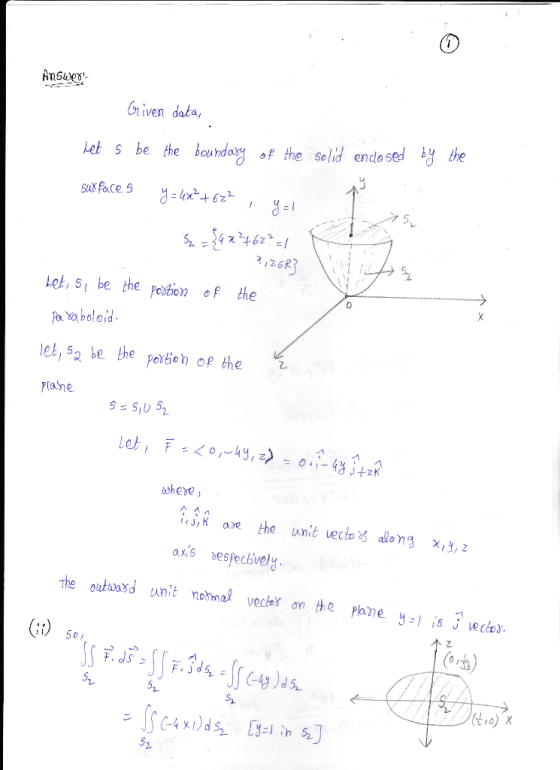
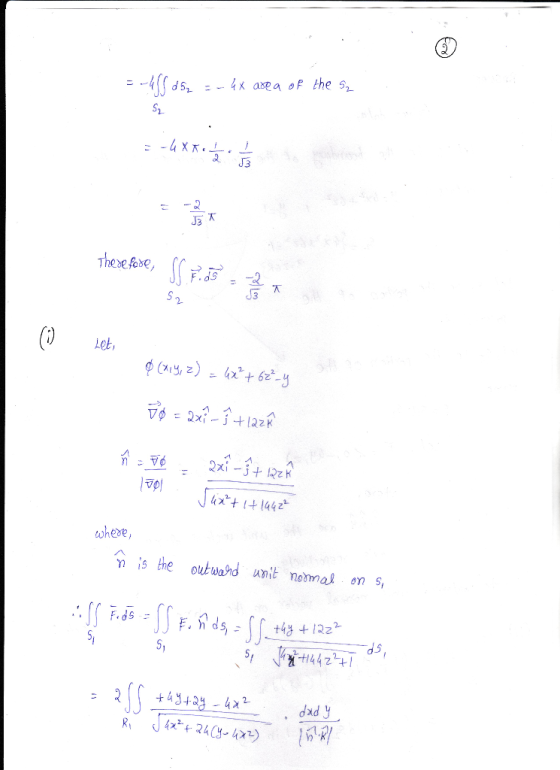
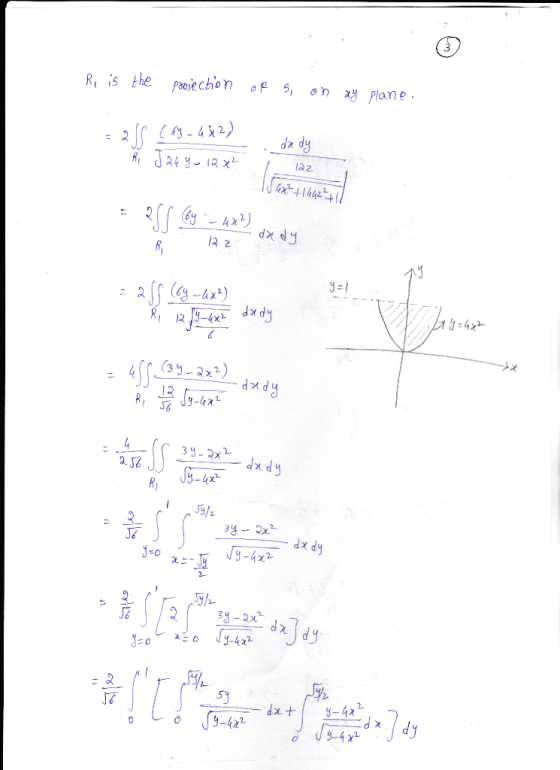
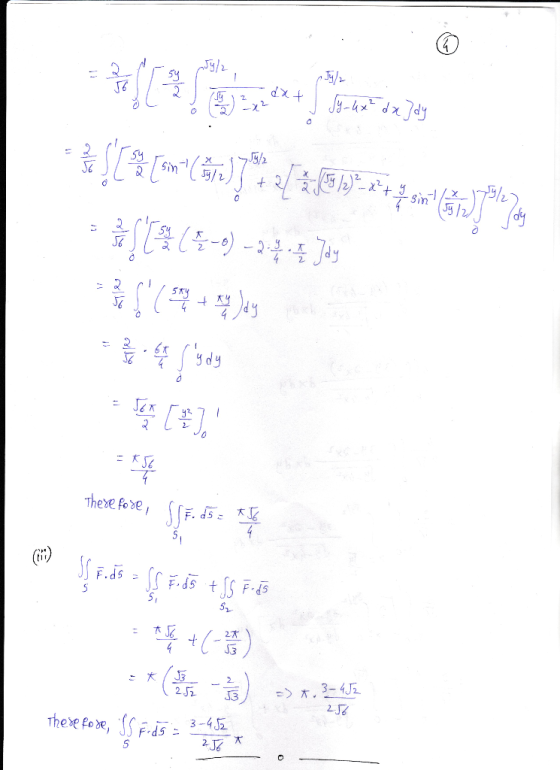
1 point Let S be the boundary of the solid enclosed by the sufaces y4z2 622 and y 1 with positive orientation. Let Si b...
Evaluate the surface integralF F ds for the given vector field F and the oriented surface S. In other words, find the flux of F across S. For closed surfaces, use the positive (outward) orientation....
 Evaluate the surface integralF F ds for the given vector field F and the oriented surface S. In other words, find the flux of F across S. For closed surfaces, use the positive (outward) orientation. S is the boundary of the region enclosed by the cylinder x2 + z2-1 and the planes y O and x y 3
Evaluate the surface integralF F ds for the given vector field F and the oriented surface S. In other words, find the...
Evaluate the surface integralF F ds for the given vector field F and the oriented surface S. In other words, find the flux of F across S. For closed surfaces, use the positive (outward) orientation. S is the boundary of the region enclosed by the cylinder x2 + z2-1 and the planes y O and x y 3
Evaluate the surface integralF F ds for the given vector field F and the oriented surface S. In other words, find the...
Evaluate the surface integral F dS for the given vector field F and the oriented surface S. In other words, find the flux of F across S. For closed surfaces, use the positive (outward) orientation. F...
 Evaluate the surface integral F dS for the given vector field F and the oriented surface S. In other words, find the flux of F across S. For closed surfaces, use the positive (outward) orientation. F(x, y, z) -xi yj+3 k S is the boundary of the region enclosed by the cylinder x2 + z2-1 and the planes y 0 and x y 2
Evaluate the surface integral F dS for the given vector field F and the oriented surface...
Evaluate the surface integral F dS for the given vector field F and the oriented surface S. In other words, find the flux of F across S. For closed surfaces, use the positive (outward) orientation. F(x, y, z) -xi yj+3 k S is the boundary of the region enclosed by the cylinder x2 + z2-1 and the planes y 0 and x y 2
Evaluate the surface integral F dS for the given vector field F and the oriented surface...
Evaluate the surface integral F·dS for the given vector field F and the oriented surface S. In other words, find the flux of F across S. For closed surfaces, use the positive (outward) orientation. F...
 Evaluate the surface integral F·dS for the given vector field F and the oriented surface S. In other words, find the flux of F across S. For closed surfaces, use the positive (outward) orientation. F(x, v, z)-xiyj+8 k S is the boundary of the region enclosed by the cylinderx2+2-1 and the planes y-o and xy6
Evaluate the surface integral F·dS for the given vector field F and the oriented surface S. In other words, find the flux of F across...
Evaluate the surface integral F·dS for the given vector field F and the oriented surface S. In other words, find the flux of F across S. For closed surfaces, use the positive (outward) orientation. F(x, v, z)-xiyj+8 k S is the boundary of the region enclosed by the cylinderx2+2-1 and the planes y-o and xy6
Evaluate the surface integral F·dS for the given vector field F and the oriented surface S. In other words, find the flux of F across...
(1 point) Suppose F(x, y, z) = (x, y, 4z). Let W be the solid bounded...
 (1 point) Suppose F(x, y, z) = (x, y, 4z). Let W be the solid bounded by the paraboloid z = x2 + y2 and the plane z = 4. Let S be the closed boundary of W oriented outward. (a) Use the divergence theorem to find the flux of F through S. ſ FdA = 48pi S (b) Find the flux of F out the bottom of S (the truncated paraboloid) and the top of S (the disk). Flux...
Evaluate the surface integral F dS for the given vector field F and the oriented surface S. In other words, find the flux of F across S. For dlosed surfaces, use the positive (outward) orientatio...
 Evaluate the surface integral F dS for the given vector field F and the oriented surface S. In other words, find the flux of F across S. For dlosed surfaces, use the positive (outward) orientation F(x, y, 2) _ yj-zk, sconsists ofthe paraboloid γ_x2 +22, O sys1, and the disk x2 +22 s 1.7-1. Need Help? to Tter
Evaluate the surface integral F dS for the given vector field F and the oriented surface S. In other words, find the...
Evaluate the surface integral F dS for the given vector field F and the oriented surface S. In other words, find the flux of F across S. For dlosed surfaces, use the positive (outward) orientation F(x, y, 2) _ yj-zk, sconsists ofthe paraboloid γ_x2 +22, O sys1, and the disk x2 +22 s 1.7-1. Need Help? to Tter
Evaluate the surface integral F dS for the given vector field F and the oriented surface S. In other words, find the...
(a3, y3,4z3). Let Si be the disk in the 12. Consider the vector field in space...
 (a3, y3,4z3). Let Si be the disk in the 12. Consider the vector field in space given by F(x, y, z) xy-plan described by x2 + y2 < 4, z = 0; and let S2 be the upper half of the paraboloid given by z 4 y2, z 2 0. Both Si and S2 are oriented upwards. Let E be the solid region enclosed by S1 and S2 (a) Evaluate the flux integral FdS (b) Calculate div F div F...
F·dS for the given vector field F and the oriented surface S. In other words, find the flux of F across S. For closed surfaces, use the positive (outward) Evaluate the surface integral orientation. F...
 F·dS for the given vector field F and the oriented surface S. In other words, find the flux of F across S. For closed surfaces, use the positive (outward) Evaluate the surface integral orientation. F(x, y, z) -x2i +y^j+z2 k S is the boundary of the solid half-cylinder 0szs V 25 -y2, 0 sxs2 Need HelpRead It Watch Talk to a Tutor
F·dS for the given vector field F and the oriented surface S. In other words, find the flux...
F·dS for the given vector field F and the oriented surface S. In other words, find the flux of F across S. For closed surfaces, use the positive (outward) Evaluate the surface integral orientation. F(x, y, z) -x2i +y^j+z2 k S is the boundary of the solid half-cylinder 0szs V 25 -y2, 0 sxs2 Need HelpRead It Watch Talk to a Tutor
F·dS for the given vector field F and the oriented surface S. In other words, find the flux...
Il Evaluate the surface integral F.ds for the given vector field F and the oriented surface...
 Il Evaluate the surface integral F.ds for the given vector field F and the oriented surface S. In other words, find the flux of F across S. For closed surfaces, use the positive (outward) orientation. F(x, y, z) = y) - zk, S consists of the paraboloid y = x2 + 22,0 Sys1, and the disk x2 + z2 s 1, y = 1. Evaluate the surface integral F.ds for the given vector field F and the oriented surface S....
13. Evaluate the F across S. For closed surfaces, use the positive (outward) orlentacion. S is the cube with vertices (,1) Sbrit Anser Save Progress Practice Another Vension My Nodes Aak Your Eva...
 13. Evaluate the F across S. For closed surfaces, use the positive (outward) orlentacion. S is the cube with vertices (,1) Sbrit Anser Save Progress Practice Another Vension My Nodes Aak Your Evaluate the surface integral F S for the given vector field F and the oriented surface S. In other words, find the flux of F across S. For closed surfaces, use the postive (outward) orientation Sisthe boundary of the region enclosed by the cylinder x2 +d-1 and the...
Suppose F(z, y, z) = (z, y, 5z). Let W be the solid bounded by the paraboloid z = x2 + y2 and the plane z = 16.
Suppose F(z, y, z) = (z, y, 5z). Let W be the solid bounded by the paraboloid z = x2 + y2 and the plane z = 16. Let S be the closed boundary of W oriented outward. (a) Use the divergence theorem to find the mux of F through S. (b) Find the flux of F out the bottom of S (the truncated paraboloid) and the top of S (the disk).
 Evaluate the surface integralF F ds for the given vector field F and the oriented surface S. In other words, find the flux of F across S. For closed surfaces, use the positive (outward) orientation. S is the boundary of the region enclosed by the cylinder x2 + z2-1 and the planes y O and x y 3
Evaluate the surface integralF F ds for the given vector field F and the oriented surface S. In other words, find the...
Evaluate the surface integralF F ds for the given vector field F and the oriented surface S. In other words, find the flux of F across S. For closed surfaces, use the positive (outward) orientation. S is the boundary of the region enclosed by the cylinder x2 + z2-1 and the planes y O and x y 3
Evaluate the surface integralF F ds for the given vector field F and the oriented surface S. In other words, find the...
 Evaluate the surface integral F dS for the given vector field F and the oriented surface S. In other words, find the flux of F across S. For closed surfaces, use the positive (outward) orientation. F(x, y, z) -xi yj+3 k S is the boundary of the region enclosed by the cylinder x2 + z2-1 and the planes y 0 and x y 2
Evaluate the surface integral F dS for the given vector field F and the oriented surface...
Evaluate the surface integral F dS for the given vector field F and the oriented surface S. In other words, find the flux of F across S. For closed surfaces, use the positive (outward) orientation. F(x, y, z) -xi yj+3 k S is the boundary of the region enclosed by the cylinder x2 + z2-1 and the planes y 0 and x y 2
Evaluate the surface integral F dS for the given vector field F and the oriented surface...
 Evaluate the surface integral F·dS for the given vector field F and the oriented surface S. In other words, find the flux of F across S. For closed surfaces, use the positive (outward) orientation. F(x, v, z)-xiyj+8 k S is the boundary of the region enclosed by the cylinderx2+2-1 and the planes y-o and xy6
Evaluate the surface integral F·dS for the given vector field F and the oriented surface S. In other words, find the flux of F across...
Evaluate the surface integral F·dS for the given vector field F and the oriented surface S. In other words, find the flux of F across S. For closed surfaces, use the positive (outward) orientation. F(x, v, z)-xiyj+8 k S is the boundary of the region enclosed by the cylinderx2+2-1 and the planes y-o and xy6
Evaluate the surface integral F·dS for the given vector field F and the oriented surface S. In other words, find the flux of F across...
 (1 point) Suppose F(x, y, z) = (x, y, 4z). Let W be the solid bounded by the paraboloid z = x2 + y2 and the plane z = 4. Let S be the closed boundary of W oriented outward. (a) Use the divergence theorem to find the flux of F through S. ſ FdA = 48pi S (b) Find the flux of F out the bottom of S (the truncated paraboloid) and the top of S (the disk). Flux...
 Evaluate the surface integral F dS for the given vector field F and the oriented surface S. In other words, find the flux of F across S. For dlosed surfaces, use the positive (outward) orientation F(x, y, 2) _ yj-zk, sconsists ofthe paraboloid γ_x2 +22, O sys1, and the disk x2 +22 s 1.7-1. Need Help? to Tter
Evaluate the surface integral F dS for the given vector field F and the oriented surface S. In other words, find the...
Evaluate the surface integral F dS for the given vector field F and the oriented surface S. In other words, find the flux of F across S. For dlosed surfaces, use the positive (outward) orientation F(x, y, 2) _ yj-zk, sconsists ofthe paraboloid γ_x2 +22, O sys1, and the disk x2 +22 s 1.7-1. Need Help? to Tter
Evaluate the surface integral F dS for the given vector field F and the oriented surface S. In other words, find the...
 (a3, y3,4z3). Let Si be the disk in the 12. Consider the vector field in space given by F(x, y, z) xy-plan described by x2 + y2 < 4, z = 0; and let S2 be the upper half of the paraboloid given by z 4 y2, z 2 0. Both Si and S2 are oriented upwards. Let E be the solid region enclosed by S1 and S2 (a) Evaluate the flux integral FdS (b) Calculate div F div F...
 F·dS for the given vector field F and the oriented surface S. In other words, find the flux of F across S. For closed surfaces, use the positive (outward) Evaluate the surface integral orientation. F(x, y, z) -x2i +y^j+z2 k S is the boundary of the solid half-cylinder 0szs V 25 -y2, 0 sxs2 Need HelpRead It Watch Talk to a Tutor
F·dS for the given vector field F and the oriented surface S. In other words, find the flux...
F·dS for the given vector field F and the oriented surface S. In other words, find the flux of F across S. For closed surfaces, use the positive (outward) Evaluate the surface integral orientation. F(x, y, z) -x2i +y^j+z2 k S is the boundary of the solid half-cylinder 0szs V 25 -y2, 0 sxs2 Need HelpRead It Watch Talk to a Tutor
F·dS for the given vector field F and the oriented surface S. In other words, find the flux...
 Il Evaluate the surface integral F.ds for the given vector field F and the oriented surface S. In other words, find the flux of F across S. For closed surfaces, use the positive (outward) orientation. F(x, y, z) = y) - zk, S consists of the paraboloid y = x2 + 22,0 Sys1, and the disk x2 + z2 s 1, y = 1. Evaluate the surface integral F.ds for the given vector field F and the oriented surface S....
 13. Evaluate the F across S. For closed surfaces, use the positive (outward) orlentacion. S is the cube with vertices (,1) Sbrit Anser Save Progress Practice Another Vension My Nodes Aak Your Evaluate the surface integral F S for the given vector field F and the oriented surface S. In other words, find the flux of F across S. For closed surfaces, use the postive (outward) orientation Sisthe boundary of the region enclosed by the cylinder x2 +d-1 and the...
Most questions answered within 3 hours.
-
Where is the error in this code sequence?
String s1 = "Hello";
String s2 = "ello";...
asked 11 months ago -
Financial data for Joel de Paris, Inc., for last year
follow:
Joel de Paris, Inc.
Balance...
asked 11 months ago -
Consider this reaction:
Al2(SO4)3 (aq)+ BaCl3
(aq) Al2Cl6 (aq)- +
3BaSO4(s) . What is the...
asked 11 months ago -
Suppose that Savneet is considering increasing her
recent random sample from 20 car rentals to 40...
asked 11 months ago -
Trucks arrive at an unloading terminal at an average rate of 120
per hour.
Trucks arrive...
asked 11 months ago -
Why are methanol and ethanol completely soluble in water while
octanol is not very little soluble....
asked 11 months ago -
A facilities manager at a university reads in a research report
that the mean amount of...
asked 11 months ago -
When the CuSO4 is rehydrated by adding water to the anhydrous
compound, is this an endothermic...
asked 11 months ago -
A ray of sunlight is passing from diamond into crown glass; the
angle of incidence is...
asked 11 months ago -
A block of mass 0.249 kg is placed on top of a light, vertical
spring of...
asked 11 months ago -
how do the kidneys compensate in the presences of acidosis
a) trigger hyperventilate
b) reserve acid...
asked 11 months ago -
Question 501 pts
The rental rate of capital to the firm increases. Which of the
following...
asked 11 months ago