
Homework Answers
• One or more substances that react together to form a product is called a chemical reaction. Most chemical reactions take place with the help of reagents.
• Reagents are the substances used to transform one form of a substance to another.
• The reaction undergoes a series of steps like deprotonation of an alkyne, substitution, and hydrogenation reactions to attain a final product.
The reagents play a vital role in all the reactions. Each reagent plays a different role in the chemical reaction.
Deprotonation of alkynes:
An alkyne undergoes deprotonation with the help of the reagent sodium amide . Acetylide ion forms when sodium amide reacts with an alkyne. Acetylide ion acts as a good nucleophile which undergoes a substitution reaction with alkyl halides and forms a new carbon chain.
Substitution:
The nucleophilic substitution reaction  takes place when the nucleophile undergoes reaction with alkyl halides.
Hydroboration of alkenes:
Borane in THF is a reagent which is used for the hydroboration of alkenes to give alkyl borane (organoboron) which is treated with  forms alcohol.
Oxidation of aldehydes:
Aldehydes are oxidized to carboxylic acids using a suitable reagent such as,  .
.


The reaction is given below:


The best reagent and conditions for the given reaction:

Add Answer to:
In each reaction box, place the best reagent and conditions from the list below. If you reduce the alkyne in step 3, y...
in each reaction box place the best reagent and conditions from the list below. alkyne
 In each reaction box, place the best reagent and conditions from the list below. If you reduce the alkyne in step 3, you would need six steps overall to produce the final carboxylic acid.
In each reaction box, place the best reagent and conditions from the list below. If you reduce the alkyne in step 3, you would need six steps overall to produce the final carboxylic acid.
In each reaction box, place the best reagent and conditions from the list below. If you reduce the alkyne in step 3, you would need six steps overall to produce the final carboxylic acid.
In each reaction box, place the best reagent and conditions from the list below. are on...
 In each reaction box, place the best reagent and conditions from the list below. are on the right track in forming the alkyne in ine first three steps and reducing it to the alkene in the fourth step, but H2 with Lindlar's catalyst will reduce the alkyne to the cis (or Z) alkene
In each reaction box, place the best reagent and conditions from the list below. In each...
 In each reaction box, place the best reagent and conditions from the list below. In each reaction box, place the best reagent and conditions from the list below. In each reaction box, place the best reagent and conditions from the list below. Your reagent for the first step is incorrect. This reaction involved a double elimination of HBr to form an alkyne. Which reagent is a strong base capable of carrying out this reaction ?
In each reaction box, place the best reagent and conditions from the list below. alkyne to...
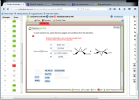 In each reaction box, place the best reagent and conditions from
the list below. alkyne to epoxide
In each reaction box, place the best reagent and conditions from
the list below. alkyne to epoxide
In each reaction box, place the best reagent and conditions from the list below. In each reaction box, place the best...
 In each reaction box, place
the best reagent and conditions from the list below.
In each reaction box, place the best reagent and conditions from the list below. You are correct that the third step is a reduction of 2-pentyne. But H2 with a platinum catalyst will reduce it to pentane, while you need an alkene for the next step. NaNH H3C OH HO 2) CH3CH2Br CEC H3C CH3. H3C H2, Pt HO 4) KMno 4, NaOH, H20, cold BH3...
In each reaction box, place
the best reagent and conditions from the list below.
In each reaction box, place the best reagent and conditions from the list below. You are correct that the third step is a reduction of 2-pentyne. But H2 with a platinum catalyst will reduce it to pentane, while you need an alkene for the next step. NaNH H3C OH HO 2) CH3CH2Br CEC H3C CH3. H3C H2, Pt HO 4) KMno 4, NaOH, H20, cold BH3...
In each reaction box, place the best reagent and conditions from the list below. A reagent...
 In each reaction box, place the best reagent and conditions from the list below. A reagent may be used more than once.) Alkylating with ethyl bromide in steps 2 and 4 will lengthen the alkyne by two carbons at both ends but will not introduce the primary alcohol functional group.
in each reaction box place the best reagent and conditions from the list below. aldehyde
 In each reaction box, place
the best reagent and conditions from the list below.
In each reaction box, place the best reagent and conditions from the list below. Your reagent for the third step is incorrect. In this step an alcohol is converted to an aldehyde.
In each reaction box, place
the best reagent and conditions from the list below.
In each reaction box, place the best reagent and conditions from the list below. Your reagent for the third step is incorrect. In this step an alcohol is converted to an aldehyde.
In each reaction box, place the best reagent and conditions from the list below. In each reaction box, place the best...
 In each reaction box, place the best reagent and conditions from
the list below.
In each reaction box, place the best reagent and conditions from the list below. In each reaction box, place the best reagent and conditions from the list below.
In each reaction box, place the best reagent and conditions from
the list below.
In each reaction box, place the best reagent and conditions from the list below. In each reaction box, place the best reagent and conditions from the list below.
In each reaction box, place the best reagent and conditions from the list below. Start with...
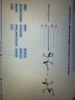 In each reaction box, place the best reagent and conditions
from the list below. Start with an alkyne.
In each reaction box, place the best reagent and conditions
from the list below. Start with an alkyne.
In each reaction box, place the best reagent and conditions from the list below. Hint: An...
 In each reaction box, place the best reagent and conditions from
the list below.
Hint: An alkyne will be an intermediate in this multistep
synthesis.
In each reaction box, place the best reagent and conditions from
the list below.
Hint: An alkyne will be an intermediate in this multistep
synthesis.
 In each reaction box, place the best reagent and conditions from the list below. If you reduce the alkyne in step 3, you would need six steps overall to produce the final carboxylic acid.
In each reaction box, place the best reagent and conditions from the list below. If you reduce the alkyne in step 3, you would need six steps overall to produce the final carboxylic acid.
In each reaction box, place the best reagent and conditions from the list below. If you reduce the alkyne in step 3, you would need six steps overall to produce the final carboxylic acid.
 In each reaction box, place the best reagent and conditions from the list below. are on the right track in forming the alkyne in ine first three steps and reducing it to the alkene in the fourth step, but H2 with Lindlar's catalyst will reduce the alkyne to the cis (or Z) alkene
 In each reaction box, place the best reagent and conditions from the list below. In each reaction box, place the best reagent and conditions from the list below. In each reaction box, place the best reagent and conditions from the list below. Your reagent for the first step is incorrect. This reaction involved a double elimination of HBr to form an alkyne. Which reagent is a strong base capable of carrying out this reaction ?
 In each reaction box, place the best reagent and conditions from
the list below. alkyne to epoxide
In each reaction box, place the best reagent and conditions from
the list below. alkyne to epoxide
 In each reaction box, place
the best reagent and conditions from the list below.
In each reaction box, place the best reagent and conditions from the list below. You are correct that the third step is a reduction of 2-pentyne. But H2 with a platinum catalyst will reduce it to pentane, while you need an alkene for the next step. NaNH H3C OH HO 2) CH3CH2Br CEC H3C CH3. H3C H2, Pt HO 4) KMno 4, NaOH, H20, cold BH3...
In each reaction box, place
the best reagent and conditions from the list below.
In each reaction box, place the best reagent and conditions from the list below. You are correct that the third step is a reduction of 2-pentyne. But H2 with a platinum catalyst will reduce it to pentane, while you need an alkene for the next step. NaNH H3C OH HO 2) CH3CH2Br CEC H3C CH3. H3C H2, Pt HO 4) KMno 4, NaOH, H20, cold BH3...
 In each reaction box, place the best reagent and conditions from the list below. A reagent may be used more than once.) Alkylating with ethyl bromide in steps 2 and 4 will lengthen the alkyne by two carbons at both ends but will not introduce the primary alcohol functional group.
 In each reaction box, place
the best reagent and conditions from the list below.
In each reaction box, place the best reagent and conditions from the list below. Your reagent for the third step is incorrect. In this step an alcohol is converted to an aldehyde.
In each reaction box, place
the best reagent and conditions from the list below.
In each reaction box, place the best reagent and conditions from the list below. Your reagent for the third step is incorrect. In this step an alcohol is converted to an aldehyde.
 In each reaction box, place the best reagent and conditions from
the list below.
In each reaction box, place the best reagent and conditions from the list below. In each reaction box, place the best reagent and conditions from the list below.
In each reaction box, place the best reagent and conditions from
the list below.
In each reaction box, place the best reagent and conditions from the list below. In each reaction box, place the best reagent and conditions from the list below.
 In each reaction box, place the best reagent and conditions
from the list below. Start with an alkyne.
In each reaction box, place the best reagent and conditions
from the list below. Start with an alkyne.
 In each reaction box, place the best reagent and conditions from
the list below.
Hint: An alkyne will be an intermediate in this multistep
synthesis.
In each reaction box, place the best reagent and conditions from
the list below.
Hint: An alkyne will be an intermediate in this multistep
synthesis.
Most questions answered within 3 hours.
-
Where is the error in this code sequence?
String s1 = "Hello";
String s2 = "ello";...
asked 10 months ago -
Financial data for Joel de Paris, Inc., for last year
follow:
Joel de Paris, Inc.
Balance...
asked 10 months ago -
Consider this reaction:
Al2(SO4)3 (aq)+ BaCl3
(aq) Al2Cl6 (aq)- +
3BaSO4(s) . What is the...
asked 10 months ago -
Suppose that Savneet is considering increasing her
recent random sample from 20 car rentals to 40...
asked 10 months ago -
Trucks arrive at an unloading terminal at an average rate of 120
per hour.
Trucks arrive...
asked 10 months ago -
Why are methanol and ethanol completely soluble in water while
octanol is not very little soluble....
asked 10 months ago -
A facilities manager at a university reads in a research report
that the mean amount of...
asked 10 months ago -
When the CuSO4 is rehydrated by adding water to the anhydrous
compound, is this an endothermic...
asked 10 months ago -
A ray of sunlight is passing from diamond into crown glass; the
angle of incidence is...
asked 10 months ago -
A block of mass 0.249 kg is placed on top of a light, vertical
spring of...
asked 10 months ago -
how do the kidneys compensate in the presences of acidosis
a) trigger hyperventilate
b) reserve acid...
asked 10 months ago -
Question 501 pts
The rental rate of capital to the firm increases. Which of the
following...
asked 10 months ago