


Homework Answers

Add Answer to:
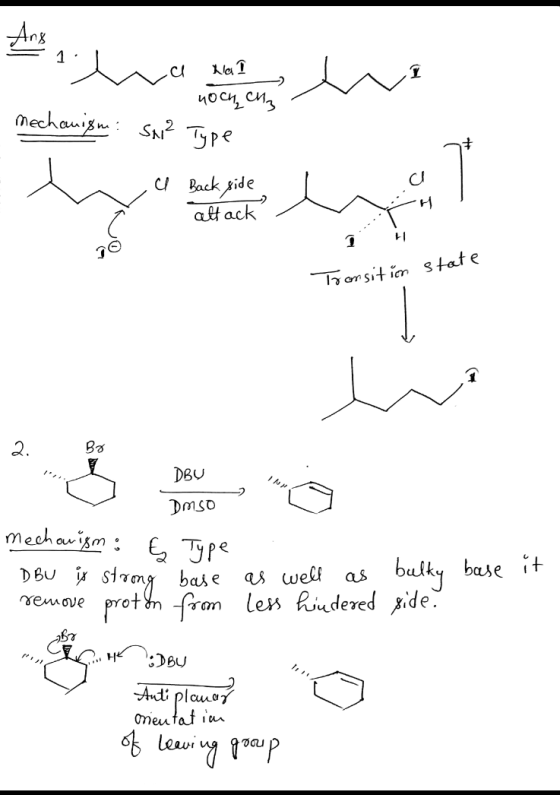
-OH Give products and type of mechanism H₂SO4 -CH3 120°C, distill KON CH₂ - CH₂ CH3 acetone 20°C OTS CH₃COZH 3...
Give products and type of mechanism. please show all work KEN " CH₂ - CH₂ CH3...
 Give products and type of mechanism. please show all work
KEN " CH₂ - CH₂ CH3 ОТ: acetone, 20% CH3CO2, В снсоон, CH3CH, он in AgNO3 mm Br
Give products and type of mechanism. please show all work
KEN " CH₂ - CH₂ CH3 ОТ: acetone, 20% CH3CO2, В снсоон, CH3CH, он in AgNO3 mm Br
the weakest base: CH3 HO HS the fastest in an Syl reaction: (CE)_CACHOSCH (CH3CB (CH.) CHCH(Br)CH, (CH),C(Br)CH (CH...
 the weakest base: CH3 HO HS the fastest in an Syl reaction: (CE)_CACHOSCH (CH3CB (CH.) CHCH(Br)CH, (CH),C(Br)CH (CH3)2CHCH Br 2. For each pair of reactions given below indicate which is faster and explain your reasoning. + CHỊ N + C CH3Cl + N CH3 + Ng CH₃N₂ + i CHg. + NaCN CH, CN + Nal DMSO CH3-1 + NaCN C H, CN + Nal Cho (c) CH,0 + CH,CH,Br - HƠ + CHỊCH,Br CH,CH,OCH, + Bril CH,CH,OH + Br...
O + CH3-NH2 H,SO4 HHH+ CH-CoH heat CH3 CH3-C-Cl- + CH3-CH-OH CH3 CH3 CH3-C-OH + CH3-CH-MgBr...
 O + CH3-NH2 H,SO4 HHH+ CH-CoH heat CH3 CH3-C-Cl- + CH3-CH-OH CH3 CH3 CH3-C-OH + CH3-CH-MgBr CH3 CH3-c-o-CH, -. Et,0 soch CH-OH
4.2 Give a detailed mechanism and show the products of the following reactions: OF CH3 C...
 4.2 Give a detailed mechanism and show the products of the following reactions: OF CH3 C (6] a) C-H E2 ООCH H CHз H b) H3CC E1 CH3 Н-О Br 4.3 Label the following reactions as SN1, SN2, E1, or E2. . Br NaNH2 THE a) HN CI КОН Ethanol b) но Ethanol c) NaOH Ethanol P OH 4A samnle with a.concentration of 0 3 a/ml was nlaced in a cell with a lenath of 5 cm 41
7) Give the mechanism including the transition state. сн.ct çı SN2 НН 8) Give the mechanism....
 7) Give the mechanism including the transition state. сн.ct çı SN2 НН 8) Give the mechanism. CH1 보 SN1 CHCH,CH-C CH. но H Br 9) Give the mechanism of the reaction shown below. CH CI E1 CH,OH 10) When 1-bromo-2,2-dimethylcyclopentane is heated in ethanol, one of the products which results is shown below. Provide a detailed, stepwise mechanism for the production of this compound, and give the name of the mechanism by which it is produced. CH3 CH3
37. H0+ (CH3), C CH OH alkene + H2O Draw the structure of the major alkene...
 37. H0+ (CH3), C CH OH alkene + H2O Draw the structure of the major alkene product of this acid-catalyzed dehydration. (Hint: rearrangement.) 38. alkenes Three alkenes produce butane when treated with hydrogen and platinum. Draw their structures. + H-Br - 39. CH2=CH CH3 CH2-CH-CH, H Br The first step of the mechanism of this reaction produces two carbocations. Draw both and circle the one that is more stable. ODHO Br 11 =C + Br - Br - - Br...
Give the products of the reaction. CH,OH CH H CH,CH CH Draw the molecules on the...
 Give the products of the reaction. CH,OH CH H CH,CH CH Draw the molecules on the canvas by choosing buttons from the Tools (for bonds), Ator including charges where needed. The single bond is active by default. 12D L2 Cl Br
GIVE PRODUCTS Ca) Cb) Cc) C PROVIDE A DETAILED MECHANISM CH 3 CH3 CH2 CH20H CH3...
 GIVE PRODUCTS Ca) Cb) Cc) C PROVIDE A DETAILED MECHANISM CH 3 CH3 CH2 CH20H CH3 40°C CH 3) RANK in order of INCREASING STABILITY. ExPLAIN CH3 CH3 CH CH2
2 problems REVIEW Topics [References) CH HC OCH Br2 CH3 B H3C CH,OH H₂C CH₂ Electrophilic...
 2 problems
REVIEW Topics [References) CH HC OCH Br2 CH3 B H3C CH,OH H₂C CH₂ Electrophilic addition of hypohalous acids to alkenes yields a 1,2-haloalcohol called a halohydrin. Halohydrin formation, however, does not result from the addition of HOBr, for example. Instead the addition is done indirectly by reaction of the alkene with Br, in the presence of water. The reaction also works with Cl2 to give chlorohydrins instead of bromohydrins. The reaction proceeds through a cyclic intermediate known as...
2 problems
REVIEW Topics [References) CH HC OCH Br2 CH3 B H3C CH,OH H₂C CH₂ Electrophilic addition of hypohalous acids to alkenes yields a 1,2-haloalcohol called a halohydrin. Halohydrin formation, however, does not result from the addition of HOBr, for example. Instead the addition is done indirectly by reaction of the alkene with Br, in the presence of water. The reaction also works with Cl2 to give chlorohydrins instead of bromohydrins. The reaction proceeds through a cyclic intermediate known as...
C-H bond BDE (kJ/mol) CH3-H 439 C2H:-H 422 (CH3)2 CH-H 414 (CH3)3 C-H 405 Table of...
 C-H bond BDE (kJ/mol) CH3-H 439 C2H:-H 422 (CH3)2 CH-H 414 (CH3)3 C-H 405 Table of Bond Dissociation Enthalpies C-X bond BDE (kJ/mol) X2 and HX bonds BDE (kJ/mol) CH3-C1 351 CI 247 CH-C1 355 НСІ 431 (CH3)2CH-C 355 (CH3)3C-CI 355 CH3 CH3 CH3CHCHCH3 CH3CHCH2CH3 + a Cl2 CI HCI Using the table of bond dissociation energies in the first part of this question: Calculate AH for this reaction. kJ/mol Overall, this reaction is CH3 CH3CHCHCH3 CH3 CH3CHCH2CH3 + b...
 Give products and type of mechanism. please show all work
KEN " CH₂ - CH₂ CH3 ОТ: acetone, 20% CH3CO2, В снсоон, CH3CH, он in AgNO3 mm Br
Give products and type of mechanism. please show all work
KEN " CH₂ - CH₂ CH3 ОТ: acetone, 20% CH3CO2, В снсоон, CH3CH, он in AgNO3 mm Br
 the weakest base: CH3 HO HS the fastest in an Syl reaction: (CE)_CACHOSCH (CH3CB (CH.) CHCH(Br)CH, (CH),C(Br)CH (CH3)2CHCH Br 2. For each pair of reactions given below indicate which is faster and explain your reasoning. + CHỊ N + C CH3Cl + N CH3 + Ng CH₃N₂ + i CHg. + NaCN CH, CN + Nal DMSO CH3-1 + NaCN C H, CN + Nal Cho (c) CH,0 + CH,CH,Br - HƠ + CHỊCH,Br CH,CH,OCH, + Bril CH,CH,OH + Br...
 O + CH3-NH2 H,SO4 HHH+ CH-CoH heat CH3 CH3-C-Cl- + CH3-CH-OH CH3 CH3 CH3-C-OH + CH3-CH-MgBr CH3 CH3-c-o-CH, -. Et,0 soch CH-OH
 4.2 Give a detailed mechanism and show the products of the following reactions: OF CH3 C (6] a) C-H E2 ООCH H CHз H b) H3CC E1 CH3 Н-О Br 4.3 Label the following reactions as SN1, SN2, E1, or E2. . Br NaNH2 THE a) HN CI КОН Ethanol b) но Ethanol c) NaOH Ethanol P OH 4A samnle with a.concentration of 0 3 a/ml was nlaced in a cell with a lenath of 5 cm 41
 7) Give the mechanism including the transition state. сн.ct çı SN2 НН 8) Give the mechanism. CH1 보 SN1 CHCH,CH-C CH. но H Br 9) Give the mechanism of the reaction shown below. CH CI E1 CH,OH 10) When 1-bromo-2,2-dimethylcyclopentane is heated in ethanol, one of the products which results is shown below. Provide a detailed, stepwise mechanism for the production of this compound, and give the name of the mechanism by which it is produced. CH3 CH3
 37. H0+ (CH3), C CH OH alkene + H2O Draw the structure of the major alkene product of this acid-catalyzed dehydration. (Hint: rearrangement.) 38. alkenes Three alkenes produce butane when treated with hydrogen and platinum. Draw their structures. + H-Br - 39. CH2=CH CH3 CH2-CH-CH, H Br The first step of the mechanism of this reaction produces two carbocations. Draw both and circle the one that is more stable. ODHO Br 11 =C + Br - Br - - Br...
 Give the products of the reaction. CH,OH CH H CH,CH CH Draw the molecules on the canvas by choosing buttons from the Tools (for bonds), Ator including charges where needed. The single bond is active by default. 12D L2 Cl Br
 GIVE PRODUCTS Ca) Cb) Cc) C PROVIDE A DETAILED MECHANISM CH 3 CH3 CH2 CH20H CH3 40°C CH 3) RANK in order of INCREASING STABILITY. ExPLAIN CH3 CH3 CH CH2
 2 problems
REVIEW Topics [References) CH HC OCH Br2 CH3 B H3C CH,OH H₂C CH₂ Electrophilic addition of hypohalous acids to alkenes yields a 1,2-haloalcohol called a halohydrin. Halohydrin formation, however, does not result from the addition of HOBr, for example. Instead the addition is done indirectly by reaction of the alkene with Br, in the presence of water. The reaction also works with Cl2 to give chlorohydrins instead of bromohydrins. The reaction proceeds through a cyclic intermediate known as...
2 problems
REVIEW Topics [References) CH HC OCH Br2 CH3 B H3C CH,OH H₂C CH₂ Electrophilic addition of hypohalous acids to alkenes yields a 1,2-haloalcohol called a halohydrin. Halohydrin formation, however, does not result from the addition of HOBr, for example. Instead the addition is done indirectly by reaction of the alkene with Br, in the presence of water. The reaction also works with Cl2 to give chlorohydrins instead of bromohydrins. The reaction proceeds through a cyclic intermediate known as...
 C-H bond BDE (kJ/mol) CH3-H 439 C2H:-H 422 (CH3)2 CH-H 414 (CH3)3 C-H 405 Table of Bond Dissociation Enthalpies C-X bond BDE (kJ/mol) X2 and HX bonds BDE (kJ/mol) CH3-C1 351 CI 247 CH-C1 355 НСІ 431 (CH3)2CH-C 355 (CH3)3C-CI 355 CH3 CH3 CH3CHCHCH3 CH3CHCH2CH3 + a Cl2 CI HCI Using the table of bond dissociation energies in the first part of this question: Calculate AH for this reaction. kJ/mol Overall, this reaction is CH3 CH3CHCHCH3 CH3 CH3CHCH2CH3 + b...
Most questions answered within 3 hours.
-
Where is the error in this code sequence?
String s1 = "Hello";
String s2 = "ello";...
asked 11 months ago -
Financial data for Joel de Paris, Inc., for last year
follow:
Joel de Paris, Inc.
Balance...
asked 11 months ago -
Consider this reaction:
Al2(SO4)3 (aq)+ BaCl3
(aq) Al2Cl6 (aq)- +
3BaSO4(s) . What is the...
asked 11 months ago -
Suppose that Savneet is considering increasing her
recent random sample from 20 car rentals to 40...
asked 11 months ago -
Trucks arrive at an unloading terminal at an average rate of 120
per hour.
Trucks arrive...
asked 11 months ago -
Why are methanol and ethanol completely soluble in water while
octanol is not very little soluble....
asked 11 months ago -
A facilities manager at a university reads in a research report
that the mean amount of...
asked 11 months ago -
When the CuSO4 is rehydrated by adding water to the anhydrous
compound, is this an endothermic...
asked 11 months ago -
A ray of sunlight is passing from diamond into crown glass; the
angle of incidence is...
asked 11 months ago -
A block of mass 0.249 kg is placed on top of a light, vertical
spring of...
asked 11 months ago -
how do the kidneys compensate in the presences of acidosis
a) trigger hyperventilate
b) reserve acid...
asked 11 months ago -
Question 501 pts
The rental rate of capital to the firm increases. Which of the
following...
asked 11 months ago