
Homework Answers

Add Answer to:
• ASºsystem = ESproducts - ESreactants (see Thermodynamic Values) • AS°surroundings = - AHºsystem / T (Use 298.0 K) Hºs...
10. Please try the problem again, your previous tries are listed below. Try 1: X AS...
 10. Please try the problem again, your previous tries are listed below. Try 1: X AS system (J/K) = -135.7 (Tol: + 0) Answer Incorrect by more than 10%. X AS surroundings (J/K) = 0.24 (Tol: + 0.1) Answer Incorrect by more than 10%. X AS universe (J/K) = -135.46 (Tol: +0.2) Answer Incorrect by more than 10%. Try 2: X AS system (J/K) = -176 (Tol: 0) Answer Incorrect by less than 2 %. Your instructor is expecting the...
The following reaction has the thermodynamic values at 298 K: AH° =-136.9 kJ/mol and AS" =...
 The following reaction has the thermodynamic values at 298 K: AH° =-136.9 kJ/mol and AS" = -120.6 J/mol K. HаС — СHз (9) Нас— CHz (0) + Hа (0) a. Calculate AG° at 298 K for this reaction in kJ/mol (Enter your answer to four significant figures.) kJ/mol b. The reaction is c. The reaction is.
Use the References to access important values if needed for this question. Consider the reaction 2CH.)...
 Use the References to access important values if needed for this question. Consider the reaction 2CH.) + 70 (8) - 4CO2(g) + 6H2O(g) Using standard thermodynamic data at 298K, calculate the entropy change for the surroundings when 1.56 moles of CH @ react at standard conditions. AS surroundings J/K Submit Answer Retry Entire Group 9 more group attempts remaining
Use the data from this table of thermodynamic properties to calculate the values of ASixn for...
 Use the data from this table of thermodynamic properties to calculate the values of ASixn for each reaction at 25 °C. 4NH,(g) + 70,(9) — 4NO2(g) + 6H2O(g) AS:n = J/mol K N,() + 0,(g) 2 NO(g) J/mol K Asian = MISU415) -1065.25 N2(9) N2H4(0) 50.6 N20(9) 81.6 N204(9) 11.1 N205(9) 13.3 NH3(9) -45.9 NH3(aq) -80.29 NH,+(aq) -133.3 NH4CI(S) -314.4 NH4NO3(s) -365.6 (NH2)2CO(s) -333.1 Na(s) Na+(aq) -240.3 Na2CO3(S) -1130.7 NaCl(s) -411.2 NaF(s) -576.6 NaBr(s) -361.1 Nal(s) -287.8 NaNO3(s) -467.9 NaOH(s)...
You have a 2.0 Molar solution of an unknown acid, “HX”. Given the (25°C) thermodynamic data...
You have a 2.0 Molar solution of an unknown acid, “HX”. Given the (25°C) thermodynamic data below, calculate Keq given that Keq = exp.[-ΔG/RT] and R is the gas constant 8.314 J/mol K Another useful equation : ΔG = ΔH - TΔS HX —> H+ + X- all aqueous Enthapies of formation Entropy of formation In KJ/mole in J/mole K HX 200 300 H+ 10 0 X- 250 175 Do you have to multiply the enthaply and entropy...
14. Which of the following is not a state function? a. Internal Energy b. Free Energy...
 14. Which of the following is not a state function? a. Internal Energy b. Free Energy c. Enthalpy d. Entropy e. Heat 15. The second law of thermodynamics states that a. the entropy of a perfect crystal is zero at 0 K b. the entropy of the universe is constant. c. the energy of the universe is increasing. d. the entropy of the universe is increasing. e. the energy of the universe is constant. 16. Which of the following are...
IR Tenen Use the References to see important values if needed for this question Consider the...
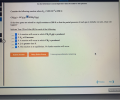 IR Tenen Use the References to see important values if needed for this question Consider the following reaction where K, -9.52*10*2 at 350 K: CH_(8) + CCL) 2CH,C12(8) If the three gases are mixed in a rigid container at 350 K so that the partial pressure of each gas is initially one atm, what will happen? Indicate True (1) or False (E) for each of the following: 1. A reaction will occur in which CH,CI,() is produced 2. K, will...
18. Please try the problem again, your previous tries are listed below. Try 1: * -8 Use the data found in the Therm...
 18. Please try the problem again, your previous tries are listed below. Try 1: * -8 Use the data found in the Thermodynamic Values link under Reference Materials to calculate AHº and AS™ at 25.0 °C for CH3OH (1) → CH3OH (g) Although the AH° and AS values do change slightly with temperature, assume that the change is not large enough to significantly affect the outcome of the following calculation. Use the AH° and AS™ values to determine the temperature...
help with this please Ca(OH)2(aq) + 2 HCl(aq) +CaCl2(8) + 2 H2O(1) Using the standard thermodynamic...
 help with this please
Ca(OH)2(aq) + 2 HCl(aq) +CaCl2(8) + 2 H2O(1) Using the standard thermodynamic data in the tables linked above, calculate the equilibrium constant for this reaction at 298.15K ANSWER: N2(g) + O2(g) +2NO(g) Using the standard thermodynamic data in the tables linked above, calculate the equilibrium constant for this reaction at 298.15K ANSWER: 2CO(g) + O2(g) +2002(9) - der e en manos de 20, ali ne more than one so mi dicogna undan Using standard thermodynamic data...
help with this please
Ca(OH)2(aq) + 2 HCl(aq) +CaCl2(8) + 2 H2O(1) Using the standard thermodynamic data in the tables linked above, calculate the equilibrium constant for this reaction at 298.15K ANSWER: N2(g) + O2(g) +2NO(g) Using the standard thermodynamic data in the tables linked above, calculate the equilibrium constant for this reaction at 298.15K ANSWER: 2CO(g) + O2(g) +2002(9) - der e en manos de 20, ali ne more than one so mi dicogna undan Using standard thermodynamic data...
Use the References to access important values if needed for this qu The following information is...
 Use the References to access important values if needed for this qu The following information is given for nickel at 1 atm: T = 2732.00°C AHvap (2732.00°C) = 6.450 x 10⁸ J/g AHS (1453.00°C) = 300.1 J/g T = 1453.00°C Specific heat solid -0.4440 J/g °C Specific heat liquid = 0.7320 J/g °C A 31.50 g sample of solid nickel is initially at 1430.00°C. If 7.626 x 10³ J of heat are added to the sample at constant pressure P=1...
 10. Please try the problem again, your previous tries are listed below. Try 1: X AS system (J/K) = -135.7 (Tol: + 0) Answer Incorrect by more than 10%. X AS surroundings (J/K) = 0.24 (Tol: + 0.1) Answer Incorrect by more than 10%. X AS universe (J/K) = -135.46 (Tol: +0.2) Answer Incorrect by more than 10%. Try 2: X AS system (J/K) = -176 (Tol: 0) Answer Incorrect by less than 2 %. Your instructor is expecting the...
 The following reaction has the thermodynamic values at 298 K: AH° =-136.9 kJ/mol and AS" = -120.6 J/mol K. HаС — СHз (9) Нас— CHz (0) + Hа (0) a. Calculate AG° at 298 K for this reaction in kJ/mol (Enter your answer to four significant figures.) kJ/mol b. The reaction is c. The reaction is.
 Use the References to access important values if needed for this question. Consider the reaction 2CH.) + 70 (8) - 4CO2(g) + 6H2O(g) Using standard thermodynamic data at 298K, calculate the entropy change for the surroundings when 1.56 moles of CH @ react at standard conditions. AS surroundings J/K Submit Answer Retry Entire Group 9 more group attempts remaining
 Use the data from this table of thermodynamic properties to calculate the values of ASixn for each reaction at 25 °C. 4NH,(g) + 70,(9) — 4NO2(g) + 6H2O(g) AS:n = J/mol K N,() + 0,(g) 2 NO(g) J/mol K Asian = MISU415) -1065.25 N2(9) N2H4(0) 50.6 N20(9) 81.6 N204(9) 11.1 N205(9) 13.3 NH3(9) -45.9 NH3(aq) -80.29 NH,+(aq) -133.3 NH4CI(S) -314.4 NH4NO3(s) -365.6 (NH2)2CO(s) -333.1 Na(s) Na+(aq) -240.3 Na2CO3(S) -1130.7 NaCl(s) -411.2 NaF(s) -576.6 NaBr(s) -361.1 Nal(s) -287.8 NaNO3(s) -467.9 NaOH(s)...
 14. Which of the following is not a state function? a. Internal Energy b. Free Energy c. Enthalpy d. Entropy e. Heat 15. The second law of thermodynamics states that a. the entropy of a perfect crystal is zero at 0 K b. the entropy of the universe is constant. c. the energy of the universe is increasing. d. the entropy of the universe is increasing. e. the energy of the universe is constant. 16. Which of the following are...
 IR Tenen Use the References to see important values if needed for this question Consider the following reaction where K, -9.52*10*2 at 350 K: CH_(8) + CCL) 2CH,C12(8) If the three gases are mixed in a rigid container at 350 K so that the partial pressure of each gas is initially one atm, what will happen? Indicate True (1) or False (E) for each of the following: 1. A reaction will occur in which CH,CI,() is produced 2. K, will...
 18. Please try the problem again, your previous tries are listed below. Try 1: * -8 Use the data found in the Thermodynamic Values link under Reference Materials to calculate AHº and AS™ at 25.0 °C for CH3OH (1) → CH3OH (g) Although the AH° and AS values do change slightly with temperature, assume that the change is not large enough to significantly affect the outcome of the following calculation. Use the AH° and AS™ values to determine the temperature...
 help with this please
Ca(OH)2(aq) + 2 HCl(aq) +CaCl2(8) + 2 H2O(1) Using the standard thermodynamic data in the tables linked above, calculate the equilibrium constant for this reaction at 298.15K ANSWER: N2(g) + O2(g) +2NO(g) Using the standard thermodynamic data in the tables linked above, calculate the equilibrium constant for this reaction at 298.15K ANSWER: 2CO(g) + O2(g) +2002(9) - der e en manos de 20, ali ne more than one so mi dicogna undan Using standard thermodynamic data...
help with this please
Ca(OH)2(aq) + 2 HCl(aq) +CaCl2(8) + 2 H2O(1) Using the standard thermodynamic data in the tables linked above, calculate the equilibrium constant for this reaction at 298.15K ANSWER: N2(g) + O2(g) +2NO(g) Using the standard thermodynamic data in the tables linked above, calculate the equilibrium constant for this reaction at 298.15K ANSWER: 2CO(g) + O2(g) +2002(9) - der e en manos de 20, ali ne more than one so mi dicogna undan Using standard thermodynamic data...
 Use the References to access important values if needed for this qu The following information is given for nickel at 1 atm: T = 2732.00°C AHvap (2732.00°C) = 6.450 x 10⁸ J/g AHS (1453.00°C) = 300.1 J/g T = 1453.00°C Specific heat solid -0.4440 J/g °C Specific heat liquid = 0.7320 J/g °C A 31.50 g sample of solid nickel is initially at 1430.00°C. If 7.626 x 10³ J of heat are added to the sample at constant pressure P=1...
Most questions answered within 3 hours.
-
Where is the error in this code sequence?
String s1 = "Hello";
String s2 = "ello";...
asked 10 months ago -
Financial data for Joel de Paris, Inc., for last year
follow:
Joel de Paris, Inc.
Balance...
asked 10 months ago -
Consider this reaction:
Al2(SO4)3 (aq)+ BaCl3
(aq) Al2Cl6 (aq)- +
3BaSO4(s) . What is the...
asked 10 months ago -
Suppose that Savneet is considering increasing her
recent random sample from 20 car rentals to 40...
asked 10 months ago -
Trucks arrive at an unloading terminal at an average rate of 120
per hour.
Trucks arrive...
asked 10 months ago -
Why are methanol and ethanol completely soluble in water while
octanol is not very little soluble....
asked 10 months ago -
A facilities manager at a university reads in a research report
that the mean amount of...
asked 10 months ago -
When the CuSO4 is rehydrated by adding water to the anhydrous
compound, is this an endothermic...
asked 10 months ago -
A ray of sunlight is passing from diamond into crown glass; the
angle of incidence is...
asked 10 months ago -
A block of mass 0.249 kg is placed on top of a light, vertical
spring of...
asked 10 months ago -
how do the kidneys compensate in the presences of acidosis
a) trigger hyperventilate
b) reserve acid...
asked 10 months ago -
Question 501 pts
The rental rate of capital to the firm increases. Which of the
following...
asked 10 months ago