
Homework Answers
Add Answer to:
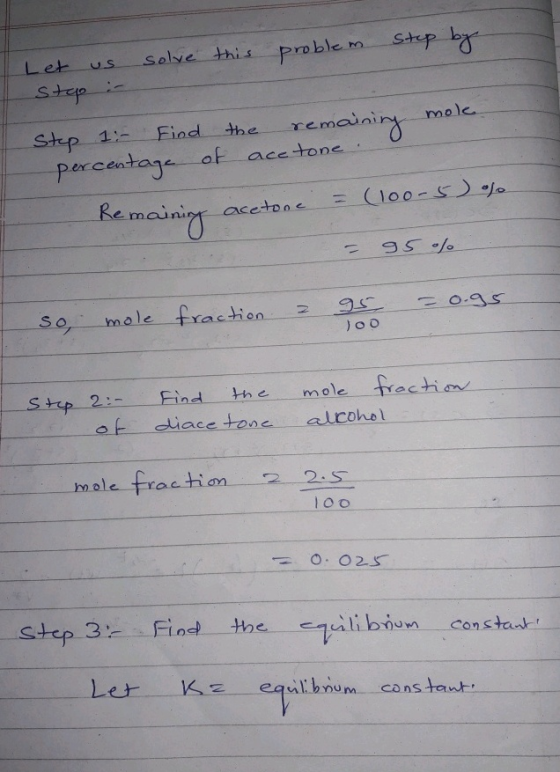
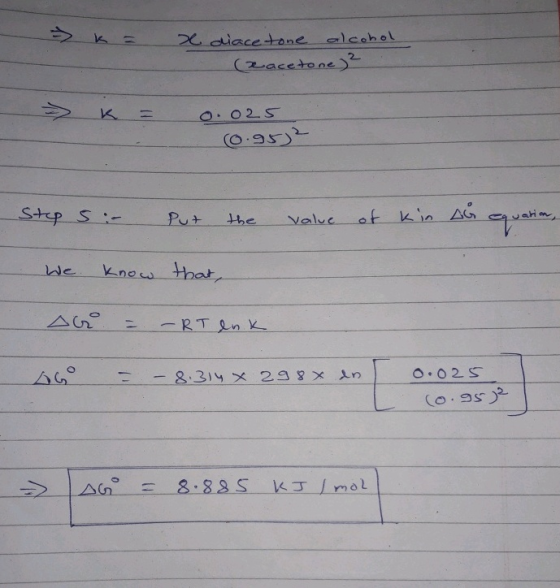
PROBLEM 4-6 Under base-catalyzed conditions, two molecules of acetone can condense to form diac- etone alcohol. At...
Provide a detailed, step-by-step mechanism for the base-catalyzed (-OH) reaction between two molecules of acetone to...
 Provide a detailed, step-by-step mechanism for the base-catalyzed (-OH) reaction between two molecules of acetone to form the Aldol addition product.
WIN Sodium elle 2.ethoxy-1-methylcyclopentanol. base Base-catalyzed: The nucleophil attacks the less substituted can which is less...
 WIN Sodium elle 2.ethoxy-1-methylcyclopentanol. base Base-catalyzed: The nucleophil attacks the less substituted can which is less hindered. 0 0-CH.CH OHH CH, OCH,CH, CH, (H (b) Under acidic conditions of the protonated epoxide. T conditions, the alcohol attacks the more electrophilic tertiary carbon atom tonated epoxide. The product is (E)-2-ethoxy-2-methylcyclopentanol. CH, OH 0 Co+ CH, H CH,CH,-0-H H CH.CH PROBLEM 24-27 Predict the major products of the following reactions, including stereochemistry where appropriate. (a) 2,2-dimethyloxirane + H/ H (oxygen-labeled water) by...
4. The molecule below, sorbic alcohol, can form in wine as a result of microbial contamination....
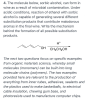 4. The molecule below, sorbic alcohol, can form in wine as a result of microbial contamination. Under acidic conditions, reaction of ethanol with sorbic alcohol is capable of generating several different substitution products that contribute malodorous aromas in the final wine. Write the mechanism behind the formation of all possible substitution products. H+ OH CH3CH2OH The next two questions focus on specific examples from organic materials science, whereby small molecules (monomers) can be built into long molecular chains (polymers). The...
_1. An alkyl halide which might be expected to undergo rearrangement under Snl or E1 conditions...
 _1. An alkyl halide which might be expected to undergo rearrangement under Snl or E1 conditions is: HZC Br CH3 A. 1 B. | F—CH,BH C. CH3-C-CH-CH, CHz CH3 D. CH3 CH3-C-CH2CH2-Br CH3 E. A Br 2. Your task is to convert 2-chloropentane into 1-pentene. Which reagents would you choose? a) NaOH/H20 b) KOH/CH3OH c) CH3ONa/CH3OH d) CH3CH2ONa/CH3CH2OH e) (CH3)3COK/(CH3)3COH 3. Circle the reaction below which is faster in polar protic solvents. OH,H,O A. CH,CH,CH,Br- CH,CH,CH,OH + Br or SH.RSH...
QUESTION 15 Which of the following is EXERGONIC? 6 CO2 + 6H20 - glucose + O2...
 QUESTION 15 Which of the following is EXERGONIC? 6 CO2 + 6H20 - glucose + O2 fructose 6-phosphate + ATP – fructose 1,6-bisphosphate + ADP (AG = -3.4 kcal/mol) glucose 6-phosphate + ATP – fructose 6-phosphate + ADP (AG = +0.5 kcal/mol) GDP - Pi GTP + H2O QUESTION 17 Fate(s) of pyruvate is(are) Check all that apply. formation of ethyl alcohol by yeasts formation of glucose by gluconeogenesis in liver cells production of ketone bodies formation of lactate under...
(C) Protonation of alkene to form a carbocation followed by addition of bromide ion (D) Addition...
 (C) Protonation of alkene to form a carbocation followed by addition of bromide ion (D) Addition of the proton to one face of the alkene with simultaneous delivery of a bromide ion from a different molecule of H-Br. 11. Which compound is the strongest nmucleophile for reaction of methane methanesulfonate (CHOS0.CH) in methanol at room temperature? (You may assume that everything is soluble in methanol) (A) potassium bromide (B) cesium iodide (C) sodiam chloride (D) lithium flaoride 12. Which proton...
Experimental Outline In its simplest form, the aldol condensation is a self-addition involving tw...
 Organic Chemistry 2
Experimental Outline In its simplest form, the aldol condensation is a self-addition involving two molecules of the same aldehyde or ketone, in the presence of a base, and results in the formation of a new carbon-carbon bond joining the carbonyl carbon of one molecule to the a-position of the second. In many cases - if the reaction conditions aren't sufficiently mild - the initially formed aldol product reacts further in an elimination reaction to give what is...
Organic Chemistry 2
Experimental Outline In its simplest form, the aldol condensation is a self-addition involving two molecules of the same aldehyde or ketone, in the presence of a base, and results in the formation of a new carbon-carbon bond joining the carbonyl carbon of one molecule to the a-position of the second. In many cases - if the reaction conditions aren't sufficiently mild - the initially formed aldol product reacts further in an elimination reaction to give what is...
PRINTER VERSION BACK NEXT x Your answer is incorrect. Try again (b) Consider the opposite problem,...
 PRINTER VERSION BACK NEXT x Your answer is incorrect. Try again (b) Consider the opposite problem, that of carrying out a substitution reaction on a tertiary alkyl halide. Use as your example the conversion of tert-butyl chloride to tert- butyl ethyl ether. What experimental conditions would you employ to ensure the highest possible yield of the ether? Select all that apply. Polar protic solvent High temperature Absence of strong base (solvent is often the base) Strong unhindered base,e.g., CH3CH2ONa (EtONa),...
I need some help to answer these following questions. Thanks. 66. Which molecule is the strongest base? O-CH3 H2N Cl H2 What is the order of increasing reactivity in an SN1 reaction for these compoun...
 I need some help to answer these following questions.
Thanks.
66. Which molecule is the strongest base? O-CH3 H2N Cl H2 What is the order of increasing reactivity in an SN1 reaction for these compounds? 67. Br Br Br I < 11 < 111 (C) 68. What is the starting material for this reaction? NH3, H+ NaBH3CN NH2 он COCI согн Which compound will be protonated to the greatest extent in 1.0 x 10⁻³ mol/L aqueous HC1? 69. NH 2...
I need some help to answer these following questions.
Thanks.
66. Which molecule is the strongest base? O-CH3 H2N Cl H2 What is the order of increasing reactivity in an SN1 reaction for these compounds? 67. Br Br Br I < 11 < 111 (C) 68. What is the starting material for this reaction? NH3, H+ NaBH3CN NH2 он COCI согн Which compound will be protonated to the greatest extent in 1.0 x 10⁻³ mol/L aqueous HC1? 69. NH 2...
can questions 1-9 please be answered and why are they the answer 1. How many sp...
 can questions 1-9 please be answered and why are they the
answer
1. How many sp hybridized carbon atoms are present in the following molecule? (A) 3 (B) 4 5 н.с (D). 6 2. Which bond is the longest in the following molecule? (A) (B) CECH (C) (D) 3. Which of the following molecules is chiral at room tempernture (25 C)? (A) 1,1-dimethylcyclohexane (B) cis-1,2-dimethyleyelohexanc (C) trans-,3-dimethyleyclohexane (D) trans-1,4-dimethylcyclohexane 4. Which group is an aldehyde? н н (C) (D) (A)...
can questions 1-9 please be answered and why are they the
answer
1. How many sp hybridized carbon atoms are present in the following molecule? (A) 3 (B) 4 5 н.с (D). 6 2. Which bond is the longest in the following molecule? (A) (B) CECH (C) (D) 3. Which of the following molecules is chiral at room tempernture (25 C)? (A) 1,1-dimethylcyclohexane (B) cis-1,2-dimethyleyelohexanc (C) trans-,3-dimethyleyclohexane (D) trans-1,4-dimethylcyclohexane 4. Which group is an aldehyde? н н (C) (D) (A)...
 Provide a detailed, step-by-step mechanism for the base-catalyzed (-OH) reaction between two molecules of acetone to form the Aldol addition product.
 WIN Sodium elle 2.ethoxy-1-methylcyclopentanol. base Base-catalyzed: The nucleophil attacks the less substituted can which is less hindered. 0 0-CH.CH OHH CH, OCH,CH, CH, (H (b) Under acidic conditions of the protonated epoxide. T conditions, the alcohol attacks the more electrophilic tertiary carbon atom tonated epoxide. The product is (E)-2-ethoxy-2-methylcyclopentanol. CH, OH 0 Co+ CH, H CH,CH,-0-H H CH.CH PROBLEM 24-27 Predict the major products of the following reactions, including stereochemistry where appropriate. (a) 2,2-dimethyloxirane + H/ H (oxygen-labeled water) by...
 4. The molecule below, sorbic alcohol, can form in wine as a result of microbial contamination. Under acidic conditions, reaction of ethanol with sorbic alcohol is capable of generating several different substitution products that contribute malodorous aromas in the final wine. Write the mechanism behind the formation of all possible substitution products. H+ OH CH3CH2OH The next two questions focus on specific examples from organic materials science, whereby small molecules (monomers) can be built into long molecular chains (polymers). The...
 _1. An alkyl halide which might be expected to undergo rearrangement under Snl or E1 conditions is: HZC Br CH3 A. 1 B. | F—CH,BH C. CH3-C-CH-CH, CHz CH3 D. CH3 CH3-C-CH2CH2-Br CH3 E. A Br 2. Your task is to convert 2-chloropentane into 1-pentene. Which reagents would you choose? a) NaOH/H20 b) KOH/CH3OH c) CH3ONa/CH3OH d) CH3CH2ONa/CH3CH2OH e) (CH3)3COK/(CH3)3COH 3. Circle the reaction below which is faster in polar protic solvents. OH,H,O A. CH,CH,CH,Br- CH,CH,CH,OH + Br or SH.RSH...
 QUESTION 15 Which of the following is EXERGONIC? 6 CO2 + 6H20 - glucose + O2 fructose 6-phosphate + ATP – fructose 1,6-bisphosphate + ADP (AG = -3.4 kcal/mol) glucose 6-phosphate + ATP – fructose 6-phosphate + ADP (AG = +0.5 kcal/mol) GDP - Pi GTP + H2O QUESTION 17 Fate(s) of pyruvate is(are) Check all that apply. formation of ethyl alcohol by yeasts formation of glucose by gluconeogenesis in liver cells production of ketone bodies formation of lactate under...
 (C) Protonation of alkene to form a carbocation followed by addition of bromide ion (D) Addition of the proton to one face of the alkene with simultaneous delivery of a bromide ion from a different molecule of H-Br. 11. Which compound is the strongest nmucleophile for reaction of methane methanesulfonate (CHOS0.CH) in methanol at room temperature? (You may assume that everything is soluble in methanol) (A) potassium bromide (B) cesium iodide (C) sodiam chloride (D) lithium flaoride 12. Which proton...
 Organic Chemistry 2
Experimental Outline In its simplest form, the aldol condensation is a self-addition involving two molecules of the same aldehyde or ketone, in the presence of a base, and results in the formation of a new carbon-carbon bond joining the carbonyl carbon of one molecule to the a-position of the second. In many cases - if the reaction conditions aren't sufficiently mild - the initially formed aldol product reacts further in an elimination reaction to give what is...
Organic Chemistry 2
Experimental Outline In its simplest form, the aldol condensation is a self-addition involving two molecules of the same aldehyde or ketone, in the presence of a base, and results in the formation of a new carbon-carbon bond joining the carbonyl carbon of one molecule to the a-position of the second. In many cases - if the reaction conditions aren't sufficiently mild - the initially formed aldol product reacts further in an elimination reaction to give what is...
 PRINTER VERSION BACK NEXT x Your answer is incorrect. Try again (b) Consider the opposite problem, that of carrying out a substitution reaction on a tertiary alkyl halide. Use as your example the conversion of tert-butyl chloride to tert- butyl ethyl ether. What experimental conditions would you employ to ensure the highest possible yield of the ether? Select all that apply. Polar protic solvent High temperature Absence of strong base (solvent is often the base) Strong unhindered base,e.g., CH3CH2ONa (EtONa),...
 I need some help to answer these following questions.
Thanks.
66. Which molecule is the strongest base? O-CH3 H2N Cl H2 What is the order of increasing reactivity in an SN1 reaction for these compounds? 67. Br Br Br I < 11 < 111 (C) 68. What is the starting material for this reaction? NH3, H+ NaBH3CN NH2 он COCI согн Which compound will be protonated to the greatest extent in 1.0 x 10⁻³ mol/L aqueous HC1? 69. NH 2...
I need some help to answer these following questions.
Thanks.
66. Which molecule is the strongest base? O-CH3 H2N Cl H2 What is the order of increasing reactivity in an SN1 reaction for these compounds? 67. Br Br Br I < 11 < 111 (C) 68. What is the starting material for this reaction? NH3, H+ NaBH3CN NH2 он COCI согн Which compound will be protonated to the greatest extent in 1.0 x 10⁻³ mol/L aqueous HC1? 69. NH 2...
 can questions 1-9 please be answered and why are they the
answer
1. How many sp hybridized carbon atoms are present in the following molecule? (A) 3 (B) 4 5 н.с (D). 6 2. Which bond is the longest in the following molecule? (A) (B) CECH (C) (D) 3. Which of the following molecules is chiral at room tempernture (25 C)? (A) 1,1-dimethylcyclohexane (B) cis-1,2-dimethyleyelohexanc (C) trans-,3-dimethyleyclohexane (D) trans-1,4-dimethylcyclohexane 4. Which group is an aldehyde? н н (C) (D) (A)...
can questions 1-9 please be answered and why are they the
answer
1. How many sp hybridized carbon atoms are present in the following molecule? (A) 3 (B) 4 5 н.с (D). 6 2. Which bond is the longest in the following molecule? (A) (B) CECH (C) (D) 3. Which of the following molecules is chiral at room tempernture (25 C)? (A) 1,1-dimethylcyclohexane (B) cis-1,2-dimethyleyelohexanc (C) trans-,3-dimethyleyclohexane (D) trans-1,4-dimethylcyclohexane 4. Which group is an aldehyde? н н (C) (D) (A)...
Most questions answered within 3 hours.
-
Where is the error in this code sequence?
String s1 = "Hello";
String s2 = "ello";...
asked 10 months ago -
Financial data for Joel de Paris, Inc., for last year
follow:
Joel de Paris, Inc.
Balance...
asked 10 months ago -
Consider this reaction:
Al2(SO4)3 (aq)+ BaCl3
(aq) Al2Cl6 (aq)- +
3BaSO4(s) . What is the...
asked 10 months ago -
Suppose that Savneet is considering increasing her
recent random sample from 20 car rentals to 40...
asked 10 months ago -
Trucks arrive at an unloading terminal at an average rate of 120
per hour.
Trucks arrive...
asked 10 months ago -
Why are methanol and ethanol completely soluble in water while
octanol is not very little soluble....
asked 10 months ago -
A facilities manager at a university reads in a research report
that the mean amount of...
asked 10 months ago -
When the CuSO4 is rehydrated by adding water to the anhydrous
compound, is this an endothermic...
asked 10 months ago -
A ray of sunlight is passing from diamond into crown glass; the
angle of incidence is...
asked 10 months ago -
A block of mass 0.249 kg is placed on top of a light, vertical
spring of...
asked 10 months ago -
how do the kidneys compensate in the presences of acidosis
a) trigger hyperventilate
b) reserve acid...
asked 10 months ago -
Question 501 pts
The rental rate of capital to the firm increases. Which of the
following...
asked 10 months ago