Please use the Schedule C, Form 1120,year 2019. The attached information is to be used to complete Part A (Schedule C)...
Please use the Schedule C, Form 1120,year 2019. The attached information is to be used to complete Part A (Schedule C) and Project B (1120-page 1 and schedule m-1). This project is to be done manually (i.e. no software). Basic information is provided for a single business. Essentially this requires you to first complete a Schedule C for a proprietorship and then use the same data to complete a form 1120 for a corporation. A trial balance is posted in the Project file on Canvas. Note: one difference between the Schedule C and 1120 is that the employment taxes increase to 14,480 for the 1120 instead of the 8,320 given in the trial balance for the Schedule C. Facts for Sole Proprietorship Schedule C: Lewis Smith is the sole proprietor of a business that operates under the name Smith Furniture (Business Code 337000). The proprietorship is located at 1234 First Avenue, City, ST, 5555. Lewis started the business with 200,000 capital investment on June 1, 2008. The proprietorship uses the calendar year as its tax year (the same as its proprietor) and the accrual method of accounting. The following information pertains to its 2017 activities. Cost of goods sold is determined as follows: Inventory at the beginning of the year 64,000 Plus: Purchases 540,800 Cost of labor 143,204 Additional S263A adjustment 7,000 Other costs 90,000 Good Available for Sale 845,004 Minus: Inventory at the end of year (104,800) Cost of Goods Sold 740,204 The inventory is valued using the FIFO method and historical cost. The S263A rules apply to the proprietorship. No change in valuing inventories occurred between the beginning and end of the tax year. The proprietorship uses MACRS depreciation for tax purposes. The current year tax depreciation is 27,476. Of this amount 15,000 is included in cost of goods sold and inventory. Using its excess funds, the proprietorship has purchased various temporary investments including a 2% investment in Plaza Corporation stock, 50 shares of Service Corporation stock, and some tax-exempt municipal bonds. The proprietorship has held the Plaza stock for two years and sold it in July for 4,500 more than its 7,000 adjusted basis. Prior to the sale, Plaza paid a 1,000 dividend. The 50 shares of Service stock, which had been purchased during the year, was declared worthless during the year. The proprietorship recovered none of its 2,100 adjusted basis. Employees other than Lewis Smith receive limited fringe benefits. One employee also receives a 2,000 contribution to an Individual Retirement account paid by the proprietorship. The proprietorship paid no estimated taxes. Here are notes to accompany the Sole Proprietorship trial balance: The 3,000 monthly salary for Lewis Smith is treated as a withdrawal from the proprietorship and is not deducted on Schedule C. The salary does not reduce Schedule C income and therefore is taxed as self-employment income. , MACRS depreciation is 27,476-15,000 = 12,476 50% of the meals and entertainment expense is not deductible for tax purposes. The pension plan expense is the same for book and tax purposes for this business. No pension expense relate to pensions for the proprietor. The employee benefit expense is the same for book and tax purposes for this business. None relates to proprietor benefits. Facts for C Corporation Form 1120: The same basic facts for the Lewis Smith Proprietorship are used for the C corporation except for the following: Lewis Smith and Stewart James are the two 50% shareholders of James and Smith, Inc., a furniture manufacturer (Business Code 337,000). Johns and Lawrence is located at 1234 First Avenue, City, ST 55555. The following information pertains to the 2017 corporate tax return: Compensation of Officers Name Shares Title Compensation Stewart James 1000 President 18,000 Andrew Lawrence 1000 V.P. 18,000 Total 2000 36,000 The corporation paid all salaries owed to the shareholders in 2017. The corporation paid none of the interest or rentals to the shareholders (i.e. all was paid to external parties). The book income for the corporation appears in the attached worksheet, which reconciles the corporation’s book income and its taxable income for special deductions. The company was incorporated on June 1, 2008. Each of the two officers hold one-half the stock, which they acquired on that date for a total cash and property contribution of 200,000. No change in the stockholdings has occurred since incorporation. James and Smith each devote 100% of their time to the business. The corporation provides no expense allowances. The corporation, however, reimburses properly substantiated expenses. Both officers are US citizens. James and Smith is not a member of a controlled group. Addresses for the officers are: Lewis Smith, 333 Third Street, City, ST 55555; Stewart James, 777 Seventh Street, City, ST 5555. The corporation paid estimated taxes of 14,000 for tax year 2017. Other deductions include: Travel 4,000 Meals and Entertainment 8,000 Minus: (50% Allowance) ( 4,000) Office Expenses 16,000 Transportation 10,400 Gen and Admin 3,000 Miscellaneous 1,000 Total 38,400 The 28,212 of withdrawals made by the two owners are dividends out of the corporation’s earnings and profits. They are reported as gross income on the shareholders’ individual tax returns.
Homework Answers
One of the most confusing aspects of tax time for business owners is knowing which tax forms they need to file. Even if you engage an accountant to prepare your tax return—and we strongly recommend you do—as a business owner and taxpayer you still need to know which forms are required. You also need to have a basic understanding of how these forms are prepared.Chances are, you started your business as a sole proprietorship or an LLCtaxed as a sole proprietorship (what the IRS considers a disregarded entity). As such, you are familiar with the relatively straightforward Schedule Ctax form and how it is used to report your business’s taxable profits.As your business grows, though, your accountant might encourage you to make an S-Corp election status in order to leverage certain tax benefits. If this is the case, you will have a different form to file: Form 1120S.
What Is Form 1120S?
The five-page Form 1120S is essentially your business’s tax return. When a business is taxed as a sole proprietorship, its profit and loss is reported on Schedule C. In an S-Corp, Form 1120S replaces Schedule C as the way the business’s profit or loss is reported to the IRS. Unlike Schedule C, though, Form 1120S is not filed with your personal tax return. It is submitted to the IRS as a separate filing and is typically due on March 15 each year.As is the case with Schedule C, the profit or loss on Form 1120S will flow through to your personal tax return and impact your personal tax liability. This is because—like sole proprietorships and partnerships—S-Corps are pass-through tax entities, meaning the tax liability belongs to the shareholders of the corporation rather than to the business itself.
When Do You Need to File Form 1120S?
If your business is an S-Corp or an LLC that has completed Form 2553 to make an S-Corp tax election, you will need to file Form 1120S no later than March 15 each year (or September 15 if you file an extension).
You will provide Schedule K-1 to each shareholder when you file Form 1120S. Schedule K-1 reflects the portion of the profit or loss in the business that belongs to each shareholder. The shareholders will then use this information to complete their individual tax returns. Even if you are the only shareholder in the business, you will prepare a Schedule K-1 for yourself.
How to File Form 1120S
If you choose to file your tax return yourself, using a tax software that will walk you through the process of completing Form 1120S is your best bet. Many tax software programs will guide you through the process of completing Form 1120S by asking a series of questions, meaning you won’t even see the form until you download it from the software.
Whether you use tax preparation software to complete Form 1120S or engage an accountant to file it for you, you will need to be able to review the form for accuracy. The following step-by-step Form 1120S instructions will help you understand how the form is put together, which will in turn assist you in this review process. One of the most confusing aspects of tax time for business owners is knowing which tax forms they need to file. Even if you engage an accountant to prepare your tax return—and we strongly recommend you do—as a business owner and taxpayer you still need to know which forms are required. You also need to have a basic understanding of how these forms are prepared.
Chances are, you started your business as a sole proprietorship or an LLCtaxed as a sole proprietorship (what the IRS considers a disregarded entity). As such, you are familiar with the relatively straightforward Schedule Ctax form and how it is used to report your business’s taxable profits.
As your business grows, though, your accountant might encourage you to make an S-Corp election status in order to leverage certain tax benefits. If this is the case, you will have a different form to file: Form 1120S.
What Is Form 1120S?
The five-page Form 1120S is essentially your business’s tax return. When a business is taxed as a sole proprietorship, its profit and loss is reported on Schedule C. In an S-Corp, Form 1120S replaces Schedule C as the way the business’s profit or loss is reported to the IRS. Unlike Schedule C, though, Form 1120S is not filed with your personal tax return. It is submitted to the IRS as a separate filing and is typically due on March 15 each year.
As is the case with Schedule C, the profit or loss on Form 1120S will flow through to your personal tax return and impact your personal tax liability. This is because—like sole proprietorships and partnerships—S-Corps are pass-through tax entities, meaning the tax liability belongs to the shareholders of the corporation rather than to the business itself.
When Do You Need to File Form 1120S?
If your business is an S-Corp or an LLC that has completed Form 2553 to make an S-Corp tax election, you will need to file Form 1120S no later than March 15 each year (or September 15 if you file an extension).
You will provide Schedule K-1 to each shareholder when you file Form 1120S. Schedule K-1 reflects the portion of the profit or loss in the business that belongs to each shareholder. The shareholders will then use this information to complete their individual tax returns. Even if you are the only shareholder in the business, you will prepare a Schedule K-1 for yourself.
How to File Form 1120S
If you choose to file your tax return yourself, using a tax software that will walk you through the process of completing Form 1120S is your best bet. Many tax software programs will guide you through the process of completing Form 1120S by asking a series of questions, meaning you won’t even see the form until you download it from the software.
Whether you use tax preparation software to complete Form 1120S or engage an accountant to file it for you, you will need to be able to review the form for accuracy. The following step-by-step Form 1120S instructions will help you understand how the form is put together, which will in turn assist you in this review process.
Form 1120S Instructions: 1 Form With 6 Parts
Form 1120S has six parts. Each part of Form 1120S provides specific information.
Part 1 (Page 1)
The first part of the form, which takes up the entire first page, is where you will provide the profit and loss information for your business. Items A through I on this page ask for identifying information about your business, including the date the business was incorporated and the date of S election status (E and A, respectively).
Once the top part of this page has been completed, you will move on to the income and expenses portion of the form. Most of this information will come from your profit and loss statement, but chances are your business’s P&L is more detailed than the first page of Form 1120S. There are special lines—Line 7 and Line 19—for income and deductions that don’t fall into the main categories listed. Additional statements must be attached to Form 1120S to detail these amounts.
If the business has never been a C-corporation, you can disregard the Tax and Payments section of this page. Refer to page 16 of the instructionsissued by the IRS if this section applies to you.
If you plan to file Form 1120S on paper, don’t forget to sign the bottom of this first page. If you paid a preparer to complete the form for you, he or she needs to sign and provide their information, as well.
Schedule B
Yes, Form 1120S contains its own schedules right inside the form itself. The first one is Schedule B. This is where you provide “other information” about your business. Schedule B looks intimidating, but chances are you won’t have to complete everything on it.
Line 1 is where you provide your accounting method. Unless your accountant instructs you otherwise, or unless you have checked something different on previous years’ Form 1120S, check the box for “Cash.” Most small businesses are cash basis tax filers.
On Line 2, you are asked for your business activity and whether you provide products or services. After you have completed this line, most of the remainder of the information on this form is provided by checking either the Yes or No column for each question, and only questions with “Yes” answers require you to provide additional information.
Don’t forget to complete Lines 13a and 13b, though. If you made payments totaling $600 or more for services to one or more non-incorporated entities during the year, your answer to these two questions is Yes.
Schedule K
Schedule K on Form 1120S summarizes the income, deductions, and credits for all shareholders for the year. Don’t confuse Schedule K on Form 1120S with the Schedule K-1 you must provide to each shareholder in the corporation. Schedule K is a summary. Schedule K-1 is a detail per shareholder.
Schedule L
If you answered “Yes” to questions 10a and 10b on Schedule B, you do not have to complete Schedule L. If you answered “No” to either of these questions, you must complete the Balance Sheet, which is part of Schedule L.
As with the first part of Form 1120S, you can pull most of the information needed to complete Schedule L straight from the balance sheet in your accounting software. Your balance sheet will likely have more detail than Schedule L requires, so you will consolidate some of the information and attach an additional statement to your tax return.
Schedule M-1
If you are required to complete Schedule L, you must also complete Schedule M-1. Schedule M-1 reconciles your books to your tax return.
Most businesses have income and expenses from business-related activity that is not included in the taxable profit calculation. Meals and travel expenses are typically only partially deductible for tax purposes, and the business might use a different depreciationmethod for assets than the method approved for tax purposes.
Your financial statements are used for management purposes and to help you make business decisions 365 days a year. They are used for filing a tax return one day a year. Your end goal for your financial statements shouldn’t be for them to match your tax return exactly, but rather to help you run your business profitably.
Schedule M-1 takes these two different purposes for your financial statements into consideration. Line 8 of Schedule M-1 should match Line 18 of Schedule K when you have finished reconciling your books to your tax return.
Schedule M-2
Schedule M-2 is the final section of Form 1120S. Line 8 of this schedule tells you how much money is left in the corporation that hasn’t been distributed or allocated for a specific use. Although it is one of the shorter schedules on Form 1120S, it is also one of the most confusing. Follow the instructions carefully.
Form 1120S: Simpler Than It Looks, but More Complex Than It Seems
Form 1120S can be overwhelming when you first see it. As you start breaking it down page by page and schedule by schedule, it seems to diminish in complexity. It’s important to feel confident about your understanding of Form 1120S, but it’s equally important not to disregard how tricky this form can be.
The IRS’s instruction document for Form 1120S is 40 pages long, with multiple references to other resources for additional instruction. Not all of the instructions apply to every business, but there is a level of complexity to Form 1120S which this article does not convey. Before you attempt to file Form 1120S yourself, make sure you thoroughly review the IRS’s instructions for each section to ensure you understand how to complete the form for your business.
You don’t have to complete Form 1120S yourself to benefit from the knowledge of what this form is and how it ties in to your overall tax filing obligations. Engage a tax professional to file Form 1120S for you, and then review the completed form with her for accuracy and understanding. This will help both you and your accountant feel confident that your return has been filed properly.
Add Answer to:
Please use the Schedule C, Form 1120,year 2019. The attached information is to be used to complete Part A (Schedule C)...
This assignment asks you to fill out 2019 Form 1120 and Schedule C (for dividend received...
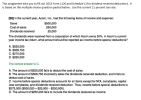 This assignment asks you to fill out 2019 Form 1120 and Schedule
C (for dividend received deduction). It is based on the
multiple-choice question pasted below. Use the current 21 percent
tax rate.
This assignment asks you to fill out 2019 Form 1120 and Schedule C (for dividend received deduction). It is based on the multiple-choice question pasted below. Use the current 21 percent tax rate. [28] In the current year, Acom, Inc., had the following items of income and...
This assignment asks you to fill out 2019 Form 1120 and Schedule
C (for dividend received deduction). It is based on the
multiple-choice question pasted below. Use the current 21 percent
tax rate.
This assignment asks you to fill out 2019 Form 1120 and Schedule C (for dividend received deduction). It is based on the multiple-choice question pasted below. Use the current 21 percent tax rate. [28] In the current year, Acom, Inc., had the following items of income and...
• Complete Alvin's Music Inc.'s (AMI) 2018 Form 1120 using the information provided below. • Neither...
• Complete Alvin's Music Inc.'s (AMI) 2018 Form 1120 using the information provided below. • Neither Form 4562 for depreciation nor Form 4797 for the sale of the equipment is required. Include the amount of tax depreciation and the tax gain on the equipment sale given in the problem (or determined from information given in the problem) on the appropriate lines on the first page of Form 1120. • Assume that AMI does not owe any alternative minimum tax. •...
Statutory Tax Rate versus Effective Tax Rate difference...... Schedule M1 (CT1) and M2 (CT2) For Rocky...
Statutory Tax Rate versus Effective Tax Rate difference...... Schedule M1 (CT1) and M2 (CT2) For Rocky Mountain Equipment Corporation Form 1120-F The Rocky Mountain Equipment Corporation, a Colorado Corporation, was formed by two Colorado State University business school graduates. The Rocky Mountain Equipment Corporation incorporated on October 20, 1974. The main line of business is selling recreational equipment to outdoor enthusiasts. Starting in their parents’ garage, they have grown the corporation to a multimillion dollar business. To comply with accounting...
Prepare a Schedule M-1, page 5, Form 1120, reconciling Cramer’s book and taxable income. Cramer Corporation, a calendar...
 Prepare a Schedule M-1, page 5, Form 1120,
reconciling Cramer’s book and taxable income.
Cramer Corporation, a calendar year, accrual basis corporation, reported $1.05 million of net income after tax on its 2018 financial statements prepared in accordance with GAAP. The corporation's books and records reveal the following information: • Cramer's federal income tax expense per books was $201,000. • Cramer's book income included $11,000 of dividends received from a domestic corporation in which Cramer owns a 25 percent stock...
Prepare a Schedule M-1, page 5, Form 1120,
reconciling Cramer’s book and taxable income.
Cramer Corporation, a calendar year, accrual basis corporation, reported $1.05 million of net income after tax on its 2018 financial statements prepared in accordance with GAAP. The corporation's books and records reveal the following information: • Cramer's federal income tax expense per books was $201,000. • Cramer's book income included $11,000 of dividends received from a domestic corporation in which Cramer owns a 25 percent stock...
QUESTION 45 The ABC Corporation's depreciation for tax purposes was $100,000. Its depreciation for book purposes...
 QUESTION 45 The ABC Corporation's depreciation for tax purposes was $100,000. Its depreciation for book purposes was $120,000. This item will be an addition on Schedule M-1. O a. True. O b. False. QUESTION 46 Thrush Corporation, a calendar year C corporation, files it's 2020 Form 1120, which reports taxable income of $100,000 for the year. The corporation's tax is $61.250. O a. True. b. False QUESTION 47 Lia incorporates her sole proprietorship with assets having a fair market value...
Blake operated as a sole proprietor, reported on Schedule C (Form '10,10). He used 350 square...
Blake operated as a sole proprietor, reported on Schedule C (Form '10,10). He used 350 square feet of his 2100 square-foot rented loft exclusively and regularly for business, Blake used the cash accounting method and had the following income and expenses for his financial planning business: . Gross receipt: $36,960 'Expenses: Advertising: $80 . Business insurance: 9685 . Business license: $100 . Comprehensive health insurance (entire year): $7,786 . Office supplies: $76 . Postage: $38 Rent {entire year): $'14,400 ....
I need dividends income tax for sasha to complete this question in part b. Problem 3-31...
 I need dividends income tax for sasha to complete this
question in part b.
Problem 3-31 (LO. 1) In the current year, Azure Company has $350.000 of net operating income before deducting any compensation or other payment to its sole owner, Sasha. In addition, Arure has interest on municipal bonds of $25,000. Sasha has significant income from other sources and is in the 37% marginal tax bracket Based on this information, determine the income tax consequences to Azure Company and...
I need dividends income tax for sasha to complete this
question in part b.
Problem 3-31 (LO. 1) In the current year, Azure Company has $350.000 of net operating income before deducting any compensation or other payment to its sole owner, Sasha. In addition, Arure has interest on municipal bonds of $25,000. Sasha has significant income from other sources and is in the 37% marginal tax bracket Based on this information, determine the income tax consequences to Azure Company and...
2019 Tax Rate Schedules Single-Schedule X Head of household—Schedule Z If taxable of the If taxable...
 2019 Tax Rate Schedules Single-Schedule X Head of household—Schedule Z If taxable of the If taxable income is: But not amount income is: But not Over- over- The tax is: over Over- over- The tax is: $ 0 $ 9,700 ......... 10% $ 0 $ 13,850 ......... 10% 9,700 39,475 $ 970.00 + 12% 9,700 13,850 52,850 $ 1,385.00 + 12% 39,475 84,200 4,543.00 + 22% 39,475 52,850 84,200 6,065.00 + 22% 84,200 160,725 14,382.50 +24% 84,200 84,200 160,700 12,962.00...
Blake operated as a sole proprietor, reported on Schedule C form 1040. He used 350 square...
Blake operated as a sole proprietor, reported on Schedule C form 1040. He used 350 square feet of his 2,100 sq ft rented Loft exclusively and regularly for business. Blake used the cash accounting method and had the following income and expenses for his Financial Planning business: gross receipts $36,960 expenses advertising $80 business insurance $685 business license $100 comprehensive life insurance entire year $7,788 office supplies $76 postage $38 rent entire year $14,400 renters insurance entire year $1,055 second...
Marathon Inc. (a C corporation) reported $1,950,000 of taxable income in the current year. During the...
Marathon Inc. (a C corporation) reported $1,950,000 of taxable income in the current year. During the year, it distributed $195,000 as dividends to its shareholders as follows: (New Corporate income tax rate has been mentioned as "21% on all taxable income" as per the recent change. Leave no answer blank. Enter zero if applicable.) $9,750 to Guy, a 5 percent individual shareholder. $29,250 to Little Rock Corp., a 15 percent shareholder (C corporation). $156,000 to other shareholders. How much of...
 This assignment asks you to fill out 2019 Form 1120 and Schedule
C (for dividend received deduction). It is based on the
multiple-choice question pasted below. Use the current 21 percent
tax rate.
This assignment asks you to fill out 2019 Form 1120 and Schedule C (for dividend received deduction). It is based on the multiple-choice question pasted below. Use the current 21 percent tax rate. [28] In the current year, Acom, Inc., had the following items of income and...
This assignment asks you to fill out 2019 Form 1120 and Schedule
C (for dividend received deduction). It is based on the
multiple-choice question pasted below. Use the current 21 percent
tax rate.
This assignment asks you to fill out 2019 Form 1120 and Schedule C (for dividend received deduction). It is based on the multiple-choice question pasted below. Use the current 21 percent tax rate. [28] In the current year, Acom, Inc., had the following items of income and...
 Prepare a Schedule M-1, page 5, Form 1120,
reconciling Cramer’s book and taxable income.
Cramer Corporation, a calendar year, accrual basis corporation, reported $1.05 million of net income after tax on its 2018 financial statements prepared in accordance with GAAP. The corporation's books and records reveal the following information: • Cramer's federal income tax expense per books was $201,000. • Cramer's book income included $11,000 of dividends received from a domestic corporation in which Cramer owns a 25 percent stock...
Prepare a Schedule M-1, page 5, Form 1120,
reconciling Cramer’s book and taxable income.
Cramer Corporation, a calendar year, accrual basis corporation, reported $1.05 million of net income after tax on its 2018 financial statements prepared in accordance with GAAP. The corporation's books and records reveal the following information: • Cramer's federal income tax expense per books was $201,000. • Cramer's book income included $11,000 of dividends received from a domestic corporation in which Cramer owns a 25 percent stock...
 QUESTION 45 The ABC Corporation's depreciation for tax purposes was $100,000. Its depreciation for book purposes was $120,000. This item will be an addition on Schedule M-1. O a. True. O b. False. QUESTION 46 Thrush Corporation, a calendar year C corporation, files it's 2020 Form 1120, which reports taxable income of $100,000 for the year. The corporation's tax is $61.250. O a. True. b. False QUESTION 47 Lia incorporates her sole proprietorship with assets having a fair market value...
 I need dividends income tax for sasha to complete this
question in part b.
Problem 3-31 (LO. 1) In the current year, Azure Company has $350.000 of net operating income before deducting any compensation or other payment to its sole owner, Sasha. In addition, Arure has interest on municipal bonds of $25,000. Sasha has significant income from other sources and is in the 37% marginal tax bracket Based on this information, determine the income tax consequences to Azure Company and...
I need dividends income tax for sasha to complete this
question in part b.
Problem 3-31 (LO. 1) In the current year, Azure Company has $350.000 of net operating income before deducting any compensation or other payment to its sole owner, Sasha. In addition, Arure has interest on municipal bonds of $25,000. Sasha has significant income from other sources and is in the 37% marginal tax bracket Based on this information, determine the income tax consequences to Azure Company and...
 2019 Tax Rate Schedules Single-Schedule X Head of household—Schedule Z If taxable of the If taxable income is: But not amount income is: But not Over- over- The tax is: over Over- over- The tax is: $ 0 $ 9,700 ......... 10% $ 0 $ 13,850 ......... 10% 9,700 39,475 $ 970.00 + 12% 9,700 13,850 52,850 $ 1,385.00 + 12% 39,475 84,200 4,543.00 + 22% 39,475 52,850 84,200 6,065.00 + 22% 84,200 160,725 14,382.50 +24% 84,200 84,200 160,700 12,962.00...
Most questions answered within 3 hours.
-
Where is the error in this code sequence?
String s1 = "Hello";
String s2 = "ello";...
asked 10 months ago -
Financial data for Joel de Paris, Inc., for last year
follow:
Joel de Paris, Inc.
Balance...
asked 10 months ago -
Consider this reaction:
Al2(SO4)3 (aq)+ BaCl3
(aq) Al2Cl6 (aq)- +
3BaSO4(s) . What is the...
asked 10 months ago -
Suppose that Savneet is considering increasing her
recent random sample from 20 car rentals to 40...
asked 10 months ago -
Trucks arrive at an unloading terminal at an average rate of 120
per hour.
Trucks arrive...
asked 10 months ago -
Why are methanol and ethanol completely soluble in water while
octanol is not very little soluble....
asked 10 months ago -
A facilities manager at a university reads in a research report
that the mean amount of...
asked 10 months ago -
When the CuSO4 is rehydrated by adding water to the anhydrous
compound, is this an endothermic...
asked 10 months ago -
A ray of sunlight is passing from diamond into crown glass; the
angle of incidence is...
asked 10 months ago -
A block of mass 0.249 kg is placed on top of a light, vertical
spring of...
asked 10 months ago -
how do the kidneys compensate in the presences of acidosis
a) trigger hyperventilate
b) reserve acid...
asked 10 months ago -
Question 501 pts
The rental rate of capital to the firm increases. Which of the
following...
asked 10 months ago