
Homework Answers

Add Answer to:
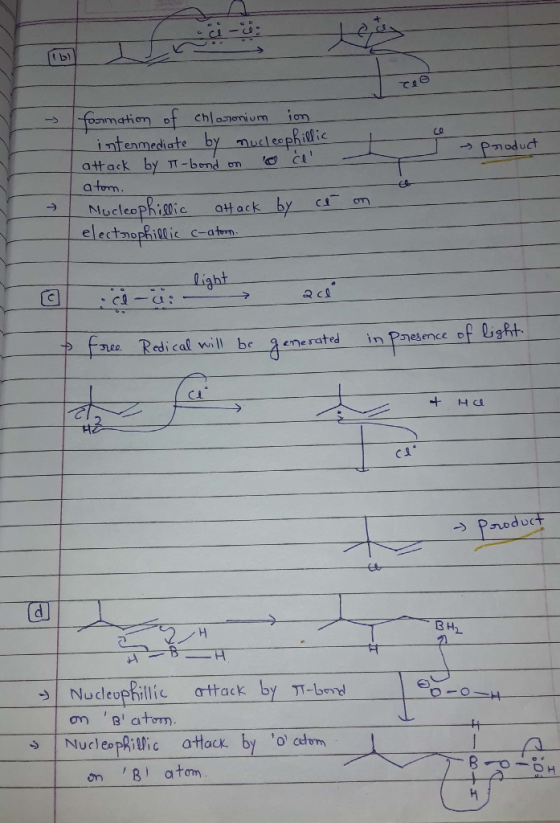
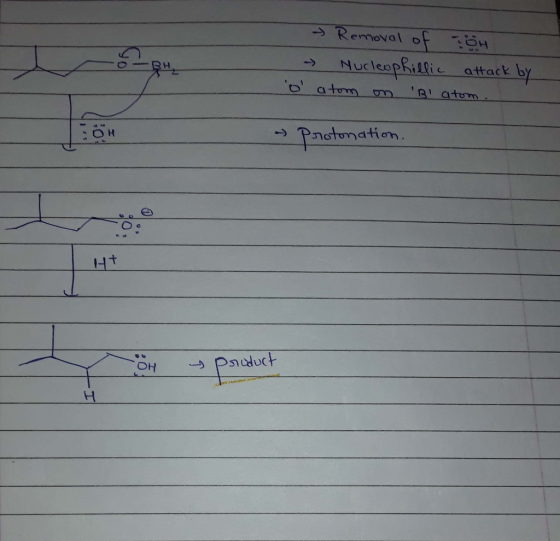
Question 5: Starting with 3-methyl-1-butene, draw the organic product formed when treated with the following reagen...
Question 4: Starting with 2-methyl-1-propanol, draw the organic product formed when treated with the following reagents:...
 Question 4: Starting with 2-methyl-1-propanol, draw the organic product formed when treated with the following reagents: OH 2-methyl-1-propanol a) H.SO,, heat HCI c) 1) TsCl, py PBr 2) NaSH
write the structure of the major organic product formed in the reaction of 2-methyl-2-butene (a) hydrogen...
write the structure of the major organic product formed in the reaction of 2-methyl-2-butene (a) hydrogen chloride (b) dilute sulfuric acid (c) diborane in diglyme, followed by basic hydrogen peroxide (d) bromine in carbon tetrachloride (e) bromine in water (f) peroxyacetic acid (g) ozone (h) product of (g) treated with zinc and water (i) product of part (g) treated with dimethyl sulfide (CH3)2S
Draw the structure of the product formed when HBr reacts with 2-methyl-2-butene in the presence of organic peroxides....
 Draw the structure of the product formed when HBr reacts with
2-methyl-2-butene in the presence of organic peroxides. When
drawing hydrogen atoms on a carbon atom, either include all
hydrogen atoms or none on that carbon atom, or your structure may
be marked incorrect.
Draw the structure of the product formed when HBr reacts with
2-methyl-2-butene in the presence of organic peroxides. When
drawing hydrogen atoms on a carbon atom, either include all
hydrogen atoms or none on that carbon atom, or your structure may
be marked incorrect.
Draw the expected major organic product that results when 3,3-dimethyl-1-butene is treated with br2 in methanol...
 Draw the expected major organic product that results when
3,3-dimethyl-1-butene is treated with br2 in methanol
Draw the expected major organic product that results when 3,3-dimethyl-1-butene is treated with Br_2 in methanol.
Draw the expected major organic product that results when
3,3-dimethyl-1-butene is treated with br2 in methanol
Draw the expected major organic product that results when 3,3-dimethyl-1-butene is treated with Br_2 in methanol.
Give the major organic product(s) of the reactions of l-methyl-2-deuteriocyclohexene (D = "H) with the reagents...
 Give the major organic product(s) of the reactions of l-methyl-2-deuteriocyclohexene (D = "H) with the reagents given. Be sure to show all stereoisomers formed, and indicate which isomers are formed in equal and in unequal quantities. CHE 1-methyl-2-deuteriocyclohexene (a) (1) BH, THF: (2) H:03, NaOH, H:0 (b) HBr, AIBN (c) Br, H:0 Give the major organic product(s) of the reactions shown below. Be sure to show all stereoisomers formed, and indicate which isomers are formed in equal and in unequal...
Reactions and Reagents 17,37 Draw the product formed when pentanal (CH,CH,CH,CH,CHO) is treated with each reagent....
 Reactions and Reagents 17,37 Draw the product formed when pentanal (CH,CH,CH,CH,CHO) is treated with each reagent. With some reagents, no reaction occurs. a. NaBH. CH,OH e. Na,Cr,O, H,SO4, H,0 1. [1] (CH3)2CuLi; [2] HO b. [1] LIAIH[2] H,0 f. Ag,O, NH,OH J. [1] HCCN: (2] H,0 c. Hz. Pd-C g. (1] CHẠMgar, [2] HẠO k. [CH,CECLI: [2] H,0 d. PCC b. [1] CH, LH: (2] HẠO 1. The product in (a), then TBDMS-CI, Imidazole
(References) Draw the structural formula of the principal organic product formed when ethyl benzoate is treated...
 (References) Draw the structural formula of the principal organic product formed when ethyl benzoate is treated with H,O, NaOH, heat. • You do not have to consider stereochemistry. • You do not have to explicitly draw H atoms. . Do not include lone pairs in your answer. They will not be considered in the grading. • Include counter-ions, e.g., Nat, 1", in your submission, but draw them in their own separate sketcher. Visited not draw organic or inorganic by-products.
1) Which base yields the most SN2 when treated with the same starting material? (draw this...
 1) Which base yields the most SN2 when treated with the same
starting material? (draw this structure with stereochemistry)
2)Which base would have the least yield of SN2?
3) What conclusions are made about the amount of SN2 product
formed as a function of base strength?
4) Discuss stereospecificity of an SN2 reaction and draw the
SN2 transition state intermediate formed when benzoate is treated
with starting material.
4. When the starting material shown below is treated with a variety...
1) Which base yields the most SN2 when treated with the same
starting material? (draw this structure with stereochemistry)
2)Which base would have the least yield of SN2?
3) What conclusions are made about the amount of SN2 product
formed as a function of base strength?
4) Discuss stereospecificity of an SN2 reaction and draw the
SN2 transition state intermediate formed when benzoate is treated
with starting material.
4. When the starting material shown below is treated with a variety...
Hc VCH Draw the organic product formed when CH3CH2CH2OH is treated with each reagent. a H2S04 (180°C) d SOC12, pyri...
 Hc VCH Draw the organic product formed when CH3CH2CH2OH is treated with each reagent. a H2S04 (180°C) d SOC12, pyridine Ig 1) NaH; 2) CH3CH2Br b NaH e PBr3 h 1) TSCI, pyridine; 2) NaSH c HBr f TsCl, pyridine 3. Draw the organic product formed when l-methylcyclohexanol is treaded with each reagent. In some cases, no reaction occurs. a KH c HBr Te NaHCO3 b Nacid HCI f 1) KH; 2) CH3CH2Br Draw two different routes to each of...
5.27 Give the principal organic products expected when 1-butene reacts with each of the following reagents...
 5.27 Give the principal organic products expected when 1-butene reacts with each of the following reagents (a) Br2 in CH2Cl2 solvent (b) O3, -78 oc (c) product of (b) with (CH3)2S (d) product of (b) with H202 (e) O2, flame (f) HBr (g) I2, H20 (h) H2, Pt/C (i) HBr, peroxides (j) BH3 in tetrahydrofuran (THF) (k) product of G) with NaOH, H,02 (1) Hg(OAc), H2O (m) product of (I) with NaBH4/NaOH (n) HI (o) HI, AIBN
 Question 4: Starting with 2-methyl-1-propanol, draw the organic product formed when treated with the following reagents: OH 2-methyl-1-propanol a) H.SO,, heat HCI c) 1) TsCl, py PBr 2) NaSH
 Draw the structure of the product formed when HBr reacts with
2-methyl-2-butene in the presence of organic peroxides. When
drawing hydrogen atoms on a carbon atom, either include all
hydrogen atoms or none on that carbon atom, or your structure may
be marked incorrect.
Draw the structure of the product formed when HBr reacts with
2-methyl-2-butene in the presence of organic peroxides. When
drawing hydrogen atoms on a carbon atom, either include all
hydrogen atoms or none on that carbon atom, or your structure may
be marked incorrect.
 Draw the expected major organic product that results when
3,3-dimethyl-1-butene is treated with br2 in methanol
Draw the expected major organic product that results when 3,3-dimethyl-1-butene is treated with Br_2 in methanol.
Draw the expected major organic product that results when
3,3-dimethyl-1-butene is treated with br2 in methanol
Draw the expected major organic product that results when 3,3-dimethyl-1-butene is treated with Br_2 in methanol.
 Give the major organic product(s) of the reactions of l-methyl-2-deuteriocyclohexene (D = "H) with the reagents given. Be sure to show all stereoisomers formed, and indicate which isomers are formed in equal and in unequal quantities. CHE 1-methyl-2-deuteriocyclohexene (a) (1) BH, THF: (2) H:03, NaOH, H:0 (b) HBr, AIBN (c) Br, H:0 Give the major organic product(s) of the reactions shown below. Be sure to show all stereoisomers formed, and indicate which isomers are formed in equal and in unequal...
 Reactions and Reagents 17,37 Draw the product formed when pentanal (CH,CH,CH,CH,CHO) is treated with each reagent. With some reagents, no reaction occurs. a. NaBH. CH,OH e. Na,Cr,O, H,SO4, H,0 1. [1] (CH3)2CuLi; [2] HO b. [1] LIAIH[2] H,0 f. Ag,O, NH,OH J. [1] HCCN: (2] H,0 c. Hz. Pd-C g. (1] CHẠMgar, [2] HẠO k. [CH,CECLI: [2] H,0 d. PCC b. [1] CH, LH: (2] HẠO 1. The product in (a), then TBDMS-CI, Imidazole
 (References) Draw the structural formula of the principal organic product formed when ethyl benzoate is treated with H,O, NaOH, heat. • You do not have to consider stereochemistry. • You do not have to explicitly draw H atoms. . Do not include lone pairs in your answer. They will not be considered in the grading. • Include counter-ions, e.g., Nat, 1", in your submission, but draw them in their own separate sketcher. Visited not draw organic or inorganic by-products.
 1) Which base yields the most SN2 when treated with the same
starting material? (draw this structure with stereochemistry)
2)Which base would have the least yield of SN2?
3) What conclusions are made about the amount of SN2 product
formed as a function of base strength?
4) Discuss stereospecificity of an SN2 reaction and draw the
SN2 transition state intermediate formed when benzoate is treated
with starting material.
4. When the starting material shown below is treated with a variety...
1) Which base yields the most SN2 when treated with the same
starting material? (draw this structure with stereochemistry)
2)Which base would have the least yield of SN2?
3) What conclusions are made about the amount of SN2 product
formed as a function of base strength?
4) Discuss stereospecificity of an SN2 reaction and draw the
SN2 transition state intermediate formed when benzoate is treated
with starting material.
4. When the starting material shown below is treated with a variety...
 Hc VCH Draw the organic product formed when CH3CH2CH2OH is treated with each reagent. a H2S04 (180°C) d SOC12, pyridine Ig 1) NaH; 2) CH3CH2Br b NaH e PBr3 h 1) TSCI, pyridine; 2) NaSH c HBr f TsCl, pyridine 3. Draw the organic product formed when l-methylcyclohexanol is treaded with each reagent. In some cases, no reaction occurs. a KH c HBr Te NaHCO3 b Nacid HCI f 1) KH; 2) CH3CH2Br Draw two different routes to each of...
 5.27 Give the principal organic products expected when 1-butene reacts with each of the following reagents (a) Br2 in CH2Cl2 solvent (b) O3, -78 oc (c) product of (b) with (CH3)2S (d) product of (b) with H202 (e) O2, flame (f) HBr (g) I2, H20 (h) H2, Pt/C (i) HBr, peroxides (j) BH3 in tetrahydrofuran (THF) (k) product of G) with NaOH, H,02 (1) Hg(OAc), H2O (m) product of (I) with NaBH4/NaOH (n) HI (o) HI, AIBN
Most questions answered within 3 hours.
-
Where is the error in this code sequence?
String s1 = "Hello";
String s2 = "ello";...
asked 10 months ago -
Financial data for Joel de Paris, Inc., for last year
follow:
Joel de Paris, Inc.
Balance...
asked 10 months ago -
Consider this reaction:
Al2(SO4)3 (aq)+ BaCl3
(aq) Al2Cl6 (aq)- +
3BaSO4(s) . What is the...
asked 10 months ago -
Suppose that Savneet is considering increasing her
recent random sample from 20 car rentals to 40...
asked 10 months ago -
Trucks arrive at an unloading terminal at an average rate of 120
per hour.
Trucks arrive...
asked 10 months ago -
Why are methanol and ethanol completely soluble in water while
octanol is not very little soluble....
asked 10 months ago -
A facilities manager at a university reads in a research report
that the mean amount of...
asked 10 months ago -
When the CuSO4 is rehydrated by adding water to the anhydrous
compound, is this an endothermic...
asked 10 months ago -
A ray of sunlight is passing from diamond into crown glass; the
angle of incidence is...
asked 10 months ago -
A block of mass 0.249 kg is placed on top of a light, vertical
spring of...
asked 10 months ago -
how do the kidneys compensate in the presences of acidosis
a) trigger hyperventilate
b) reserve acid...
asked 10 months ago -
Question 501 pts
The rental rate of capital to the firm increases. Which of the
following...
asked 10 months ago