Please show all the steps for the answer, not just the answer, and can you give a little explanation on the side of each step explaining why you did that step please
Homework Answers
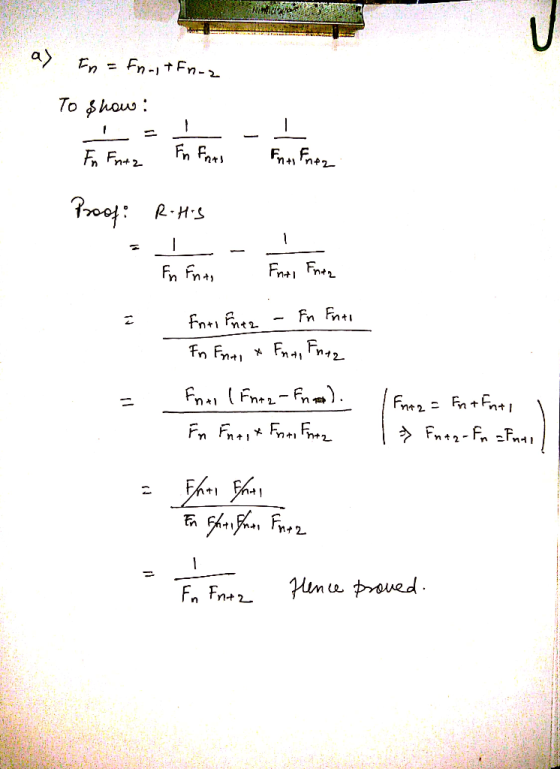
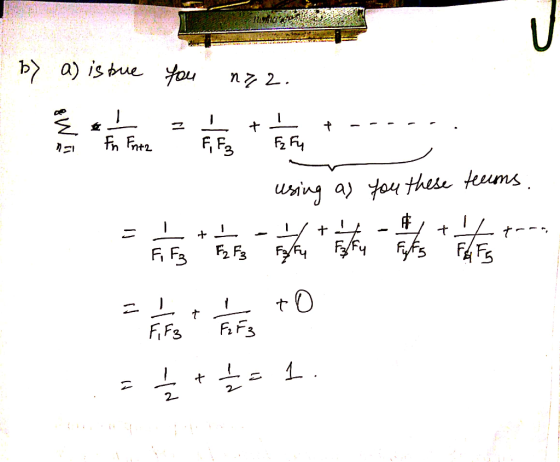
If you need any further clarification regarding this problem feel
free to comment below
Don't forget to vote
Add Answer to:
Please show all the steps for the answer, not just the answer, and can you give a little explanation on the side of eac...
Please show all the steps for the answer, not just the answer, and can you give a little explanation on the side of eac...
 Please show all the steps for the answer, not just the answer,
and can you give a little explanation on the side of each step
explaining why you did that step please.
The curve shown in the graph below is called a lemniscate. Its polar equation is T COs 20 0.25 -0.5 0.5 -0.25 Find an equation for the lemniscate in rectangular coordinates (a) (b) lemniscate Set up and evaluate an integral to calculate the area enclosed by the
The...
Please show all the steps for the answer, not just the answer,
and can you give a little explanation on the side of each step
explaining why you did that step please.
The curve shown in the graph below is called a lemniscate. Its polar equation is T COs 20 0.25 -0.5 0.5 -0.25 Find an equation for the lemniscate in rectangular coordinates (a) (b) lemniscate Set up and evaluate an integral to calculate the area enclosed by the
The...
The questions for the calculusIII Instructions. Answer each question completely: justify your answers. This assignment is...
 The
questions for the calculusIII
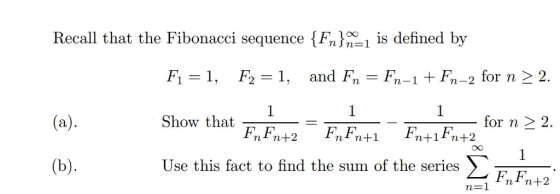
Instructions. Answer each question completely: justify your answers. This assignment is due at 5pm on Wednesday September 25 in Assignment Box #20. 1. Determine if the series given below are convergent. If convergent, calculate the sum of the series. If divergent, justify your answer. 1+23 2 32n n=1 (b) Žlcos(1) (1) § (12 + 3n+3) Suggestion: Use partial fractions. 2. Express this number as a ratio of integers: 2.46 = 2.46464646.. 3. The Fibonacci sequence...
The
questions for the calculusIII
Instructions. Answer each question completely: justify your answers. This assignment is due at 5pm on Wednesday September 25 in Assignment Box #20. 1. Determine if the series given below are convergent. If convergent, calculate the sum of the series. If divergent, justify your answer. 1+23 2 32n n=1 (b) Žlcos(1) (1) § (12 + 3n+3) Suggestion: Use partial fractions. 2. Express this number as a ratio of integers: 2.46 = 2.46464646.. 3. The Fibonacci sequence...
3. The sequence (Fn) of Fibonacci numbers is defined by the recursive relation Fn+2 Fn+1+ F...
 3. The sequence (Fn) of Fibonacci numbers is defined by the recursive relation Fn+2 Fn+1+ F for all n E N and with Fi = F2= 1. to find a recursive relation for the sequence of ratios (a) Use the recursive relation for (F) Fn+ Fn an Hint: Divide by Fn+1 N (b) Show by induction that an 1 for all n (c) Given that the limit l = lim,0 an exists (so you do not need to prove that...
Please answer c d e 3. This problem shows that the metric space of continuous real-valued...
 Please answer c d e
3. This problem shows that the metric space of continuous real-valued functions C([0, 1]) on the interval [0, 1is complete. Recall that we use the sup metric on C([0,1), so that df, 9) = sup{f (2) - 9(2): € (0,1]} (a) Suppose that {n} is a Cauchy sequence in C([0,1]). Show that for each a in 0,1], {Sn(a)} is a Cauchy sequence of real numbers. (b) Show that the sequence {fn(a)} converges. We define f(a)...
Please answer c d e
3. This problem shows that the metric space of continuous real-valued functions C([0, 1]) on the interval [0, 1is complete. Recall that we use the sup metric on C([0,1), so that df, 9) = sup{f (2) - 9(2): € (0,1]} (a) Suppose that {n} is a Cauchy sequence in C([0,1]). Show that for each a in 0,1], {Sn(a)} is a Cauchy sequence of real numbers. (b) Show that the sequence {fn(a)} converges. We define f(a)...
solve 6 please . step by step. #5. Given a sequence fa pao, a , a,...
 solve 6 please . step by step.
#5. Given a sequence fa pao, a , a, , define the sequence lbne bobt b2, by 田 b.-ao + a1 +a2 + + ak If a (x) is the generating function for (an) and b(x) is the generating function for tbnj, then show (1-x)a. This lets us write b)4 #6. Let(anpao, ai, a2, given by a,-0, ai-1, an+2-an+1 + an be the sequence of Fibonacci numbers; recall that the ordinary generating function...
solve 6 please . step by step.
#5. Given a sequence fa pao, a , a, , define the sequence lbne bobt b2, by 田 b.-ao + a1 +a2 + + ak If a (x) is the generating function for (an) and b(x) is the generating function for tbnj, then show (1-x)a. This lets us write b)4 #6. Let(anpao, ai, a2, given by a,-0, ai-1, an+2-an+1 + an be the sequence of Fibonacci numbers; recall that the ordinary generating function...
I understand a) and b), but I do not know how to answer c). Can someone...
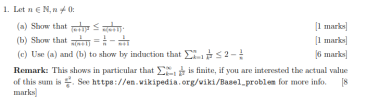 I understand a) and b), but I do not know how to answer c). Can
someone clearly explain and answer the last question, please!
Uploaded the previous question if that helps answer question
2!
1. Let n E N, n # 0: (a) Show that n+1)* < m(n+1}* marks 1 marks 6 marks (b) Show that n+1) 1 n1 n (c) Use (a) and (b) to show by induction that < 2 - 1 Remark: This shows in particular that...
I understand a) and b), but I do not know how to answer c). Can
someone clearly explain and answer the last question, please!
Uploaded the previous question if that helps answer question
2!
1. Let n E N, n # 0: (a) Show that n+1)* < m(n+1}* marks 1 marks 6 marks (b) Show that n+1) 1 n1 n (c) Use (a) and (b) to show by induction that < 2 - 1 Remark: This shows in particular that...
please help me and show all the steps and make sure it's correct 8.(a) Show all...
 please help me and show all the steps and make sure it's
correct
8.(a) Show all calculus to determine whether the sequence {A,}=1 + 2n converges or diverges. -{{ 2.)"} (b) Show how to find a formula for the sequence of partial sums (Sn) for the 2 infinite sum 2n +51 +6 and use limits to find the sum of the infinite series. Σ
please help me and show all the steps and make sure it's
correct
8.(a) Show all calculus to determine whether the sequence {A,}=1 + 2n converges or diverges. -{{ 2.)"} (b) Show how to find a formula for the sequence of partial sums (Sn) for the 2 infinite sum 2n +51 +6 and use limits to find the sum of the infinite series. Σ
Question 1. A linear homogeneous recurrence relation of degree 2 with constant coefficients is a recurrence...
 Question 1. A linear homogeneous recurrence relation of degree 2 with constant coefficients is a recurrence relation of the form an = Cian-1 + c2an-2, for real constants Ci and C2, and all n 2. Show that if an = r" for some constant r, then r must satisfy the characteristic equation, p2 - cir= c = 0. Question 2. Given a linear homogeneous recurrence relation of degree 2 with constant coefficients, the solutions of its characteristic equation are called...
Show all work. Incomplete answers may receive little or no credit. 1. Briefly explain why the...
 Show all work. Incomplete answers may receive little or no credit. 1. Briefly explain why the sequence (34+3 converges, while the series 23+2 diverges. For each of the following, determine if the series converges or diverges. Be sure to state what test you use. If the series is geometric & converges, find the sum. 5 -1 gn+1 5 el/n 5. 1 - 9 + - 1 - 6 + 1 - 4 + -3 8
1. The famous Fibonacci sequence f1, f2, f3, . . . is defined as f1 =...
1. The famous Fibonacci sequence f1, f2, f3, . . . is defined as f1 = 1, f2 = 1 fn = fn−1 + fn−2, for n > 2 So the sequence begins as 1, 1, 2, 3, 5, 8, 13, 21, 34, . . .. Define a recursive function int fibonacci(int n) which returns the n-th Fibonacci number 2. Define recursive function my_sequence(n) which returns the n-th member of the sequence a1 = 3, a2 = 5, a3 =...
 Please show all the steps for the answer, not just the answer,
and can you give a little explanation on the side of each step
explaining why you did that step please.
The curve shown in the graph below is called a lemniscate. Its polar equation is T COs 20 0.25 -0.5 0.5 -0.25 Find an equation for the lemniscate in rectangular coordinates (a) (b) lemniscate Set up and evaluate an integral to calculate the area enclosed by the
The...
Please show all the steps for the answer, not just the answer,
and can you give a little explanation on the side of each step
explaining why you did that step please.
The curve shown in the graph below is called a lemniscate. Its polar equation is T COs 20 0.25 -0.5 0.5 -0.25 Find an equation for the lemniscate in rectangular coordinates (a) (b) lemniscate Set up and evaluate an integral to calculate the area enclosed by the
The...
 The
questions for the calculusIII
Instructions. Answer each question completely: justify your answers. This assignment is due at 5pm on Wednesday September 25 in Assignment Box #20. 1. Determine if the series given below are convergent. If convergent, calculate the sum of the series. If divergent, justify your answer. 1+23 2 32n n=1 (b) Žlcos(1) (1) § (12 + 3n+3) Suggestion: Use partial fractions. 2. Express this number as a ratio of integers: 2.46 = 2.46464646.. 3. The Fibonacci sequence...
The
questions for the calculusIII
Instructions. Answer each question completely: justify your answers. This assignment is due at 5pm on Wednesday September 25 in Assignment Box #20. 1. Determine if the series given below are convergent. If convergent, calculate the sum of the series. If divergent, justify your answer. 1+23 2 32n n=1 (b) Žlcos(1) (1) § (12 + 3n+3) Suggestion: Use partial fractions. 2. Express this number as a ratio of integers: 2.46 = 2.46464646.. 3. The Fibonacci sequence...
 3. The sequence (Fn) of Fibonacci numbers is defined by the recursive relation Fn+2 Fn+1+ F for all n E N and with Fi = F2= 1. to find a recursive relation for the sequence of ratios (a) Use the recursive relation for (F) Fn+ Fn an Hint: Divide by Fn+1 N (b) Show by induction that an 1 for all n (c) Given that the limit l = lim,0 an exists (so you do not need to prove that...
 Please answer c d e
3. This problem shows that the metric space of continuous real-valued functions C([0, 1]) on the interval [0, 1is complete. Recall that we use the sup metric on C([0,1), so that df, 9) = sup{f (2) - 9(2): € (0,1]} (a) Suppose that {n} is a Cauchy sequence in C([0,1]). Show that for each a in 0,1], {Sn(a)} is a Cauchy sequence of real numbers. (b) Show that the sequence {fn(a)} converges. We define f(a)...
Please answer c d e
3. This problem shows that the metric space of continuous real-valued functions C([0, 1]) on the interval [0, 1is complete. Recall that we use the sup metric on C([0,1), so that df, 9) = sup{f (2) - 9(2): € (0,1]} (a) Suppose that {n} is a Cauchy sequence in C([0,1]). Show that for each a in 0,1], {Sn(a)} is a Cauchy sequence of real numbers. (b) Show that the sequence {fn(a)} converges. We define f(a)...
 solve 6 please . step by step.
#5. Given a sequence fa pao, a , a, , define the sequence lbne bobt b2, by 田 b.-ao + a1 +a2 + + ak If a (x) is the generating function for (an) and b(x) is the generating function for tbnj, then show (1-x)a. This lets us write b)4 #6. Let(anpao, ai, a2, given by a,-0, ai-1, an+2-an+1 + an be the sequence of Fibonacci numbers; recall that the ordinary generating function...
solve 6 please . step by step.
#5. Given a sequence fa pao, a , a, , define the sequence lbne bobt b2, by 田 b.-ao + a1 +a2 + + ak If a (x) is the generating function for (an) and b(x) is the generating function for tbnj, then show (1-x)a. This lets us write b)4 #6. Let(anpao, ai, a2, given by a,-0, ai-1, an+2-an+1 + an be the sequence of Fibonacci numbers; recall that the ordinary generating function...
 I understand a) and b), but I do not know how to answer c). Can
someone clearly explain and answer the last question, please!
Uploaded the previous question if that helps answer question
2!
1. Let n E N, n # 0: (a) Show that n+1)* < m(n+1}* marks 1 marks 6 marks (b) Show that n+1) 1 n1 n (c) Use (a) and (b) to show by induction that < 2 - 1 Remark: This shows in particular that...
I understand a) and b), but I do not know how to answer c). Can
someone clearly explain and answer the last question, please!
Uploaded the previous question if that helps answer question
2!
1. Let n E N, n # 0: (a) Show that n+1)* < m(n+1}* marks 1 marks 6 marks (b) Show that n+1) 1 n1 n (c) Use (a) and (b) to show by induction that < 2 - 1 Remark: This shows in particular that...
 please help me and show all the steps and make sure it's
correct
8.(a) Show all calculus to determine whether the sequence {A,}=1 + 2n converges or diverges. -{{ 2.)"} (b) Show how to find a formula for the sequence of partial sums (Sn) for the 2 infinite sum 2n +51 +6 and use limits to find the sum of the infinite series. Σ
please help me and show all the steps and make sure it's
correct
8.(a) Show all calculus to determine whether the sequence {A,}=1 + 2n converges or diverges. -{{ 2.)"} (b) Show how to find a formula for the sequence of partial sums (Sn) for the 2 infinite sum 2n +51 +6 and use limits to find the sum of the infinite series. Σ
 Question 1. A linear homogeneous recurrence relation of degree 2 with constant coefficients is a recurrence relation of the form an = Cian-1 + c2an-2, for real constants Ci and C2, and all n 2. Show that if an = r" for some constant r, then r must satisfy the characteristic equation, p2 - cir= c = 0. Question 2. Given a linear homogeneous recurrence relation of degree 2 with constant coefficients, the solutions of its characteristic equation are called...
 Show all work. Incomplete answers may receive little or no credit. 1. Briefly explain why the sequence (34+3 converges, while the series 23+2 diverges. For each of the following, determine if the series converges or diverges. Be sure to state what test you use. If the series is geometric & converges, find the sum. 5 -1 gn+1 5 el/n 5. 1 - 9 + - 1 - 6 + 1 - 4 + -3 8
Most questions answered within 3 hours.
-
Where is the error in this code sequence?
String s1 = "Hello";
String s2 = "ello";...
asked 10 months ago -
Financial data for Joel de Paris, Inc., for last year
follow:
Joel de Paris, Inc.
Balance...
asked 10 months ago -
Consider this reaction:
Al2(SO4)3 (aq)+ BaCl3
(aq) Al2Cl6 (aq)- +
3BaSO4(s) . What is the...
asked 10 months ago -
Suppose that Savneet is considering increasing her
recent random sample from 20 car rentals to 40...
asked 10 months ago -
Trucks arrive at an unloading terminal at an average rate of 120
per hour.
Trucks arrive...
asked 10 months ago -
Why are methanol and ethanol completely soluble in water while
octanol is not very little soluble....
asked 10 months ago -
A facilities manager at a university reads in a research report
that the mean amount of...
asked 10 months ago -
When the CuSO4 is rehydrated by adding water to the anhydrous
compound, is this an endothermic...
asked 10 months ago -
A ray of sunlight is passing from diamond into crown glass; the
angle of incidence is...
asked 10 months ago -
A block of mass 0.249 kg is placed on top of a light, vertical
spring of...
asked 10 months ago -
how do the kidneys compensate in the presences of acidosis
a) trigger hyperventilate
b) reserve acid...
asked 10 months ago -
Question 501 pts
The rental rate of capital to the firm increases. Which of the
following...
asked 10 months ago