

Homework Answers

Add Answer to:
Draw at least two resonance structures for compound 4 Experiment #5, Part B. pn of 5-((2Z,4E)-5-(diethylamino)...
draw at least 2 resonance structures for this compound. please use arrows showing movement doplon N...
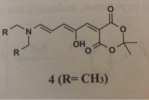 draw at least 2 resonance structures for this compound. please
use arrows showing movement
doplon N OH 4 (R= CH3) R R
draw at least 2 resonance structures for this compound. please
use arrows showing movement
doplon N OH 4 (R= CH3) R R
a) Draw all the resonance structed of the comparable energy for the following isomeric species b)Which...
 a) Draw all the resonance structed of the comparable energy for
the following isomeric species
b)Which of the two structures above will be present in higher
concentration in an aqueos solution at ph=7
5. (a) Draw all resonance structures of comparable energy for the following isomeric species (A and Bare the ionized forms of the same compound) (3 marks) O S-OH OH (b) Based on your answer to part (a), which of the two structures above will be present in...
a) Draw all the resonance structed of the comparable energy for
the following isomeric species
b)Which of the two structures above will be present in higher
concentration in an aqueos solution at ph=7
5. (a) Draw all resonance structures of comparable energy for the following isomeric species (A and Bare the ionized forms of the same compound) (3 marks) O S-OH OH (b) Based on your answer to part (a), which of the two structures above will be present in...
3) Consider the following structure: a) (6 pts) Draw two additional resonance structures for the following...
 3) Consider the following structure: a) (6 pts) Draw two additional resonance structures for the following compound. Show curved arrows to convert between the resonance structures. (You need to redraw the molecule below) b) (4 pts) Circle the major contributor above. Explain your choice 4) (5 pts) For the following compound draw in the lone pairs, indicate if each lone pair is localized or delocalized and identify what type of orbital each lone pair is in
Armine the lHD for the following formula and provide 2 Lewis structures Hint: You may also...
 Armine the lHD for the following formula and provide 2 Lewis structures Hint: You may also draw first, determine HD second] CsH2O2N2 One of the two isomeric derivatives shown below exhibits strong intramolecular hydrogen bonding the other dans not. Draw good three-dimensional chair representations of the stable conformers of each compound that shows this phenomenon, and explain in words. (50 pts) 7. 5-hydroxy-1,3-dioxane is more stable with the OH group in the axial position than in the equatiorial position. Explain...
Draw structures corresponding to the following systematic names: (a) (4Z)-2,4-Dimethylhexa-1,4-diene (b) trans-3,3-Dimethyl-4-propylocta-1,5-diene (c)(E)-4-Methylhexa-1,3-diene (d) (3E,5Z)-2,6-Dimethylocta-1,3,5,7-tetraene
 Draw structures corresponding to the following systematic names: (a) (4Z)-2,4-Dimethylhexa-1,4-diene (b) trans-3,3-Dimethyl-4-propylocta-1,5-diene (c)(E)-4-Methylhexa-1,3-diene (d) (3E,5Z)-2,6-Dimethylocta-1,3,5,7-tetraene
2. Name or draw (as appropriate for the following compounds: OH 1701111 B. (1R)-1-(1-methylethyl)-4-propoxycyclohex-3-en-ol D. (1R,...
 2. Name or draw (as appropriate for the following compounds: OH 1701111 B. (1R)-1-(1-methylethyl)-4-propoxycyclohex-3-en-ol D. (1R, 32, 55, 6E, 95)-5-ethyl-9(N,N-diethylamino)cyclodec-3,6-dien-1-ol ol بما
Draw the structure of each compound 1. Draw the structure of each compound: (a) cis-1,2-Cyclohexanediol (b)...
 Draw the structure of each compound
1. Draw the structure of each compound: (a) cis-1,2-Cyclohexanediol (b) Isobutanol (c) 2,4,6-Trinitrophenol (d) (R)-2,2-Dimethyl-3-heptanol (e) Ethylene glycol (0) (s)-2-Methyl-1-butanol 2. Acid-catalyzed hydration of 3,3-dimethyl-1-butene produces 2,3-dimethyl-2-butanol. Show a mechanism for this reaction 3. Acid-catalyzed hydration of 1-methylcyclohexene yields two alcohols. The major product does not undergo oxidation, while the minor product will undergo oxidation. Explain. 4. Using 2-propanol as your only source of carbon, show how you would prepare 2-methyl- 2-pentanol. 5. Identify...
Draw the structure of each compound
1. Draw the structure of each compound: (a) cis-1,2-Cyclohexanediol (b) Isobutanol (c) 2,4,6-Trinitrophenol (d) (R)-2,2-Dimethyl-3-heptanol (e) Ethylene glycol (0) (s)-2-Methyl-1-butanol 2. Acid-catalyzed hydration of 3,3-dimethyl-1-butene produces 2,3-dimethyl-2-butanol. Show a mechanism for this reaction 3. Acid-catalyzed hydration of 1-methylcyclohexene yields two alcohols. The major product does not undergo oxidation, while the minor product will undergo oxidation. Explain. 4. Using 2-propanol as your only source of carbon, show how you would prepare 2-methyl- 2-pentanol. 5. Identify...
6. (4 pts.) Draw the two resonance structures of the enolate formed from the following reaction: 7. (4 pts) Draw th...
 6. (4 pts.) Draw the two resonance structures of the enolate formed from the following reaction: 7. (4 pts) Draw the structure of an alkyl bromide (R-Br) and an alkoxide (R-O) that would provide the most efficient synthesis of the following ether by the Williamson ether synthesis. Target ether 8. (5 pts.) Draw a mechanism for the following E2 reaction. Draw the major product. Be sure to include any necessary H's in your structure as you draw the mechanism. OH...
4. Draw the line-angle structure for each of the following a) (2E,4Z)-4-ethyl-5-isopropyl-3,6-dimethylocta-2,4-diene b) (2Z,4Z,6E)-3-bromo-5-chloro-4-ethyl-7-fluoro-9-methyldeca-2,4,6-triene c) (5S,8S)-3-sec-butyl-5-ethyl-1,8-dimethylcycloocta-1,3,6-trien
 4. Draw the line-angle structure for each of the following a) (2E,4Z)-4-ethyl-5-isopropyl-3,6-dimethylocta-2,4-diene b) (2Z,4Z,6E)-3-bromo-5-chloro-4-ethyl-7-fluoro-9-methyldeca-2,4,6-triene c) (5S,8S)-3-sec-butyl-5-ethyl-1,8-dimethylcycloocta-1,3,6-triene d) 2-ethyl-3,5,5-trimethylcyclopenta-1,3-diene
24. Draw the structures for 4 of the following 5 compounds. a. 4-(1,1-dimethylethyl)heptane b. 2,...
 PLEASE PROVIDE EXPLANATION
24. Draw the structures for 4 of the following 5 compounds. a. 4-(1,1-dimethylethyl)heptane b. 2,6-dimethyl-4-(2-methylpropyl)decane c. 1-bromo-4-(3,3,3-trifluoro-2-methylpropyl)-7-fluorooctane d. 6-ethyl-2,6,7-trimethyl-5-propylnonane e. 4-sec-butyl-1,2-dimethylcyclohexane
24. Draw the structures for 4 of the following 5 compounds. a. 4-(1,1-dimethylethyl)heptane b. 2,6-dimethyl-4-(2-methylpropyl)decane c. 1-bromo-4-(3,3,3-trifluoro-2-methylpropyl)-7-fluorooctane d. 6-ethyl-2,6,7-trimethyl-5-propylnonane e. 4-sec-butyl-1,2-dimethylcyclohexane
PLEASE PROVIDE EXPLANATION
24. Draw the structures for 4 of the following 5 compounds. a. 4-(1,1-dimethylethyl)heptane b. 2,6-dimethyl-4-(2-methylpropyl)decane c. 1-bromo-4-(3,3,3-trifluoro-2-methylpropyl)-7-fluorooctane d. 6-ethyl-2,6,7-trimethyl-5-propylnonane e. 4-sec-butyl-1,2-dimethylcyclohexane
24. Draw the structures for 4 of the following 5 compounds. a. 4-(1,1-dimethylethyl)heptane b. 2,6-dimethyl-4-(2-methylpropyl)decane c. 1-bromo-4-(3,3,3-trifluoro-2-methylpropyl)-7-fluorooctane d. 6-ethyl-2,6,7-trimethyl-5-propylnonane e. 4-sec-butyl-1,2-dimethylcyclohexane
 draw at least 2 resonance structures for this compound. please
use arrows showing movement
doplon N OH 4 (R= CH3) R R
draw at least 2 resonance structures for this compound. please
use arrows showing movement
doplon N OH 4 (R= CH3) R R
 a) Draw all the resonance structed of the comparable energy for
the following isomeric species
b)Which of the two structures above will be present in higher
concentration in an aqueos solution at ph=7
5. (a) Draw all resonance structures of comparable energy for the following isomeric species (A and Bare the ionized forms of the same compound) (3 marks) O S-OH OH (b) Based on your answer to part (a), which of the two structures above will be present in...
a) Draw all the resonance structed of the comparable energy for
the following isomeric species
b)Which of the two structures above will be present in higher
concentration in an aqueos solution at ph=7
5. (a) Draw all resonance structures of comparable energy for the following isomeric species (A and Bare the ionized forms of the same compound) (3 marks) O S-OH OH (b) Based on your answer to part (a), which of the two structures above will be present in...
 3) Consider the following structure: a) (6 pts) Draw two additional resonance structures for the following compound. Show curved arrows to convert between the resonance structures. (You need to redraw the molecule below) b) (4 pts) Circle the major contributor above. Explain your choice 4) (5 pts) For the following compound draw in the lone pairs, indicate if each lone pair is localized or delocalized and identify what type of orbital each lone pair is in
 Armine the lHD for the following formula and provide 2 Lewis structures Hint: You may also draw first, determine HD second] CsH2O2N2 One of the two isomeric derivatives shown below exhibits strong intramolecular hydrogen bonding the other dans not. Draw good three-dimensional chair representations of the stable conformers of each compound that shows this phenomenon, and explain in words. (50 pts) 7. 5-hydroxy-1,3-dioxane is more stable with the OH group in the axial position than in the equatiorial position. Explain...
 Draw structures corresponding to the following systematic names: (a) (4Z)-2,4-Dimethylhexa-1,4-diene (b) trans-3,3-Dimethyl-4-propylocta-1,5-diene (c)(E)-4-Methylhexa-1,3-diene (d) (3E,5Z)-2,6-Dimethylocta-1,3,5,7-tetraene
 2. Name or draw (as appropriate for the following compounds: OH 1701111 B. (1R)-1-(1-methylethyl)-4-propoxycyclohex-3-en-ol D. (1R, 32, 55, 6E, 95)-5-ethyl-9(N,N-diethylamino)cyclodec-3,6-dien-1-ol ol بما
 Draw the structure of each compound
1. Draw the structure of each compound: (a) cis-1,2-Cyclohexanediol (b) Isobutanol (c) 2,4,6-Trinitrophenol (d) (R)-2,2-Dimethyl-3-heptanol (e) Ethylene glycol (0) (s)-2-Methyl-1-butanol 2. Acid-catalyzed hydration of 3,3-dimethyl-1-butene produces 2,3-dimethyl-2-butanol. Show a mechanism for this reaction 3. Acid-catalyzed hydration of 1-methylcyclohexene yields two alcohols. The major product does not undergo oxidation, while the minor product will undergo oxidation. Explain. 4. Using 2-propanol as your only source of carbon, show how you would prepare 2-methyl- 2-pentanol. 5. Identify...
Draw the structure of each compound
1. Draw the structure of each compound: (a) cis-1,2-Cyclohexanediol (b) Isobutanol (c) 2,4,6-Trinitrophenol (d) (R)-2,2-Dimethyl-3-heptanol (e) Ethylene glycol (0) (s)-2-Methyl-1-butanol 2. Acid-catalyzed hydration of 3,3-dimethyl-1-butene produces 2,3-dimethyl-2-butanol. Show a mechanism for this reaction 3. Acid-catalyzed hydration of 1-methylcyclohexene yields two alcohols. The major product does not undergo oxidation, while the minor product will undergo oxidation. Explain. 4. Using 2-propanol as your only source of carbon, show how you would prepare 2-methyl- 2-pentanol. 5. Identify...
 6. (4 pts.) Draw the two resonance structures of the enolate formed from the following reaction: 7. (4 pts) Draw the structure of an alkyl bromide (R-Br) and an alkoxide (R-O) that would provide the most efficient synthesis of the following ether by the Williamson ether synthesis. Target ether 8. (5 pts.) Draw a mechanism for the following E2 reaction. Draw the major product. Be sure to include any necessary H's in your structure as you draw the mechanism. OH...
 4. Draw the line-angle structure for each of the following a) (2E,4Z)-4-ethyl-5-isopropyl-3,6-dimethylocta-2,4-diene b) (2Z,4Z,6E)-3-bromo-5-chloro-4-ethyl-7-fluoro-9-methyldeca-2,4,6-triene c) (5S,8S)-3-sec-butyl-5-ethyl-1,8-dimethylcycloocta-1,3,6-triene d) 2-ethyl-3,5,5-trimethylcyclopenta-1,3-diene
 PLEASE PROVIDE EXPLANATION
24. Draw the structures for 4 of the following 5 compounds. a. 4-(1,1-dimethylethyl)heptane b. 2,6-dimethyl-4-(2-methylpropyl)decane c. 1-bromo-4-(3,3,3-trifluoro-2-methylpropyl)-7-fluorooctane d. 6-ethyl-2,6,7-trimethyl-5-propylnonane e. 4-sec-butyl-1,2-dimethylcyclohexane
24. Draw the structures for 4 of the following 5 compounds. a. 4-(1,1-dimethylethyl)heptane b. 2,6-dimethyl-4-(2-methylpropyl)decane c. 1-bromo-4-(3,3,3-trifluoro-2-methylpropyl)-7-fluorooctane d. 6-ethyl-2,6,7-trimethyl-5-propylnonane e. 4-sec-butyl-1,2-dimethylcyclohexane
PLEASE PROVIDE EXPLANATION
24. Draw the structures for 4 of the following 5 compounds. a. 4-(1,1-dimethylethyl)heptane b. 2,6-dimethyl-4-(2-methylpropyl)decane c. 1-bromo-4-(3,3,3-trifluoro-2-methylpropyl)-7-fluorooctane d. 6-ethyl-2,6,7-trimethyl-5-propylnonane e. 4-sec-butyl-1,2-dimethylcyclohexane
24. Draw the structures for 4 of the following 5 compounds. a. 4-(1,1-dimethylethyl)heptane b. 2,6-dimethyl-4-(2-methylpropyl)decane c. 1-bromo-4-(3,3,3-trifluoro-2-methylpropyl)-7-fluorooctane d. 6-ethyl-2,6,7-trimethyl-5-propylnonane e. 4-sec-butyl-1,2-dimethylcyclohexane
Most questions answered within 3 hours.
-
Where is the error in this code sequence?
String s1 = "Hello";
String s2 = "ello";...
asked 10 months ago -
Financial data for Joel de Paris, Inc., for last year
follow:
Joel de Paris, Inc.
Balance...
asked 10 months ago -
Consider this reaction:
Al2(SO4)3 (aq)+ BaCl3
(aq) Al2Cl6 (aq)- +
3BaSO4(s) . What is the...
asked 10 months ago -
Suppose that Savneet is considering increasing her
recent random sample from 20 car rentals to 40...
asked 10 months ago -
Trucks arrive at an unloading terminal at an average rate of 120
per hour.
Trucks arrive...
asked 10 months ago -
Why are methanol and ethanol completely soluble in water while
octanol is not very little soluble....
asked 10 months ago -
A facilities manager at a university reads in a research report
that the mean amount of...
asked 10 months ago -
When the CuSO4 is rehydrated by adding water to the anhydrous
compound, is this an endothermic...
asked 10 months ago -
A ray of sunlight is passing from diamond into crown glass; the
angle of incidence is...
asked 10 months ago -
A block of mass 0.249 kg is placed on top of a light, vertical
spring of...
asked 10 months ago -
how do the kidneys compensate in the presences of acidosis
a) trigger hyperventilate
b) reserve acid...
asked 10 months ago -
Question 501 pts
The rental rate of capital to the firm increases. Which of the
following...
asked 10 months ago