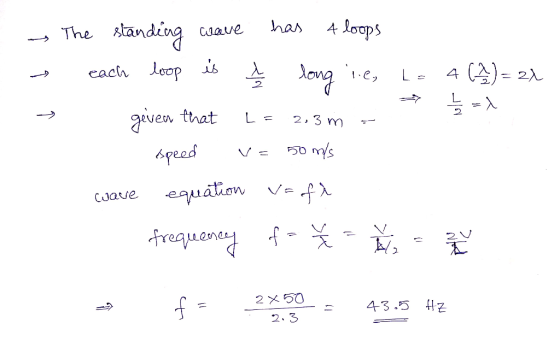
(Figure 1) shows a standing wave on a 2.3 m -long string that has been fixed...
| (Figure 1) shows a standing wave on a 2.3
m -long string that has been fixed at both ends and tightened until
the wave speed is 50 m/s .
You may want to review (Pages 460 - 463) . Figure1 of 1The figure shows a string attached to two walls oscillating as a standing wave with 3 nodes and 4 anti-nodes.
|
Part A Part complete What is the frequency? Express your answer with the appropriate units. |

Homework Answers
Add Answer to:
(Figure 1) shows a standing wave on a 2.3 m -long string that has been fixed...
Review Part A (Figure 1) shows a standing wave on a 1.8 m -long string that...
 Review Part A (Figure 1) shows a standing wave on a 1.8 m -long string that has been fixed at both ends and tightened until the wave speed is 30 m/s What is the frequency? Express your answer with the appropriate units. You may want to review (Pages 460 463) Figure 1 of 1> Value Units Submit Previous Answers Request Answer XIncorrect; Try Again; 15 attempts remaining Provide Feedback Next >
A 2.0 meters long string is fixed but both ends and tightened until the wave speed is 40 m/s. What is the frequency of the standing wave shown in figure below?
A 2.0 meters long string is fixed but both ends and tightened until the wave speed is 40 m/s. What is the frequency of the standing wave shown in figure below?
The figure shows a standing wave on a string of length L = 1.20 m with...
 The figure shows a standing wave on a string of length
L = 1.20 m with fixed ends oscillating at frequency
f = 450 Hz. Answer the following questions.
1. What is the speed of wave propagation in the
string?
2. The linear mass density of the string is ? = 10.0 g/m. (Note
the units.) What is the tension FT in the
string?
3. The tension in the string is changed to
F'T = 324 N. What does the...
The figure shows a standing wave on a string of length
L = 1.20 m with fixed ends oscillating at frequency
f = 450 Hz. Answer the following questions.
1. What is the speed of wave propagation in the
string?
2. The linear mass density of the string is ? = 10.0 g/m. (Note
the units.) What is the tension FT in the
string?
3. The tension in the string is changed to
F'T = 324 N. What does the...
The figure shows a standing wave oscillating at 100 Hz on a string. (Figure 1) What...
 The figure shows a standing wave oscillating at 100 Hz on a string. (Figure 1) What is the wave speed?
The figure shows a standing wave oscillating on a string at frequency f0. A) What mode...
 The figure shows a standing wave oscillating on a string at frequency f0.
A) What mode (m-value) is this?
B)How many antinodes will there be if the frequency is increased to 7f0?
The figure shows a standing wave oscillating on a string at frequency f0.
A) What mode (m-value) is this?
B)How many antinodes will there be if the frequency is increased to 7f0?
A string is stretched to a length of 1.2 m and a standing wave is produced...
A string is stretched to a length of 1.2 m and a standing wave is produced with a speed of 4 m/s. The pattern for the standing wave is that of one anti-node between two nodes. What is the frequency that produces a standing wave? Include a diagram of the standing wave
The speed of transverse waves in a 1.5-m-long stretched string is 90 m/s. A standing wave...
The speed of transverse waves in a 1.5-m-long stretched string is 90 m/s. A standing wave having five nodes (including the two at the ends) is created in the string. What is the wave’s frequency?
Problem 17.7 Previous Answers (Figure 1) shows a standing wave that is oscillating at frequency 100...
 Problem 17.7 Previous Answers (Figure 1) shows a standing wave that is oscillating at frequency 100 Hz. Correct Part B If the tension in the string is increased by a factor of 4, at what frequency will the to oscillate as a standing wave that looks like the one in the figure? Figure 1 of 1 Express your answer with the appropriate units 2000 Hz SubmitPr Previous AnswersRequest Answer X Incorrect; Try Agai Provide Feedback
12. A longitudinal standing wave can be created in a long, thin aluminum rod by stroking...
12. A longitudinal standing wave can be created in a long, thin aluminum rod by stroking the rod with very dry fingers. This is often done as a physics demonstration, creating a high-pitched, very annoying whine. From a wave perspective, the standing wave is equivalent to a sound standing wave in an open-open tube. In particular, both ends of the rod are anti-nodes. What is the fundamental frequency of a 2.50 m -long aluminum rod? The speed of sound in...
(2) The figure shows a standing wave on a string. The wave has a frequency f....
 (2) The figure shows a standing wave on a string. The wave has a frequency f. Draw the new standing wave if the frequency is changed to (2/3)f Original wave, frequency f
 Review Part A (Figure 1) shows a standing wave on a 1.8 m -long string that has been fixed at both ends and tightened until the wave speed is 30 m/s What is the frequency? Express your answer with the appropriate units. You may want to review (Pages 460 463) Figure 1 of 1> Value Units Submit Previous Answers Request Answer XIncorrect; Try Again; 15 attempts remaining Provide Feedback Next >
 The figure shows a standing wave on a string of length
L = 1.20 m with fixed ends oscillating at frequency
f = 450 Hz. Answer the following questions.
1. What is the speed of wave propagation in the
string?
2. The linear mass density of the string is ? = 10.0 g/m. (Note
the units.) What is the tension FT in the
string?
3. The tension in the string is changed to
F'T = 324 N. What does the...
The figure shows a standing wave on a string of length
L = 1.20 m with fixed ends oscillating at frequency
f = 450 Hz. Answer the following questions.
1. What is the speed of wave propagation in the
string?
2. The linear mass density of the string is ? = 10.0 g/m. (Note
the units.) What is the tension FT in the
string?
3. The tension in the string is changed to
F'T = 324 N. What does the...
 The figure shows a standing wave oscillating at 100 Hz on a string. (Figure 1) What is the wave speed?
 The figure shows a standing wave oscillating on a string at frequency f0.
A) What mode (m-value) is this?
B)How many antinodes will there be if the frequency is increased to 7f0?
The figure shows a standing wave oscillating on a string at frequency f0.
A) What mode (m-value) is this?
B)How many antinodes will there be if the frequency is increased to 7f0?
 Problem 17.7 Previous Answers (Figure 1) shows a standing wave that is oscillating at frequency 100 Hz. Correct Part B If the tension in the string is increased by a factor of 4, at what frequency will the to oscillate as a standing wave that looks like the one in the figure? Figure 1 of 1 Express your answer with the appropriate units 2000 Hz SubmitPr Previous AnswersRequest Answer X Incorrect; Try Agai Provide Feedback
 (2) The figure shows a standing wave on a string. The wave has a frequency f. Draw the new standing wave if the frequency is changed to (2/3)f Original wave, frequency f
Most questions answered within 3 hours.
-
Where is the error in this code sequence?
String s1 = "Hello";
String s2 = "ello";...
asked 10 months ago -
Financial data for Joel de Paris, Inc., for last year
follow:
Joel de Paris, Inc.
Balance...
asked 10 months ago -
Consider this reaction:
Al2(SO4)3 (aq)+ BaCl3
(aq) Al2Cl6 (aq)- +
3BaSO4(s) . What is the...
asked 10 months ago -
Suppose that Savneet is considering increasing her
recent random sample from 20 car rentals to 40...
asked 10 months ago -
Trucks arrive at an unloading terminal at an average rate of 120
per hour.
Trucks arrive...
asked 10 months ago -
Why are methanol and ethanol completely soluble in water while
octanol is not very little soluble....
asked 10 months ago -
A facilities manager at a university reads in a research report
that the mean amount of...
asked 10 months ago -
When the CuSO4 is rehydrated by adding water to the anhydrous
compound, is this an endothermic...
asked 10 months ago -
A ray of sunlight is passing from diamond into crown glass; the
angle of incidence is...
asked 10 months ago -
A block of mass 0.249 kg is placed on top of a light, vertical
spring of...
asked 10 months ago -
how do the kidneys compensate in the presences of acidosis
a) trigger hyperventilate
b) reserve acid...
asked 10 months ago -
Question 501 pts
The rental rate of capital to the firm increases. Which of the
following...
asked 10 months ago