
Homework Answers

Add Answer to:
Lab 9: Synthesis and Reaction of Alkenes 1. Complete the reaction below, and provide a mechanism...
Lab 9: Synthesis and Reaction of Alkenes 1. Complete the reaction below, and provide a mechanism...
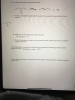
 Lab 9: Synthesis and Reaction of Alkenes 1. Complete the reaction below, and provide a mechanism for the formation of Product A and B (3 points) 0.5 M bromine in water LOH H,PO (60 % Yield)
DATE: Teaching Assistant: LAB SECTION: Lab 9: Synthesis and Reaction of Alkenes 1. Complete the reaction...
 DATE: Teaching Assistant: LAB SECTION: Lab 9: Synthesis and Reaction of Alkenes 1. Complete the reaction below, and provide a mechanism for the formation of Product A and B (3 points) OH H,PO 0.5 M bromine in water A (60 % Yield) 2. Search the Internet or use any other resources to complete the data table (0.75 point) Compound Molecular Weight Density Boiling Point Cyclohexane Phosphoric acid Cyclohexanol 3b) How is the use of "Hickman Still" in this Lab connected...
| 1. Complete the reaction below, and provide a mechanism for the formation of Product A...
 | 1. Complete the reaction below, and provide a mechanism for the formation of Product A | and B (3 points) 0.5 M bromine in water OH H3PO4 (60 % Yield)
the complete resion below, and provide a mechanism to the formation of Product 1. Complete the...
 the complete resion below, and provide a mechanism to the formation of Product 1. Complete the reaction below, and provide a mechanism for the formation of Product A and B (3 points) OH H3PO4 0.5 M bromine in water (60 % Yield)
1. For the following questions, see the reaction below: H.SO + H,0 a) Provide a reasonable...
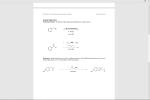
 1. For the following questions, see the reaction below: H.SO + H,0 a) Provide a reasonable mechanism for this reaction. Be sure to push arrows to show the flow of electrons b) What is the rate determining step in this mechanism? The formation of c) If only 0.2 equivalence of sulfuric acid is used in this reaction, would it still proceed to completion? Explain your answer 2. In the dehydration of cyclohexanol, what step was most important in maximizing product...
Experiment 2: Grignard synthesis of benzoic acid . Complete reaction, and provide the reaction mechanism for...
 Experiment 2: Grignard synthesis of benzoic acid . Complete reaction, and provide the reaction mechanism for all chemistry in this lab (forming the Grignard reagent, reaction with the CO2 electrophile, and acidification). . What are the side products and salts formed in this reaction? How are they removed from the purified product? . Why do we take precautions to eliminate water from the reaction? Be specific about what would happen if we did not do so. . Why is the...
Synthesis of Triphenylmethanol Digital Lab Report Chemistry 2540 CONCEPT QUESTIONS Predict the Product. Provide the stable...
 Synthesis of Triphenylmethanol Digital Lab Report Chemistry 2540 CONCEPT QUESTIONS Predict the Product. Provide the stable organic product(s) for the reactions below. CONCEPT QUESTIONS 1. Mg".CH,CH,OCH.CH 2. co. (9) 3. H,O, HCI Mechanism. Using Chemtraw, provide the complete mechanism for the following transformation. You must include appropriate arrows, intermediates, and formal charges. or h ox
Experiment #6: Synthesis of cyclohexene pre-lab (4 pts) 1) (2 pts) The mechanism for the formation...
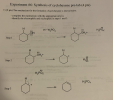 Experiment #6: Synthesis of cyclohexene pre-lab (4 pts) 1) (2 pts) The mechanism for the formation of cyclohexene is shown below. - complete the mechanism with the appropriate arrows - identify the electrophile and nucleophile in steps 1 and 3. H-H2PO4 H2PO4. он Step I Step 2 H2o H2PO H,PO4 Step 3
9.46 () Rank the following alkenes in terms of their reactivity with MCPBA. (1 = most...
 9.46 () Rank the following alkenes in terms of their reactivity with MCPBA. (1 = most reactive, 5 = least reactive) 9.47 ( When alkenes react with bromine in water, a halohydrin is produced. When water is replaced with methanol in this reaction, a different product is produced. Suggest a mechanism for the formation of this product (+-) ОСHЗ Br2 Ph Ph CH-он Br
11. a) Provide the two substituenproductsforthe followingSNI reaction: (6…) OH b) Show the mechanism for the...
 11. a) Provide the two substituenproductsforthe followingSNI reaction: (6…) OH b) Show the mechanism for the formation of the 1.2 and 1.4-addition products sho reaction below: (10 points) H-Br c) Using curved arrows, show the product of the following Diels-Alder r mechanism for its formation:(9 points)
 Lab 9: Synthesis and Reaction of Alkenes 1. Complete the reaction below, and provide a mechanism for the formation of Product A and B (3 points) 0.5 M bromine in water LOH H,PO (60 % Yield)
 DATE: Teaching Assistant: LAB SECTION: Lab 9: Synthesis and Reaction of Alkenes 1. Complete the reaction below, and provide a mechanism for the formation of Product A and B (3 points) OH H,PO 0.5 M bromine in water A (60 % Yield) 2. Search the Internet or use any other resources to complete the data table (0.75 point) Compound Molecular Weight Density Boiling Point Cyclohexane Phosphoric acid Cyclohexanol 3b) How is the use of "Hickman Still" in this Lab connected...
 | 1. Complete the reaction below, and provide a mechanism for the formation of Product A | and B (3 points) 0.5 M bromine in water OH H3PO4 (60 % Yield)
 the complete resion below, and provide a mechanism to the formation of Product 1. Complete the reaction below, and provide a mechanism for the formation of Product A and B (3 points) OH H3PO4 0.5 M bromine in water (60 % Yield)
 1. For the following questions, see the reaction below: H.SO + H,0 a) Provide a reasonable mechanism for this reaction. Be sure to push arrows to show the flow of electrons b) What is the rate determining step in this mechanism? The formation of c) If only 0.2 equivalence of sulfuric acid is used in this reaction, would it still proceed to completion? Explain your answer 2. In the dehydration of cyclohexanol, what step was most important in maximizing product...
 Experiment 2: Grignard synthesis of benzoic acid . Complete reaction, and provide the reaction mechanism for all chemistry in this lab (forming the Grignard reagent, reaction with the CO2 electrophile, and acidification). . What are the side products and salts formed in this reaction? How are they removed from the purified product? . Why do we take precautions to eliminate water from the reaction? Be specific about what would happen if we did not do so. . Why is the...
 Synthesis of Triphenylmethanol Digital Lab Report Chemistry 2540 CONCEPT QUESTIONS Predict the Product. Provide the stable organic product(s) for the reactions below. CONCEPT QUESTIONS 1. Mg".CH,CH,OCH.CH 2. co. (9) 3. H,O, HCI Mechanism. Using Chemtraw, provide the complete mechanism for the following transformation. You must include appropriate arrows, intermediates, and formal charges. or h ox
 Experiment #6: Synthesis of cyclohexene pre-lab (4 pts) 1) (2 pts) The mechanism for the formation of cyclohexene is shown below. - complete the mechanism with the appropriate arrows - identify the electrophile and nucleophile in steps 1 and 3. H-H2PO4 H2PO4. он Step I Step 2 H2o H2PO H,PO4 Step 3
 9.46 () Rank the following alkenes in terms of their reactivity with MCPBA. (1 = most reactive, 5 = least reactive) 9.47 ( When alkenes react with bromine in water, a halohydrin is produced. When water is replaced with methanol in this reaction, a different product is produced. Suggest a mechanism for the formation of this product (+-) ОСHЗ Br2 Ph Ph CH-он Br
 11. a) Provide the two substituenproductsforthe followingSNI reaction: (6…) OH b) Show the mechanism for the formation of the 1.2 and 1.4-addition products sho reaction below: (10 points) H-Br c) Using curved arrows, show the product of the following Diels-Alder r mechanism for its formation:(9 points)
Most questions answered within 3 hours.
-
Where is the error in this code sequence?
String s1 = "Hello";
String s2 = "ello";...
asked 11 months ago -
Financial data for Joel de Paris, Inc., for last year
follow:
Joel de Paris, Inc.
Balance...
asked 11 months ago -
Consider this reaction:
Al2(SO4)3 (aq)+ BaCl3
(aq) Al2Cl6 (aq)- +
3BaSO4(s) . What is the...
asked 11 months ago -
Suppose that Savneet is considering increasing her
recent random sample from 20 car rentals to 40...
asked 11 months ago -
Trucks arrive at an unloading terminal at an average rate of 120
per hour.
Trucks arrive...
asked 11 months ago -
Why are methanol and ethanol completely soluble in water while
octanol is not very little soluble....
asked 11 months ago -
A facilities manager at a university reads in a research report
that the mean amount of...
asked 11 months ago -
When the CuSO4 is rehydrated by adding water to the anhydrous
compound, is this an endothermic...
asked 11 months ago -
A ray of sunlight is passing from diamond into crown glass; the
angle of incidence is...
asked 11 months ago -
A block of mass 0.249 kg is placed on top of a light, vertical
spring of...
asked 11 months ago -
how do the kidneys compensate in the presences of acidosis
a) trigger hyperventilate
b) reserve acid...
asked 11 months ago -
Question 501 pts
The rental rate of capital to the firm increases. Which of the
following...
asked 11 months ago