In the figure, a double-glazed window consists of two identical panes of glass (ng = 1.50), each yg = 32.0 mm thick, separated by an air gap of ya = 25.6 mm
Building contractors often install double-glazed windows to prevent thermal energy (heat) from entering or exiting a building. In addition to being effective insulators, such windows present interesting optical effects.
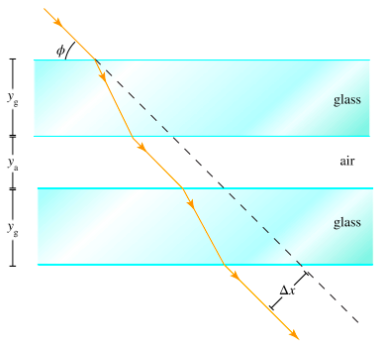
In the figure, a double-glazed window consists of two identical panes of glass (ng = 1.50), each yg = 32.0 mm thick, separated by an air gap of ya = 25.6 mm. If light incident on the glass makes an angle of φ = 40.00° with respect to the glass, find the shift in path Δx as the light enters the room. Use na = 1.00 for the index of refraction of air.
Δx= _______ mm
Homework Answers
Here angle of incidence i = 90 -40 degree = 50 degree
angle of refraction r = arcsin(na sin 50 degree / ng) = arcsin( sin 50 degree/1.5) = 30.71 degree
lateral displacement = (yg+yg)*sec r * sin (I-r)
= [32+32]*sec 30.71 degree * sin (50 - 30.71) degree
= 64*sec 30.71 degree *sin 19.29 degree
= 24.59 mm answer
Add Answer to:
In the figure, a double-glazed window consists of two identical panes of glass (ng = 1.50), each yg = 32.0 mm thick, separated by an air gap of ya = 25.6 mm
Building contractors often install double-glazed windows to prevent thermal energy (heat) from entering or exiting a building
 Building contractors often install double-glazed windows to prevent thermal energy (heat) from entering or exiting a building. In addition to being effective insulators, such windows present interesting optical effects. In the figure, a double glazed window consists of two identical panes of glass (ng = 1.46), cach yg = 42.0 mm thick, separated by an air gap of ya = 33.6 mm. If light incident on the glass makes an angle of φ = 40.00° with respect to the glass, find...
glass Building contractors often install double-glazed windows to prevent thermal energy (heat) from entering or exiting...
 glass Building contractors often install double-glazed windows to prevent thermal energy (heat) from entering or exiting a building. In addition to being effective insulators, such windows present interesting optical effects. In the figure, a double-glazed window consists of two identical panes of glass (ng = 1.40), each yg = 52.0 mm thick, separated by an air gap of yn = 41.6 mm. If light incident on the glass makes an angle of 0 = 40.00" with respect to the glass,...
glass Building contractors often install double-glazed windows to prevent thermal energy (heat) from entering or exiting...
 glass Building contractors often install double-glazed windows to prevent thermal energy (heat) from entering or exiting a building. In addition to being effective insulators, such windows present interesting optical effects. In the figure, a double-glazed window consists of two identical panes of glass (ng = 1.44), each yg = 62.0 mm thick, separated by an air gap of ya = 49.6 mm. If light incident on the glass makes an angle of d = 40.00° with respect to the glass,...
Building contractors often install double-glazed windows to prevent thermal energy (heat) from entering or exiting a...
 Building contractors often install double-glazed windows to prevent thermal energy (heat) from entering or exiting a building. In addition to being effective insulators, such windows present interesting optical effects. In the figure, a double-glazed window consists of two identical panes of glass (ng = 1.54), each yg = 22.0 mm thick, separated by an air gap of ya = 17.6 mm. If light incident on the glass makes an angle of d = 40.00' with respect to the glass, find...
(1) Building contractors often install double-glazed windows to prevent thermal energy (heat) from entering or exiting...
(1) Building contractors often install double-glazed windows to prevent thermal energy (heat) from entering or exiting a building. In addition to being effective insulators, such windows present interesting optical effects. In the figure, a double-glazed window consists of two identical panes of glass (ng=1.40), each yg=52.0 mm thick, separated by an air gap of ya=41.6 mm . If light incident on the glass makes an angle of ϕ=40.00∘ with respect to the glass, find the shift in path Δx as...
Building contractors often install double-glazed windows to prevent thermal energy (heat) from entering or exiting a...
 Building contractors often install double-glazed windows to prevent thermal energy (heat) from entering or exiting a building. In addition to being effective insulators, such windows present interesting optical effects. glass = air In the figure, a double-glazed window consists of two identical panes of glass (ng 1.54), each yg = 52.0 mm thick, separated by an air gap of Уа = 41.6 mm. If light incident on the glass makes an angle of $ = 40.00° with respect to the...
plass Building contractors often install double-glazed windows to prevent thermal energy (heat) from entering or exiting...
 plass Building contractors often install double-glazed windows to prevent thermal energy (heat) from entering or exiting a building. In addition to being effective insulators, such windows present interesting optical effects. In the figure, a double-glazed window consists of two identical panes of glass (ng - 1.44). each ye - 62.0 mm thick, separated by an air gap of y. - 49.6 mm. If light incident on the glass makes an angle of = 40.00 with respect to the glass, find...
Building contractors often install double-glazed windows to prevent thermal energy (heat) from entering or exiting a...
Building contractors often install double-glazed windows to prevent thermal energy (heat) from entering or exiting a building. In addition to being effective insulators, such windows present interesting optical effects. In the figure, a double-glazed window consists of two identical panes of glass ( ?g=1.50 ), each ?g=62.0 mm thick, separated by an air gap of ?a=49.6 mm . If light incident on the glass makes an angle of ?=40.00∘ with respect to the glass, find the shift in path Δ?...
you may have learned when studying the properties of thermal energy, building contractors oftern nstall double-glazed windows to prevent thermal energy ("heať") from entering/exiting the buil...
 you may have learned when studying the properties of thermal energy, building contractors oftern nstall double-glazed windows to prevent thermal energy ("heať") from entering/exiting the building Although effective as insulators, such windows present interesting optical effects In the figure, a double-glazed window comprises two identical panes of glass (ng- 1.46) separated by an air gap. If the light encounters the glass at an angle of 40.00° with respect to the glass, find the shift in path Ax as the light...
As you may have learned when studying the properties of thermal energy, building contractors ofte...
 As you may have learned when studying the properties of thermal
energy, building contractors often install double-glazed windows to
prevent thermal energy (\"heat\") from entering/exiting the
building. Although effective as insulators, such windows present
interesting optical effects. In the figure, a double-glazed window
comprises two identical panes of glass (ng = 1.40) separated by an
air gap. If the light encounters the glass at an angle of 40.00°
with respect to the glass, find the shift in path Δx as...
As you may have learned when studying the properties of thermal
energy, building contractors often install double-glazed windows to
prevent thermal energy (\"heat\") from entering/exiting the
building. Although effective as insulators, such windows present
interesting optical effects. In the figure, a double-glazed window
comprises two identical panes of glass (ng = 1.40) separated by an
air gap. If the light encounters the glass at an angle of 40.00°
with respect to the glass, find the shift in path Δx as...
 glass Building contractors often install double-glazed windows to prevent thermal energy (heat) from entering or exiting a building. In addition to being effective insulators, such windows present interesting optical effects. In the figure, a double-glazed window consists of two identical panes of glass (ng = 1.40), each yg = 52.0 mm thick, separated by an air gap of yn = 41.6 mm. If light incident on the glass makes an angle of 0 = 40.00" with respect to the glass,...
 glass Building contractors often install double-glazed windows to prevent thermal energy (heat) from entering or exiting a building. In addition to being effective insulators, such windows present interesting optical effects. In the figure, a double-glazed window consists of two identical panes of glass (ng = 1.44), each yg = 62.0 mm thick, separated by an air gap of ya = 49.6 mm. If light incident on the glass makes an angle of d = 40.00° with respect to the glass,...
 Building contractors often install double-glazed windows to prevent thermal energy (heat) from entering or exiting a building. In addition to being effective insulators, such windows present interesting optical effects. In the figure, a double-glazed window consists of two identical panes of glass (ng = 1.54), each yg = 22.0 mm thick, separated by an air gap of ya = 17.6 mm. If light incident on the glass makes an angle of d = 40.00' with respect to the glass, find...
 Building contractors often install double-glazed windows to prevent thermal energy (heat) from entering or exiting a building. In addition to being effective insulators, such windows present interesting optical effects. glass = air In the figure, a double-glazed window consists of two identical panes of glass (ng 1.54), each yg = 52.0 mm thick, separated by an air gap of Уа = 41.6 mm. If light incident on the glass makes an angle of $ = 40.00° with respect to the...
 plass Building contractors often install double-glazed windows to prevent thermal energy (heat) from entering or exiting a building. In addition to being effective insulators, such windows present interesting optical effects. In the figure, a double-glazed window consists of two identical panes of glass (ng - 1.44). each ye - 62.0 mm thick, separated by an air gap of y. - 49.6 mm. If light incident on the glass makes an angle of = 40.00 with respect to the glass, find...
 you may have learned when studying the properties of thermal energy, building contractors oftern nstall double-glazed windows to prevent thermal energy ("heať") from entering/exiting the building Although effective as insulators, such windows present interesting optical effects In the figure, a double-glazed window comprises two identical panes of glass (ng- 1.46) separated by an air gap. If the light encounters the glass at an angle of 40.00° with respect to the glass, find the shift in path Ax as the light...
 As you may have learned when studying the properties of thermal
energy, building contractors often install double-glazed windows to
prevent thermal energy (\"heat\") from entering/exiting the
building. Although effective as insulators, such windows present
interesting optical effects. In the figure, a double-glazed window
comprises two identical panes of glass (ng = 1.40) separated by an
air gap. If the light encounters the glass at an angle of 40.00°
with respect to the glass, find the shift in path Δx as...
As you may have learned when studying the properties of thermal
energy, building contractors often install double-glazed windows to
prevent thermal energy (\"heat\") from entering/exiting the
building. Although effective as insulators, such windows present
interesting optical effects. In the figure, a double-glazed window
comprises two identical panes of glass (ng = 1.40) separated by an
air gap. If the light encounters the glass at an angle of 40.00°
with respect to the glass, find the shift in path Δx as...
Most questions answered within 3 hours.
-
Where is the error in this code sequence?
String s1 = "Hello";
String s2 = "ello";...
asked 10 months ago -
Financial data for Joel de Paris, Inc., for last year
follow:
Joel de Paris, Inc.
Balance...
asked 10 months ago -
Consider this reaction:
Al2(SO4)3 (aq)+ BaCl3
(aq) Al2Cl6 (aq)- +
3BaSO4(s) . What is the...
asked 10 months ago -
Suppose that Savneet is considering increasing her
recent random sample from 20 car rentals to 40...
asked 10 months ago -
Trucks arrive at an unloading terminal at an average rate of 120
per hour.
Trucks arrive...
asked 10 months ago -
Why are methanol and ethanol completely soluble in water while
octanol is not very little soluble....
asked 10 months ago -
A facilities manager at a university reads in a research report
that the mean amount of...
asked 10 months ago -
When the CuSO4 is rehydrated by adding water to the anhydrous
compound, is this an endothermic...
asked 10 months ago -
A ray of sunlight is passing from diamond into crown glass; the
angle of incidence is...
asked 10 months ago -
A block of mass 0.249 kg is placed on top of a light, vertical
spring of...
asked 10 months ago -
how do the kidneys compensate in the presences of acidosis
a) trigger hyperventilate
b) reserve acid...
asked 10 months ago -
Question 501 pts
The rental rate of capital to the firm increases. Which of the
following...
asked 10 months ago