Convert 2.785x10^5 in to km
Homework Answers
Solution:
1 inch = 2.54 * 10^-5 km
2.785 * 10^5 in = 2.785 * 10^5 * 2.54 * 10^-5 km
=> 7.7039 km
thanks.
Question 8 5. Convert 85 MPH into feet per second. 6. Convert 120 km/hr into feet...
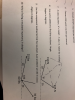 Question 8
5. Convert 85 MPH into feet per second. 6. Convert 120 km/hr into feet per second. 7. A cubic equation; x3 + 2.40x2-7.14x = 0. Solve for x values( 225 N 8. Use vector addition to find the resultant. Angle 150 N Angles in degrees. 5 5 9. Use the component method to find the resultant. (Last problem we did in class) 35 lbs Angles in degrees. 25 lbs 10. Why is finding a resultant important, in design?....10...
Question 8
5. Convert 85 MPH into feet per second. 6. Convert 120 km/hr into feet per second. 7. A cubic equation; x3 + 2.40x2-7.14x = 0. Solve for x values( 225 N 8. Use vector addition to find the resultant. Angle 150 N Angles in degrees. 5 5 9. Use the component method to find the resultant. (Last problem we did in class) 35 lbs Angles in degrees. 25 lbs 10. Why is finding a resultant important, in design?....10...
convert 7.85 x 10^-8 km to um
convert 7.85 x 10^-8 km to um
convert 28 miles/gal to km/l 0.89 oz/in^3 to g/ml 5*10^-3 qt/sec to ml/hour
convert 28 miles/gal to km/l 0.89 oz/in^3 to g/ml 5*10^-3 qt/sec to ml/hour
The radius of a spherical plutoid is 0.03 km. Convert the radius to m and give...
The radius of a spherical plutoid is 0.03 km. Convert the radius to m and give its volume in m3 as an integer (whole number).
A car traveling at 20m/s, convert the speed from m/s to km/h
A car traveling at 20m/s, convert the speed from m/s to km/h
D.30.0 N.m QUESTION 2 Convert 5 km/h to m/s. Write down your answer to three significant...
 D.30.0 N.m QUESTION 2 Convert 5 km/h to m/s. Write down your answer to three significant figure I QUESTION 3 When a particle is in equilibrium, the sum of forces acting on it equals a positive number a negative number Zero a constant QUESTION 4 esc C 2
Unit Conversions: Convert 7.71 m/s^2 to km/h^2 (Correct Answer: 1 km/h^2) Please show all of your...
Unit Conversions: Convert 7.71 m/s^2 to km/h^2 (Correct Answer: 1 km/h^2) Please show all of your work!!! Thank you
a. 4.0 km b. 3.40 km c. 250 km d. 0.25 km e. none 12. Convert...
 a. 4.0 km b. 3.40 km c. 250 km d. 0.25 km e. none 12. Convert 375 pounds to kilograms. a. 826 kg b. 14.0 kg c. 170 kg d. 82 kg e. none 13. Express 12 km/L in mi/gal a. 7.0 mi/gal b. 28 mi/gal c. 31 mi/gal d. 73 mi/gal f. 32 mi/gal 14. How many minutes will it take for a car that is travelling 8.0 x 10 mi/h to travel 200 km? a. 93 min b....
Four successive displacements of 4 km, 5 km, 4 km, and 2 km are at right...
 Four successive displacements of 4 km, 5 km, 4 km, and 2 km are at right angles to each other as shown in the diagram. The magnitude of the resultant displacement is 5. 5 km 4 km 4 km 2 km A. 4 km B. 15km C. 3km D. -5 km E. -15 km 6. The graph shows how the position of a particle depends on time. x, m 4 2 4 6 8 t,s Which choice is closest to...
Four successive displacements of 4 km, 5 km, 4 km, and 2 km are at right...
Four successive displacements of 4 km, 5 km, 4 km, and 2 km are at right angles to each other as shown in the diagram. The magnitude of the resultant displacement is
 Question 8
5. Convert 85 MPH into feet per second. 6. Convert 120 km/hr into feet per second. 7. A cubic equation; x3 + 2.40x2-7.14x = 0. Solve for x values( 225 N 8. Use vector addition to find the resultant. Angle 150 N Angles in degrees. 5 5 9. Use the component method to find the resultant. (Last problem we did in class) 35 lbs Angles in degrees. 25 lbs 10. Why is finding a resultant important, in design?....10...
Question 8
5. Convert 85 MPH into feet per second. 6. Convert 120 km/hr into feet per second. 7. A cubic equation; x3 + 2.40x2-7.14x = 0. Solve for x values( 225 N 8. Use vector addition to find the resultant. Angle 150 N Angles in degrees. 5 5 9. Use the component method to find the resultant. (Last problem we did in class) 35 lbs Angles in degrees. 25 lbs 10. Why is finding a resultant important, in design?....10...
 D.30.0 N.m QUESTION 2 Convert 5 km/h to m/s. Write down your answer to three significant figure I QUESTION 3 When a particle is in equilibrium, the sum of forces acting on it equals a positive number a negative number Zero a constant QUESTION 4 esc C 2
 a. 4.0 km b. 3.40 km c. 250 km d. 0.25 km e. none 12. Convert 375 pounds to kilograms. a. 826 kg b. 14.0 kg c. 170 kg d. 82 kg e. none 13. Express 12 km/L in mi/gal a. 7.0 mi/gal b. 28 mi/gal c. 31 mi/gal d. 73 mi/gal f. 32 mi/gal 14. How many minutes will it take for a car that is travelling 8.0 x 10 mi/h to travel 200 km? a. 93 min b....
 Four successive displacements of 4 km, 5 km, 4 km, and 2 km are at right angles to each other as shown in the diagram. The magnitude of the resultant displacement is 5. 5 km 4 km 4 km 2 km A. 4 km B. 15km C. 3km D. -5 km E. -15 km 6. The graph shows how the position of a particle depends on time. x, m 4 2 4 6 8 t,s Which choice is closest to...
Most questions answered within 3 hours.
-
Where is the error in this code sequence?
String s1 = "Hello";
String s2 = "ello";...
asked 10 months ago -
Financial data for Joel de Paris, Inc., for last year
follow:
Joel de Paris, Inc.
Balance...
asked 10 months ago -
Consider this reaction:
Al2(SO4)3 (aq)+ BaCl3
(aq) Al2Cl6 (aq)- +
3BaSO4(s) . What is the...
asked 10 months ago -
Suppose that Savneet is considering increasing her
recent random sample from 20 car rentals to 40...
asked 10 months ago -
Trucks arrive at an unloading terminal at an average rate of 120
per hour.
Trucks arrive...
asked 10 months ago -
Why are methanol and ethanol completely soluble in water while
octanol is not very little soluble....
asked 10 months ago -
A facilities manager at a university reads in a research report
that the mean amount of...
asked 10 months ago -
When the CuSO4 is rehydrated by adding water to the anhydrous
compound, is this an endothermic...
asked 10 months ago -
A ray of sunlight is passing from diamond into crown glass; the
angle of incidence is...
asked 10 months ago -
A block of mass 0.249 kg is placed on top of a light, vertical
spring of...
asked 10 months ago -
how do the kidneys compensate in the presences of acidosis
a) trigger hyperventilate
b) reserve acid...
asked 10 months ago -
Question 501 pts
The rental rate of capital to the firm increases. Which of the
following...
asked 10 months ago