
Homework Answers
a) According to Hess law,  G(s)=G(g)+G(sub)
as
G is a state function.
G(s)=G(g)+G(sub)
as
G is a state function.
b)-lnK =
G/RT, Now lnK=-(19.2*1000)/(8.314*1000)
or lnK=-2.303
or K=0.1 Now K=P(CH4)/(P(H2))^2
Now x/4x2=0.1 hence x=2.5 atm. Sine total pressure is 1
atm
G(s) must be negative.
Add Answer to:
9.2 A mixture of H, and CH4 establishes a "carbon activity", defined as the ratio of...
kindly help with 20 and 21 please 20. The sublimation of solid carbon dioxide is a...
 kindly help with 20 and 21 please
20. The sublimation of solid carbon dioxide is a spontaneous process. Predict the sign (+,-, or 0) of AG", AH", and AS, respectively. 21. Calculate AG for the following reaction at 298 K. 2PbS(s) + 3O2(g) → 2PbO(s) + 25O2(g) AH°= -844 kJ ASO= -165 J/K If the reaction is not spontaneous under standard conditions at 298K, at what temperature (if any) would the reaction become spontaneous?
kindly help with 20 and 21 please
20. The sublimation of solid carbon dioxide is a spontaneous process. Predict the sign (+,-, or 0) of AG", AH", and AS, respectively. 21. Calculate AG for the following reaction at 298 K. 2PbS(s) + 3O2(g) → 2PbO(s) + 25O2(g) AH°= -844 kJ ASO= -165 J/K If the reaction is not spontaneous under standard conditions at 298K, at what temperature (if any) would the reaction become spontaneous?
2.1 Consider the equilibrium between solid nickel carbon monoxide, and nickel tetracarbonyl: Ni (s) + 4C0(g)-→...
 2.1 Consider the equilibrium between solid nickel carbon monoxide, and nickel tetracarbonyl: Ni (s) + 4C0(g)-→ Ni (CO)4 (g) For the reaction as written, the standard Gibbs free-energy change at 100°C is 1292 cal/mol when the following standard states are used: Ni(s) pure crystalline solid at 100 C under its own vapor pressure CO(g) pure gas at 100°C, unit fugacity Ni(CO)4 (g) pure gas at 100°C, unit fugacity (a) If a vessel is initially charged with pure Ni(CO), and maintained...
2. Consider the following reaction taking place in the tuyere zone of an iron-making blast furnace,...
 2. Consider the following reaction taking place in the tuyere zone of an iron-making blast furnace, where the blasts of air (20% oxygen , 3.1 Atmos) first meet solid particles of coke C(s) +O2 (g) CO2 (g) AGo at 1800°C = -395,200 J / gm mole. Find the ratio of the partial pressures of carbon dioxide and oxygen at equilibrium. Assume that the activity of pure carbon is unity and that the activity of a gas at a given temperature,...
8. Given the relative costs, making diamond from graphite would appear to be an economically sound...
 8. Given the relative costs, making diamond from graphite would appear to be an economically sound proposition. The standard free energy difference for the solid-solid phase change C(s, graphite)C(s, diamond) is Δ๔ : μdiamond-graphite-2.900 kJ mol-1 (at 25°C), The densities of these materials are ρ(diamond): 3.51 g cm-3 and ρ(graphite): 2.26 g cm-3. Estimate the pressure required to convert graphite to diamond
Use standard free energies of formation to calculate AG at 25°C for each of the following...
 Use standard free energies of formation to calculate AG at 25°C for each of the following reactions. AG xn = EMAG (produ Substituting the appropriate stoichiometric coefficients from the balanced chem AGPx = 175.2 kJ. AGî (kJ/mol) -228.6 -237.1 -16.4 87.6 Part D -137.2 2KCIO3(s) +2KC1(s) + 302(g) Express your answer to one decimal place and include the appropriate units. Substance H2O(g) H2O(1) NH3(g) NO(g) CO(g) CO2(g) CH4(g) C2H2(g) CC4(1) Fe3O4(s) KCIO3(s) KCI(S) -394.4 -50.5 209.9 -66.4 AGFn = 224.4...
For the endothermic reaction shown below, indicate which way the equilibrium will shit when each of...
 For the endothermic reaction shown below, indicate which way the equilibrium will shit when each of the following changes is made (circle the correct choice). CH4 (g) <==> C(s) + 2H2(g) Solid carbon is added the total pressure is reduced the reaction is heated H2 gas is removed the volume of the container is increased to products to products to products to products to products to reactants to reactants to reactants to reactants to reactants no change no change no...
2 questions, need help! When the oxide of generic metal M is heated at 25.0 °C,...
 2 questions, need help!
When the oxide of generic metal M is heated at 25.0 °C, a negligible amount of M is produced kJ AG" 289.0- mol MO2(s) M(s)+ 02(g) When this reaction is coupled to the conversion of graphite to carbon dioxide, it becomes spontaneous What is the chemical equation of this coupled process? Show that the reaction is in equilibrium. Include physical states and represent graphite as C(s) chemical equation: MO,(s)C(s)=M(s) + CO2(g) What is the thermodynamic equilbrium...
2 questions, need help!
When the oxide of generic metal M is heated at 25.0 °C, a negligible amount of M is produced kJ AG" 289.0- mol MO2(s) M(s)+ 02(g) When this reaction is coupled to the conversion of graphite to carbon dioxide, it becomes spontaneous What is the chemical equation of this coupled process? Show that the reaction is in equilibrium. Include physical states and represent graphite as C(s) chemical equation: MO,(s)C(s)=M(s) + CO2(g) What is the thermodynamic equilbrium...
Q1.6 3 Points With the biochemistry standard states, the ionic activity of H+ in solution with...
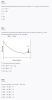 Q1.6 3 Points With the biochemistry standard states, the ionic activity of H+ in solution with a pH of 6.0 is 01 x 10-6 01 x 106 01 O 10 O 0.1 Q1.7 3 Points Consider the graph below of the Gibbs energy versus the extent of reaction, $, for the following hypothetical reaction at 1 bar and 298 K: R(g) → P(9) Gibbs energy 0 Extent of reaction, O The reaction favors the reactant, O Atx, A,G = Mp...
4) (a) Use the standard entropy values (AS") in the Appendix to solve for ?5° of...
 4) (a) Use the standard entropy values (AS") in the Appendix to solve for ?5° of each reaction at 25°C. (b) Solve for AG° ron for both reactions as well using the standard free energy values. (AG) 2H20(liquid)2H2(g) + O2(g) Al2O3(s) 3 H2(g) 2 Al(s)3 H20(g) 5) AH° 180.7 kJ; AS 24.7 JIK 25°C N2(8) O2(g)-2 NO(g) (a)Calculate the standard free-energy change for the reaction at 25°C. (b) Calculate ?G at 500°C using the ?G° value calculated from part a.
9. Carbon monoxide (CO) is toxic because it can displace oxygen (O2) from the iron in...
 9. Carbon monoxide (CO) is toxic because it can displace oxygen (O2) from the iron in hemoglobin (Hgb) following the reaction: HgbO2 (s) + CO(g) + Hgbco (s) + O2 (g) AG®rx = -30. kl/mol A. Consider the following reactions involving hemoglobin, O2 and Co: Hgboz (s) + Hgb (s) + O2 (g) AG®rxn = 40. kJ/mol HgbCO (s) -- Hgb (s) + CO (6) AGºrx = ??? Using Hess's law, determine the free energy AG*rn (in kJ/mol) for the...
 kindly help with 20 and 21 please
20. The sublimation of solid carbon dioxide is a spontaneous process. Predict the sign (+,-, or 0) of AG", AH", and AS, respectively. 21. Calculate AG for the following reaction at 298 K. 2PbS(s) + 3O2(g) → 2PbO(s) + 25O2(g) AH°= -844 kJ ASO= -165 J/K If the reaction is not spontaneous under standard conditions at 298K, at what temperature (if any) would the reaction become spontaneous?
kindly help with 20 and 21 please
20. The sublimation of solid carbon dioxide is a spontaneous process. Predict the sign (+,-, or 0) of AG", AH", and AS, respectively. 21. Calculate AG for the following reaction at 298 K. 2PbS(s) + 3O2(g) → 2PbO(s) + 25O2(g) AH°= -844 kJ ASO= -165 J/K If the reaction is not spontaneous under standard conditions at 298K, at what temperature (if any) would the reaction become spontaneous?
 2.1 Consider the equilibrium between solid nickel carbon monoxide, and nickel tetracarbonyl: Ni (s) + 4C0(g)-→ Ni (CO)4 (g) For the reaction as written, the standard Gibbs free-energy change at 100°C is 1292 cal/mol when the following standard states are used: Ni(s) pure crystalline solid at 100 C under its own vapor pressure CO(g) pure gas at 100°C, unit fugacity Ni(CO)4 (g) pure gas at 100°C, unit fugacity (a) If a vessel is initially charged with pure Ni(CO), and maintained...
 2. Consider the following reaction taking place in the tuyere zone of an iron-making blast furnace, where the blasts of air (20% oxygen , 3.1 Atmos) first meet solid particles of coke C(s) +O2 (g) CO2 (g) AGo at 1800°C = -395,200 J / gm mole. Find the ratio of the partial pressures of carbon dioxide and oxygen at equilibrium. Assume that the activity of pure carbon is unity and that the activity of a gas at a given temperature,...
 8. Given the relative costs, making diamond from graphite would appear to be an economically sound proposition. The standard free energy difference for the solid-solid phase change C(s, graphite)C(s, diamond) is Δ๔ : μdiamond-graphite-2.900 kJ mol-1 (at 25°C), The densities of these materials are ρ(diamond): 3.51 g cm-3 and ρ(graphite): 2.26 g cm-3. Estimate the pressure required to convert graphite to diamond
 Use standard free energies of formation to calculate AG at 25°C for each of the following reactions. AG xn = EMAG (produ Substituting the appropriate stoichiometric coefficients from the balanced chem AGPx = 175.2 kJ. AGî (kJ/mol) -228.6 -237.1 -16.4 87.6 Part D -137.2 2KCIO3(s) +2KC1(s) + 302(g) Express your answer to one decimal place and include the appropriate units. Substance H2O(g) H2O(1) NH3(g) NO(g) CO(g) CO2(g) CH4(g) C2H2(g) CC4(1) Fe3O4(s) KCIO3(s) KCI(S) -394.4 -50.5 209.9 -66.4 AGFn = 224.4...
 For the endothermic reaction shown below, indicate which way the equilibrium will shit when each of the following changes is made (circle the correct choice). CH4 (g) <==> C(s) + 2H2(g) Solid carbon is added the total pressure is reduced the reaction is heated H2 gas is removed the volume of the container is increased to products to products to products to products to products to reactants to reactants to reactants to reactants to reactants no change no change no...
 2 questions, need help!
When the oxide of generic metal M is heated at 25.0 °C, a negligible amount of M is produced kJ AG" 289.0- mol MO2(s) M(s)+ 02(g) When this reaction is coupled to the conversion of graphite to carbon dioxide, it becomes spontaneous What is the chemical equation of this coupled process? Show that the reaction is in equilibrium. Include physical states and represent graphite as C(s) chemical equation: MO,(s)C(s)=M(s) + CO2(g) What is the thermodynamic equilbrium...
2 questions, need help!
When the oxide of generic metal M is heated at 25.0 °C, a negligible amount of M is produced kJ AG" 289.0- mol MO2(s) M(s)+ 02(g) When this reaction is coupled to the conversion of graphite to carbon dioxide, it becomes spontaneous What is the chemical equation of this coupled process? Show that the reaction is in equilibrium. Include physical states and represent graphite as C(s) chemical equation: MO,(s)C(s)=M(s) + CO2(g) What is the thermodynamic equilbrium...
 Q1.6 3 Points With the biochemistry standard states, the ionic activity of H+ in solution with a pH of 6.0 is 01 x 10-6 01 x 106 01 O 10 O 0.1 Q1.7 3 Points Consider the graph below of the Gibbs energy versus the extent of reaction, $, for the following hypothetical reaction at 1 bar and 298 K: R(g) → P(9) Gibbs energy 0 Extent of reaction, O The reaction favors the reactant, O Atx, A,G = Mp...
 4) (a) Use the standard entropy values (AS") in the Appendix to solve for ?5° of each reaction at 25°C. (b) Solve for AG° ron for both reactions as well using the standard free energy values. (AG) 2H20(liquid)2H2(g) + O2(g) Al2O3(s) 3 H2(g) 2 Al(s)3 H20(g) 5) AH° 180.7 kJ; AS 24.7 JIK 25°C N2(8) O2(g)-2 NO(g) (a)Calculate the standard free-energy change for the reaction at 25°C. (b) Calculate ?G at 500°C using the ?G° value calculated from part a.
 9. Carbon monoxide (CO) is toxic because it can displace oxygen (O2) from the iron in hemoglobin (Hgb) following the reaction: HgbO2 (s) + CO(g) + Hgbco (s) + O2 (g) AG®rx = -30. kl/mol A. Consider the following reactions involving hemoglobin, O2 and Co: Hgboz (s) + Hgb (s) + O2 (g) AG®rxn = 40. kJ/mol HgbCO (s) -- Hgb (s) + CO (6) AGºrx = ??? Using Hess's law, determine the free energy AG*rn (in kJ/mol) for the...
Most questions answered within 3 hours.
-
Where is the error in this code sequence?
String s1 = "Hello";
String s2 = "ello";...
asked 11 months ago -
Financial data for Joel de Paris, Inc., for last year
follow:
Joel de Paris, Inc.
Balance...
asked 11 months ago -
Consider this reaction:
Al2(SO4)3 (aq)+ BaCl3
(aq) Al2Cl6 (aq)- +
3BaSO4(s) . What is the...
asked 11 months ago -
Suppose that Savneet is considering increasing her
recent random sample from 20 car rentals to 40...
asked 11 months ago -
Trucks arrive at an unloading terminal at an average rate of 120
per hour.
Trucks arrive...
asked 11 months ago -
Why are methanol and ethanol completely soluble in water while
octanol is not very little soluble....
asked 11 months ago -
A facilities manager at a university reads in a research report
that the mean amount of...
asked 11 months ago -
When the CuSO4 is rehydrated by adding water to the anhydrous
compound, is this an endothermic...
asked 11 months ago -
A ray of sunlight is passing from diamond into crown glass; the
angle of incidence is...
asked 11 months ago -
A block of mass 0.249 kg is placed on top of a light, vertical
spring of...
asked 11 months ago -
how do the kidneys compensate in the presences of acidosis
a) trigger hyperventilate
b) reserve acid...
asked 11 months ago -
Question 501 pts
The rental rate of capital to the firm increases. Which of the
following...
asked 11 months ago