If I am given a problem that says an object moves up and down on a...
If I am given a problem that says an object moves up and down on a table sinusoidally with a given amplitude and then I am told that the table begins to move up and down very fast leaving the object to eventually leave the table, how would I determine the position in the oscillation that the object left the table and also the frequency that the object left the table?
Homework Answers
 f=
frequency
f=
frequencyAdd Answer to:
If I am given a problem that says an object moves up and down on a...
If I am given a problem that says an object moves up and down on a...
If I am given a problem that says an object moves up and down on a table sinusoidally with a given amplitude of 4 cm and then I am told that the table begins to move up and down very fast leaving the object to eventually leave the table, how would I determine the position in the oscillation that the object left the table and also the frequency that the object left the table? Can you please explain in detail...
please answer as many questions as possible. I will “thumb up” the answers. Thanks! 1. You are on a boat, which is bobbing up and down. The boat's vertical displacement y is given by y 1.2...
 please answer as many questions as possible. I will “thumb up” the
answers. Thanks!
1. You are on a boat, which is bobbing up and down. The boat's vertical displacement y is given by y 1.2 cos(t). Find the amplitude, angular frequency, phase constant, frequency, and period of the motion. (b) Where is the boat at t 1 s? (c) Find the velocity and acceleration as functions of time t. (d) Find the initial values of the position, velocity, and...
please answer as many questions as possible. I will “thumb up” the
answers. Thanks!
1. You are on a boat, which is bobbing up and down. The boat's vertical displacement y is given by y 1.2 cos(t). Find the amplitude, angular frequency, phase constant, frequency, and period of the motion. (b) Where is the boat at t 1 s? (c) Find the velocity and acceleration as functions of time t. (d) Find the initial values of the position, velocity, and...
1. For this problem, ignore gravity. m Object 1 (mass mi, speed vı) moves directly to...
 1. For this problem, ignore gravity. m Object 1 (mass mi, speed vı) moves directly to the right while object 2 (mass m2, speed v2) moves up-and-left (angle 02 relative to vertical). (See Fig. 1.) Known: Only the quantities given above. Fig. 1 The objects then collide and stick together and move as a unit. Determine the final speed ve and final angle Of of the combined object. (See Fig. 2.) Stick together m2 Fig. 2
1. A Constant force pushes an object and speeds it up. The object moves from (6i - 8j + 4k)m to (...
1. A Constant force pushes an object and speeds it up. The object moves from (6i - 8j + 4k)m to (11i - 5j + 4k)m. The net force acting on the object is (2i + 4j + 5k)N. What is the increase in it's kinetic energy, in J? So I found in the x direction to be 10 J and in the y direction to be 12 J. I ignored the work in the k direction as the object...
problem 17. fully explain parts e and f. I have answer need explanation as to why...
 problem 17. fully explain parts e and f. I have answer
need explanation as to why we multiply for part e. amplitude times
angular frequency to get vmax
um 16. A 0.250-kg block attached to a light spring U 23. Thev At t frictionless, horizontal table. The oscillation amplitude is 0.125 m and the block moves at 3.00 m/s as it passes through equilibrium at 0. (a) Find the spring constant, k. (b) Calculate the total energy of the block-spring...
problem 17. fully explain parts e and f. I have answer
need explanation as to why we multiply for part e. amplitude times
angular frequency to get vmax
um 16. A 0.250-kg block attached to a light spring U 23. Thev At t frictionless, horizontal table. The oscillation amplitude is 0.125 m and the block moves at 3.00 m/s as it passes through equilibrium at 0. (a) Find the spring constant, k. (b) Calculate the total energy of the block-spring...
(17%) Problem 1: An object oscillates with an angular frequency o = 3 rad/s. At 1-0,...
 (17%) Problem 1: An object oscillates with an angular frequency o = 3 rad/s. At 1-0, the object is at xo = 3.5 cm. It is moving with velocity vx0= 2 cm/s in the positive x-direction. The position of the object can be described through the equation x() = A cos(o1+). 33% Part (a) What is the the phase constant of the oscillation in radians? (Caution: If you are using the trig functions in the palette below, be careful to...
There's a lot going on here and I am overwhelmed. I have no idea how to...
 There's a lot going on here and I am overwhelmed. I have no idea
how to start this.
-w'r, (25%) Problem 4: Any system for which the acceleration is linearly proportional to the position with a negative proportionality constant), or a = undergoes simple harmonic motion, a form of oscillatory motion. The mathematical solution to this is (t) = A coswt) where A is the amplitude and w=2nf = 2 is the angular frequency (fis the frequency in Hz and...
There's a lot going on here and I am overwhelmed. I have no idea
how to start this.
-w'r, (25%) Problem 4: Any system for which the acceleration is linearly proportional to the position with a negative proportionality constant), or a = undergoes simple harmonic motion, a form of oscillatory motion. The mathematical solution to this is (t) = A coswt) where A is the amplitude and w=2nf = 2 is the angular frequency (fis the frequency in Hz and...
In Java: I got most of the logic down but I'd like to seen an answer...
 In Java: I got most of the logic down but I'd like to seen an
answer that actually prints out the T and H and moves them or those
something with an image since I only print out the winner and
responses with my own code.
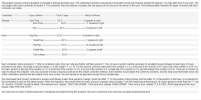
This project involves writing a program to simulate a tortoise and hare race. The contenders will each race along a horizontal course that contains at least 50 squares. You may add more if you...
In Java: I got most of the logic down but I'd like to seen an
answer that actually prints out the T and H and moves them or those
something with an image since I only print out the winner and
responses with my own code.
This project involves writing a program to simulate a tortoise and hare race. The contenders will each race along a horizontal course that contains at least 50 squares. You may add more if you...
This was an example problem given during class, however, I was unable to write down what...
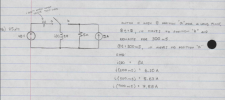 This was an example problem given during class, however, I was
unable to write down what the first resistor value was.
Either solve for that resistor value using the provided solution
OR chose any resistor value you want and then
solve for i(0), i(200ms), i(300ms), and i(900ms).
WAT DOTACUE THIS WAS. -44 #6) 25 pts 40 V D i(4) 324 ssa (@SA SWITCH OPEH @ POSITION a Foce A LONG TIME, @t:0, 1 moves to pogrom "6" AND REMAINS Foe...
This was an example problem given during class, however, I was
unable to write down what the first resistor value was.
Either solve for that resistor value using the provided solution
OR chose any resistor value you want and then
solve for i(0), i(200ms), i(300ms), and i(900ms).
WAT DOTACUE THIS WAS. -44 #6) 25 pts 40 V D i(4) 324 ssa (@SA SWITCH OPEH @ POSITION a Foce A LONG TIME, @t:0, 1 moves to pogrom "6" AND REMAINS Foe...
A 0.43 kg mass is attached to the end of a spring and set into oscillation...
A 0.43 kg mass is attached to the end of a spring and set into oscillation on a horizontal frictionless surface by releasing it from a compressed position. The record of time is started when the oscillating mass passes through the equilibrium position and the position of the mass at any time is shown in the drawing. On a coordinate plane with a horizontal axis labeled t(s) and a vertical axis labeled x(m) there is one item, a curve that...
 please answer as many questions as possible. I will “thumb up” the
answers. Thanks!
1. You are on a boat, which is bobbing up and down. The boat's vertical displacement y is given by y 1.2 cos(t). Find the amplitude, angular frequency, phase constant, frequency, and period of the motion. (b) Where is the boat at t 1 s? (c) Find the velocity and acceleration as functions of time t. (d) Find the initial values of the position, velocity, and...
please answer as many questions as possible. I will “thumb up” the
answers. Thanks!
1. You are on a boat, which is bobbing up and down. The boat's vertical displacement y is given by y 1.2 cos(t). Find the amplitude, angular frequency, phase constant, frequency, and period of the motion. (b) Where is the boat at t 1 s? (c) Find the velocity and acceleration as functions of time t. (d) Find the initial values of the position, velocity, and...
 1. For this problem, ignore gravity. m Object 1 (mass mi, speed vı) moves directly to the right while object 2 (mass m2, speed v2) moves up-and-left (angle 02 relative to vertical). (See Fig. 1.) Known: Only the quantities given above. Fig. 1 The objects then collide and stick together and move as a unit. Determine the final speed ve and final angle Of of the combined object. (See Fig. 2.) Stick together m2 Fig. 2
 problem 17. fully explain parts e and f. I have answer
need explanation as to why we multiply for part e. amplitude times
angular frequency to get vmax
um 16. A 0.250-kg block attached to a light spring U 23. Thev At t frictionless, horizontal table. The oscillation amplitude is 0.125 m and the block moves at 3.00 m/s as it passes through equilibrium at 0. (a) Find the spring constant, k. (b) Calculate the total energy of the block-spring...
problem 17. fully explain parts e and f. I have answer
need explanation as to why we multiply for part e. amplitude times
angular frequency to get vmax
um 16. A 0.250-kg block attached to a light spring U 23. Thev At t frictionless, horizontal table. The oscillation amplitude is 0.125 m and the block moves at 3.00 m/s as it passes through equilibrium at 0. (a) Find the spring constant, k. (b) Calculate the total energy of the block-spring...
 (17%) Problem 1: An object oscillates with an angular frequency o = 3 rad/s. At 1-0, the object is at xo = 3.5 cm. It is moving with velocity vx0= 2 cm/s in the positive x-direction. The position of the object can be described through the equation x() = A cos(o1+). 33% Part (a) What is the the phase constant of the oscillation in radians? (Caution: If you are using the trig functions in the palette below, be careful to...
 There's a lot going on here and I am overwhelmed. I have no idea
how to start this.
-w'r, (25%) Problem 4: Any system for which the acceleration is linearly proportional to the position with a negative proportionality constant), or a = undergoes simple harmonic motion, a form of oscillatory motion. The mathematical solution to this is (t) = A coswt) where A is the amplitude and w=2nf = 2 is the angular frequency (fis the frequency in Hz and...
There's a lot going on here and I am overwhelmed. I have no idea
how to start this.
-w'r, (25%) Problem 4: Any system for which the acceleration is linearly proportional to the position with a negative proportionality constant), or a = undergoes simple harmonic motion, a form of oscillatory motion. The mathematical solution to this is (t) = A coswt) where A is the amplitude and w=2nf = 2 is the angular frequency (fis the frequency in Hz and...
 In Java: I got most of the logic down but I'd like to seen an
answer that actually prints out the T and H and moves them or those
something with an image since I only print out the winner and
responses with my own code.
This project involves writing a program to simulate a tortoise and hare race. The contenders will each race along a horizontal course that contains at least 50 squares. You may add more if you...
In Java: I got most of the logic down but I'd like to seen an
answer that actually prints out the T and H and moves them or those
something with an image since I only print out the winner and
responses with my own code.
This project involves writing a program to simulate a tortoise and hare race. The contenders will each race along a horizontal course that contains at least 50 squares. You may add more if you...
 This was an example problem given during class, however, I was
unable to write down what the first resistor value was.
Either solve for that resistor value using the provided solution
OR chose any resistor value you want and then
solve for i(0), i(200ms), i(300ms), and i(900ms).
WAT DOTACUE THIS WAS. -44 #6) 25 pts 40 V D i(4) 324 ssa (@SA SWITCH OPEH @ POSITION a Foce A LONG TIME, @t:0, 1 moves to pogrom "6" AND REMAINS Foe...
This was an example problem given during class, however, I was
unable to write down what the first resistor value was.
Either solve for that resistor value using the provided solution
OR chose any resistor value you want and then
solve for i(0), i(200ms), i(300ms), and i(900ms).
WAT DOTACUE THIS WAS. -44 #6) 25 pts 40 V D i(4) 324 ssa (@SA SWITCH OPEH @ POSITION a Foce A LONG TIME, @t:0, 1 moves to pogrom "6" AND REMAINS Foe...
Most questions answered within 3 hours.
-
Where is the error in this code sequence?
String s1 = "Hello";
String s2 = "ello";...
asked 10 months ago -
Financial data for Joel de Paris, Inc., for last year
follow:
Joel de Paris, Inc.
Balance...
asked 10 months ago -
Consider this reaction:
Al2(SO4)3 (aq)+ BaCl3
(aq) Al2Cl6 (aq)- +
3BaSO4(s) . What is the...
asked 10 months ago -
Suppose that Savneet is considering increasing her
recent random sample from 20 car rentals to 40...
asked 10 months ago -
Trucks arrive at an unloading terminal at an average rate of 120
per hour.
Trucks arrive...
asked 10 months ago -
Why are methanol and ethanol completely soluble in water while
octanol is not very little soluble....
asked 10 months ago -
A facilities manager at a university reads in a research report
that the mean amount of...
asked 10 months ago -
When the CuSO4 is rehydrated by adding water to the anhydrous
compound, is this an endothermic...
asked 10 months ago -
A ray of sunlight is passing from diamond into crown glass; the
angle of incidence is...
asked 10 months ago -
A block of mass 0.249 kg is placed on top of a light, vertical
spring of...
asked 10 months ago -
how do the kidneys compensate in the presences of acidosis
a) trigger hyperventilate
b) reserve acid...
asked 10 months ago -
Question 501 pts
The rental rate of capital to the firm increases. Which of the
following...
asked 10 months ago