For chemical shifts of the protons labeled x, y,& z, which is the correct order from...
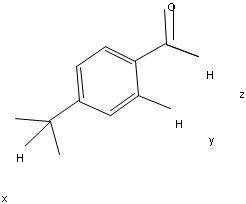
For chemical shifts of the protons labeled x, y,& z, which
is the correct order from highest to lowest effective field (i.e.,
deshielded  shielded) in the 1 H NMR spectrum?
note: the 1 before the H is suppose to be a superscript
Homework Answers
1H NMR Spectroscopy:
• Nuclear magnetic resonance spectroscopy is one of the techniques in analytical chemistry that is widely used to determine the purity of sample and also to predict the structure of the organic compounds.
• The  spectroscopy is phenomenon that is observed when frequency of nuclei of atoms (sample) resonates with frequency of rotating magnetic field.
•  Spectroscopy provides the information about how many types of hydrogen (chemically nonequivalent hydrogen) atoms present in a molecule.
Chemical Shift,  :
:
• The relative difference between the frequency of absorbed electromagnetic radiation by the sample and the frequency of absorbed electromagnetic radiation by the standard usually TMS divided by the spectrometer operating frequency.
• It is expressed in parts per million (ppm).
Mathematical equation for the chemical shift:

The frequency of absorbed radiation by the sample is  .
.
The frequency of absorbed radiation by the standard is  .
.
Factors affecting the chemical shift:
• Electronegativity
• Hybridization
• Magnetic anisotropy of  systems
• Hydrogen bonding


The correct order from highest to lowest effective field (i.e., deshielded > shielded) in the  spectrum is
 .
.
Add Answer to:
For chemical shifts of the protons labeled x, y,& z, which
is the correct order from...
For chemical shifts of the protons labeled x, y, & z, which is the correct order...
 For chemical shifts of the protons labeled x, y, & z, which is the correct order from highest to lowest effective field (i.e., deshielded > shielded) in the 1H NMR spectrum? x > y > z x > z > y y > x > z y > z > x z > x > y z > y > x
For chemical shifts of the protons labeled x, y, & z, which is the correct order...
 For chemical shifts of the protons labeled x, y, & z, which is the correct order from highest to lowest effective field (i.e., deshielded > shielded) in the H NMR spectrum? x>y>z 000000 V V X X V V V V < < X NX N < V V < V V N V V N
For chemical shifts of the protons labeled x, y, &z which is the correct order from...
 For chemical shifts of the protons labeled x, y, &z which is the correct order from height to lowest effective field(ie., deshielded > sheilded) in the H NMR spectrum?
The chemical environment of protons can be deduced from their chemical shifts. What are the relative...
 The chemical environment of protons can be deduced from their
chemical shifts. What are the relative chemical shifts of the
protons at the labeled positions? [Protons that are highly shielded
have low delta (chemical shift) values.]
The proton with the lowest delta value the most shielded) is The proton with the highest delta value the most deshielded) is The proton with the lowest delta value the most shielded) is The proton with the highest delta value the most deshielded) is...
The chemical environment of protons can be deduced from their
chemical shifts. What are the relative chemical shifts of the
protons at the labeled positions? [Protons that are highly shielded
have low delta (chemical shift) values.]
The proton with the lowest delta value the most shielded) is The proton with the highest delta value the most deshielded) is The proton with the lowest delta value the most shielded) is The proton with the highest delta value the most deshielded) is...
The chemical environment of protons can be deduced from their chemical shifts. What are the relative...
 The chemical environment of protons can be deduced from their chemical shifts. What are the relative chemical shifts of the protons at the labeled positions? [Prolons that are highly shielded have low delta (chemical shift) values.) 1) OCH ск с OCH The proton with the lowest delta value the most shielded) is The proton with the highest delta value the most deshielded) is The proton with the lowest delta value the most shielded) is The proton with the highest delta...
The chemical environment of protons can be deduced from their chemical shifts. What are the relat...
 The chemical environment of protons can be deduced from their chemical shifts. What are the relat that are highly shielded have low delta (chemical shift) values.] 1) 0 The proton with the lowest delta value (the most shielded) is The proton with the highest delta value (the most deshielded) is 2) The proton with the lowest delta value (the most shielded) is The proton with the highest delta value (the most deshielded) is Submit Answer Retry Entire Group 6 more...
HELP The chemical environment of protons can be deduced from the chemical shifts. What are the...
 HELP
The chemical environment of protons can be deduced from the chemical shifts. What are the relative chemical shifts of the protons M the labeled positions (Proces that webuphlychelded have low delta (chemical shift) values] The proton with the lowest delta value the most shielded) is The proton with the highest delta value the most deshielded) is The proton with the lowest delta value (the most shielded) is The proton with the highest delta value (the most deshielded) is How...
HELP
The chemical environment of protons can be deduced from the chemical shifts. What are the relative chemical shifts of the protons M the labeled positions (Proces that webuphlychelded have low delta (chemical shift) values] The proton with the lowest delta value the most shielded) is The proton with the highest delta value the most deshielded) is The proton with the lowest delta value (the most shielded) is The proton with the highest delta value (the most deshielded) is How...
What is the correct order from highest to lowest ppm value for the chemical shifts of...
 What is the correct order from highest to lowest ppm value for the chemical shifts of the labeled carbon atoms in the 'SC-NMR spectrum of this compound? Choose an answer 1 The correct order is ill, 14, IV, I. 2 The correct order is IV, I, III The correct order is II, IV, III, I. The correct order is 11, I, IV, L.
4. order the chemical shifts of the circled protons in the following list of compounds from...
 4. order the chemical shifts of the circled protons in
the following list of compounds from the farthest downfield
(highest ppm number) to lowest.
5. The IR spectra of the following compounds should a
strong broad signal centered at 3520 cm^-1. After a chemical
reaction was performed on this compound the signal at 3520 has
disappeared and was replaced by a strong signal at 1720. Which ser
of reactants and products agree with this experimental data?
6. A C^13 spectra...
4. order the chemical shifts of the circled protons in
the following list of compounds from the farthest downfield
(highest ppm number) to lowest.
5. The IR spectra of the following compounds should a
strong broad signal centered at 3520 cm^-1. After a chemical
reaction was performed on this compound the signal at 3520 has
disappeared and was replaced by a strong signal at 1720. Which ser
of reactants and products agree with this experimental data?
6. A C^13 spectra...
Shown below is the peak list of chemical shifts, multiplicities, numbers of protons (from integration), and...
 Shown below is the peak list of chemical shifts, multiplicities,
numbers of protons (from integration), and coupling constants for
the 1H NMR spectrum in Question 4.
a) Draw the chemical structure of trans-4-nitrochalcone. Circle
the proton or protons that you would attempt to identify in the 1H
NMR spectrum as evidence that the expected trans-isomer was formed
(rather than the cis-isomer).
b) Identify the peak or peaks in the peak list that
correspond(s) to the proton or protons circled in...
Shown below is the peak list of chemical shifts, multiplicities,
numbers of protons (from integration), and coupling constants for
the 1H NMR spectrum in Question 4.
a) Draw the chemical structure of trans-4-nitrochalcone. Circle
the proton or protons that you would attempt to identify in the 1H
NMR spectrum as evidence that the expected trans-isomer was formed
(rather than the cis-isomer).
b) Identify the peak or peaks in the peak list that
correspond(s) to the proton or protons circled in...
 For chemical shifts of the protons labeled x, y, & z, which is the correct order from highest to lowest effective field (i.e., deshielded > shielded) in the 1H NMR spectrum? x > y > z x > z > y y > x > z y > z > x z > x > y z > y > x
 For chemical shifts of the protons labeled x, y, & z, which is the correct order from highest to lowest effective field (i.e., deshielded > shielded) in the H NMR spectrum? x>y>z 000000 V V X X V V V V < < X NX N < V V < V V N V V N
 For chemical shifts of the protons labeled x, y, &z which is the correct order from height to lowest effective field(ie., deshielded > sheilded) in the H NMR spectrum?
 The chemical environment of protons can be deduced from their
chemical shifts. What are the relative chemical shifts of the
protons at the labeled positions? [Protons that are highly shielded
have low delta (chemical shift) values.]
The proton with the lowest delta value the most shielded) is The proton with the highest delta value the most deshielded) is The proton with the lowest delta value the most shielded) is The proton with the highest delta value the most deshielded) is...
The chemical environment of protons can be deduced from their
chemical shifts. What are the relative chemical shifts of the
protons at the labeled positions? [Protons that are highly shielded
have low delta (chemical shift) values.]
The proton with the lowest delta value the most shielded) is The proton with the highest delta value the most deshielded) is The proton with the lowest delta value the most shielded) is The proton with the highest delta value the most deshielded) is...
 The chemical environment of protons can be deduced from their chemical shifts. What are the relative chemical shifts of the protons at the labeled positions? [Prolons that are highly shielded have low delta (chemical shift) values.) 1) OCH ск с OCH The proton with the lowest delta value the most shielded) is The proton with the highest delta value the most deshielded) is The proton with the lowest delta value the most shielded) is The proton with the highest delta...
 The chemical environment of protons can be deduced from their chemical shifts. What are the relat that are highly shielded have low delta (chemical shift) values.] 1) 0 The proton with the lowest delta value (the most shielded) is The proton with the highest delta value (the most deshielded) is 2) The proton with the lowest delta value (the most shielded) is The proton with the highest delta value (the most deshielded) is Submit Answer Retry Entire Group 6 more...
 HELP
The chemical environment of protons can be deduced from the chemical shifts. What are the relative chemical shifts of the protons M the labeled positions (Proces that webuphlychelded have low delta (chemical shift) values] The proton with the lowest delta value the most shielded) is The proton with the highest delta value the most deshielded) is The proton with the lowest delta value (the most shielded) is The proton with the highest delta value (the most deshielded) is How...
HELP
The chemical environment of protons can be deduced from the chemical shifts. What are the relative chemical shifts of the protons M the labeled positions (Proces that webuphlychelded have low delta (chemical shift) values] The proton with the lowest delta value the most shielded) is The proton with the highest delta value the most deshielded) is The proton with the lowest delta value (the most shielded) is The proton with the highest delta value (the most deshielded) is How...
 What is the correct order from highest to lowest ppm value for the chemical shifts of the labeled carbon atoms in the 'SC-NMR spectrum of this compound? Choose an answer 1 The correct order is ill, 14, IV, I. 2 The correct order is IV, I, III The correct order is II, IV, III, I. The correct order is 11, I, IV, L.
 4. order the chemical shifts of the circled protons in
the following list of compounds from the farthest downfield
(highest ppm number) to lowest.
5. The IR spectra of the following compounds should a
strong broad signal centered at 3520 cm^-1. After a chemical
reaction was performed on this compound the signal at 3520 has
disappeared and was replaced by a strong signal at 1720. Which ser
of reactants and products agree with this experimental data?
6. A C^13 spectra...
4. order the chemical shifts of the circled protons in
the following list of compounds from the farthest downfield
(highest ppm number) to lowest.
5. The IR spectra of the following compounds should a
strong broad signal centered at 3520 cm^-1. After a chemical
reaction was performed on this compound the signal at 3520 has
disappeared and was replaced by a strong signal at 1720. Which ser
of reactants and products agree with this experimental data?
6. A C^13 spectra...
 Shown below is the peak list of chemical shifts, multiplicities,
numbers of protons (from integration), and coupling constants for
the 1H NMR spectrum in Question 4.
a) Draw the chemical structure of trans-4-nitrochalcone. Circle
the proton or protons that you would attempt to identify in the 1H
NMR spectrum as evidence that the expected trans-isomer was formed
(rather than the cis-isomer).
b) Identify the peak or peaks in the peak list that
correspond(s) to the proton or protons circled in...
Shown below is the peak list of chemical shifts, multiplicities,
numbers of protons (from integration), and coupling constants for
the 1H NMR spectrum in Question 4.
a) Draw the chemical structure of trans-4-nitrochalcone. Circle
the proton or protons that you would attempt to identify in the 1H
NMR spectrum as evidence that the expected trans-isomer was formed
(rather than the cis-isomer).
b) Identify the peak or peaks in the peak list that
correspond(s) to the proton or protons circled in...
Most questions answered within 3 hours.
-
Where is the error in this code sequence?
String s1 = "Hello";
String s2 = "ello";...
asked 11 months ago -
Financial data for Joel de Paris, Inc., for last year
follow:
Joel de Paris, Inc.
Balance...
asked 11 months ago -
Consider this reaction:
Al2(SO4)3 (aq)+ BaCl3
(aq) Al2Cl6 (aq)- +
3BaSO4(s) . What is the...
asked 11 months ago -
Suppose that Savneet is considering increasing her
recent random sample from 20 car rentals to 40...
asked 11 months ago -
Trucks arrive at an unloading terminal at an average rate of 120
per hour.
Trucks arrive...
asked 11 months ago -
Why are methanol and ethanol completely soluble in water while
octanol is not very little soluble....
asked 11 months ago -
A facilities manager at a university reads in a research report
that the mean amount of...
asked 11 months ago -
When the CuSO4 is rehydrated by adding water to the anhydrous
compound, is this an endothermic...
asked 11 months ago -
A ray of sunlight is passing from diamond into crown glass; the
angle of incidence is...
asked 11 months ago -
A block of mass 0.249 kg is placed on top of a light, vertical
spring of...
asked 11 months ago -
how do the kidneys compensate in the presences of acidosis
a) trigger hyperventilate
b) reserve acid...
asked 11 months ago -
Question 501 pts
The rental rate of capital to the firm increases. Which of the
following...
asked 11 months ago