
Homework Answers

Add Answer to:
You are given: P(A)P(B) .P(A U B)-0.10 · P(A n B)' = 0.80 Calculate the P(A)...
1. For a given binomial distribution with n fixed trials and p, which is the probability...
1. For a given binomial distribution with n fixed trials and p, which is the probability of success of each trial, the binomial distribution is skewed left if p=0.50 Select one: True or False 2. Consider a graph of a normal distribution with the mean μμ and standard deviation σσ. The graph will never cross the horizontal axis. This happens because the normal distribution is an exponential function. Select one: True or False 3. Suppose you flip a fair a...
Given P(A) = 0.10, P(B) = 0.12, P(C) = 0.21, P(A ∩ C) = 0.05, and...
Given P(A) = 0.10, P(B) = 0.12, P(C) = 0.21, P(A ∩ C) = 0.05, and P(B ∩ C) = 0.03, solve the following: a. P(A ∪ C) = b. P(B ∪ C) = c. P(A ∪ B) =
Consider the following hypotheses. Ho:p0.14 H:p> 0.14 Given that p=0.2, n = 150, and a=0.10, answer...
 Consider the following hypotheses. Ho:p0.14 H:p> 0.14 Given that p=0.2, n = 150, and a=0.10, answer the following questions. a. What conclusion should be drawn? b. Determine the p-value for this test. a. Determine the critical value(s) of the test statistic.
Use P(A U B U gives ) = P(A) + P(B) + . . .-P(A n...
 Use P(A U B U gives ) = P(A) + P(B) + . . .-P(A n B)-... This 1m k+1 nn-1 に! lim 一= 1 k! ~ 0.632121 に! Your assignment is to show how we get these last two equalities.
Consider a binomial experiment with n = 20 and p = 0.80. (Round your answers to four decimal places.)
Consider a binomial experiment with n = 20and p = 0.80. (Round your answers to four decimal places.)(a)Compute f(12). f(12) = (b)Compute f(16). f(16) = (c)Compute P(x ≥ 16). P(x ≥ 16) = (d)Compute P(x ≤ 15). P(x ≤ 15) = (e)Compute E(x). E(x) = (f)Compute Var(x)and σ. ...
V. If P(A) 0.40, P(B)-0.80, and P(A and B) 0.35 a. Are A and B mutually...
 V. If P(A) 0.40, P(B)-0.80, and P(A and B) 0.35 a. Are A and B mutually exclusive? Explain why b. What is the probability of either A or B or both occurring? c. Using the multiplication rule, determine whether A and B are independent. d. What is the probability that neither A nor B will occur?
Question 5. Consider a binomial experiment with n=10 and p = 0.10. Use the binomial tables...
 Question 5. Consider a binomial experiment with n=10 and p = 0.10. Use the binomial tables attached to answer parts (a) through (d). a) Find f (0) b). Find f (2) c) Find P( x2) d) Find P( x 1 ) e) Find E(x) f) Find Variance(x) and o SOLUTION :
1. Let S P(ta), P(ld) if you are given that {a,b,c,d) be a sample space and...
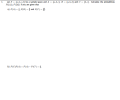 1. Let S P(ta), P(ld) if you are given that {a,b,c,d) be a sample space and A-{a,b,e). В-{a,b,d) and C-{b,e). Calculate the probabilities a) P(A) = , P(B)-i and P(C)- 21 b) P(C)P(A) = P(A)-P(C)-흄
Consider the following hypotheses. Ho: p=0.40 Hp#0.40 Given that p=0.26, n = 100, and a =0.10,...
 Consider the following hypotheses. Ho: p=0.40 Hp#0.40 Given that p=0.26, n = 100, and a =0.10, answer the following questions. a. Determine the p-value for this test. b. What conclusion should be drawn? a. p-value = (Round to three decimal places as needed.) Determine the critical value(s) of the test statistic. b. Choose the correct answer below. O A. Do not reject Ho. There is sufficient evidence that p+0.40. OB. Do not reject Ho There is insufficient evidence that p#0.40....
How would you draw a Venn diagram with the following: Pr((A u B) n C) (given...
How would you draw a Venn diagram with the following: Pr((A u B) n C) (given that A B and C are independent and they are not mutually exclusive). What about Pr((A n B) u C)?
 Consider the following hypotheses. Ho:p0.14 H:p> 0.14 Given that p=0.2, n = 150, and a=0.10, answer the following questions. a. What conclusion should be drawn? b. Determine the p-value for this test. a. Determine the critical value(s) of the test statistic.
 Use P(A U B U gives ) = P(A) + P(B) + . . .-P(A n B)-... This 1m k+1 nn-1 に! lim 一= 1 k! ~ 0.632121 に! Your assignment is to show how we get these last two equalities.
 V. If P(A) 0.40, P(B)-0.80, and P(A and B) 0.35 a. Are A and B mutually exclusive? Explain why b. What is the probability of either A or B or both occurring? c. Using the multiplication rule, determine whether A and B are independent. d. What is the probability that neither A nor B will occur?
 Question 5. Consider a binomial experiment with n=10 and p = 0.10. Use the binomial tables attached to answer parts (a) through (d). a) Find f (0) b). Find f (2) c) Find P( x2) d) Find P( x 1 ) e) Find E(x) f) Find Variance(x) and o SOLUTION :
 1. Let S P(ta), P(ld) if you are given that {a,b,c,d) be a sample space and A-{a,b,e). В-{a,b,d) and C-{b,e). Calculate the probabilities a) P(A) = , P(B)-i and P(C)- 21 b) P(C)P(A) = P(A)-P(C)-흄
 Consider the following hypotheses. Ho: p=0.40 Hp#0.40 Given that p=0.26, n = 100, and a =0.10, answer the following questions. a. Determine the p-value for this test. b. What conclusion should be drawn? a. p-value = (Round to three decimal places as needed.) Determine the critical value(s) of the test statistic. b. Choose the correct answer below. O A. Do not reject Ho. There is sufficient evidence that p+0.40. OB. Do not reject Ho There is insufficient evidence that p#0.40....
Most questions answered within 3 hours.
-
Where is the error in this code sequence?
String s1 = "Hello";
String s2 = "ello";...
asked 10 months ago -
Financial data for Joel de Paris, Inc., for last year
follow:
Joel de Paris, Inc.
Balance...
asked 10 months ago -
Consider this reaction:
Al2(SO4)3 (aq)+ BaCl3
(aq) Al2Cl6 (aq)- +
3BaSO4(s) . What is the...
asked 10 months ago -
Suppose that Savneet is considering increasing her
recent random sample from 20 car rentals to 40...
asked 10 months ago -
Trucks arrive at an unloading terminal at an average rate of 120
per hour.
Trucks arrive...
asked 10 months ago -
Why are methanol and ethanol completely soluble in water while
octanol is not very little soluble....
asked 10 months ago -
A facilities manager at a university reads in a research report
that the mean amount of...
asked 10 months ago -
When the CuSO4 is rehydrated by adding water to the anhydrous
compound, is this an endothermic...
asked 10 months ago -
A ray of sunlight is passing from diamond into crown glass; the
angle of incidence is...
asked 10 months ago -
A block of mass 0.249 kg is placed on top of a light, vertical
spring of...
asked 10 months ago -
how do the kidneys compensate in the presences of acidosis
a) trigger hyperventilate
b) reserve acid...
asked 10 months ago -
Question 501 pts
The rental rate of capital to the firm increases. Which of the
following...
asked 10 months ago