In microelectronics circuits 7th edition number 5.59 in the problems. Can you explain how you know...
In microelectronics circuits 7th edition number 5.59 in the problems. Can you explain how you know the gate is short circuits as well why in part a you don’t use (u)(Cox) but, you do in the others. This is the part I can not understand for this question.
Thank you,
Homework Answers

if you want know how Vd = Vg leads to saturation then refer to the example problem no:5.4 in the same text book.
Add Answer to:
In microelectronics circuits 7th edition number 5.59 in the problems. Can you explain how you know...
In microelectronics circuits 7th edition number 5.59 in the problems. Can you explain how you know...
In microelectronics circuits 7th edition number 5.59 in the problems. Can you explain how you know the gate is short circuits as well why in part a you don’t use (u)(Cox) but, you do in the others. This is the part I can not understand for this question. Thank you,
Can someone please explain this one to me. I know the right answer (it is marked),...
 Can someone please explain this
one to me. I know the right answer (it is marked), but I do not
understand why the first option is also not the correct answer. Any
help is appreciated, thank you.
Can someone please explain this
one to me. I know the right answer (it is marked), but I do not
understand why the first option is also not the correct answer. Any
help is appreciated, thank you.
please explain answer so i can understand how to slove for further problems! thank you !!...
 please explain answer so i can understand how to slove for further
problems! thank you !!
1. A compound has a molecular formula of CaH:02. Propose a valid structure that matches well with the IR spectrum below. Please identify the main functional group(s) on the spectrum below. RIVENURSER identify the main functional group(s) on the spectrum below. RAVENUMBERI-
please explain answer so i can understand how to slove for further
problems! thank you !!
1. A compound has a molecular formula of CaH:02. Propose a valid structure that matches well with the IR spectrum below. Please identify the main functional group(s) on the spectrum below. RIVENURSER identify the main functional group(s) on the spectrum below. RAVENUMBERI-
Relating to titration problems: How do you know when it is appropriate to use either the...
Relating to titration problems: How do you know when it is appropriate to use either the neutralization reaction, the hydrolysis reaction, or the stoichiometry reaction? I am trying to figure out when I can use the ICE table, or when I am supposed to use stoichiometry to solve at different points in a reaction. Please explain the concept behind your answer as well. If it helps to apply your explanation to a problem: TItration of 10mL of 0.3 M NH3...
Having a hard time with this chapter can anyone explain how they know which regents go...
 Having a hard time with this chapter can anyone explain how
they know which regents go with each compound? I just don’t see how
you can look at it and know which reagent goes with the compound
explanation would be nice! Thank you
1. Identify the reagents (1-8) needed or product (9) formed for eac Br 2. он OTs 3 4. 5. Br, light HOCI 9. он 7. OH 8 Cl 'OH OH
Having a hard time with this chapter can anyone explain how
they know which regents go with each compound? I just don’t see how
you can look at it and know which reagent goes with the compound
explanation would be nice! Thank you
1. Identify the reagents (1-8) needed or product (9) formed for eac Br 2. он OTs 3 4. 5. Br, light HOCI 9. он 7. OH 8 Cl 'OH OH
How can you tell which of the two following equations to use when solving problems and...
 How can you tell which of the two following equations to use
when solving problems and why do the two different equations
exist?
Why does one have moles and the other mass? How does this affect
how we find internal energy for instance? I know that U= Q- W but
wouldn't know which Q to use.
CynAT specific mass change in heat added heat temperature
How can you tell which of the two following equations to use
when solving problems and why do the two different equations
exist?
Why does one have moles and the other mass? How does this affect
how we find internal energy for instance? I know that U= Q- W but
wouldn't know which Q to use.
CynAT specific mass change in heat added heat temperature
I got confused can you please explain to me how did he answer this question, please...
 I got confused can you please explain to me how did he answer
this question, please I need to know in each step how did he do
it
Centre of Pressure Inclined Sluice Gate Example Bgate 2m 1.5m Hydrostatic force on sluice gate? Location of centre of pressure? Force on catch? 1.8m 45 Catch 1.5m 0- 45°. 2 13.02m x2x (1.8) S 12 3-02 (3x2) Fateh っ M.
I got confused can you please explain to me how did he answer
this question, please I need to know in each step how did he do
it
Centre of Pressure Inclined Sluice Gate Example Bgate 2m 1.5m Hydrostatic force on sluice gate? Location of centre of pressure? Force on catch? 1.8m 45 Catch 1.5m 0- 45°. 2 13.02m x2x (1.8) S 12 3-02 (3x2) Fateh っ M.
Encoders. IF YOU CAN FIND THE QUESTION RELATING TO THIS IMAGE ONLINE AND LINK IT I...
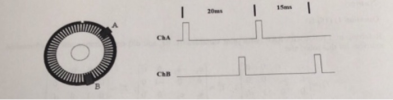 Encoders. IF YOU CAN FIND THE QUESTION RELATING TO THIS IMAGE
ONLINE AND LINK IT I WILL THUMBS UP. Or, if you can clearly explain
what is going on with these two time values given in ms. What can I
calculate with these values. Please make a made up example and show
work so I can understand and I will thumbs up. If you don’t know
how to do this I will thumbs down
15ms 20ms A. IL ChB
Encoders. IF YOU CAN FIND THE QUESTION RELATING TO THIS IMAGE
ONLINE AND LINK IT I WILL THUMBS UP. Or, if you can clearly explain
what is going on with these two time values given in ms. What can I
calculate with these values. Please make a made up example and show
work so I can understand and I will thumbs up. If you don’t know
how to do this I will thumbs down
15ms 20ms A. IL ChB
Can you explain how to do these types of problems?? For each molecule shown identify the...
 Can you explain how to do these
types of problems??
For each molecule shown identify the value of the molecular ion peak. If present comment on the M+ 2 peak as well. 2. a.
Can you explain how to do these
types of problems??
For each molecule shown identify the value of the molecular ion peak. If present comment on the M+ 2 peak as well. 2. a.
Can you please explain and show all the steps to solve these log problems Ex1: 8.52...
Can you please explain and show all the steps to solve these log problems Ex1: 8.52 = 9.52 + log(0.500/x) Ex2: 8.52 = 9.52 + ln(0.500/x) I want to isolate "x" but I don't know how to remove the "log" or "ln" from the problem. Also would it be any different if "x" were in the numerator instead of the denominator? The more specific the better, Thank You!
 Can someone please explain this
one to me. I know the right answer (it is marked), but I do not
understand why the first option is also not the correct answer. Any
help is appreciated, thank you.
Can someone please explain this
one to me. I know the right answer (it is marked), but I do not
understand why the first option is also not the correct answer. Any
help is appreciated, thank you.
 please explain answer so i can understand how to slove for further
problems! thank you !!
1. A compound has a molecular formula of CaH:02. Propose a valid structure that matches well with the IR spectrum below. Please identify the main functional group(s) on the spectrum below. RIVENURSER identify the main functional group(s) on the spectrum below. RAVENUMBERI-
please explain answer so i can understand how to slove for further
problems! thank you !!
1. A compound has a molecular formula of CaH:02. Propose a valid structure that matches well with the IR spectrum below. Please identify the main functional group(s) on the spectrum below. RIVENURSER identify the main functional group(s) on the spectrum below. RAVENUMBERI-
 Having a hard time with this chapter can anyone explain how
they know which regents go with each compound? I just don’t see how
you can look at it and know which reagent goes with the compound
explanation would be nice! Thank you
1. Identify the reagents (1-8) needed or product (9) formed for eac Br 2. он OTs 3 4. 5. Br, light HOCI 9. он 7. OH 8 Cl 'OH OH
Having a hard time with this chapter can anyone explain how
they know which regents go with each compound? I just don’t see how
you can look at it and know which reagent goes with the compound
explanation would be nice! Thank you
1. Identify the reagents (1-8) needed or product (9) formed for eac Br 2. он OTs 3 4. 5. Br, light HOCI 9. он 7. OH 8 Cl 'OH OH
 How can you tell which of the two following equations to use
when solving problems and why do the two different equations
exist?
Why does one have moles and the other mass? How does this affect
how we find internal energy for instance? I know that U= Q- W but
wouldn't know which Q to use.
CynAT specific mass change in heat added heat temperature
How can you tell which of the two following equations to use
when solving problems and why do the two different equations
exist?
Why does one have moles and the other mass? How does this affect
how we find internal energy for instance? I know that U= Q- W but
wouldn't know which Q to use.
CynAT specific mass change in heat added heat temperature
 I got confused can you please explain to me how did he answer
this question, please I need to know in each step how did he do
it
Centre of Pressure Inclined Sluice Gate Example Bgate 2m 1.5m Hydrostatic force on sluice gate? Location of centre of pressure? Force on catch? 1.8m 45 Catch 1.5m 0- 45°. 2 13.02m x2x (1.8) S 12 3-02 (3x2) Fateh っ M.
I got confused can you please explain to me how did he answer
this question, please I need to know in each step how did he do
it
Centre of Pressure Inclined Sluice Gate Example Bgate 2m 1.5m Hydrostatic force on sluice gate? Location of centre of pressure? Force on catch? 1.8m 45 Catch 1.5m 0- 45°. 2 13.02m x2x (1.8) S 12 3-02 (3x2) Fateh っ M.
 Encoders. IF YOU CAN FIND THE QUESTION RELATING TO THIS IMAGE
ONLINE AND LINK IT I WILL THUMBS UP. Or, if you can clearly explain
what is going on with these two time values given in ms. What can I
calculate with these values. Please make a made up example and show
work so I can understand and I will thumbs up. If you don’t know
how to do this I will thumbs down
15ms 20ms A. IL ChB
Encoders. IF YOU CAN FIND THE QUESTION RELATING TO THIS IMAGE
ONLINE AND LINK IT I WILL THUMBS UP. Or, if you can clearly explain
what is going on with these two time values given in ms. What can I
calculate with these values. Please make a made up example and show
work so I can understand and I will thumbs up. If you don’t know
how to do this I will thumbs down
15ms 20ms A. IL ChB
 Can you explain how to do these
types of problems??
For each molecule shown identify the value of the molecular ion peak. If present comment on the M+ 2 peak as well. 2. a.
Can you explain how to do these
types of problems??
For each molecule shown identify the value of the molecular ion peak. If present comment on the M+ 2 peak as well. 2. a.
Most questions answered within 3 hours.
-
Where is the error in this code sequence?
String s1 = "Hello";
String s2 = "ello";...
asked 10 months ago -
Financial data for Joel de Paris, Inc., for last year
follow:
Joel de Paris, Inc.
Balance...
asked 10 months ago -
Consider this reaction:
Al2(SO4)3 (aq)+ BaCl3
(aq) Al2Cl6 (aq)- +
3BaSO4(s) . What is the...
asked 10 months ago -
Suppose that Savneet is considering increasing her
recent random sample from 20 car rentals to 40...
asked 10 months ago -
Trucks arrive at an unloading terminal at an average rate of 120
per hour.
Trucks arrive...
asked 10 months ago -
Why are methanol and ethanol completely soluble in water while
octanol is not very little soluble....
asked 10 months ago -
A facilities manager at a university reads in a research report
that the mean amount of...
asked 10 months ago -
When the CuSO4 is rehydrated by adding water to the anhydrous
compound, is this an endothermic...
asked 10 months ago -
A ray of sunlight is passing from diamond into crown glass; the
angle of incidence is...
asked 10 months ago -
A block of mass 0.249 kg is placed on top of a light, vertical
spring of...
asked 10 months ago -
how do the kidneys compensate in the presences of acidosis
a) trigger hyperventilate
b) reserve acid...
asked 10 months ago -
Question 501 pts
The rental rate of capital to the firm increases. Which of the
following...
asked 10 months ago