
Homework Answers
By Bernoulli's theorem sum of pressure head and velocity head above and below the wing must be equal i.e,
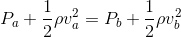
P denotes the pressure, v denotes the velocity and  is the density of air
The index a denotes above and b denotes below the wings.

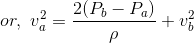
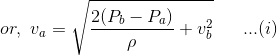
Now we consider the term Pb-Pa
This is nothing but the pressure difference between the upper and lower surface of the wings.
This pressure difference is equal to the force per unit area i.e,
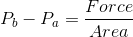
Here the force is supplied by the weight of the aircraft. So we can write
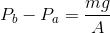
m is the mass of the aircraft and g is the acceleration due to gravity.
putting this value in equation (i) we have
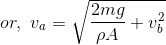
Putting the values we have,


This is the velocity of the air flow above the surface.
Add Answer to:
An airplane has a mass of 10x10 kg, and the ar flows put the lower surface...
An airplane has a mass of 2.1×10⁶ kg , and the air flows past the lower...
An airplane has a mass of 2.1×10⁶ kg , and the air flows past the lower surface of the wings at 96 m/s If the wings have a surface area of 1500 m2 , how fast must the air flow over the upper surface of the wing if the plane is to stay in the air? Express your answer to two significant figures and include the appropriate units.
An airplane has a mass of 2.4×10⁶ kg , and the air flows past the lower...
An airplane has a mass of 2.4×10⁶ kg , and the air flows past the lower surface of the wings at 91 m/s . Part A If the wings have a surface area of 1200 m2 , how fast must the air flow over the upper surface of the wing if the plane is to stay in the air? Express your answer to two significant figures and include the appropriate units.
An airplane has a mass of 1.6×10⁶ kg , and the air flows past the lower...
An airplane has a mass of 1.6×10⁶ kg , and the air flows past the lower surface of the wings at 92 m/s. If the wings have a surface area of 1000 m2 , how fast must the air flow over the upper surface of the wing if the plane is to stay in the air? Express your answer using two significant figures.
An airplane has a mass of 2.2×10⁶ kg , and the air flows past the lower...
An airplane has a mass of 2.2×10⁶ kg , and the air flows past the lower surface of the wings at 85 m/s . If the wings have a surface area of 1200 m2 , how fast must the air flow over the upper surface of the wing if the plane is to stay in the air?
An airplane has a mass of 2.7×10⁶ kg , and the air flows past the lower...
An airplane has a mass of 2.7×10⁶ kg , and the air flows past the lower surface of the wings at 85 m/s . If the wings have a surface area of 1500 m'2 , how fast must the air flow over the upper surface of the wing if the plane is to stay in the air?
An airplane has a mass of 3.0×10⁶ kg , and the air flows past the lower...
An airplane has a mass of 3.0×10⁶ kg , and the air flows past the lower surface of the wings at 83 m/s . Part A If the wings have a surface area of 1600 m2 , how fast must the air flow over the upper surface of the wing if the plane is to stay in the air?
Find the pressure difference on an airplane wing if air flows over the upper surface with...
Find the pressure difference on an airplane wing if air flows over the upper surface with a speed of 115 m/s , and along the bottom surface with a speed of 103 m/s . Answer is in kPa. If the area of the wing is 33 m2 , what is the net upward force exerted on the wing? Express your answer using two significant figures. Answer in kN
7.) A Cessna 152 is a small airplane with a mass of 725 kg and a wing area of 15.0 m. It the wings are designed so...
 7.) A Cessna 152 is a small airplane with a mass of 725 kg and a wing area of 15.0 m. It the wings are designed so that the air flows 13.5% faster above the wings than below, then what is the minimum cruising speed of the plane? (You can make the assumption that all the litt force comes from this difference in air flow.)
If air flows under the wing of.an 80,000 kg plane with a speed of 280 m/s...
 If air flows under the wing of.an 80,000 kg plane with a speed of 280 m/s how fast does it need to flow over the top of the wing in order to keep the plane in the air if the wings have a surface area of 60 m2?
A small jet airplane has a total wing area of 62.5 m2 and a mass of...
A small jet airplane has a total wing area of 62.5 m2 and a mass of 7.03 104 kg. (a) If this jet is in horizontal flight, determine the pressure difference between the lower and upper surfaces of the wings. (b) When the speed of air traveling over the wing is 237 m/s, determine the speed of air under the wing. Use 1.29 kg/m3 as the density of air.
 7.) A Cessna 152 is a small airplane with a mass of 725 kg and a wing area of 15.0 m. It the wings are designed so that the air flows 13.5% faster above the wings than below, then what is the minimum cruising speed of the plane? (You can make the assumption that all the litt force comes from this difference in air flow.)
 If air flows under the wing of.an 80,000 kg plane with a speed of 280 m/s how fast does it need to flow over the top of the wing in order to keep the plane in the air if the wings have a surface area of 60 m2?
Most questions answered within 3 hours.
-
Where is the error in this code sequence?
String s1 = "Hello";
String s2 = "ello";...
asked 11 months ago -
Financial data for Joel de Paris, Inc., for last year
follow:
Joel de Paris, Inc.
Balance...
asked 11 months ago -
Consider this reaction:
Al2(SO4)3 (aq)+ BaCl3
(aq) Al2Cl6 (aq)- +
3BaSO4(s) . What is the...
asked 11 months ago -
Suppose that Savneet is considering increasing her
recent random sample from 20 car rentals to 40...
asked 11 months ago -
Trucks arrive at an unloading terminal at an average rate of 120
per hour.
Trucks arrive...
asked 11 months ago -
Why are methanol and ethanol completely soluble in water while
octanol is not very little soluble....
asked 11 months ago -
A facilities manager at a university reads in a research report
that the mean amount of...
asked 11 months ago -
When the CuSO4 is rehydrated by adding water to the anhydrous
compound, is this an endothermic...
asked 11 months ago -
A ray of sunlight is passing from diamond into crown glass; the
angle of incidence is...
asked 11 months ago -
A block of mass 0.249 kg is placed on top of a light, vertical
spring of...
asked 11 months ago -
how do the kidneys compensate in the presences of acidosis
a) trigger hyperventilate
b) reserve acid...
asked 11 months ago -
Question 501 pts
The rental rate of capital to the firm increases. Which of the
following...
asked 11 months ago