
Please help. Would really appreciate an explanation. Thank you
Homework Answers


Add Answer to:
Please help. Would really appreciate an explanation. Thank you EXECUTE the solution as follows Constants Learning...
Learning Goal: To practice Problem-Solving Strategy 21.1 Coulomb's Law EXECUTE the solution as follows Three charged...
 Learning Goal: To practice Problem-Solving Strategy 21.1 Coulomb's Law EXECUTE the solution as follows Three charged particles are placed at each of three corners of an equilateral triangle whose sides are of length 3.4 cm. Two of the particles have a negative charge: q-7.3 nC and g2 14.6 nC The remaining particle has a positive charge, g3 8.0 nC. What is the net electric force acting on particle 3 due to particle 1 and particle 2 Part B Find the...
Learning Goal: To practice Problem-Solving Strategy 21.1 Coulomb's Law EXECUTE the solution as follows Three charged...
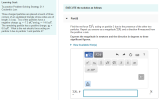 Learning Goal: To practice Problem-Solving Strategy 21.1 Coulomb's Law EXECUTE the solution as follows Three charged particles are placed at each of three corners of an equilateral triangle whose sides are of length 3.4 cm. Two of the particles have a negative charge: q-7.3 nC and g2 14.6 nC The remaining particle has a positive charge, g3 8.0 nC. What is the net electric force acting on particle 3 due to particle 1 and particle 2 Part B Find the...
To practice Problem-Solving Strategy 21.1 Coulomb's Law. Three charged particles are placed at each of three...
To practice Problem-Solving Strategy 21.1 Coulomb's Law. Three charged particles are placed at each of three corners of an equilateral triangle whose sides are of length 3.2 cm . Two of the particles have a negative charge: q1 = -6.6 nC and q2 = -13.2 nC . The remaining particle has a positive charge, q3 = 8.0 nC . What is the net electric force acting on particle 3 due to particle 1 and particle 2? Find the net force...
To practice Problem-Solving Strategy 21.1 Coulomb's Law. Three charged particles are placed at each of three...
To practice Problem-Solving Strategy 21.1 Coulomb's Law. Three charged particles are placed at each of three corners of an equilateral triangle whose sides are of length 3.0 cm . Two of the particles have a negative charge: q1 = -6.6 nC and q2 = -13.2 nC . The remaining particle has a positive charge, q3 = 8.0 nC . Find the net force ΣF⃗ 3 acting on particle 3 due to the presence of the other two particles. Report you...
To practice Problem-Solving Strategy 21.1 Coulomb's Law. Three charged particles are placed at each of three...
To practice Problem-Solving Strategy 21.1 Coulomb's Law. Three charged particles are placed at each of three corners of an equilateral triangle whose sides are of length 2.2 cm . Two of the particles have a negative charge: q1 = -8.7 nC and q2 = -17.4 nC . The remaining particle has a positive charge, q3 = 8.0 nC . What is the net electric force acting on particle 3 due to particle 1 and particle 2? Find the net force...
KHwork 01 Electric Force and Field Problem 1 Constants Learning Goal: To practice Problem-Solving Strategy 21.1...
 KHwork 01 Electric Force and Field Problem 1 Constants Learning Goal: To practice Problem-Solving Strategy 21.1 Coulomb's Law Three charged particles are placed at each of three comers of an equilateral triangle whose sides are of length 2.6 cm. Two of the particles have a negative charge: q1 -6.7 nC and g2-13.4 nC The remaining particle has a positive charge, 93 8.0 nC. What is the net electric force acting on particle 3 due to particle 1 and particle 2?...
Three charged particles are placed at each of three corners of an equilateral triangle whose sides...
Three charged particles are placed at each of three corners of an equilateral triangle whose sides are of length 3.4cm . Two of the particles have a negative charge: q1 = -8.1nC and q2 = -16.2nC . The remaining particle has a positive charge, q3 = 8.0nC . What is the net electric force acting on particle 3 due to particle 1 and particle 2? Find the net force ?F? 3 acting on particle 3 due to the presence of...
Three positive particles of equal charge, +17.0 uC, are located at the corners of an equilateral triangle of side 15.0 cm (Fig. 16-53).
 Three positive particles of equal charge, +17.0 uC, are located at the corners of an equilateral triangle of side 15.0 cm (Fig. 16-53). Calculate the magnitude and direction of the net force on each particle due to the other two.
1. In the figure below, three point particles are fixed in place in the xy plane. The three partiles sit on the corners...
 1. In the figure below, three point particles are fixed in place in the xy plane. The three partiles sit on the corners of an equilateral triangle with sides of length a = 2.50 mm. Particle 1 has a mass m1 = 12.0 kg, particle 2 has a mass m2 = 18.0 kg, and particle 3 has a mass m3 = 15.0 kg. m --- -- 1 m3 (a) What is the magnitude and direction of the net gravitational force...
Three positive particles of equal charge, Q = 7.3 μC , are located at the corners...
Three positive particles of equal charge, Q = 7.3 μC , are located at the corners of an equilateral triangle of side 15.0 cm. Calculate the magnitude of the net force on each particle due to the other two. Express your answer to two significant figures and include the appropriate units.
 Learning Goal: To practice Problem-Solving Strategy 21.1 Coulomb's Law EXECUTE the solution as follows Three charged particles are placed at each of three corners of an equilateral triangle whose sides are of length 3.4 cm. Two of the particles have a negative charge: q-7.3 nC and g2 14.6 nC The remaining particle has a positive charge, g3 8.0 nC. What is the net electric force acting on particle 3 due to particle 1 and particle 2 Part B Find the...
 Learning Goal: To practice Problem-Solving Strategy 21.1 Coulomb's Law EXECUTE the solution as follows Three charged particles are placed at each of three corners of an equilateral triangle whose sides are of length 3.4 cm. Two of the particles have a negative charge: q-7.3 nC and g2 14.6 nC The remaining particle has a positive charge, g3 8.0 nC. What is the net electric force acting on particle 3 due to particle 1 and particle 2 Part B Find the...
 KHwork 01 Electric Force and Field Problem 1 Constants Learning Goal: To practice Problem-Solving Strategy 21.1 Coulomb's Law Three charged particles are placed at each of three comers of an equilateral triangle whose sides are of length 2.6 cm. Two of the particles have a negative charge: q1 -6.7 nC and g2-13.4 nC The remaining particle has a positive charge, 93 8.0 nC. What is the net electric force acting on particle 3 due to particle 1 and particle 2?...
 1. In the figure below, three point particles are fixed in place in the xy plane. The three partiles sit on the corners of an equilateral triangle with sides of length a = 2.50 mm. Particle 1 has a mass m1 = 12.0 kg, particle 2 has a mass m2 = 18.0 kg, and particle 3 has a mass m3 = 15.0 kg. m --- -- 1 m3 (a) What is the magnitude and direction of the net gravitational force...
Most questions answered within 3 hours.
-
Where is the error in this code sequence?
String s1 = "Hello";
String s2 = "ello";...
asked 10 months ago -
Financial data for Joel de Paris, Inc., for last year
follow:
Joel de Paris, Inc.
Balance...
asked 10 months ago -
Consider this reaction:
Al2(SO4)3 (aq)+ BaCl3
(aq) Al2Cl6 (aq)- +
3BaSO4(s) . What is the...
asked 10 months ago -
Suppose that Savneet is considering increasing her
recent random sample from 20 car rentals to 40...
asked 10 months ago -
Trucks arrive at an unloading terminal at an average rate of 120
per hour.
Trucks arrive...
asked 10 months ago -
Why are methanol and ethanol completely soluble in water while
octanol is not very little soluble....
asked 10 months ago -
A facilities manager at a university reads in a research report
that the mean amount of...
asked 10 months ago -
When the CuSO4 is rehydrated by adding water to the anhydrous
compound, is this an endothermic...
asked 10 months ago -
A ray of sunlight is passing from diamond into crown glass; the
angle of incidence is...
asked 10 months ago -
A block of mass 0.249 kg is placed on top of a light, vertical
spring of...
asked 10 months ago -
how do the kidneys compensate in the presences of acidosis
a) trigger hyperventilate
b) reserve acid...
asked 10 months ago -
Question 501 pts
The rental rate of capital to the firm increases. Which of the
following...
asked 10 months ago