Draw the main organic product of the following reaction. See the hint below for the strucutres...
Draw the main organic product of the following reaction. See the hint below for the strucutres of the listed reagents and solvent. Omit byproducts.

Homework Answers
• Oxidation is the process of adding oxygens to a compound. Alcohols undergo oxidation reaction to give carbonyl compounds.
• Alcohols oxidized using DMSO (dimethyl sulfoxide), oxalyl chloride and organic base (triethyl amine) gives carbonyl compounds.
• The selectivity of alcohols plays a major role in Swern oxidation in which primary alcohols gives aldehydes and secondary alcohols gives ketones. Tertiary alcohols are not reactive.
Swern oxidation: The Swern oxidation is a type of organic reaction in which primary alcohols are oxidized to give aldehydes. The mechanism involves the reaction of dimethyl sulfoxide (DMSO) with oxalyl chloride followed by the reaction with chloride ion which gives chlorosulfonium salt. The alcohol attacks the chlorosulfonium salt with release of chloride ion which gives alkoxylsulfonium cation followed by proton abstraction which gives carbonyl compounds.
The scheme of the reaction is given below:


The mechanism of the reaction is given below:

The main organic product of the following reaction is given below:

Add Answer to:
Draw the main organic product of the following reaction. See the
hint below for the strucutres...
Draw the main organic product of the following reaction. See the hint below for the strucutres...
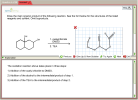 Draw the main organic product of the following reaction. See the
hint below for the strucutres of the listed reagents and solvent.
Omit byproducts.
Draw the main organic product of the following reaction. See the
hint below for the strucutres of the listed reagents and solvent.
Omit byproducts.
Question: Draw the main organic products of the reaction. Indicate the stereochemistry, including H's, at each stereo...
 Question:
Draw the main organic products of the reaction. Indicate the stereochemistry, including H's, at each stereocenter. Omit byproducts such as salts or methanol. Draw the major organic product of the reaction. Show the stereochemistry, if applicable. Omit byproducts such as water or bromide ion.
Question:
Draw the main organic products of the reaction. Indicate the stereochemistry, including H's, at each stereocenter. Omit byproducts such as salts or methanol. Draw the major organic product of the reaction. Show the stereochemistry, if applicable. Omit byproducts such as water or bromide ion.
Draw the main organic products of the reaction. Indicate the stereochemistry, including H's, at each stereocenter....
 Draw the main organic products of the reaction. Indicate the
stereochemistry, including H's, at each stereocenter. Omit
byproducts such as salts or methanol.
UPDATED WITH CORRECT ANSWER:
Draw the main organic products of the reaction. Indicate the stereochemistry, including H's, at each stereocenter. Omit byproducts such as salts or methanol.
Draw the main organic products of the reaction. Indicate the
stereochemistry, including H's, at each stereocenter. Omit
byproducts such as salts or methanol.
UPDATED WITH CORRECT ANSWER:
Draw the main organic products of the reaction. Indicate the stereochemistry, including H's, at each stereocenter. Omit byproducts such as salts or methanol.
Draw the organic product for the following reaction. Omit any inorganic byproducts or ions
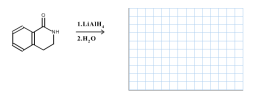 Draw the organic product for the following reaction. Omit any
inorganic byproducts or ions
Draw the organic product for the following reaction. Omit any
inorganic byproducts or ions
Draw the major organic products of the reaction. (Hint: might there be more than one product?...
 Draw the major organic products of the reaction. (Hint: might there be more than one product? Will it be only substitution, only elimination, or some of each?) Indicate the stereochemistry, including H's, at each stereocenter. Omit byproducts such as salts or methanol. If there is more than one alkene that can form, only draw one of them, the one that forms to greater extent. CH3ONa CH3OH 1111
Draw the main organic products of the reaction. Indicate the stereochemistry, including all hydrogen atoms, at...
 Draw the main organic products of the reaction. Indicate the stereochemistry, including all hydrogen atoms, at each stereocenter. Omit byproducts such as salts or methanol. CH3ONa CH3OH
Draw the major organic product of each reaction. Indicate the stereochemistry at the stereogenic center. Omit byproduct...
 Draw the major organic product of each reaction. Indicate the
stereochemistry at the stereogenic center. Omit byproducts such as
salts. If applicable, expand octets to minimize formal charges.And Draw the major organic product(s) of the following reaction
(multiple products may be drawn in one box):
Draw the major organic product of each reaction. Indicate the
stereochemistry at the stereogenic center. Omit byproducts such as
salts. If applicable, expand octets to minimize formal charges.And Draw the major organic product(s) of the following reaction
(multiple products may be drawn in one box):
Draw the major organic product of the reaction. Show the stereochemistry, if applicable. Omit byproducts such as wate...
 Draw the major organic product of the reaction. Show the
stereochemistry, if applicable. Omit byproducts such as water or
bromide ion.
Draw the major organic product of the reaction. Show the
stereochemistry, if applicable. Omit byproducts such as water or
bromide ion.
Draw the major organic product of each reaction. Indicate the stereochemistry at the stereogenic center. Omit...
 Draw the major organic product of each reaction. Indicate the stereochemistry at the stereogenic center. Omit byproducts such as salts. If applicable, expand octets to minimize formal charges. CH3S SoCl2 pyridine Step 1 hint: If the C-O bond breaks, assume inversion of configuration сна
Draw the major organic product of each reaction. Indicate the stereochemistry at the stereogenic center. Omit...
 Draw the major organic product of each reaction. Indicate the stereochemistry at the stereogenic center. Omit byproducts such as salts. If applicable, expand octets to minimize formal charges.
 Draw the main organic product of the following reaction. See the
hint below for the strucutres of the listed reagents and solvent.
Omit byproducts.
Draw the main organic product of the following reaction. See the
hint below for the strucutres of the listed reagents and solvent.
Omit byproducts.
 Question:
Draw the main organic products of the reaction. Indicate the stereochemistry, including H's, at each stereocenter. Omit byproducts such as salts or methanol. Draw the major organic product of the reaction. Show the stereochemistry, if applicable. Omit byproducts such as water or bromide ion.
Question:
Draw the main organic products of the reaction. Indicate the stereochemistry, including H's, at each stereocenter. Omit byproducts such as salts or methanol. Draw the major organic product of the reaction. Show the stereochemistry, if applicable. Omit byproducts such as water or bromide ion.
 Draw the main organic products of the reaction. Indicate the
stereochemistry, including H's, at each stereocenter. Omit
byproducts such as salts or methanol.
UPDATED WITH CORRECT ANSWER:
Draw the main organic products of the reaction. Indicate the stereochemistry, including H's, at each stereocenter. Omit byproducts such as salts or methanol.
Draw the main organic products of the reaction. Indicate the
stereochemistry, including H's, at each stereocenter. Omit
byproducts such as salts or methanol.
UPDATED WITH CORRECT ANSWER:
Draw the main organic products of the reaction. Indicate the stereochemistry, including H's, at each stereocenter. Omit byproducts such as salts or methanol.
 Draw the organic product for the following reaction. Omit any
inorganic byproducts or ions
Draw the organic product for the following reaction. Omit any
inorganic byproducts or ions
 Draw the major organic products of the reaction. (Hint: might there be more than one product? Will it be only substitution, only elimination, or some of each?) Indicate the stereochemistry, including H's, at each stereocenter. Omit byproducts such as salts or methanol. If there is more than one alkene that can form, only draw one of them, the one that forms to greater extent. CH3ONa CH3OH 1111
 Draw the main organic products of the reaction. Indicate the stereochemistry, including all hydrogen atoms, at each stereocenter. Omit byproducts such as salts or methanol. CH3ONa CH3OH
 Draw the major organic product of each reaction. Indicate the
stereochemistry at the stereogenic center. Omit byproducts such as
salts. If applicable, expand octets to minimize formal charges.And Draw the major organic product(s) of the following reaction
(multiple products may be drawn in one box):
Draw the major organic product of each reaction. Indicate the
stereochemistry at the stereogenic center. Omit byproducts such as
salts. If applicable, expand octets to minimize formal charges.And Draw the major organic product(s) of the following reaction
(multiple products may be drawn in one box):
 Draw the major organic product of the reaction. Show the
stereochemistry, if applicable. Omit byproducts such as water or
bromide ion.
Draw the major organic product of the reaction. Show the
stereochemistry, if applicable. Omit byproducts such as water or
bromide ion.
 Draw the major organic product of each reaction. Indicate the stereochemistry at the stereogenic center. Omit byproducts such as salts. If applicable, expand octets to minimize formal charges. CH3S SoCl2 pyridine Step 1 hint: If the C-O bond breaks, assume inversion of configuration сна
 Draw the major organic product of each reaction. Indicate the stereochemistry at the stereogenic center. Omit byproducts such as salts. If applicable, expand octets to minimize formal charges.
Most questions answered within 3 hours.
-
Where is the error in this code sequence?
String s1 = "Hello";
String s2 = "ello";...
asked 11 months ago -
Financial data for Joel de Paris, Inc., for last year
follow:
Joel de Paris, Inc.
Balance...
asked 11 months ago -
Consider this reaction:
Al2(SO4)3 (aq)+ BaCl3
(aq) Al2Cl6 (aq)- +
3BaSO4(s) . What is the...
asked 11 months ago -
Suppose that Savneet is considering increasing her
recent random sample from 20 car rentals to 40...
asked 11 months ago -
Trucks arrive at an unloading terminal at an average rate of 120
per hour.
Trucks arrive...
asked 11 months ago -
Why are methanol and ethanol completely soluble in water while
octanol is not very little soluble....
asked 11 months ago -
A facilities manager at a university reads in a research report
that the mean amount of...
asked 11 months ago -
When the CuSO4 is rehydrated by adding water to the anhydrous
compound, is this an endothermic...
asked 11 months ago -
A ray of sunlight is passing from diamond into crown glass; the
angle of incidence is...
asked 11 months ago -
A block of mass 0.249 kg is placed on top of a light, vertical
spring of...
asked 11 months ago -
how do the kidneys compensate in the presences of acidosis
a) trigger hyperventilate
b) reserve acid...
asked 11 months ago -
Question 501 pts
The rental rate of capital to the firm increases. Which of the
following...
asked 11 months ago