
Homework Answers

Add Answer to:
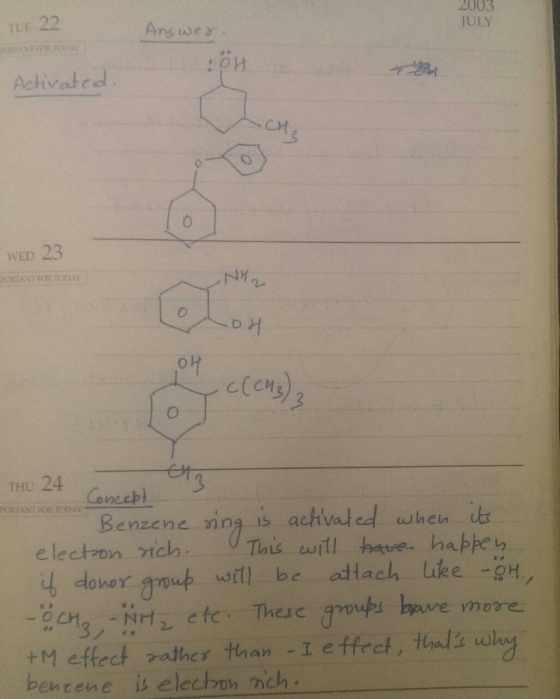
Classify each benzene ring as activated or deactivated. If one or more benzenes are incorrectly placed,...
18 Classify the following solvents as either protic or aprotic solvents. Note: If one or more solvents are incorrect...
 18
Classify the following solvents as either protic or aprotic solvents. Note: If one or more solvents are incorrectly placed, a single red X will appear on the top left. Protic Aprotic DMF DMso acetonitrile acetone H20 cH3CH20H CH3OH acetic acid
18
Classify the following solvents as either protic or aprotic solvents. Note: If one or more solvents are incorrectly placed, a single red X will appear on the top left. Protic Aprotic DMF DMso acetonitrile acetone H20 cH3CH20H CH3OH acetic acid
Label each carbon atom with its optimum C-C-C bond angle. Note: If one or more bond...
 Label each carbon atom with its optimum C-C-C bond angle. Note: If one or more bond angles are incorrectly placed, a single red X will appear on the top left.
Select the missing reagents needed to convert each molecule into the next one pictured in the...
 Select the missing reagents needed to convert each molecule into
the next one pictured in the synthetic scheme below. Note: If one
or more reagents are incorrectly placed, a single red X will appear
on the top left.
Select the missing reagents needed to convert each molecule into the next one pictured in the synthetic scheme below. Note: Ifone or more reagents are incorrectly placed, a single red X will appear on the top left. 1. acetone Brz. CH3CH2OH H30...
Select the missing reagents needed to convert each molecule into
the next one pictured in the synthetic scheme below. Note: If one
or more reagents are incorrectly placed, a single red X will appear
on the top left.
Select the missing reagents needed to convert each molecule into the next one pictured in the synthetic scheme below. Note: Ifone or more reagents are incorrectly placed, a single red X will appear on the top left. 1. acetone Brz. CH3CH2OH H30...
Starting with cyclohexene, propose a reasonable synthesis of the cyclohexene derivative below. If one or more...
 Starting with cyclohexene, propose a reasonable synthesis of the cyclohexene derivative below. If one or more reagents are incorrectly placed, a single red X will appear on the top left.
Which of the following structures qualify as being aromatic, according to Huckel's rule? Note: If one...
 Which of the following structures qualify as being aromatic,
according to Huckel's rule? Note: If one or more structures are
incorrectly placed, a single red X will appear on the top left.
Which of the following structures qualify as being aromatic, according to Huckel's rule? Note: If one or more structures are incorrectly placed, a single red X will appear on the top left. Not Aromatic Aromatic 2K
Which of the following structures qualify as being aromatic,
according to Huckel's rule? Note: If one or more structures are
incorrectly placed, a single red X will appear on the top left.
Which of the following structures qualify as being aromatic, according to Huckel's rule? Note: If one or more structures are incorrectly placed, a single red X will appear on the top left. Not Aromatic Aromatic 2K
Fill in the appropriate reagents to achieve the synthetic transformation shown below. Note: If one or more reagents are...
 Fill in the appropriate reagents to achieve the synthetic
transformation shown below. Note: If one or more reagents are
incorrectly placed, a single red X will appear on the top left.
Map Sapling Learning macmilan learning Fill in the appropriate reaets to achieve the synthetic transformation shown below. Note: If one or more reagents are incorrectly placed, a single re X appear on the top left 2. 3. 4. 5. Mg, ether NaH Br(CH2)2CH3 CH3(CH2ho NaOH CH3(CH2MgBr acetone H30*
Fill in the appropriate reagents to achieve the synthetic
transformation shown below. Note: If one or more reagents are
incorrectly placed, a single red X will appear on the top left.
Map Sapling Learning macmilan learning Fill in the appropriate reaets to achieve the synthetic transformation shown below. Note: If one or more reagents are incorrectly placed, a single re X appear on the top left 2. 3. 4. 5. Mg, ether NaH Br(CH2)2CH3 CH3(CH2ho NaOH CH3(CH2MgBr acetone H30*
Identify the reactant, reagent, and solvent to synthesize the following Grignard reagent. Note: If one or more items a...
 Identify the reactant, reagent,
and solvent to synthesize the following Grignard reagent. Note: If
one or more items are incorrectly placed, a single red X will
appear on the top left.
Identify the reactant, reagent,
and solvent to synthesize the following Grignard reagent. Note: If
one or more items are incorrectly placed, a single red X will
appear on the top left.
Drag the labels to identify the appropriate reagents for each reaction below. Each label is associated...
 Drag the labels to identify the appropriate reagents for each
reaction below. Each label is associated with the arrow adjacent to
it. The direction of the arrow is important! Note: If one or more
reagents are incorrectly placed, a single red X will appear on the
top left.
Drag the labels to identify the appropriate reagents for each reaction below. Each label is associated with the arrow adjacent to it. The direction of the arrow is important! Note: If one...
Drag the labels to identify the appropriate reagents for each
reaction below. Each label is associated with the arrow adjacent to
it. The direction of the arrow is important! Note: If one or more
reagents are incorrectly placed, a single red X will appear on the
top left.
Drag the labels to identify the appropriate reagents for each reaction below. Each label is associated with the arrow adjacent to it. The direction of the arrow is important! Note: If one...
Label each carbon atom with its optimum C-C-C bond angle. Note: If one or more bond...
 Label each carbon atom with its optimum C-C-C bond angle. Note: If one or more bond angles are incorrectly placed, a single red X will appear on the top left CH3 H3 degrees CH2 ← 180 degrees 109.5 degr CH CH3
In each reaction box, place the best reagent and conditions from the list below. There is more than one possible route...
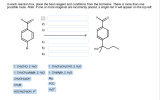 In each reaction box, place the best reagent and conditions from the list below. There is more than one possible route. Note: If one or more reagents are incorrectly placed, a single red X will appear on the top left. CH3CHO, 2H2O CH2CH2CH2CHO, 2H2O CH3(CH2)2MgBr, H2O CH3MgBr, H2O CH3(CH2)2OH Mg CH3Br PCC HOCH2CH2OH, H+ H3O+
 18
Classify the following solvents as either protic or aprotic solvents. Note: If one or more solvents are incorrectly placed, a single red X will appear on the top left. Protic Aprotic DMF DMso acetonitrile acetone H20 cH3CH20H CH3OH acetic acid
18
Classify the following solvents as either protic or aprotic solvents. Note: If one or more solvents are incorrectly placed, a single red X will appear on the top left. Protic Aprotic DMF DMso acetonitrile acetone H20 cH3CH20H CH3OH acetic acid
 Label each carbon atom with its optimum C-C-C bond angle. Note: If one or more bond angles are incorrectly placed, a single red X will appear on the top left.
 Select the missing reagents needed to convert each molecule into
the next one pictured in the synthetic scheme below. Note: If one
or more reagents are incorrectly placed, a single red X will appear
on the top left.
Select the missing reagents needed to convert each molecule into the next one pictured in the synthetic scheme below. Note: Ifone or more reagents are incorrectly placed, a single red X will appear on the top left. 1. acetone Brz. CH3CH2OH H30...
Select the missing reagents needed to convert each molecule into
the next one pictured in the synthetic scheme below. Note: If one
or more reagents are incorrectly placed, a single red X will appear
on the top left.
Select the missing reagents needed to convert each molecule into the next one pictured in the synthetic scheme below. Note: Ifone or more reagents are incorrectly placed, a single red X will appear on the top left. 1. acetone Brz. CH3CH2OH H30...
 Starting with cyclohexene, propose a reasonable synthesis of the cyclohexene derivative below. If one or more reagents are incorrectly placed, a single red X will appear on the top left.
 Which of the following structures qualify as being aromatic,
according to Huckel's rule? Note: If one or more structures are
incorrectly placed, a single red X will appear on the top left.
Which of the following structures qualify as being aromatic, according to Huckel's rule? Note: If one or more structures are incorrectly placed, a single red X will appear on the top left. Not Aromatic Aromatic 2K
Which of the following structures qualify as being aromatic,
according to Huckel's rule? Note: If one or more structures are
incorrectly placed, a single red X will appear on the top left.
Which of the following structures qualify as being aromatic, according to Huckel's rule? Note: If one or more structures are incorrectly placed, a single red X will appear on the top left. Not Aromatic Aromatic 2K
 Fill in the appropriate reagents to achieve the synthetic
transformation shown below. Note: If one or more reagents are
incorrectly placed, a single red X will appear on the top left.
Map Sapling Learning macmilan learning Fill in the appropriate reaets to achieve the synthetic transformation shown below. Note: If one or more reagents are incorrectly placed, a single re X appear on the top left 2. 3. 4. 5. Mg, ether NaH Br(CH2)2CH3 CH3(CH2ho NaOH CH3(CH2MgBr acetone H30*
Fill in the appropriate reagents to achieve the synthetic
transformation shown below. Note: If one or more reagents are
incorrectly placed, a single red X will appear on the top left.
Map Sapling Learning macmilan learning Fill in the appropriate reaets to achieve the synthetic transformation shown below. Note: If one or more reagents are incorrectly placed, a single re X appear on the top left 2. 3. 4. 5. Mg, ether NaH Br(CH2)2CH3 CH3(CH2ho NaOH CH3(CH2MgBr acetone H30*
 Identify the reactant, reagent,
and solvent to synthesize the following Grignard reagent. Note: If
one or more items are incorrectly placed, a single red X will
appear on the top left.
Identify the reactant, reagent,
and solvent to synthesize the following Grignard reagent. Note: If
one or more items are incorrectly placed, a single red X will
appear on the top left.
 Drag the labels to identify the appropriate reagents for each
reaction below. Each label is associated with the arrow adjacent to
it. The direction of the arrow is important! Note: If one or more
reagents are incorrectly placed, a single red X will appear on the
top left.
Drag the labels to identify the appropriate reagents for each reaction below. Each label is associated with the arrow adjacent to it. The direction of the arrow is important! Note: If one...
Drag the labels to identify the appropriate reagents for each
reaction below. Each label is associated with the arrow adjacent to
it. The direction of the arrow is important! Note: If one or more
reagents are incorrectly placed, a single red X will appear on the
top left.
Drag the labels to identify the appropriate reagents for each reaction below. Each label is associated with the arrow adjacent to it. The direction of the arrow is important! Note: If one...
 Label each carbon atom with its optimum C-C-C bond angle. Note: If one or more bond angles are incorrectly placed, a single red X will appear on the top left CH3 H3 degrees CH2 ← 180 degrees 109.5 degr CH CH3
 In each reaction box, place the best reagent and conditions from the list below. There is more than one possible route. Note: If one or more reagents are incorrectly placed, a single red X will appear on the top left. CH3CHO, 2H2O CH2CH2CH2CHO, 2H2O CH3(CH2)2MgBr, H2O CH3MgBr, H2O CH3(CH2)2OH Mg CH3Br PCC HOCH2CH2OH, H+ H3O+
Most questions answered within 3 hours.
-
Where is the error in this code sequence?
String s1 = "Hello";
String s2 = "ello";...
asked 10 months ago -
Financial data for Joel de Paris, Inc., for last year
follow:
Joel de Paris, Inc.
Balance...
asked 10 months ago -
Consider this reaction:
Al2(SO4)3 (aq)+ BaCl3
(aq) Al2Cl6 (aq)- +
3BaSO4(s) . What is the...
asked 10 months ago -
Suppose that Savneet is considering increasing her
recent random sample from 20 car rentals to 40...
asked 10 months ago -
Trucks arrive at an unloading terminal at an average rate of 120
per hour.
Trucks arrive...
asked 10 months ago -
Why are methanol and ethanol completely soluble in water while
octanol is not very little soluble....
asked 10 months ago -
A facilities manager at a university reads in a research report
that the mean amount of...
asked 10 months ago -
When the CuSO4 is rehydrated by adding water to the anhydrous
compound, is this an endothermic...
asked 10 months ago -
A ray of sunlight is passing from diamond into crown glass; the
angle of incidence is...
asked 10 months ago -
A block of mass 0.249 kg is placed on top of a light, vertical
spring of...
asked 10 months ago -
how do the kidneys compensate in the presences of acidosis
a) trigger hyperventilate
b) reserve acid...
asked 10 months ago -
Question 501 pts
The rental rate of capital to the firm increases. Which of the
following...
asked 10 months ago