
Homework Answers

Add Answer to:
Use curved arrows to show the elimination of hydrogen bromide from the alkyl halide when it...
Complete the mechanism of the initial step of the reaction of the alkyl halide with sodium...
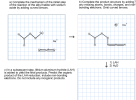 Complete the mechanism of the initial step of the reaction of the alkyl halide with sodium azide by adding curved arrows. Complete the product structure by adding any missing atoms, bonds, charges, and nonbonding electrons. Omit curved arrows. In a subsequent step, lithium aluminum hydride (LAH) is added to yield the final products. Predict the organic product of the LAH reduction; include non-bonding electrons. Do not include any inorganic products.
when an alkyl halide undergoes E2 elimination the halogen and leaving hydrogen must be/have 21. When...
 when an alkyl halide undergoes E2 elimination the halogen and
leaving hydrogen must be/have
21. When an alkyl halide undergoes E2 elimination the halogen and leaving hydrogen must be/have A. moni on the same carbon parallel bonds anti-periplanar a low activation energy none of these
when an alkyl halide undergoes E2 elimination the halogen and
leaving hydrogen must be/have
21. When an alkyl halide undergoes E2 elimination the halogen and leaving hydrogen must be/have A. moni on the same carbon parallel bonds anti-periplanar a low activation energy none of these
curved arrows and equation.
 1. For the first equation, predict the organic compound of the reaction. include hydrogen atoms in the reaction.2. Add one or more curved arrows to show the movement of electrons in the second (2) reaction. Use double curved arrow or single barbed arrow appropriately.Add curved arrows for the first step.2.draw both organic and inorganic intermediate species. Include non bonding electrons and charges, where applicable.
Complete the curved arrow mechanism of the following double elimination reaction when 2,3-dibromoper Map is treated...
 Complete the curved arrow mechanism of the following double elimination reaction when 2,3-dibromoper Map is treated with two equivalents of sodium amide and heated in mineral oil. a) Use three curved arrows to show the elimination of the first hydrogen bromide. b) Use three curved arrows to show the elimination of the second hydrogen bromide. INHO HENT NH3. Br c) Complete the structure of the organic product formed from the double elimination. -C-HC-CH,
Complete the curved arrow mechanism of the following double elimination reaction when 1,2-dibromopropane is treated with...
 Complete the curved arrow mechanism of the following double elimination reaction when 1,2-dibromopropane is treated with two equivalents of sodium amide and heated in mineral oil. a) Use three curved arrows to show the elimination of the first hydrogen bromide. b) Use three curved arrows to show the elimination of the second hydrogen bromide. ENHE •NH HC Hac Bra , -NH3, Br c) Complete the structure of the organic product formed from the double elimination. N-H H3C- C- & Use...
Draw the possible elimination products formed when the alkyl halide is treated with K-OC(CH). Elimination product...
 Draw the possible elimination products formed when the alkyl halide is treated with K-OC(CH). Elimination product formed when carbon 1 is the ß carbon: draw structure ... Elimination product formed when carbon 2 or 4 is the ß carbon: draw structure...
Complete the curved arrow mechanism of the following double elimination reaction when 2,3-dibromopentane is treated with...
 Complete the curved arrow mechanism of the following double
elimination reaction when 2,3-dibromopentane is treated with two
equivalents of sodium amide and heated in mineral oil.
can someone answer this question for me please. thank you.
complete drawing for sapling. i will rate you!! thank you!!
a) Use three curved arrows to show the b) Use three curved arrows to show the elimination of the first hydrogen bromide. elimination of the second hydrogen bromide NH3 :Br: Bi H3 CH3 H3...
Complete the curved arrow mechanism of the following double
elimination reaction when 2,3-dibromopentane is treated with two
equivalents of sodium amide and heated in mineral oil.
can someone answer this question for me please. thank you.
complete drawing for sapling. i will rate you!! thank you!!
a) Use three curved arrows to show the b) Use three curved arrows to show the elimination of the first hydrogen bromide. elimination of the second hydrogen bromide NH3 :Br: Bi H3 CH3 H3...
21. When an alkyl halide undergoes E2 elimination the halogen and leaving hydrogen must be/have A...
 21. When an alkyl halide undergoes E2 elimination the halogen and leaving hydrogen must be/have A B. on the same carbon parallel bonds anti-periplanar a low activation energy none of these யே SN2 reactions work best with? polar aprotic solvents tertiary alkyl halides weak nucleophiles polar protic solvents none of these யே
Draw a major resonance structure for the following enolate. Use curved arrows in both structures to...
 Draw a major resonance structure for the following enolate. Use
curved arrows in both structures to show the delocalization of
electron pairs. Include lone pairs of electrons, formal charges,
and hydrogen atoms.
Draw a major resonance structure for the following enolate. Use curved arrows in both structures to show the delocalization of electron pairs. Include lone pairs of electrons, formal charges, and hydrogen atoms.
Draw a major resonance structure for the following enolate. Use
curved arrows in both structures to show the delocalization of
electron pairs. Include lone pairs of electrons, formal charges,
and hydrogen atoms.
Draw a major resonance structure for the following enolate. Use curved arrows in both structures to show the delocalization of electron pairs. Include lone pairs of electrons, formal charges, and hydrogen atoms.
Alkyl halides may undergo elimination reactions with BrØnstead-Lowry bases in which the halide and an adjacent...
Alkyl halides may undergo elimination reactions with BrØnstead-Lowry bases in which the halide and an adjacent proton are lost to form a new π bond. Because of the loss of a proton and a halide anion the reactions are termed ‘dehydrohalogenation’. The two most common associated mechanisms are designated as either unimolecular (E1) or bimolecular (E2) elimination reactions based on reaction rate studies. E1 reactions proceed via a two-step mechanism that involves the cleavage of the leaving group (here the...
 Complete the mechanism of the initial step of the reaction of the alkyl halide with sodium azide by adding curved arrows. Complete the product structure by adding any missing atoms, bonds, charges, and nonbonding electrons. Omit curved arrows. In a subsequent step, lithium aluminum hydride (LAH) is added to yield the final products. Predict the organic product of the LAH reduction; include non-bonding electrons. Do not include any inorganic products.
 when an alkyl halide undergoes E2 elimination the halogen and
leaving hydrogen must be/have
21. When an alkyl halide undergoes E2 elimination the halogen and leaving hydrogen must be/have A. moni on the same carbon parallel bonds anti-periplanar a low activation energy none of these
when an alkyl halide undergoes E2 elimination the halogen and
leaving hydrogen must be/have
21. When an alkyl halide undergoes E2 elimination the halogen and leaving hydrogen must be/have A. moni on the same carbon parallel bonds anti-periplanar a low activation energy none of these
 Complete the curved arrow mechanism of the following double elimination reaction when 2,3-dibromoper Map is treated with two equivalents of sodium amide and heated in mineral oil. a) Use three curved arrows to show the elimination of the first hydrogen bromide. b) Use three curved arrows to show the elimination of the second hydrogen bromide. INHO HENT NH3. Br c) Complete the structure of the organic product formed from the double elimination. -C-HC-CH,
 Complete the curved arrow mechanism of the following double elimination reaction when 1,2-dibromopropane is treated with two equivalents of sodium amide and heated in mineral oil. a) Use three curved arrows to show the elimination of the first hydrogen bromide. b) Use three curved arrows to show the elimination of the second hydrogen bromide. ENHE •NH HC Hac Bra , -NH3, Br c) Complete the structure of the organic product formed from the double elimination. N-H H3C- C- & Use...
 Draw the possible elimination products formed when the alkyl halide is treated with K-OC(CH). Elimination product formed when carbon 1 is the ß carbon: draw structure ... Elimination product formed when carbon 2 or 4 is the ß carbon: draw structure...
 Complete the curved arrow mechanism of the following double
elimination reaction when 2,3-dibromopentane is treated with two
equivalents of sodium amide and heated in mineral oil.
can someone answer this question for me please. thank you.
complete drawing for sapling. i will rate you!! thank you!!
a) Use three curved arrows to show the b) Use three curved arrows to show the elimination of the first hydrogen bromide. elimination of the second hydrogen bromide NH3 :Br: Bi H3 CH3 H3...
Complete the curved arrow mechanism of the following double
elimination reaction when 2,3-dibromopentane is treated with two
equivalents of sodium amide and heated in mineral oil.
can someone answer this question for me please. thank you.
complete drawing for sapling. i will rate you!! thank you!!
a) Use three curved arrows to show the b) Use three curved arrows to show the elimination of the first hydrogen bromide. elimination of the second hydrogen bromide NH3 :Br: Bi H3 CH3 H3...
 21. When an alkyl halide undergoes E2 elimination the halogen and leaving hydrogen must be/have A B. on the same carbon parallel bonds anti-periplanar a low activation energy none of these யே SN2 reactions work best with? polar aprotic solvents tertiary alkyl halides weak nucleophiles polar protic solvents none of these யே
 Draw a major resonance structure for the following enolate. Use
curved arrows in both structures to show the delocalization of
electron pairs. Include lone pairs of electrons, formal charges,
and hydrogen atoms.
Draw a major resonance structure for the following enolate. Use curved arrows in both structures to show the delocalization of electron pairs. Include lone pairs of electrons, formal charges, and hydrogen atoms.
Draw a major resonance structure for the following enolate. Use
curved arrows in both structures to show the delocalization of
electron pairs. Include lone pairs of electrons, formal charges,
and hydrogen atoms.
Draw a major resonance structure for the following enolate. Use curved arrows in both structures to show the delocalization of electron pairs. Include lone pairs of electrons, formal charges, and hydrogen atoms.
Most questions answered within 3 hours.
-
Where is the error in this code sequence?
String s1 = "Hello";
String s2 = "ello";...
asked 10 months ago -
Financial data for Joel de Paris, Inc., for last year
follow:
Joel de Paris, Inc.
Balance...
asked 10 months ago -
Consider this reaction:
Al2(SO4)3 (aq)+ BaCl3
(aq) Al2Cl6 (aq)- +
3BaSO4(s) . What is the...
asked 10 months ago -
Suppose that Savneet is considering increasing her
recent random sample from 20 car rentals to 40...
asked 10 months ago -
Trucks arrive at an unloading terminal at an average rate of 120
per hour.
Trucks arrive...
asked 10 months ago -
Why are methanol and ethanol completely soluble in water while
octanol is not very little soluble....
asked 10 months ago -
A facilities manager at a university reads in a research report
that the mean amount of...
asked 10 months ago -
When the CuSO4 is rehydrated by adding water to the anhydrous
compound, is this an endothermic...
asked 10 months ago -
A ray of sunlight is passing from diamond into crown glass; the
angle of incidence is...
asked 10 months ago -
A block of mass 0.249 kg is placed on top of a light, vertical
spring of...
asked 10 months ago -
how do the kidneys compensate in the presences of acidosis
a) trigger hyperventilate
b) reserve acid...
asked 10 months ago -
Question 501 pts
The rental rate of capital to the firm increases. Which of the
following...
asked 10 months ago