
Homework Answers
Add Answer to:
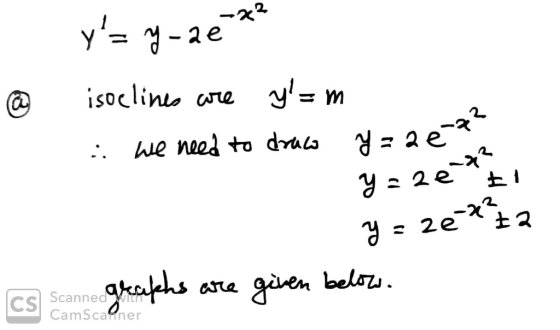
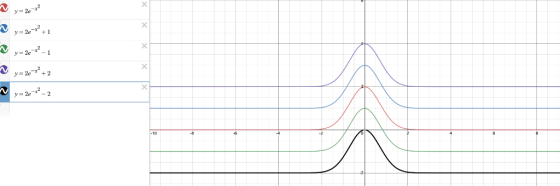
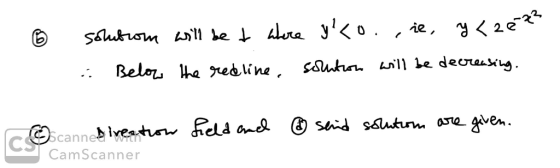
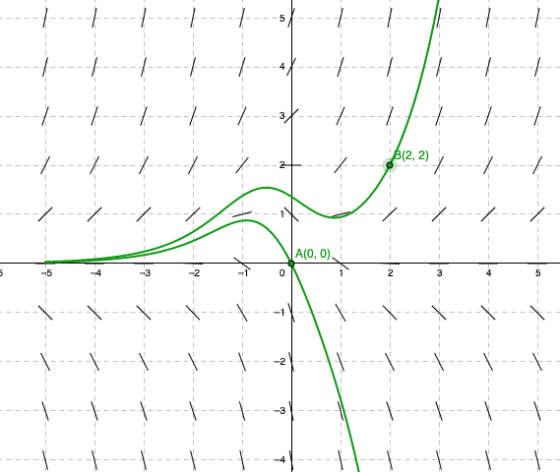
8. Consider the DE: y' =y-2 e Label the isoclines below by the corresponding values a)...
8. Consider the autonomous DE: y y+1)(y- 2) a) Find and sketch below the equilibrium solutions....
 8. Consider the autonomous DE: y y+1)(y- 2) a) Find and sketch below the equilibrium solutions. b) Find the region where the solutions are increasing c) Draw the direction field. d) Sketch three solutions passing respectively through the points (0, 0), (0, 3) and (0, -2) (15 4 2. 0 2 4 2 -2 4
8. Consider the autonomous DE: y y+1)(y- 2) a) Find and sketch below the equilibrium solutions. b) Find the region where the solutions are increasing...
8. Consider the autonomous DE: y y+1)(y- 2) a) Find and sketch below the equilibrium solutions. b) Find the region where the solutions are increasing c) Draw the direction field. d) Sketch three solutions passing respectively through the points (0, 0), (0, 3) and (0, -2) (15 4 2. 0 2 4 2 -2 4
8. Consider the autonomous DE: y y+1)(y- 2) a) Find and sketch below the equilibrium solutions. b) Find the region where the solutions are increasing...
Consider the differential equation y' (t) = (y-4)(1 + y). a) Find the solutions that are...
 Consider the differential equation y' (t) = (y-4)(1 + y). a) Find the solutions that are constant, for all t2 0 (the equilibrium solutions). b) In what regions are solutions increasing? Decreasing? c) Which initial conditions y(0) = A lead to solutions that are increasing in time? Decreasing? d) Sketch the direction field and verify that it is consistent with parts a through c. a) The solutions are constant for (Type an equation. Use a comma to separate answers as...
4 Consider the autonomous differential equation y f(v) a) (3 points) Find all the equilibrium solutions (critical...
 4 Consider the autonomous differential equation y f(v) a) (3 points) Find all the equilibrium solutions (critical points). b) (3 points) Use the sign of y f(z) to determine where solutions are increasing / decreasing. Sketch several solution curves in each region determined by the critical points in c) (3 points) the ty-plane. d) (3 points) Classify each equilibrium point as asymptotically stable, unstable, or semi-stable and draw the corresponding phase line.
4 Consider the autonomous differential equation y f(v)...
4 Consider the autonomous differential equation y f(v) a) (3 points) Find all the equilibrium solutions (critical points). b) (3 points) Use the sign of y f(z) to determine where solutions are increasing / decreasing. Sketch several solution curves in each region determined by the critical points in c) (3 points) the ty-plane. d) (3 points) Classify each equilibrium point as asymptotically stable, unstable, or semi-stable and draw the corresponding phase line.
4 Consider the autonomous differential equation y f(v)...
Consider the autonomous differential equation y = f(y) = y4-4 уг = y"(y-2) (y+2). a) (3 points) Find all the equilibrium solutions (critical points). f(y) to determine where solutions are i...
 Consider the autonomous differential equation y = f(y) = y4-4 уг = y"(y-2) (y+2). a) (3 points) Find all the equilibrium solutions (critical points). f(y) to determine where solutions are increasing / decreasing. Use the sign of y' e) (3 points) Sketch several solution curves in each region determined by the critical poins in the ty-plane
Consider the autonomous differential equation y = f(y) = y4-4 уг = y"(y-2) (y+2). a) (3 points) Find all the equilibrium solutions (critical points)....
Consider the autonomous differential equation y = f(y) = y4-4 уг = y"(y-2) (y+2). a) (3 points) Find all the equilibrium solutions (critical points). f(y) to determine where solutions are increasing / decreasing. Use the sign of y' e) (3 points) Sketch several solution curves in each region determined by the critical poins in the ty-plane
Consider the autonomous differential equation y = f(y) = y4-4 уг = y"(y-2) (y+2). a) (3 points) Find all the equilibrium solutions (critical points)....
Consider the differential equation y' (t) = (y-2)(1 + y). a) Find the solutions that are...
 Consider the differential equation y' (t) = (y-2)(1 + y). a) Find the solutions that are constant, for all t20 (the equilibrium solutions). b) In what regions are solutions increasing? Decreasing? c) Which initial conditions y(0) = A lead to solutions that are increasing in time? Decreasing? d) Sketch the direction field and verify that it is consistent with parts a through c. a) The solutions are constant for (Type an equation. Use a comma to separate answers as needed.)...
Consider the differential equation y' (t) = (y-2)(1 + y). a) Find the solutions that are...
 Consider the differential equation y' (t) = (y-2)(1 + y). a) Find the solutions that are constant, for all t20 (the equilibrium solutions). b) In what regions are solutions increasing? Decreasing? c) Which initial conditions y(0) = A lead to solutions that are increasing in time? Decreasing? d) Sketch the direction field and verify that it is consistent with parts a through c. a) The solutions are constant for (Type an equation. Use a comma to separate answers as needed.)...
consider the autonomous equation 2. Consider the autonomous equation y=-(y2-6y-8) (a) Use the isocline method to ske...
 consider the autonomous equation
2. Consider the autonomous equation y=-(y2-6y-8) (a) Use the isocline method to sketch a direction field for the equation (b) Sketch the solution curves corresponding to the following intitial conditions: (1) y(0) 1 (2) y(0) =3 (3) y(0)=5 (4) 3y(0) 2 (5) y(0) = 4 (c) What are equilibrium solutions, and classify its equilibrium them as: sink (stable), source, node. (d) What is limy(t) if y(0) = 6? too
2. Consider the autonomous equation y=-(y2-6y-8) (a)...
consider the autonomous equation
2. Consider the autonomous equation y=-(y2-6y-8) (a) Use the isocline method to sketch a direction field for the equation (b) Sketch the solution curves corresponding to the following intitial conditions: (1) y(0) 1 (2) y(0) =3 (3) y(0)=5 (4) 3y(0) 2 (5) y(0) = 4 (c) What are equilibrium solutions, and classify its equilibrium them as: sink (stable), source, node. (d) What is limy(t) if y(0) = 6? too
2. Consider the autonomous equation y=-(y2-6y-8) (a)...
Calculate the Y values corresponding to the X values given below. Find the critical values for X ...
 Calculate the Y values corresponding to the X values given below. Find the critical values for X for the given polynomial by finding the X values among those given where the first derivative, dv/dx- 0 and/orn X values where the second derivative, d-y/dx2-0. Be sure to find the sign (+ or-) of dv/dx and of d'y/dx2 at all X values. Using the first and second derivative tests with the information you have calculated, determine which X value(s) represent maximums (MAX),...
Calculate the Y values corresponding to the X values given below. Find the critical values for...
 Calculate the Y values corresponding to the X values given below. Find the critical values for X for the given polynomial by finding the X values among those given where the first derivative, dv/dx- 0 and/orn X values where the second derivative, d-y/dx2-0. Be sure to find the sign (+ or-) of dv/dx and of d'y/dx2 at all X values. Using the first and second derivative tests with the information you have calculated, determine which X value(s) represent maximums (MAX),...
8. (10 points) Consider the differential equation (DE) y" + 6y' + cy = 0. where...
 8. (10 points) Consider the differential equation (DE) y" + 6y' + cy = 0. where c is some constant and the prime indicates differentiation with respect to t. (i) (2 points) For what value(s) of c does this DE have oscillatory solutions? (ii) (2 points) For what value(s) of c does this DE have an exponentially growing solution? (iii) (3 points) For what value(s) of c does this DE have a constant solution? (iv) (3 points) For what value(s)...
 8. Consider the autonomous DE: y y+1)(y- 2) a) Find and sketch below the equilibrium solutions. b) Find the region where the solutions are increasing c) Draw the direction field. d) Sketch three solutions passing respectively through the points (0, 0), (0, 3) and (0, -2) (15 4 2. 0 2 4 2 -2 4
8. Consider the autonomous DE: y y+1)(y- 2) a) Find and sketch below the equilibrium solutions. b) Find the region where the solutions are increasing...
8. Consider the autonomous DE: y y+1)(y- 2) a) Find and sketch below the equilibrium solutions. b) Find the region where the solutions are increasing c) Draw the direction field. d) Sketch three solutions passing respectively through the points (0, 0), (0, 3) and (0, -2) (15 4 2. 0 2 4 2 -2 4
8. Consider the autonomous DE: y y+1)(y- 2) a) Find and sketch below the equilibrium solutions. b) Find the region where the solutions are increasing...
 Consider the differential equation y' (t) = (y-4)(1 + y). a) Find the solutions that are constant, for all t2 0 (the equilibrium solutions). b) In what regions are solutions increasing? Decreasing? c) Which initial conditions y(0) = A lead to solutions that are increasing in time? Decreasing? d) Sketch the direction field and verify that it is consistent with parts a through c. a) The solutions are constant for (Type an equation. Use a comma to separate answers as...
 4 Consider the autonomous differential equation y f(v) a) (3 points) Find all the equilibrium solutions (critical points). b) (3 points) Use the sign of y f(z) to determine where solutions are increasing / decreasing. Sketch several solution curves in each region determined by the critical points in c) (3 points) the ty-plane. d) (3 points) Classify each equilibrium point as asymptotically stable, unstable, or semi-stable and draw the corresponding phase line.
4 Consider the autonomous differential equation y f(v)...
4 Consider the autonomous differential equation y f(v) a) (3 points) Find all the equilibrium solutions (critical points). b) (3 points) Use the sign of y f(z) to determine where solutions are increasing / decreasing. Sketch several solution curves in each region determined by the critical points in c) (3 points) the ty-plane. d) (3 points) Classify each equilibrium point as asymptotically stable, unstable, or semi-stable and draw the corresponding phase line.
4 Consider the autonomous differential equation y f(v)...
 Consider the autonomous differential equation y = f(y) = y4-4 уг = y"(y-2) (y+2). a) (3 points) Find all the equilibrium solutions (critical points). f(y) to determine where solutions are increasing / decreasing. Use the sign of y' e) (3 points) Sketch several solution curves in each region determined by the critical poins in the ty-plane
Consider the autonomous differential equation y = f(y) = y4-4 уг = y"(y-2) (y+2). a) (3 points) Find all the equilibrium solutions (critical points)....
Consider the autonomous differential equation y = f(y) = y4-4 уг = y"(y-2) (y+2). a) (3 points) Find all the equilibrium solutions (critical points). f(y) to determine where solutions are increasing / decreasing. Use the sign of y' e) (3 points) Sketch several solution curves in each region determined by the critical poins in the ty-plane
Consider the autonomous differential equation y = f(y) = y4-4 уг = y"(y-2) (y+2). a) (3 points) Find all the equilibrium solutions (critical points)....
 Consider the differential equation y' (t) = (y-2)(1 + y). a) Find the solutions that are constant, for all t20 (the equilibrium solutions). b) In what regions are solutions increasing? Decreasing? c) Which initial conditions y(0) = A lead to solutions that are increasing in time? Decreasing? d) Sketch the direction field and verify that it is consistent with parts a through c. a) The solutions are constant for (Type an equation. Use a comma to separate answers as needed.)...
 Consider the differential equation y' (t) = (y-2)(1 + y). a) Find the solutions that are constant, for all t20 (the equilibrium solutions). b) In what regions are solutions increasing? Decreasing? c) Which initial conditions y(0) = A lead to solutions that are increasing in time? Decreasing? d) Sketch the direction field and verify that it is consistent with parts a through c. a) The solutions are constant for (Type an equation. Use a comma to separate answers as needed.)...
 consider the autonomous equation
2. Consider the autonomous equation y=-(y2-6y-8) (a) Use the isocline method to sketch a direction field for the equation (b) Sketch the solution curves corresponding to the following intitial conditions: (1) y(0) 1 (2) y(0) =3 (3) y(0)=5 (4) 3y(0) 2 (5) y(0) = 4 (c) What are equilibrium solutions, and classify its equilibrium them as: sink (stable), source, node. (d) What is limy(t) if y(0) = 6? too
2. Consider the autonomous equation y=-(y2-6y-8) (a)...
consider the autonomous equation
2. Consider the autonomous equation y=-(y2-6y-8) (a) Use the isocline method to sketch a direction field for the equation (b) Sketch the solution curves corresponding to the following intitial conditions: (1) y(0) 1 (2) y(0) =3 (3) y(0)=5 (4) 3y(0) 2 (5) y(0) = 4 (c) What are equilibrium solutions, and classify its equilibrium them as: sink (stable), source, node. (d) What is limy(t) if y(0) = 6? too
2. Consider the autonomous equation y=-(y2-6y-8) (a)...
 Calculate the Y values corresponding to the X values given below. Find the critical values for X for the given polynomial by finding the X values among those given where the first derivative, dv/dx- 0 and/orn X values where the second derivative, d-y/dx2-0. Be sure to find the sign (+ or-) of dv/dx and of d'y/dx2 at all X values. Using the first and second derivative tests with the information you have calculated, determine which X value(s) represent maximums (MAX),...
 Calculate the Y values corresponding to the X values given below. Find the critical values for X for the given polynomial by finding the X values among those given where the first derivative, dv/dx- 0 and/orn X values where the second derivative, d-y/dx2-0. Be sure to find the sign (+ or-) of dv/dx and of d'y/dx2 at all X values. Using the first and second derivative tests with the information you have calculated, determine which X value(s) represent maximums (MAX),...
 8. (10 points) Consider the differential equation (DE) y" + 6y' + cy = 0. where c is some constant and the prime indicates differentiation with respect to t. (i) (2 points) For what value(s) of c does this DE have oscillatory solutions? (ii) (2 points) For what value(s) of c does this DE have an exponentially growing solution? (iii) (3 points) For what value(s) of c does this DE have a constant solution? (iv) (3 points) For what value(s)...
Most questions answered within 3 hours.
-
Where is the error in this code sequence?
String s1 = "Hello";
String s2 = "ello";...
asked 10 months ago -
Financial data for Joel de Paris, Inc., for last year
follow:
Joel de Paris, Inc.
Balance...
asked 10 months ago -
Consider this reaction:
Al2(SO4)3 (aq)+ BaCl3
(aq) Al2Cl6 (aq)- +
3BaSO4(s) . What is the...
asked 10 months ago -
Suppose that Savneet is considering increasing her
recent random sample from 20 car rentals to 40...
asked 10 months ago -
Trucks arrive at an unloading terminal at an average rate of 120
per hour.
Trucks arrive...
asked 10 months ago -
Why are methanol and ethanol completely soluble in water while
octanol is not very little soluble....
asked 10 months ago -
A facilities manager at a university reads in a research report
that the mean amount of...
asked 10 months ago -
When the CuSO4 is rehydrated by adding water to the anhydrous
compound, is this an endothermic...
asked 10 months ago -
A ray of sunlight is passing from diamond into crown glass; the
angle of incidence is...
asked 10 months ago -
A block of mass 0.249 kg is placed on top of a light, vertical
spring of...
asked 10 months ago -
how do the kidneys compensate in the presences of acidosis
a) trigger hyperventilate
b) reserve acid...
asked 10 months ago -
Question 501 pts
The rental rate of capital to the firm increases. Which of the
following...
asked 10 months ago