![Let X, Y ~ U0,1] independently. Find P(max(X,Y} 〉 0.8 1 min(X,Y} = 0.5). 48](http://img.homeworklib.com/questions/3a5d1880-61dc-11ea-9045-793f9d2df297.png?x-oss-process=image/resize,w_560)
The answer .48 was found incorrect
Homework Answers
here min(X,Y)=0.5 which means other variable is 0.5 and other is greater then 0.5
therefore P(max(X,Y)>=0.8|min(X,Y)=0.5)=(1-0.8)/(1-0.5)=0.40
( please revert for any clarification)
Add Answer to:
The answer .48 was found incorrect
Let X, Y ~ U0,1] independently. Find P(max(X,Y} 〉 0.8...
Let X, Y ~ 10,11 independently. Find P(max(X, Y} > 0.8 1 min(X, Y} = 0.5)
 Let X, Y ~ 10,11 independently. Find P(max(X, Y} > 0.8 1 min(X, Y} = 0.5)
Problem 4 Suppose U and V follow uniform [0, 1] independently. (1) Let X = min(...
 Problem 4 Suppose U and V follow uniform [0, 1] independently. (1) Let X = min( UV). Let F(x) = P(X<2). Calculate F(2) and f(c). (2) Let Y = max(U,V). Let F(y) = P(Y = y). Calculate F(y) and f(y). (3) Let Z=U + V. Let F(z) = P(Z < z). Calculate F(2) and f(z).
Let the joint pdf of X and Y be , zero elsewhere. Let U = min(X, Y ) and V = max(X, Y ). Find the joint pdf of U and V...
Let the joint pdf of X and Y be , zero elsewhere. Let U = min(X, Y ) and V = max(X, Y ). Find the joint pdf of U and V . 12 (x+y), 0< <1,0 y<1 f (x, y) 12 (x+y), 0
#5. Random variables X and Y have joint PDF 6exp[-(2x+3y)] ,x20, y 20 0 , otherwise x20,y20 (a) Find P[X>Y] and P[X +Y s 1 (b) Find P[ min(x.Y)1] (o) Find P| max(x.y)s1 #5. Random variable...
 #5. Random variables X and Y have joint PDF 6exp[-(2x+3y)] ,x20, y 20 0 , otherwise x20,y20 (a) Find P[X>Y] and P[X +Y s 1 (b) Find P[ min(x.Y)1] (o) Find P| max(x.y)s1
#5. Random variables X and Y have joint PDF 6exp[-(2x+3y)] ,x20, y 20 0 , otherwise x20,y20 (a) Find P[X>Y] and P[X +Y s 1 (b) Find P[ min(x.Y)1] (o) Find P| max(x.y)s1
#5. Random variables X and Y have joint PDF 6exp[-(2x+3y)] ,x20, y 20 0 , otherwise x20,y20 (a) Find P[X>Y] and P[X +Y s 1 (b) Find P[ min(x.Y)1] (o) Find P| max(x.y)s1
1. Let B-(0, 1). Define x + y max(x, y) and x . y-min(x, y), and let the complement of x of be 1-x (ordinary subtraction). Show whether or not B forms a Boolean algebra under these operations. 2....
 1. Let B-(0, 1). Define x + y max(x, y) and x . y-min(x, y), and let the complement of x of be 1-x (ordinary subtraction). Show whether or not B forms a Boolean algebra under these operations. 2. Let S-(0,1 R, and T = { y : 2 < y < 12). Find a one to one correspondence (the actual function) between S and T showing they have the same cardinality. (hint: look at straight lines in the xy-plane)...
4. Let f: X Y +R be any real valued function. Show that max min f(x,y)...
 4. Let f: X Y +R be any real valued function. Show that max min f(x,y) < min max f(x,y) REX YEY yey reX
Question 12: Let X and Y have the joint probability density function Find P(X>Y), P(X Y...
 Question 12: Let X and Y have the joint probability density function Find P(X>Y), P(X Y <1), and P(X < 0.5)
21.12 1.12 Let C be the curve y = +e 2.2 for 0.8 < x <...
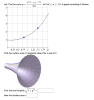 21.12 1.12 Let C be the curve y = +e 2.2 for 0.8 < x < 1.5. A graph containing C follows. 5 - 4 3 2 1 0.25 0.5 0.75 1.25 1.5 1.75 2 Find the surface area of revolution about the x-axis of C. First find and simplify 12 1+ y Now find surface area =
Let Xi, , X. .., Exp(β) be IID. Let Y max(Xi, , h} Find the probability...
 Let Xi, , X. .., Exp(β) be IID. Let Y max(Xi, , h} Find the probability density function of Y. İlint: Y < y if and only if XS for i 1,,n.
Let U, V be random numbers chosen independently from the interval [0,1]. Find the cumulative distribution...
Let U, V be random numbers chosen independently from the interval [0,1]. Find the cumulative distribution and density for the random variables (a) Y =max(U,V). (b) Y =min(U,V).
 Let X, Y ~ 10,11 independently. Find P(max(X, Y} > 0.8 1 min(X, Y} = 0.5)
 Problem 4 Suppose U and V follow uniform [0, 1] independently. (1) Let X = min( UV). Let F(x) = P(X<2). Calculate F(2) and f(c). (2) Let Y = max(U,V). Let F(y) = P(Y = y). Calculate F(y) and f(y). (3) Let Z=U + V. Let F(z) = P(Z < z). Calculate F(2) and f(z).
 #5. Random variables X and Y have joint PDF 6exp[-(2x+3y)] ,x20, y 20 0 , otherwise x20,y20 (a) Find P[X>Y] and P[X +Y s 1 (b) Find P[ min(x.Y)1] (o) Find P| max(x.y)s1
#5. Random variables X and Y have joint PDF 6exp[-(2x+3y)] ,x20, y 20 0 , otherwise x20,y20 (a) Find P[X>Y] and P[X +Y s 1 (b) Find P[ min(x.Y)1] (o) Find P| max(x.y)s1
#5. Random variables X and Y have joint PDF 6exp[-(2x+3y)] ,x20, y 20 0 , otherwise x20,y20 (a) Find P[X>Y] and P[X +Y s 1 (b) Find P[ min(x.Y)1] (o) Find P| max(x.y)s1
 1. Let B-(0, 1). Define x + y max(x, y) and x . y-min(x, y), and let the complement of x of be 1-x (ordinary subtraction). Show whether or not B forms a Boolean algebra under these operations. 2. Let S-(0,1 R, and T = { y : 2 < y < 12). Find a one to one correspondence (the actual function) between S and T showing they have the same cardinality. (hint: look at straight lines in the xy-plane)...
 4. Let f: X Y +R be any real valued function. Show that max min f(x,y) < min max f(x,y) REX YEY yey reX
 Question 12: Let X and Y have the joint probability density function Find P(X>Y), P(X Y <1), and P(X < 0.5)
 21.12 1.12 Let C be the curve y = +e 2.2 for 0.8 < x < 1.5. A graph containing C follows. 5 - 4 3 2 1 0.25 0.5 0.75 1.25 1.5 1.75 2 Find the surface area of revolution about the x-axis of C. First find and simplify 12 1+ y Now find surface area =
 Let Xi, , X. .., Exp(β) be IID. Let Y max(Xi, , h} Find the probability density function of Y. İlint: Y < y if and only if XS for i 1,,n.
Most questions answered within 3 hours.
-
Where is the error in this code sequence?
String s1 = "Hello";
String s2 = "ello";...
asked 10 months ago -
Financial data for Joel de Paris, Inc., for last year
follow:
Joel de Paris, Inc.
Balance...
asked 10 months ago -
Consider this reaction:
Al2(SO4)3 (aq)+ BaCl3
(aq) Al2Cl6 (aq)- +
3BaSO4(s) . What is the...
asked 10 months ago -
Suppose that Savneet is considering increasing her
recent random sample from 20 car rentals to 40...
asked 10 months ago -
Trucks arrive at an unloading terminal at an average rate of 120
per hour.
Trucks arrive...
asked 10 months ago -
Why are methanol and ethanol completely soluble in water while
octanol is not very little soluble....
asked 10 months ago -
A facilities manager at a university reads in a research report
that the mean amount of...
asked 10 months ago -
When the CuSO4 is rehydrated by adding water to the anhydrous
compound, is this an endothermic...
asked 10 months ago -
A ray of sunlight is passing from diamond into crown glass; the
angle of incidence is...
asked 10 months ago -
A block of mass 0.249 kg is placed on top of a light, vertical
spring of...
asked 10 months ago -
how do the kidneys compensate in the presences of acidosis
a) trigger hyperventilate
b) reserve acid...
asked 10 months ago -
Question 501 pts
The rental rate of capital to the firm increases. Which of the
following...
asked 10 months ago