ketone products can be efficiently constructed by sequential Friedal-Crafts acylations with phosgene. a- draw an arrow...
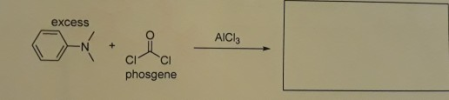 ketone products can be efficiently constructed by
sequential Friedal-Crafts acylations with phosgene.
a- draw an arrow pushing mechanism for the double acylation and
predict the final product
b-draw the major resonance contributor of the sigma complex formed
in the first acylation
excess AICl3 Cl︿Cl phosgene
ketone products can be efficiently constructed by
sequential Friedal-Crafts acylations with phosgene.
a- draw an arrow pushing mechanism for the double acylation and
predict the final product
b-draw the major resonance contributor of the sigma complex formed
in the first acylation
excess AICl3 Cl︿Cl phosgene
Products Reaction Progression Reaction Progression Energy Energy Reactant Reaction Progression Reaction Progression Which of these reactions...
 Products Reaction Progression Reaction Progression Energy Energy Reactant Reaction Progression Reaction Progression Which of these reactions would be the closest to equilibrium? (Mark all that are correct
Predict the equilibrium constant for the first reaction shown here given the equilibrium constant for the...
 Predict the equilibrium constant for the first reaction shown
here given the equilibrium constant for the second and third
reactions
You may want to reference (Pages 680-684) Section 15.3 while completing this problem Part A Predict the equilibrium constant for the first reaction shown here given the equilibrium constants for the second and wird reactions: CO.() + 3H, (B) -...
Predict the equilibrium constant for the first reaction shown
here given the equilibrium constant for the second and third
reactions
You may want to reference (Pages 680-684) Section 15.3 while completing this problem Part A Predict the equilibrium constant for the first reaction shown here given the equilibrium constants for the second and wird reactions: CO.() + 3H, (B) -...
Draw only major products for the reaction C. Addition reaction of alkynes НСЕС
 Draw only major products for the reaction
C. Addition reaction of alkynes НСЕС
Draw only major products for the reaction
C. Addition reaction of alkynes НСЕС
5. Show the organic products and the reaction mechanism for the following reaction. (6 Heat
 5. Show the organic products and the reaction mechanism for the following reaction. (6 Heat
Ph CM3 if this reaction is based on E2 reaction, explain major and minor products
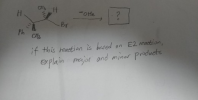 Ph CM3 if this reaction is based on E2 reaction, explain major and minor products
For an enzyme catalyzed reaction, the initial rate R. was determined at each initial concentration of...
 For an enzyme catalyzed reaction, the initial rate R. was determined at each initial concentration of substrate [S]. The following data were obtained [S], u M/1 Ro, u M/1 2.5 9.8 20.2 31.7 41.2 50.2 60.1 74.3 (a) Use these data to determine Km and Rmax by means of a Line- weaver-Burke-analysis. (b) Analyze the data using the Eadie-Hofstee procedure...
Initial rate data are listed in the table for the reaction: Initial rate data are listed...
 Initial rate data are listed in the table for the reaction:
 NH4+ (aq) + NO2 (aq) + N2 (g) + H20 (1) Experiment (NH4+]: [NO 2-1. Initial rate (M/s) 0.24 0.10 7.2 x 10⁻⁴ 0.10 3.6 x 10⁻⁴ 10.12 0.15 5.4 x 10⁻⁴ 0.12 0.12 4.3 x 10⁻⁴ 0.12...
Initial rate data are listed in the table for the reaction:
Initial rate data are listed in the table for the reaction: NH4+ (aq) + NO2 (aq) + N2 (g) + H20 (1) Experiment (NH4+]: [NO 2-1. Initial rate (M/s) 0.24 0.10 7.2 x 10⁻⁴ 0.10 3.6 x 10⁻⁴ 10.12 0.15 5.4 x 10⁻⁴ 0.12 0.12 4.3 x 10⁻⁴ 0.12...
Consider the reaction below. The initial concentration of KBr is 0.0183 M, and the initial concentrations...
Consider the reaction below. The initial concentration of KBr is 0.0183 M, and the initial concentrations of K+ and Br− are each 0 M. If the equilibrium constant is Kc=7.76 under certain conditions, what is the equilibrium concentration of KBr? KBr(aq)⇌K+(aq)+Br−(aq) Remember to use correct significant figures in your answer (round your answer to the nearest hundredth).
Question 15 of 15 > The image shows the products of a combustion reaction of a...
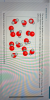 Question 15 of 15 > The image shows the products of a combustion reaction of a hydrocarbon containing only carbon and hydrogen. The large, red spheres represent oxygen atoms, the small, white spheres represent hydrogen atoms, and the grey spheres represent carbon atoms. Determine the empirical formula of the hydrocarbon based on these products. Determine the empirical formula of the...
 ketone products can be efficiently constructed by
sequential Friedal-Crafts acylations with phosgene.
a- draw an arrow pushing mechanism for the double acylation and
predict the final product
b-draw the major resonance contributor of the sigma complex formed
in the first acylation
excess AICl3 Cl︿Cl phosgene
ketone products can be efficiently constructed by
sequential Friedal-Crafts acylations with phosgene.
a- draw an arrow pushing mechanism for the double acylation and
predict the final product
b-draw the major resonance contributor of the sigma complex formed
in the first acylation
excess AICl3 Cl︿Cl phosgene
 Products Reaction Progression Reaction Progression Energy Energy Reactant Reaction Progression Reaction Progression Which of these reactions would be the closest to equilibrium? (Mark all that are correct
 Predict the equilibrium constant for the first reaction shown
here given the equilibrium constant for the second and third
reactions
You may want to reference (Pages 680-684) Section 15.3 while completing this problem Part A Predict the equilibrium constant for the first reaction shown here given the equilibrium constants for the second and wird reactions: CO.() + 3H, (B) -...
Predict the equilibrium constant for the first reaction shown
here given the equilibrium constant for the second and third
reactions
You may want to reference (Pages 680-684) Section 15.3 while completing this problem Part A Predict the equilibrium constant for the first reaction shown here given the equilibrium constants for the second and wird reactions: CO.() + 3H, (B) -...
 Draw only major products for the reaction
C. Addition reaction of alkynes НСЕС
Draw only major products for the reaction
C. Addition reaction of alkynes НСЕС
 5. Show the organic products and the reaction mechanism for the following reaction. (6 Heat
 Ph CM3 if this reaction is based on E2 reaction, explain major and minor products
 For an enzyme catalyzed reaction, the initial rate R. was determined at each initial concentration of substrate [S]. The following data were obtained [S], u M/1 Ro, u M/1 2.5 9.8 20.2 31.7 41.2 50.2 60.1 74.3 (a) Use these data to determine Km and Rmax by means of a Line- weaver-Burke-analysis. (b) Analyze the data using the Eadie-Hofstee procedure...
 Initial rate data are listed in the table for the reaction:
 NH4+ (aq) + NO2 (aq) + N2 (g) + H20 (1) Experiment (NH4+]: [NO 2-1. Initial rate (M/s) 0.24 0.10 7.2 x 10⁻⁴ 0.10 3.6 x 10⁻⁴ 10.12 0.15 5.4 x 10⁻⁴ 0.12 0.12 4.3 x 10⁻⁴ 0.12...
Initial rate data are listed in the table for the reaction:
Initial rate data are listed in the table for the reaction: NH4+ (aq) + NO2 (aq) + N2 (g) + H20 (1) Experiment (NH4+]: [NO 2-1. Initial rate (M/s) 0.24 0.10 7.2 x 10⁻⁴ 0.10 3.6 x 10⁻⁴ 10.12 0.15 5.4 x 10⁻⁴ 0.12 0.12 4.3 x 10⁻⁴ 0.12...
 Question 15 of 15 > The image shows the products of a combustion reaction of a hydrocarbon containing only carbon and hydrogen. The large, red spheres represent oxygen atoms, the small, white spheres represent hydrogen atoms, and the grey spheres represent carbon atoms. Determine the empirical formula of the hydrocarbon based on these products. Determine the empirical formula of the...
Most questions answered within 3 hours.