Which molecule "holds electrons" that can be used for energy transfer in living systems? a dATP...
 Which molecule "holds electrons" that can be used for energy transfer in living systems? a dATP b ATP c. Phosphofructokinase d. NAD e. Oxygen Refer to the figure below. What is it? a. Glucose b. ATP c. ADP d. dATP e. Nicotinamide adenine dinucleotide Which statement is FALSE? a. Most organisms have efficient systems to salvage preformed nucleotides. b. Acetyl-CoA's...
Initial rate data are listed in the table for the reaction NH4t (aq)NO2 (aq)N2 (g)H20 () Experiment [NH4+[NO2Initial ra...
 Initial rate data are listed in the table for the reaction NH4t (aq)NO2 (aq)N2 (g)H20 () Experiment [NH4+[NO2Initial rate (M/s) 0.10 0.24 7.2 x 10⁴ 1 0.10 0.12 3.6 x 10⁴ 0.12 0.15 5.4 x 10⁴ 0.12 0.12 4.3 x 10⁴ 4 First determine the rate law and rate constant Under the same initial conditions as in Experiment 4, calculate...
Given the initial rate data for the reaction A+BC, determine the rate expression for the reaction....
 Given the initial rate data for the reaction A+BC, determine the rate expression for the reaction. [A], M [B].M Initial rate, M/S 0.10 0.20 5.00 10.20 0.20 10.0 0.10 0.15 2.81 O rate=250[A][B] rate - 5.0[A][B] rate=250[A)? rate - 50.0[A] rate= 1250[A][B] The first-order reaction A --> B+C has a half-life of 3.00 minutes. The rate equation for this reaction...
The initial reaction rate for the elementary reaction A+2B-3C was measured as a function of temperature...
 The initial reaction rate for the elementary reaction A+2B-3C was measured as a function of temperature when the concentration of A was 2.5 M and the concentration of B was 1 M; the measurements are summarized in the table below. From these data, a) What is the activation energy? b) What is the frequency factor? c What is the rate...
Could you do both questions? Thank you in advance! 2. For the reaction below: a. Predict...
 Could you do both questions?
Thank you in advance!
2. For the reaction below: a. Predict the most stable product(s) and draw the mechanism OK + E b. Redraw the product(s) below and label all the non-equivalent carbons. How many signals would you expect to see in the 13C NMR of the product? Predict the chemical shifts of each carbon...
Could you do both questions?
Thank you in advance!
2. For the reaction below: a. Predict the most stable product(s) and draw the mechanism OK + E b. Redraw the product(s) below and label all the non-equivalent carbons. How many signals would you expect to see in the 13C NMR of the product? Predict the chemical shifts of each carbon...
Lab 9 Heat of Reaction OBJECTIVE: To experimentally determine the heat of reaction for two exothermic...
 Lab 9 Heat of Reaction
OBJECTIVE:
To experimentally determine the heat of reaction for two
exothermic reactions.
DISCUSSION:
The heat given off or gained in a reaction is called the heat
of reaction (∆?????????).
A reaction that releases heat is known as an exothermic
reaction; an endothermic reaction
is one that absorbs heat.
The heat of the reaction corresponds to...
Lab 9 Heat of Reaction
OBJECTIVE:
To experimentally determine the heat of reaction for two
exothermic reactions.
DISCUSSION:
The heat given off or gained in a reaction is called the heat
of reaction (∆?????????).
A reaction that releases heat is known as an exothermic
reaction; an endothermic reaction
is one that absorbs heat.
The heat of the reaction corresponds to...
8. Predict whether or not a reaction will occur. Write the predicted results (time, color, etc.,)...
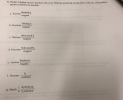 8. Predict whether or not a reaction will occur. Write the predicted results (time, color, etc.,) for positive results or NR for no reaction. Barfoed's a. Sucrose reagent io no ni w Fehling's b. Fructose reagent Seliwanoff's reagent c. Glucose Seliwanoff's d. Fructose reagent Barfoed's e. Lactose nolld s reagent I2 solution f. Sucrose 1. hydrolysis 2. I2 solution g.Starch
Of the following equations predict the product of the reactions. Include stereochemistry in cases where more...
 Of the following equations predict the product of the
reactions. Include stereochemistry in cases where more than one
product is formed . Circle the major product of the reaction
0 CH2CH3 Br CH13 0, HI (2 equivalents Он (1) NaH CH3CH2 Choosing reagents and reaction conditions of your choice, propose a two-step transformation of the given substrate Br Br KOCICH3)s...
Of the following equations predict the product of the
reactions. Include stereochemistry in cases where more than one
product is formed . Circle the major product of the reaction
0 CH2CH3 Br CH13 0, HI (2 equivalents Он (1) NaH CH3CH2 Choosing reagents and reaction conditions of your choice, propose a two-step transformation of the given substrate Br Br KOCICH3)s...
I need some OChem help! Which of the following is (are) a keto-enol tautomeric pair(s)? I...
 I need some OChem help!
Which of the following is (are) a keto-enol tautomeric pair(s)? I II III IV V Which one of the following compound does not undergo an aldol addition reaction in presence of aqueous sodium hydroxide? Butanal 2-methylbutanal 3-methylpentanal 2, 2-dimethyIbutanal Predict the major product for the following reaction. I II III IV V
I need some OChem help!
Which of the following is (are) a keto-enol tautomeric pair(s)? I II III IV V Which one of the following compound does not undergo an aldol addition reaction in presence of aqueous sodium hydroxide? Butanal 2-methylbutanal 3-methylpentanal 2, 2-dimethyIbutanal Predict the major product for the following reaction. I II III IV V
QUESTION 9 Estimate the ΔΗ for forming the first product. H,C H + HBr CH QUESTION...
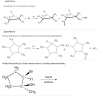 QUESTION 9 Estimate the ΔΗ for forming the first product. H,C H + HBr CH QUESTION 8 Write a Mechanism for Making the Second Product the Following Reaction. HaC H C Cl CH CH, H,C hv HCI CH H,C H C Predict the product(s) of the reaction shown, including stereochemistry: 2 H2C NaCN acetone CH3
 Which molecule "holds electrons" that can be used for energy transfer in living systems? a dATP b ATP c. Phosphofructokinase d. NAD e. Oxygen Refer to the figure below. What is it? a. Glucose b. ATP c. ADP d. dATP e. Nicotinamide adenine dinucleotide Which statement is FALSE? a. Most organisms have efficient systems to salvage preformed nucleotides. b. Acetyl-CoA's...
 Initial rate data are listed in the table for the reaction NH4t (aq)NO2 (aq)N2 (g)H20 () Experiment [NH4+[NO2Initial rate (M/s) 0.10 0.24 7.2 x 10⁴ 1 0.10 0.12 3.6 x 10⁴ 0.12 0.15 5.4 x 10⁴ 0.12 0.12 4.3 x 10⁴ 4 First determine the rate law and rate constant Under the same initial conditions as in Experiment 4, calculate...
 Given the initial rate data for the reaction A+BC, determine the rate expression for the reaction. [A], M [B].M Initial rate, M/S 0.10 0.20 5.00 10.20 0.20 10.0 0.10 0.15 2.81 O rate=250[A][B] rate - 5.0[A][B] rate=250[A)? rate - 50.0[A] rate= 1250[A][B] The first-order reaction A --> B+C has a half-life of 3.00 minutes. The rate equation for this reaction...
 The initial reaction rate for the elementary reaction A+2B-3C was measured as a function of temperature when the concentration of A was 2.5 M and the concentration of B was 1 M; the measurements are summarized in the table below. From these data, a) What is the activation energy? b) What is the frequency factor? c What is the rate...
 Could you do both questions?
Thank you in advance!
2. For the reaction below: a. Predict the most stable product(s) and draw the mechanism OK + E b. Redraw the product(s) below and label all the non-equivalent carbons. How many signals would you expect to see in the 13C NMR of the product? Predict the chemical shifts of each carbon...
Could you do both questions?
Thank you in advance!
2. For the reaction below: a. Predict the most stable product(s) and draw the mechanism OK + E b. Redraw the product(s) below and label all the non-equivalent carbons. How many signals would you expect to see in the 13C NMR of the product? Predict the chemical shifts of each carbon...
 Lab 9 Heat of Reaction
OBJECTIVE:
To experimentally determine the heat of reaction for two
exothermic reactions.
DISCUSSION:
The heat given off or gained in a reaction is called the heat
of reaction (∆?????????).
A reaction that releases heat is known as an exothermic
reaction; an endothermic reaction
is one that absorbs heat.
The heat of the reaction corresponds to...
Lab 9 Heat of Reaction
OBJECTIVE:
To experimentally determine the heat of reaction for two
exothermic reactions.
DISCUSSION:
The heat given off or gained in a reaction is called the heat
of reaction (∆?????????).
A reaction that releases heat is known as an exothermic
reaction; an endothermic reaction
is one that absorbs heat.
The heat of the reaction corresponds to...
 8. Predict whether or not a reaction will occur. Write the predicted results (time, color, etc.,) for positive results or NR for no reaction. Barfoed's a. Sucrose reagent io no ni w Fehling's b. Fructose reagent Seliwanoff's reagent c. Glucose Seliwanoff's d. Fructose reagent Barfoed's e. Lactose nolld s reagent I2 solution f. Sucrose 1. hydrolysis 2. I2 solution g.Starch
 Of the following equations predict the product of the
reactions. Include stereochemistry in cases where more than one
product is formed . Circle the major product of the reaction
0 CH2CH3 Br CH13 0, HI (2 equivalents Он (1) NaH CH3CH2 Choosing reagents and reaction conditions of your choice, propose a two-step transformation of the given substrate Br Br KOCICH3)s...
Of the following equations predict the product of the
reactions. Include stereochemistry in cases where more than one
product is formed . Circle the major product of the reaction
0 CH2CH3 Br CH13 0, HI (2 equivalents Он (1) NaH CH3CH2 Choosing reagents and reaction conditions of your choice, propose a two-step transformation of the given substrate Br Br KOCICH3)s...
 I need some OChem help!
Which of the following is (are) a keto-enol tautomeric pair(s)? I II III IV V Which one of the following compound does not undergo an aldol addition reaction in presence of aqueous sodium hydroxide? Butanal 2-methylbutanal 3-methylpentanal 2, 2-dimethyIbutanal Predict the major product for the following reaction. I II III IV V
I need some OChem help!
Which of the following is (are) a keto-enol tautomeric pair(s)? I II III IV V Which one of the following compound does not undergo an aldol addition reaction in presence of aqueous sodium hydroxide? Butanal 2-methylbutanal 3-methylpentanal 2, 2-dimethyIbutanal Predict the major product for the following reaction. I II III IV V
 QUESTION 9 Estimate the ΔΗ for forming the first product. H,C H + HBr CH QUESTION 8 Write a Mechanism for Making the Second Product the Following Reaction. HaC H C Cl CH CH, H,C hv HCI CH H,C H C Predict the product(s) of the reaction shown, including stereochemistry: 2 H2C NaCN acetone CH3
Most questions answered within 3 hours.