Fund the initial and final volumes of the reactant snd then determine thr molarity of HBr....
 Fund the initial and final volumes of the reactant snd then
determine thr molarity of HBr.
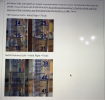
#4) When HBr and NaOH are mixed, a neutralization reaction occurs. To determine the molarity of HBr, it was titrated with 0.500 M NaOH. Read the burettes below to find the initial and final volumes of the reactants, and then determine the molarity of...
Fund the initial and final volumes of the reactant snd then
determine thr molarity of HBr.
#4) When HBr and NaOH are mixed, a neutralization reaction occurs. To determine the molarity of HBr, it was titrated with 0.500 M NaOH. Read the burettes below to find the initial and final volumes of the reactants, and then determine the molarity of...
50 Experiment 7 Types of Chemical Reactions QUESTIONS POST LAB I. In experiment #3, the manganese...
 50 Experiment 7 Types of Chemical Reactions QUESTIONS POST LAB I. In experiment #3, the manganese dioxide (MnO,) was added to the test tube containing hydrogen peroxide (H,O2) in order to speed up the reaction. What is the name given to a chemical that is added to a reaction in order to increase its rate? 2. Did you expect tap...
Predict the major product(s) expected given the reagents shown below. Answer the following questions and use...
 Predict the major product(s) expected given the reagents shown below. Answer the following questions and use the answer so identify the likely mechanists pathway(s) (e.g., E2 or E1eB) Be sure to include the answers to the questions! What is the electrophile for this reaction? (Mark it with an*) Is the electrophilie carbon primary, secondary, tertiary, Is the leaving group excellent...
Pre-lab Study Questions (Submit upon arrival for experiment; show work or explanation to the question. )...
Pre-lab Study Questions (Submit upon arrival for experiment; show work or explanation to the question. ) An experiment is designed to study the rates of reaction: 2 I-(aq) + S2O82-(aq) ® I2(aq) + 2 SO42-(aq) Experiment [I-] (M) [S2O82-] (M) Rate (M/s) 1 0.040 0.040 1.48 ´ 10-3 2 0.080 0.040 5.79 ´ 10-3 3 0.040 0.080 2.82 ´ 10-3...
Consider the reaction: 2 HgCl2 (aq) + C2O42-(aq) 2 Cl-(aq) + 2 CO2 (g) + Hg2Cl2(s) The initial rate of this reaction was determined for several concentrations of mercury (II) chloride and oxalate io...
Consider the reaction: 2 HgCl2 (aq) + C2O42-(aq) 2 Cl-(aq) + 2 CO2 (g) + Hg2Cl2(s) The initial rate of this reaction was determined for several concentrations of mercury (II) chloride and oxalate ion and the following rate data was obtained: Experiment HgCl2 (aq) ( mol/L) C2O42-(aq) (mol/L) Rate (mol/L-s) 1 0.164 0.15 0.000032 2 0.164 0.45 0.00029 3...
Part B An ideal gaseous reaction (which is a hypothetical gaseous reaction that conforms to the...
 Part B An ideal gaseous reaction (which is a hypothetical gaseous reaction that conforms to the laws governing gas behavior) occurs at a constart pressure of 30.0 atm and releases 71.5 k.J of heat. Before the reaction, the volume of the system was 8.80 L After the reaction, the volume of the system was 2.00 L Calculate the total internal...
2 HgCl2(aq) + C2O42-(aq) → 2 Cl-(aq) + 2 CO2(g) + Hg2Cl2(s) Experiment [HgCl2], M [C2O42-],...
2 HgCl2(aq) + C2O42-(aq) → 2 Cl-(aq) + 2 CO2(g) + Hg2Cl2(s) Experiment [HgCl2], M [C2O42-], M Initial rate 1 0.105 0.15 1.8 x 10⁻⁵ 2 0.105 0.30 7.1 x 10⁻⁵ 3 0.052 0.30 3.5 x 10⁻⁵ 4 0.052 0.15 8.9 x 10⁻⁶ a) Determine the order of reaction with respect to HgCl2. b) Determine the order of reaction with...
Draw the structural formula for the reagents and the products for the following reactions. Watch the stereochemistry...
Draw the structural formula for the reagents and the products for the following reactions. Watch the stereochemistry where appropriate. Indicate the mechanism for each (E1, E2, SN1, SN2). The reaction of t-butylbromide with a strong base and heat. The reaction of R-2-bromobutane with methanol. The reaction of R-2-bromobutane with sodium methoxide in acetone. The reaction of R-2-bromobutane with sodium t-butoxide and heat....
Consider the following reaction. It is occuring in a closed system and it is currently at...
Consider the following reaction. It is occuring in a closed system and it is currently at equilibrium: 2H2O(g) + Heat ↔ 2H2(g) + O2(g) Label each of the following statements with is effect on the reaction a) shift towards products b) shift towards reactants c) no change Adding water vapor. Adding hydrogen gas. Increase the pressure on the reaction vessel...
See picture below: amines can be converted into secondary amines by reaction with haloalkanes. This reaction...
 See picture below:
amines can be converted into secondary amines by reaction with haloalkanes. This reaction is difficult to achieve in the lab because of the large number of byproducts. Select the possible products/ byproducts of the following reaction. CH3 Br H2 1 equiv 1 equiv. Br Bre H3N-CH3 NH2 ON Bro Br
See picture below:
amines can be converted into secondary amines by reaction with haloalkanes. This reaction is difficult to achieve in the lab because of the large number of byproducts. Select the possible products/ byproducts of the following reaction. CH3 Br H2 1 equiv 1 equiv. Br Bre H3N-CH3 NH2 ON Bro Br
 Fund the initial and final volumes of the reactant snd then
determine thr molarity of HBr.
#4) When HBr and NaOH are mixed, a neutralization reaction occurs. To determine the molarity of HBr, it was titrated with 0.500 M NaOH. Read the burettes below to find the initial and final volumes of the reactants, and then determine the molarity of...
Fund the initial and final volumes of the reactant snd then
determine thr molarity of HBr.
#4) When HBr and NaOH are mixed, a neutralization reaction occurs. To determine the molarity of HBr, it was titrated with 0.500 M NaOH. Read the burettes below to find the initial and final volumes of the reactants, and then determine the molarity of...
 50 Experiment 7 Types of Chemical Reactions QUESTIONS POST LAB I. In experiment #3, the manganese dioxide (MnO,) was added to the test tube containing hydrogen peroxide (H,O2) in order to speed up the reaction. What is the name given to a chemical that is added to a reaction in order to increase its rate? 2. Did you expect tap...
 Predict the major product(s) expected given the reagents shown below. Answer the following questions and use the answer so identify the likely mechanists pathway(s) (e.g., E2 or E1eB) Be sure to include the answers to the questions! What is the electrophile for this reaction? (Mark it with an*) Is the electrophilie carbon primary, secondary, tertiary, Is the leaving group excellent...
 Part B An ideal gaseous reaction (which is a hypothetical gaseous reaction that conforms to the laws governing gas behavior) occurs at a constart pressure of 30.0 atm and releases 71.5 k.J of heat. Before the reaction, the volume of the system was 8.80 L After the reaction, the volume of the system was 2.00 L Calculate the total internal...
 See picture below:
amines can be converted into secondary amines by reaction with haloalkanes. This reaction is difficult to achieve in the lab because of the large number of byproducts. Select the possible products/ byproducts of the following reaction. CH3 Br H2 1 equiv 1 equiv. Br Bre H3N-CH3 NH2 ON Bro Br
See picture below:
amines can be converted into secondary amines by reaction with haloalkanes. This reaction is difficult to achieve in the lab because of the large number of byproducts. Select the possible products/ byproducts of the following reaction. CH3 Br H2 1 equiv 1 equiv. Br Bre H3N-CH3 NH2 ON Bro Br
Most questions answered within 3 hours.