The figure below shows two wires carrying currents of I = 4.85 A in opposite directions,...
 The figure below shows two wires carrying currents of I
= 4.85 A in opposite directions, separated by a distance
d. Assume d = 7.7 cm.
The figure below shows two wires carrying currents of I = 4.85 A in opposite directions, separated by a distance d. Assume d 7.7 cm. Р. .-d- (a) Find the magnitude (in pT) and...
The figure below shows two wires carrying currents of I
= 4.85 A in opposite directions, separated by a distance
d. Assume d = 7.7 cm.
The figure below shows two wires carrying currents of I = 4.85 A in opposite directions, separated by a distance d. Assume d 7.7 cm. Р. .-d- (a) Find the magnitude (in pT) and...
1. Consider a rectangular conducting loop of length l, width w, mass m, and resistance R....
 1. Consider a rectangular conducting loop of length l, width w, mass m, and resistance R. Due to gravity g, it is falling out of a uniform magnetic field that points out of the page. At the time shown in the figure, the rate at which heat is released from the loop reaches a constant value P. O © Boo...
1) I want to polarize a rectangular conductor using magnetism. Suppose that the conductor has width...
 1) I want to polarize a rectangular conductor using magnetism. Suppose that the conductor has width 3 cm and length 6 cm and that I move it with a steady speed of 9 cm/s lengthwise through a uniform magnetic field of strength 2 T directed perpendicularly to both the length and width of the conductor. How strong does the electric...
A positive charge q moves along the positive x-axis in a region of space where a...
 A positive charge q moves along the positive x-axis in a region of space where a magnetic field points along the negative z-axis and an electric field points 19° below the negative x-axis (in the xy-plane) a. Draw a free body diagram indicating all forces acting on the particle. (Neglect gravity) b. What is the magnitude of the Lorentz force...
A positive charge q moves along the positive x-axis in a region of space where a...
 A positive charge q moves along the positive x-axis in a region of space where a magnetic field points along the negative :- axis and an electric field points 19° below the negative x-axis (in the xy-plane) a. Draw a free body diagram indicating all forces acting on the particle. (Neglect gravity) b. What is the magnitude of the Lorentz...
Find the x and y components of the electric field produced by q1 and q2 in...
 Find the x and y components of
the electric field produced by q1 and q2 in the figure shown below
at point A and point B. (Take q1 = 1.81 µC and q2 = −1.15 µC.)
Find the x and y components of the electric field produced by 91 and q2 in the figure shown below at point A and...
Find the x and y components of
the electric field produced by q1 and q2 in the figure shown below
at point A and point B. (Take q1 = 1.81 µC and q2 = −1.15 µC.)
Find the x and y components of the electric field produced by 91 and q2 in the figure shown below at point A and...
Locations of three point charg 4. (10 points) A conducting solid sphere (radius of R=18.0 cm,...
 Locations of three point charg 4. (10 points) A conducting solid sphere (radius of R=18.0 cm, charge of q = 6.10*10-C) is shown in the figure. Calculate the electric potential at a point 24.0 cm from the center (point A), a point on the surface (point B), and at the center of the sphere (point C). Assume that the electric...
Consider Figs. 2(a) and 2(b). Do both figures show a current to the right? Explain. The...
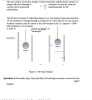 Consider Figs. 2(a) and 2(b). Do
both figures show a current to the right?
Explain.
The rate of flow of electric charge is more commonly called electric current. If charge AQ flows through a AQ conductor in time At, then the I = current can be expressed At mathematically by the relationship The SI unit of current is called the...
Consider Figs. 2(a) and 2(b). Do
both figures show a current to the right?
Explain.
The rate of flow of electric charge is more commonly called electric current. If charge AQ flows through a AQ conductor in time At, then the I = current can be expressed At mathematically by the relationship The SI unit of current is called the...
These are 2 seperate questions What is the relationship linking frequency and wavevector? What happens to...
 These are 2 seperate questions
What is the relationship linking frequency and wavevector? What happens to the velocity of the wave as the wavevector increases? NB take measurements for different values of k (the simplest way to do this would be to follow a point on the wave as and see how far it moves. Take the time period for...
These are 2 seperate questions
What is the relationship linking frequency and wavevector? What happens to the velocity of the wave as the wavevector increases? NB take measurements for different values of k (the simplest way to do this would be to follow a point on the wave as and see how far it moves. Take the time period for...
Two identical sinusoidal waves with wavelengths of 2.00 m travel in the same direction at a...
 Two identical sinusoidal waves with wavelengths of 2.00 m travel in the same direction at a speed of 3.50 m/s. The second wave originates from the same point as the first, but at a later time. The amplitude of the resultant wave is the same as that of each of the two initial waves. Determine the minimum possible time interval...
 The figure below shows two wires carrying currents of I
= 4.85 A in opposite directions, separated by a distance
d. Assume d = 7.7 cm.
The figure below shows two wires carrying currents of I = 4.85 A in opposite directions, separated by a distance d. Assume d 7.7 cm. Р. .-d- (a) Find the magnitude (in pT) and...
The figure below shows two wires carrying currents of I
= 4.85 A in opposite directions, separated by a distance
d. Assume d = 7.7 cm.
The figure below shows two wires carrying currents of I = 4.85 A in opposite directions, separated by a distance d. Assume d 7.7 cm. Р. .-d- (a) Find the magnitude (in pT) and...
 1. Consider a rectangular conducting loop of length l, width w, mass m, and resistance R. Due to gravity g, it is falling out of a uniform magnetic field that points out of the page. At the time shown in the figure, the rate at which heat is released from the loop reaches a constant value P. O © Boo...
 1) I want to polarize a rectangular conductor using magnetism. Suppose that the conductor has width 3 cm and length 6 cm and that I move it with a steady speed of 9 cm/s lengthwise through a uniform magnetic field of strength 2 T directed perpendicularly to both the length and width of the conductor. How strong does the electric...
 A positive charge q moves along the positive x-axis in a region of space where a magnetic field points along the negative z-axis and an electric field points 19° below the negative x-axis (in the xy-plane) a. Draw a free body diagram indicating all forces acting on the particle. (Neglect gravity) b. What is the magnitude of the Lorentz force...
 A positive charge q moves along the positive x-axis in a region of space where a magnetic field points along the negative :- axis and an electric field points 19° below the negative x-axis (in the xy-plane) a. Draw a free body diagram indicating all forces acting on the particle. (Neglect gravity) b. What is the magnitude of the Lorentz...
 Find the x and y components of
the electric field produced by q1 and q2 in the figure shown below
at point A and point B. (Take q1 = 1.81 µC and q2 = −1.15 µC.)
Find the x and y components of the electric field produced by 91 and q2 in the figure shown below at point A and...
Find the x and y components of
the electric field produced by q1 and q2 in the figure shown below
at point A and point B. (Take q1 = 1.81 µC and q2 = −1.15 µC.)
Find the x and y components of the electric field produced by 91 and q2 in the figure shown below at point A and...
 Locations of three point charg 4. (10 points) A conducting solid sphere (radius of R=18.0 cm, charge of q = 6.10*10-C) is shown in the figure. Calculate the electric potential at a point 24.0 cm from the center (point A), a point on the surface (point B), and at the center of the sphere (point C). Assume that the electric...
 Consider Figs. 2(a) and 2(b). Do
both figures show a current to the right?
Explain.
The rate of flow of electric charge is more commonly called electric current. If charge AQ flows through a AQ conductor in time At, then the I = current can be expressed At mathematically by the relationship The SI unit of current is called the...
Consider Figs. 2(a) and 2(b). Do
both figures show a current to the right?
Explain.
The rate of flow of electric charge is more commonly called electric current. If charge AQ flows through a AQ conductor in time At, then the I = current can be expressed At mathematically by the relationship The SI unit of current is called the...
 These are 2 seperate questions
What is the relationship linking frequency and wavevector? What happens to the velocity of the wave as the wavevector increases? NB take measurements for different values of k (the simplest way to do this would be to follow a point on the wave as and see how far it moves. Take the time period for...
These are 2 seperate questions
What is the relationship linking frequency and wavevector? What happens to the velocity of the wave as the wavevector increases? NB take measurements for different values of k (the simplest way to do this would be to follow a point on the wave as and see how far it moves. Take the time period for...
 Two identical sinusoidal waves with wavelengths of 2.00 m travel in the same direction at a speed of 3.50 m/s. The second wave originates from the same point as the first, but at a later time. The amplitude of the resultant wave is the same as that of each of the two initial waves. Determine the minimum possible time interval...
Most questions answered within 3 hours.