helo A chemical engineer is studying the rate of this reaction. H,Co, (aq) - H20 (aq)...
 helo
A chemical engineer is studying the rate of this reaction. H,Co, (aq) - H20 (aq) +CO, (ag) She hills a reaction vessel with H, 00, and measures its concentration as the reaction proceeds. Here's a graph of her data: 0.20-4 (w) [Ⓡod' 02 04 06 08 (seconds) Use this graph to answer the following questions: What is the half...
helo
A chemical engineer is studying the rate of this reaction. H,Co, (aq) - H20 (aq) +CO, (ag) She hills a reaction vessel with H, 00, and measures its concentration as the reaction proceeds. Here's a graph of her data: 0.20-4 (w) [Ⓡod' 02 04 06 08 (seconds) Use this graph to answer the following questions: What is the half...
Consider the equilibrium reaction. 3 A+B 2c After multiplying the reaction by a factor of 2,...
 Consider the equilibrium reaction. 3 A+B 2c After multiplying the reaction by a factor of 2, what is the new equilibrium equation? new equilibrium equation: 6A + 2B 4C Create the equilibrium constant expression, K., for the new equilibrium reaction. Answer Bank IC) IA C IAP K = IA [B] [B] ICI 18" If the initial reaction contains 1.83 M...
13. In step 5 of reaction 3, the reaction mixture containing the products shown below in...
 13. In step 5 of reaction 3, the reaction mixture containing the products shown below in ethyl acetate is extracted twice with HCI. NH2 NH2 HN o-methylaniline m-methylaniline p-methylacetanilide a) Which products (shown above) from reaction 3 can react with HCl in an acid-base reaction? Show the mechanism for this acid-base reaction and give the structures that would result from...
Given the thermodynamic data below, determine the equilibrium constant for the following two reactions at 25...
Given the thermodynamic data below, determine the equilibrium constant for the following two reactions at 25 oC. Predict what will happen to ΔG, how the direction of the reaction will shift, and how the spontaneity will be affected when more BaSO4(s) is added to reaction a), and more NH4+(aq) is added to reaction b). Substance ∆Gof(kJ/mol) Substance ∆Gof(kJ/mol) Substance ∆Gof...
You will be observing a reaction in this lab. As with most reactions, this reaction occurs...
 You will be observing a reaction in this lab. As with most reactions, this reaction occurs by the breaking of some bonds in the reactants and the formation of new bonds in the products. During the reaction, the gas that is produced will fizz away. After the reaction is complete, one of the products can be removed. Then you will...
The reversible decomposition of dinitrogen tetroxide, N, O, to nitrogen dioxide, NO,, is shown. For this...
 The reversible decomposition of dinitrogen tetroxide, N, O, to nitrogen dioxide, NO,, is shown. For this reaction, Keq = 0.15. = NO dinitrogen tetroxide 2NO, nitrogen dioxide At equilibrium, is the concentration of reactants or products greater? The concentration of reactants equals the concentration of products at equilibrium. The concentration of products is greater than the concentration of reactants at...
Each row of the table below describes an aqueous solution at 25 °C The second column...
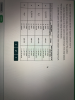 Each row of the table below describes an aqueous solution at 25 °C The second column of the table shows the initial components of the solution. . Use the checkboxes in the third column to explain the type of the initial solution. The fourth column describes a change in the solution. Use the fifth column to predict how the change...
2. Differential equations and direction fields (a) Find the general solution to the differential equation y'...
 2. Differential equations and direction fields (a) Find the general solution to the differential equation y' = 20e3+ + + (b) Find the particular solution to the initial value problem y' = 64 – 102, y(0) = 11. (e) List the equilibrium solutions of the differential equation V = (y2 - 1) arctan() (d) List all equilibrium solutions of the...
For the reaction, Br2(g) = 2Br(g) the equilibrium constant, Kis 1.10 X 10 at 1280°C. Determine...
 For the reaction, Br2(g) = 2Br(g) the equilibrium constant, Kis 1.10 X 10 at 1280°C. Determine the initial and equilibrium concentrations of Brif the initial and equilibrium concentrations of Br are 5.80 x 10⁻³ Mand 5.10 x 10 3 M, respectively. [Br]:- [Br] - M
The table below contains initial rate experimental data for the reaction: A +BC Experiment: [A], M....
 The table below contains initial rate experimental data for the reaction: A +BC Experiment: [A], M. [B], M. Initial Rate in M/min 1 0.34 0.21 1.2 2 0.34 0.42 4.8 3 0.68 0.42 9.6 4 0.50 0.35 ???? What is the initial rate for experiment 4? 7.0 Mmin 3.7 Mmin What is the initial rate for experiment 4? 7.0 M/min...
 helo
A chemical engineer is studying the rate of this reaction. H,Co, (aq) - H20 (aq) +CO, (ag) She hills a reaction vessel with H, 00, and measures its concentration as the reaction proceeds. Here's a graph of her data: 0.20-4 (w) [Ⓡod' 02 04 06 08 (seconds) Use this graph to answer the following questions: What is the half...
helo
A chemical engineer is studying the rate of this reaction. H,Co, (aq) - H20 (aq) +CO, (ag) She hills a reaction vessel with H, 00, and measures its concentration as the reaction proceeds. Here's a graph of her data: 0.20-4 (w) [Ⓡod' 02 04 06 08 (seconds) Use this graph to answer the following questions: What is the half...
 Consider the equilibrium reaction. 3 A+B 2c After multiplying the reaction by a factor of 2, what is the new equilibrium equation? new equilibrium equation: 6A + 2B 4C Create the equilibrium constant expression, K., for the new equilibrium reaction. Answer Bank IC) IA C IAP K = IA [B] [B] ICI 18" If the initial reaction contains 1.83 M...
 13. In step 5 of reaction 3, the reaction mixture containing the products shown below in ethyl acetate is extracted twice with HCI. NH2 NH2 HN o-methylaniline m-methylaniline p-methylacetanilide a) Which products (shown above) from reaction 3 can react with HCl in an acid-base reaction? Show the mechanism for this acid-base reaction and give the structures that would result from...
 You will be observing a reaction in this lab. As with most reactions, this reaction occurs by the breaking of some bonds in the reactants and the formation of new bonds in the products. During the reaction, the gas that is produced will fizz away. After the reaction is complete, one of the products can be removed. Then you will...
 The reversible decomposition of dinitrogen tetroxide, N, O, to nitrogen dioxide, NO,, is shown. For this reaction, Keq = 0.15. = NO dinitrogen tetroxide 2NO, nitrogen dioxide At equilibrium, is the concentration of reactants or products greater? The concentration of reactants equals the concentration of products at equilibrium. The concentration of products is greater than the concentration of reactants at...
 Each row of the table below describes an aqueous solution at 25 °C The second column of the table shows the initial components of the solution. . Use the checkboxes in the third column to explain the type of the initial solution. The fourth column describes a change in the solution. Use the fifth column to predict how the change...
 2. Differential equations and direction fields (a) Find the general solution to the differential equation y' = 20e3+ + + (b) Find the particular solution to the initial value problem y' = 64 – 102, y(0) = 11. (e) List the equilibrium solutions of the differential equation V = (y2 - 1) arctan() (d) List all equilibrium solutions of the...
 For the reaction, Br2(g) = 2Br(g) the equilibrium constant, Kis 1.10 X 10 at 1280°C. Determine the initial and equilibrium concentrations of Brif the initial and equilibrium concentrations of Br are 5.80 x 10⁻³ Mand 5.10 x 10 3 M, respectively. [Br]:- [Br] - M
 The table below contains initial rate experimental data for the reaction: A +BC Experiment: [A], M. [B], M. Initial Rate in M/min 1 0.34 0.21 1.2 2 0.34 0.42 4.8 3 0.68 0.42 9.6 4 0.50 0.35 ???? What is the initial rate for experiment 4? 7.0 Mmin 3.7 Mmin What is the initial rate for experiment 4? 7.0 M/min...
Most questions answered within 3 hours.