Add physical states to the equations: A) 2H+ + CO32- -----> H2O + CO2 B) H+...
Add physical states to the equations:
A) 2H+ + CO32- -----> H2O + CO2
B) H+ + HCO3- -----> 2H+ + CO32-
Homework Answers

Add Answer to:
Add physical states to the equations:
A) 2H+ + CO32- ----->
H2O + CO2
B) H+...
CO32−(aq)+H2O(l)←−→HCO3−(aq)+OH−(aq) acid (proton donor) CO32−, base (proton acceptor) H2O acid (proton donor) H2O, base (proton acceptor) CO2−3...
 CO32−(aq)+H2O(l)←−→HCO3−(aq)+OH−(aq)
acid (proton donor) CO32−, base (proton acceptor)
H2O
acid (proton donor) H2O, base (proton acceptor) CO2−3
Part B
NH3(aq)+H2O(l)←−→NH4+(aq)+OH−(aq)
acid (proton donor) H2O, base (proton acceptor)
NH3
acid (proton donor) NH3, base (proton acceptor) H2O
CO32−(aq)+H2O(l)←−→HCO3−(aq)+OH−(aq)
acid (proton donor) CO32−, base (proton acceptor)
H2O
acid (proton donor) H2O, base (proton acceptor) CO2−3
Part B
NH3(aq)+H2O(l)←−→NH4+(aq)+OH−(aq)
acid (proton donor) H2O, base (proton acceptor)
NH3
acid (proton donor) NH3, base (proton acceptor) H2O
1) why is CO2 the conjugate acid of bicarbonate? Please explaing CO2 (g) + H2O(l) ⇄...
1) why is CO2 the conjugate acid of bicarbonate? Please explaing CO2 (g) + H2O(l) ⇄ H2CO3 (aq) 2) Exercise increases metabolism and thus increase the amount of CO2 in the blood. Following a bout of intense exercise, the pH of your blood was found to be 7.1 and the HCO3− concentration in the blood to be 8 mM. Remember the overall reaction for the bicarbonate buffering system in the blood can be written as: H2CO3 (aq) ⇄ HCO3- (aq)...
please explain why. 24. Which of the following is aredox reaction? a) CO32 +2H CO2 +...
 please explain why.
24. Which of the following is aredox reaction? a) CO32 +2H CO2 + H;O irr b) NaCI Na* + Cl c) 2LIBR+ F2 2LIF + Br2 d) C2H4 + 302 2CO2+ 2H2O e) Two of the above answers are redox reactions. +/
please explain why.
24. Which of the following is aredox reaction? a) CO32 +2H CO2 + H;O irr b) NaCI Na* + Cl c) 2LIBR+ F2 2LIF + Br2 d) C2H4 + 302 2CO2+ 2H2O e) Two of the above answers are redox reactions. +/
When a carbonate solution is acidified, carbon dioxide is produced. 2H+(aq) + CO32-(aq) → H2O(l) +...
When a carbonate solution is acidified, carbon dioxide is produced. 2H+(aq) + CO32-(aq) → H2O(l) + CO2(g) (a) Can we say anything about the sign of the entropy change without doing any calculations? (b) Calculate the entropy change for this reaction. please use the commonly found entropy values found online for each molecule.
Write equations to show what happens when, to a buffer solution containing equimolar amounts of co32-...
Write equations to show what happens when, to a buffer solution containing equimolar amounts of co32- and HCO3- , we add (Use the lowest possible coefficients. Omit states of matter.) 1. H3O+ ____+_____ ----> ___+___ 2. OH- ___+____ ----> ___+____
Identify the conjugate acid-base pairs in each of the following equations: 1) HF(aq)+CO32?(aq)?F?(aq)+HCO3?(aq) Check all that...
Identify the conjugate acid-base pairs in each of the following equations: 1) HF(aq)+CO32?(aq)?F?(aq)+HCO3?(aq) Check all that apply. a) F?/HCO3? b) HF/F? c) HF/CO32? d) HCO3?/CO32? 2) HCl(aq)+OH?(aq)?Cl?(aq)+H2O(l) a) HCl/OH? b) HCl/Cl? c) H2O/OH? d) H2O/Cl?
HCO3- + H2O CO32- + As drawn, the acid in the reaction is (HCO3- ) and the...
 HCO3- +
H2O
CO32- +
As drawn, the acid in the reaction is
(HCO3- ) and the base is (
H2O)
The conjugate acid is ( CO32- ) and the
conjugate base is (H3O+ )
b) If a solution has a H3O+ concentration
of 0.817 M, what is the pH? Provide your answer with 2 decimal
places (13.91)
can you please check my answers? Thanks!
HCO3- +
H2O
CO32- +
As drawn, the acid in the reaction is
(HCO3- ) and the base is (
H2O)
The conjugate acid is ( CO32- ) and the
conjugate base is (H3O+ )
b) If a solution has a H3O+ concentration
of 0.817 M, what is the pH? Provide your answer with 2 decimal
places (13.91)
can you please check my answers? Thanks!
Which of the following portrays the weak acid H2CO3 in aqueous solution? 2H (aq)+ CO32(aq) H(aq)+...
 Which of the following portrays the weak acid H2CO3 in aqueous solution? 2H (aq)+ CO32(aq) H(aq)+ COs2-(aq) H(aq)+2 CO32(aq) answer not given H2CO3(aq)
TONGUEDO 204 + 2H+ 2H2O b) sodium sulfide (aq) + nitric acid (aq) → Naast 4...
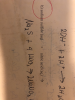 TONGUEDO 204 + 2H+ 2H2O b) sodium sulfide (aq) + nitric acid (aq) → Naast 4 Hoo, 72NaNO3 l c) calcium hydrogen carbonate (aq) + hydrochloric acid (aq) → ca (HCO3)2(aq) + 2 HCl(aq) > Caclacaq) +aCoacm) +aao Sa+ 2 H603 + 2H+ +262 to +260 + G + axt! HCO3 Cag) + H+ (44) > H2O (1) + CO2 Cy)
A- Identify the reactant that is a Brønsted−Lowry acid in the following reaction: CO32−(aq)+H2O(l)⇌HCO3−(aq)+OH−(aq) B- Identify...
A- Identify the reactant that is a Brønsted−Lowry acid in the following reaction: CO32−(aq)+H2O(l)⇌HCO3−(aq)+OH−(aq) B- Identify the reactant that is a Brønsted−Lowry base in the following reaction: CO32−(aq)+H2O(l)⇌HCO3−(aq)+OH−(aq) Express your answer as a chemical formula. c- Identify the reactant that is a Brønsted−Lowry acid in the following reaction: H2SO4(aq)+H2O(l)→HSO4−(aq)+H3O+(aq) Express your answer as a chemical formula d- Identify the reactant that is a Brønsted−Lowry base in the following reaction: H2SO4(aq)+H2O(l)→HSO4−(aq)+H3O+(aq) Express your answer as a chemical formula.
 CO32−(aq)+H2O(l)←−→HCO3−(aq)+OH−(aq)
acid (proton donor) CO32−, base (proton acceptor)
H2O
acid (proton donor) H2O, base (proton acceptor) CO2−3
Part B
NH3(aq)+H2O(l)←−→NH4+(aq)+OH−(aq)
acid (proton donor) H2O, base (proton acceptor)
NH3
acid (proton donor) NH3, base (proton acceptor) H2O
CO32−(aq)+H2O(l)←−→HCO3−(aq)+OH−(aq)
acid (proton donor) CO32−, base (proton acceptor)
H2O
acid (proton donor) H2O, base (proton acceptor) CO2−3
Part B
NH3(aq)+H2O(l)←−→NH4+(aq)+OH−(aq)
acid (proton donor) H2O, base (proton acceptor)
NH3
acid (proton donor) NH3, base (proton acceptor) H2O
 please explain why.
24. Which of the following is aredox reaction? a) CO32 +2H CO2 + H;O irr b) NaCI Na* + Cl c) 2LIBR+ F2 2LIF + Br2 d) C2H4 + 302 2CO2+ 2H2O e) Two of the above answers are redox reactions. +/
please explain why.
24. Which of the following is aredox reaction? a) CO32 +2H CO2 + H;O irr b) NaCI Na* + Cl c) 2LIBR+ F2 2LIF + Br2 d) C2H4 + 302 2CO2+ 2H2O e) Two of the above answers are redox reactions. +/
 HCO3- +
H2O
CO32- +
As drawn, the acid in the reaction is
(HCO3- ) and the base is (
H2O)
The conjugate acid is ( CO32- ) and the
conjugate base is (H3O+ )
b) If a solution has a H3O+ concentration
of 0.817 M, what is the pH? Provide your answer with 2 decimal
places (13.91)
can you please check my answers? Thanks!
HCO3- +
H2O
CO32- +
As drawn, the acid in the reaction is
(HCO3- ) and the base is (
H2O)
The conjugate acid is ( CO32- ) and the
conjugate base is (H3O+ )
b) If a solution has a H3O+ concentration
of 0.817 M, what is the pH? Provide your answer with 2 decimal
places (13.91)
can you please check my answers? Thanks!
 Which of the following portrays the weak acid H2CO3 in aqueous solution? 2H (aq)+ CO32(aq) H(aq)+ COs2-(aq) H(aq)+2 CO32(aq) answer not given H2CO3(aq)
 TONGUEDO 204 + 2H+ 2H2O b) sodium sulfide (aq) + nitric acid (aq) → Naast 4 Hoo, 72NaNO3 l c) calcium hydrogen carbonate (aq) + hydrochloric acid (aq) → ca (HCO3)2(aq) + 2 HCl(aq) > Caclacaq) +aCoacm) +aao Sa+ 2 H603 + 2H+ +262 to +260 + G + axt! HCO3 Cag) + H+ (44) > H2O (1) + CO2 Cy)
Most questions answered within 3 hours.
-
Where is the error in this code sequence?
String s1 = "Hello";
String s2 = "ello";...
asked 11 months ago -
Financial data for Joel de Paris, Inc., for last year
follow:
Joel de Paris, Inc.
Balance...
asked 11 months ago -
Consider this reaction:
Al2(SO4)3 (aq)+ BaCl3
(aq) Al2Cl6 (aq)- +
3BaSO4(s) . What is the...
asked 11 months ago -
Suppose that Savneet is considering increasing her
recent random sample from 20 car rentals to 40...
asked 11 months ago -
Trucks arrive at an unloading terminal at an average rate of 120
per hour.
Trucks arrive...
asked 11 months ago -
Why are methanol and ethanol completely soluble in water while
octanol is not very little soluble....
asked 11 months ago -
A facilities manager at a university reads in a research report
that the mean amount of...
asked 11 months ago -
When the CuSO4 is rehydrated by adding water to the anhydrous
compound, is this an endothermic...
asked 11 months ago -
A ray of sunlight is passing from diamond into crown glass; the
angle of incidence is...
asked 11 months ago -
A block of mass 0.249 kg is placed on top of a light, vertical
spring of...
asked 11 months ago -
how do the kidneys compensate in the presences of acidosis
a) trigger hyperventilate
b) reserve acid...
asked 11 months ago -
Question 501 pts
The rental rate of capital to the firm increases. Which of the
following...
asked 11 months ago