
Homework Answers

Add Answer to:
Part III Case A Consider the vectors shown at right. Case A consists of two vectors,...
These two questions are part of the same question. I am not sure on to solve...
 These two questions are part of the same question. I am not sure
on to solve this. Please help!
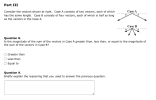
Part III Case A Consider the vectors shown at right. Case A consists of two vectors, each of which has the same length. Case B consists of four vectors, each of which is half as long as the vectors in the Case A. .-___ Case B Question 8 Is the magnitude of the sum of the vectors in Case A greater...
These two questions are part of the same question. I am not sure
on to solve this. Please help!
Part III Case A Consider the vectors shown at right. Case A consists of two vectors, each of which has the same length. Case B consists of four vectors, each of which is half as long as the vectors in the Case A. .-___ Case B Question 8 Is the magnitude of the sum of the vectors in Case A greater...
Consider the vectors shown at right. Each vector shown has the same length. Pair A consists...
 Consider the vectors shown at right. Each vector shown has the
same length. Pair A consists of the two vectors at the top and Pair
B consists of the two vectors at the bottom.
I need help on this question. I am not sure how to solve it.
Thank you!
Part III Pair A Consider the vectors shown at right. Each vector shown has the same length. Pair A consists of the two vectors at the top and Pair B...
Consider the vectors shown at right. Each vector shown has the
same length. Pair A consists of the two vectors at the top and Pair
B consists of the two vectors at the bottom.
I need help on this question. I am not sure how to solve it.
Thank you!
Part III Pair A Consider the vectors shown at right. Each vector shown has the same length. Pair A consists of the two vectors at the top and Pair B...
17. Combinig Vectors-Magnitude of the resultant In Case A, two vectors of magnitude 6 uints are...
 17. Combinig Vectors-Magnitude of the resultant In Case A, two vectors of magnitude 6 uints are at right angles to one another. In Case B,four vectors each of magnitude 3 units, are arragned as shown. The outer vectors in Case B are also at right angles to one another, and difference in direction between any pair of adjacent vectors is 30 degress. 45 45° 45 30 30 6 Case A Case B are added together, s the magntidue of the...
Not sure how to answer this question. Part I Object A has two forces of magnitude...
 Not sure how to answer this question.
Part I Object A has two forces of magnitude 6 N each acting on it, as shown in the free-body diagram at right. ObjectA 45° 45° 6V 6N Object B has four forces of magnitude 3 N acting on it, as shown in the free- body diagram shown at right. Object B 45° 45 3N BN 3N 3N Question 1 Is the magnitude of the net force on object B greater than, less...
Not sure how to answer this question.
Part I Object A has two forces of magnitude 6 N each acting on it, as shown in the free-body diagram at right. ObjectA 45° 45° 6V 6N Object B has four forces of magnitude 3 N acting on it, as shown in the free- body diagram shown at right. Object B 45° 45 3N BN 3N 3N Question 1 Is the magnitude of the net force on object B greater than, less...
Problem 4: Consider the following four vectors: • 12.0 cm to the right at 23◦ above...
Problem 4: Consider the following four vectors: • 12.0 cm to the right at 23◦ above the horizontal • 31.0 cm to the left at 67◦ above the horizontal • 8.40 cm to the left at 23◦ below the horizontal • 24.0 cm to the right at 67◦ below the horizontal (a) Sketch a graph showing all four vectors with their tails at the origin. (b) Find the vector sum of the four vectors by resolving each one into components....
A hand pushes three identical bricks as shown. System A consists of two bricks stacked together....
 A hand pushes three identical bricks as shown. System A consists of two bricks stacked together. System B consists of a single brick. System C consists of all three bricks. There is friction between the bricks and the table. The bricks are moving to the left and speeding up. In the spaces provided at right, draw and label separate free-body diagrams for systems A and B. (Ignore vertical forces.) The vector representing the acceleration of system A is shown at...
Part III Cars move from left to right on the section of road shown below. The...
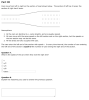 Part III Cars move from left to right on the section of road shown below. The section of left has 2 lanes; the section of right has 4 lanes. Assumptions: 1. All the cars are identical (i.e., same length), and are equally spaced. 2. All cars move with the same speed on the left section and on the right section, but the speeds on the two section may not be the same 3. All the lanes are fully occupied with...
IN IwODIMENSIONMOMENTUM Me HV Name Two objects are arranged on a level, frictionless table as shown. Two experiments are conducted in which object A is launched toward the stationary block B. The ini...
 IN IwODIMENSIONMOMENTUM Me HV Name Two objects are arranged on a level, frictionless table as shown. Two experiments are conducted in which object A is launched toward the stationary block B. The initial speed of object A is the same in both experiments; the direction is not. The initial and final velocities of object A in each experiment are shown 1. The mass of block B is four times that of object A (m 4m). Top views Velocity vectors (drawn...
A circuit consists of two resistors connected in series with a power supply, as shown in...
 A circuit consists of two resistors connected in series with a
power supply, as shown in the figure. The resistance of ?1 is less
than the resistance of ?2.
A series circuit with two resistors R subscript 1 and R
subscript 2. R subscript 1 is connected to the positive terminal of
the power supply, and is the first resistor in the circuit.
Which resistor has the greater current flowing through
it?
?2
?1
The current through each resistor is...
A circuit consists of two resistors connected in series with a
power supply, as shown in the figure. The resistance of ?1 is less
than the resistance of ?2.
A series circuit with two resistors R subscript 1 and R
subscript 2. R subscript 1 is connected to the positive terminal of
the power supply, and is the first resistor in the circuit.
Which resistor has the greater current flowing through
it?
?2
?1
The current through each resistor is...
Consider the pendulum shown at the right. It has the following characteristics: • T = 1.33...
 Consider the pendulum shown at the right. It has the following characteristics: • T = 1.33 s • m=0.251 kg Answer the three questions below, using three significant digits. Part A: What is the value of the angular frequency (w) of the pendulum? T. 4.72 rad/s Part B: What is the length (L) of the pendulum? L = .44 m Part C: How might the period of this pendulum be different if it were moved from Earth to the planet...
 These two questions are part of the same question. I am not sure
on to solve this. Please help!
Part III Case A Consider the vectors shown at right. Case A consists of two vectors, each of which has the same length. Case B consists of four vectors, each of which is half as long as the vectors in the Case A. .-___ Case B Question 8 Is the magnitude of the sum of the vectors in Case A greater...
These two questions are part of the same question. I am not sure
on to solve this. Please help!
Part III Case A Consider the vectors shown at right. Case A consists of two vectors, each of which has the same length. Case B consists of four vectors, each of which is half as long as the vectors in the Case A. .-___ Case B Question 8 Is the magnitude of the sum of the vectors in Case A greater...
 Consider the vectors shown at right. Each vector shown has the
same length. Pair A consists of the two vectors at the top and Pair
B consists of the two vectors at the bottom.
I need help on this question. I am not sure how to solve it.
Thank you!
Part III Pair A Consider the vectors shown at right. Each vector shown has the same length. Pair A consists of the two vectors at the top and Pair B...
Consider the vectors shown at right. Each vector shown has the
same length. Pair A consists of the two vectors at the top and Pair
B consists of the two vectors at the bottom.
I need help on this question. I am not sure how to solve it.
Thank you!
Part III Pair A Consider the vectors shown at right. Each vector shown has the same length. Pair A consists of the two vectors at the top and Pair B...
 17. Combinig Vectors-Magnitude of the resultant In Case A, two vectors of magnitude 6 uints are at right angles to one another. In Case B,four vectors each of magnitude 3 units, are arragned as shown. The outer vectors in Case B are also at right angles to one another, and difference in direction between any pair of adjacent vectors is 30 degress. 45 45° 45 30 30 6 Case A Case B are added together, s the magntidue of the...
 Not sure how to answer this question.
Part I Object A has two forces of magnitude 6 N each acting on it, as shown in the free-body diagram at right. ObjectA 45° 45° 6V 6N Object B has four forces of magnitude 3 N acting on it, as shown in the free- body diagram shown at right. Object B 45° 45 3N BN 3N 3N Question 1 Is the magnitude of the net force on object B greater than, less...
Not sure how to answer this question.
Part I Object A has two forces of magnitude 6 N each acting on it, as shown in the free-body diagram at right. ObjectA 45° 45° 6V 6N Object B has four forces of magnitude 3 N acting on it, as shown in the free- body diagram shown at right. Object B 45° 45 3N BN 3N 3N Question 1 Is the magnitude of the net force on object B greater than, less...
 A hand pushes three identical bricks as shown. System A consists of two bricks stacked together. System B consists of a single brick. System C consists of all three bricks. There is friction between the bricks and the table. The bricks are moving to the left and speeding up. In the spaces provided at right, draw and label separate free-body diagrams for systems A and B. (Ignore vertical forces.) The vector representing the acceleration of system A is shown at...
 Part III Cars move from left to right on the section of road shown below. The section of left has 2 lanes; the section of right has 4 lanes. Assumptions: 1. All the cars are identical (i.e., same length), and are equally spaced. 2. All cars move with the same speed on the left section and on the right section, but the speeds on the two section may not be the same 3. All the lanes are fully occupied with...
 IN IwODIMENSIONMOMENTUM Me HV Name Two objects are arranged on a level, frictionless table as shown. Two experiments are conducted in which object A is launched toward the stationary block B. The initial speed of object A is the same in both experiments; the direction is not. The initial and final velocities of object A in each experiment are shown 1. The mass of block B is four times that of object A (m 4m). Top views Velocity vectors (drawn...
 A circuit consists of two resistors connected in series with a
power supply, as shown in the figure. The resistance of ?1 is less
than the resistance of ?2.
A series circuit with two resistors R subscript 1 and R
subscript 2. R subscript 1 is connected to the positive terminal of
the power supply, and is the first resistor in the circuit.
Which resistor has the greater current flowing through
it?
?2
?1
The current through each resistor is...
A circuit consists of two resistors connected in series with a
power supply, as shown in the figure. The resistance of ?1 is less
than the resistance of ?2.
A series circuit with two resistors R subscript 1 and R
subscript 2. R subscript 1 is connected to the positive terminal of
the power supply, and is the first resistor in the circuit.
Which resistor has the greater current flowing through
it?
?2
?1
The current through each resistor is...
 Consider the pendulum shown at the right. It has the following characteristics: • T = 1.33 s • m=0.251 kg Answer the three questions below, using three significant digits. Part A: What is the value of the angular frequency (w) of the pendulum? T. 4.72 rad/s Part B: What is the length (L) of the pendulum? L = .44 m Part C: How might the period of this pendulum be different if it were moved from Earth to the planet...
Most questions answered within 3 hours.
-
Where is the error in this code sequence?
String s1 = "Hello";
String s2 = "ello";...
asked 10 months ago -
Financial data for Joel de Paris, Inc., for last year
follow:
Joel de Paris, Inc.
Balance...
asked 10 months ago -
Consider this reaction:
Al2(SO4)3 (aq)+ BaCl3
(aq) Al2Cl6 (aq)- +
3BaSO4(s) . What is the...
asked 10 months ago -
Suppose that Savneet is considering increasing her
recent random sample from 20 car rentals to 40...
asked 10 months ago -
Trucks arrive at an unloading terminal at an average rate of 120
per hour.
Trucks arrive...
asked 10 months ago -
Why are methanol and ethanol completely soluble in water while
octanol is not very little soluble....
asked 10 months ago -
A facilities manager at a university reads in a research report
that the mean amount of...
asked 10 months ago -
When the CuSO4 is rehydrated by adding water to the anhydrous
compound, is this an endothermic...
asked 10 months ago -
A ray of sunlight is passing from diamond into crown glass; the
angle of incidence is...
asked 10 months ago -
A block of mass 0.249 kg is placed on top of a light, vertical
spring of...
asked 10 months ago -
how do the kidneys compensate in the presences of acidosis
a) trigger hyperventilate
b) reserve acid...
asked 10 months ago -
Question 501 pts
The rental rate of capital to the firm increases. Which of the
following...
asked 10 months ago