
Homework Answers
Add Answer to:
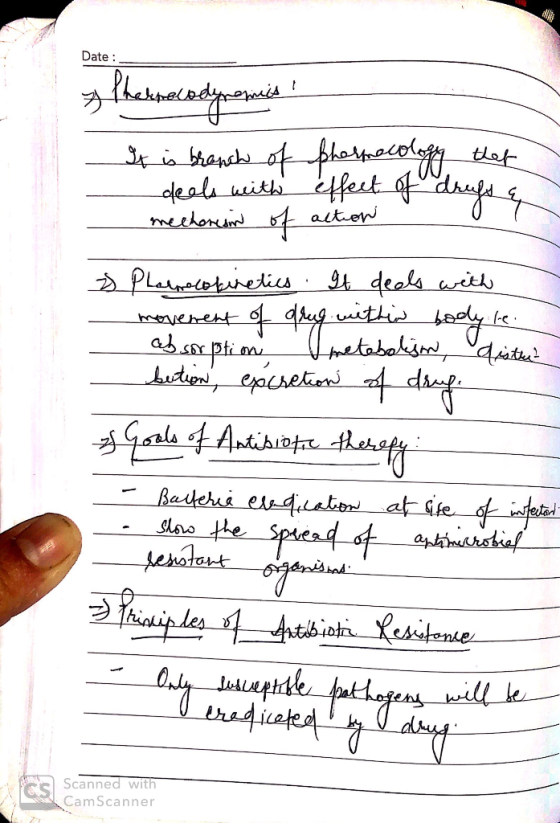
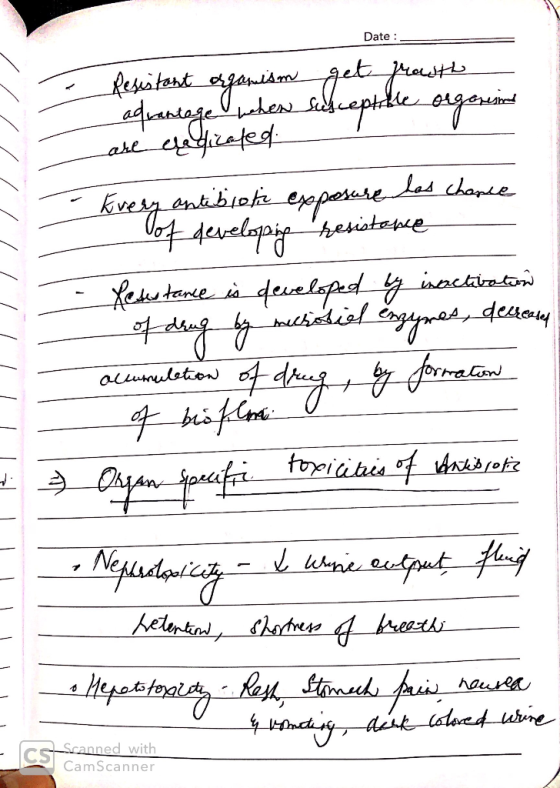
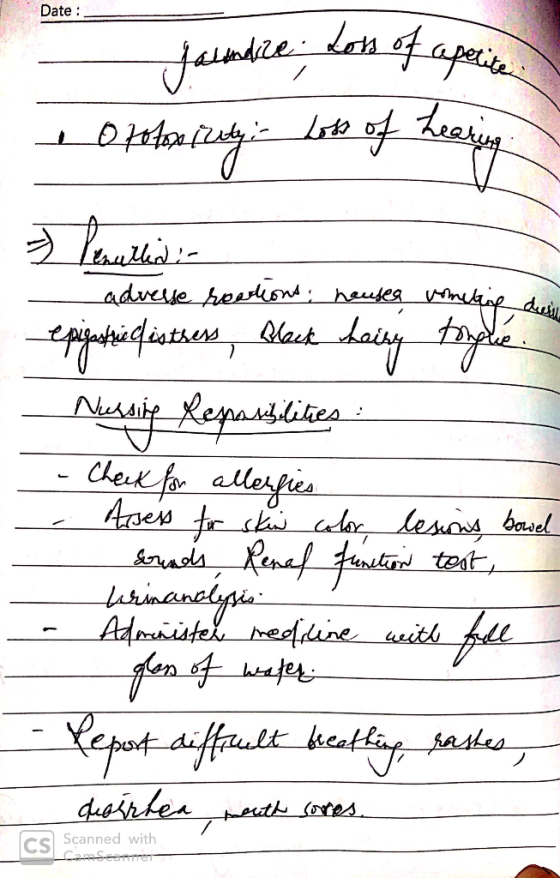
1. Pharmacodynamics and Pharmacokinetics 2. Principles of anti-microbial therapy a. Goal of antibiotic therapy b. Principles...
1. Pharmacodynamics and Pharmacokinetics 2. Principles of anti-microbial therapy a. Goal of antibiotic therapy b. &nbs
1. Pharmacodynamics and Pharmacokinetics 2. Principles of anti-microbial therapy a. Goal of antibiotic therapy b. Principles of Antibiotic Resistance c. Organ specific toxicities = signs and symptoms 3. Core drug knowledge / Core patient variables a. Penicillin = adverse effects, nursing interventions b. Cephalosporin: Cephalexin, Cefaclor = nursing interventions c. Gentamicin = adverse effects, nursing interventions d. Amphotericin B = adverse effects e. Rifampicin / Rifampin = adverse effects f. Isoniazid = adverse effect, nursing interventions g. Clotrimazole = indications 4. Core drug knowledge / Core patient variables a. Aspirin...
7. Core drug knowledge / Core patient variables a. TCA: Imipramine - pharmacodynamics, mechanism of action...
 7. Core drug knowledge / Core patient variables a. TCA: Imipramine - pharmacodynamics, mechanism of action b. MAOI: Phenelzine = adverse effects, nursing interventions, food-drug interactions
Please help 1. Drug HUMALOG 100 UNITSML KWIKPEN: what is a. Classification: b. Labs to Review...
Please help 1. Drug HUMALOG 100 UNITSML KWIKPEN: what is a. Classification: b. Labs to Review 2. Milk of magnesia: a. Contraindications b. Labs to Review 3. MORPHINE SULF 20 MG a. Labs to Review 4. ONDANSETTRON HCL 8 MG TABLET: a. General Indications & Why is your Patient receiving this medication? b. Labs to Review c. Special Considerations (Before administration, After administration, Nursing Considerations) 5. HUMALOG 100 UNITSML KWIKPEN a. Classification. b. Adverse Side Effects c. Contraindications d. Labs...
Jim Mueller, 13 years old, is at a family picnic and drinking soda out of a...
Jim Mueller, 13 years old, is at a family picnic and drinking soda out of a can. When Jim swallows some soda, he realizes that a bee was in the soda can because he feels it sting him inside his throat. Jim has a history of allergy to bees. His mom rushes him to the emergency room. Data Obtained From Nursing Assessment Vital signs: pulse, 100; respirations, 24 and shallow; blood pressure, 88/58 Dyspnea Lung sounds barely audible at bases...
1. What are the actions of adrenergic agonists and adrenergic blockers? 2. You are preparing to...
1. What are the actions of adrenergic agonists and adrenergic blockers? 2. You are preparing to administer albuterol to your patient with asthma. What classification is this drug? Explain how albuterol works to control asthma? a. What will you assess prior to administering this medication? b. What side effects and adverse reactions will you monitor for while your patient is taking this medication? c. How would you evaluate your patient to know the medication was effective? d. What are the...
CASE STUDY Tina Bremmer is a 20-year-old college student with moderate persistent asthma. She has a...
CASE STUDY Tina Bremmer is a 20-year-old college student with moderate persistent asthma. She has a cold. While dashing across the campus on a cold fall day, she suffers an asthma attack. Her girlfriend, who is with her, knows that Tina keeps her medication in her backpack. She opens Tina’s pack, finds the inhaler, and gives it to her. Tina uses the inhaler, but instead of achieving relief, she goes into bronchospasm. She is taken to the Emergency Department of...
1. What are the actions of adrenergic agonists and adrenergic blockers? 2. You are preparing to...
 1. What are the actions of adrenergic agonists and adrenergic blockers? 2. You are preparing to administer albuterol to your patient with asthma. What classification is this drug? Explain how albuterol works to control asthma? . a. What will you assess prior to administering this medication? b. What side effects and adverse reactions will you monitor for while your patient is taking this medication? . c. How would you evaluate your patient to . d. What are the nursing interventions...
Potassium chloride 1. Medication Order (written the way the MD/NP ordered it) → drug-dose - route...
 Potassium chloride
1. Medication Order (written the way the MD/NP ordered it) → drug-dose - route -frequency 2. generic name: 3. Trade name: 4. Maximum Safe Dose in 24 hours: 5. Therapeutic class/Pharmacologic classification: 6. Indication: 7. Black Box Warning: (if none-type None) 8. Common Adverse Reactions (maximum-8) 9. Life Threatening Adverse Reactions: (If none-type None) 10. Drug-Drug Interactions (Only list those that apply for your patient & type the interaction & nursing considerations) - If there are none -...
Potassium chloride
1. Medication Order (written the way the MD/NP ordered it) → drug-dose - route -frequency 2. generic name: 3. Trade name: 4. Maximum Safe Dose in 24 hours: 5. Therapeutic class/Pharmacologic classification: 6. Indication: 7. Black Box Warning: (if none-type None) 8. Common Adverse Reactions (maximum-8) 9. Life Threatening Adverse Reactions: (If none-type None) 10. Drug-Drug Interactions (Only list those that apply for your patient & type the interaction & nursing considerations) - If there are none -...
Set #2 1. What are the actions of cholinergics and anticholinergics? 2. You are preparing to...
Set #2 1. What are the actions of cholinergics and anticholinergics? 2. You are preparing to administer atropine to your patient. What classification is this drug? Explain the uses of this medication? a. For each use, what evaluation would tell you that the patient has a therapeutic effect? b. When obtaining a history, what conditions or other drugs are you concerned the patient has that could interact or be contraindicated with this drug? c. How does this drug impact vital...
16. Fludrocortisones (Florinef) a. What type of medication is this? M_ b. Action: Increases _reabsorption in...
 16. Fludrocortisones (Florinef) a. What type of medication is this? M_ b. Action: Increases _reabsorption in renal tubules and Increases _and hydrogen excretion = water and sodium retention C. Indications for use d. Is this medication given in combination with glucocorticoids? Why? e. Contraindicated in hypertension, CHF, heart disease - Why? f. Adverse reaction - i. Why headache (frontal/occipital) ii. Other adverse effects: why edema? and ? 8. Nursing Assessment: electrolytes, VS plus? What electrolyte imbalances would you monitor for?...
 7. Core drug knowledge / Core patient variables a. TCA: Imipramine - pharmacodynamics, mechanism of action b. MAOI: Phenelzine = adverse effects, nursing interventions, food-drug interactions
 1. What are the actions of adrenergic agonists and adrenergic blockers? 2. You are preparing to administer albuterol to your patient with asthma. What classification is this drug? Explain how albuterol works to control asthma? . a. What will you assess prior to administering this medication? b. What side effects and adverse reactions will you monitor for while your patient is taking this medication? . c. How would you evaluate your patient to . d. What are the nursing interventions...
 Potassium chloride
1. Medication Order (written the way the MD/NP ordered it) → drug-dose - route -frequency 2. generic name: 3. Trade name: 4. Maximum Safe Dose in 24 hours: 5. Therapeutic class/Pharmacologic classification: 6. Indication: 7. Black Box Warning: (if none-type None) 8. Common Adverse Reactions (maximum-8) 9. Life Threatening Adverse Reactions: (If none-type None) 10. Drug-Drug Interactions (Only list those that apply for your patient & type the interaction & nursing considerations) - If there are none -...
Potassium chloride
1. Medication Order (written the way the MD/NP ordered it) → drug-dose - route -frequency 2. generic name: 3. Trade name: 4. Maximum Safe Dose in 24 hours: 5. Therapeutic class/Pharmacologic classification: 6. Indication: 7. Black Box Warning: (if none-type None) 8. Common Adverse Reactions (maximum-8) 9. Life Threatening Adverse Reactions: (If none-type None) 10. Drug-Drug Interactions (Only list those that apply for your patient & type the interaction & nursing considerations) - If there are none -...
 16. Fludrocortisones (Florinef) a. What type of medication is this? M_ b. Action: Increases _reabsorption in renal tubules and Increases _and hydrogen excretion = water and sodium retention C. Indications for use d. Is this medication given in combination with glucocorticoids? Why? e. Contraindicated in hypertension, CHF, heart disease - Why? f. Adverse reaction - i. Why headache (frontal/occipital) ii. Other adverse effects: why edema? and ? 8. Nursing Assessment: electrolytes, VS plus? What electrolyte imbalances would you monitor for?...
Most questions answered within 3 hours.
-
Where is the error in this code sequence?
String s1 = "Hello";
String s2 = "ello";...
asked 10 months ago -
Financial data for Joel de Paris, Inc., for last year
follow:
Joel de Paris, Inc.
Balance...
asked 10 months ago -
Consider this reaction:
Al2(SO4)3 (aq)+ BaCl3
(aq) Al2Cl6 (aq)- +
3BaSO4(s) . What is the...
asked 10 months ago -
Suppose that Savneet is considering increasing her
recent random sample from 20 car rentals to 40...
asked 10 months ago -
Trucks arrive at an unloading terminal at an average rate of 120
per hour.
Trucks arrive...
asked 10 months ago -
Why are methanol and ethanol completely soluble in water while
octanol is not very little soluble....
asked 10 months ago -
A facilities manager at a university reads in a research report
that the mean amount of...
asked 10 months ago -
When the CuSO4 is rehydrated by adding water to the anhydrous
compound, is this an endothermic...
asked 10 months ago -
A ray of sunlight is passing from diamond into crown glass; the
angle of incidence is...
asked 10 months ago -
A block of mass 0.249 kg is placed on top of a light, vertical
spring of...
asked 10 months ago -
how do the kidneys compensate in the presences of acidosis
a) trigger hyperventilate
b) reserve acid...
asked 10 months ago -
Question 501 pts
The rental rate of capital to the firm increases. Which of the
following...
asked 10 months ago