
Homework Answers
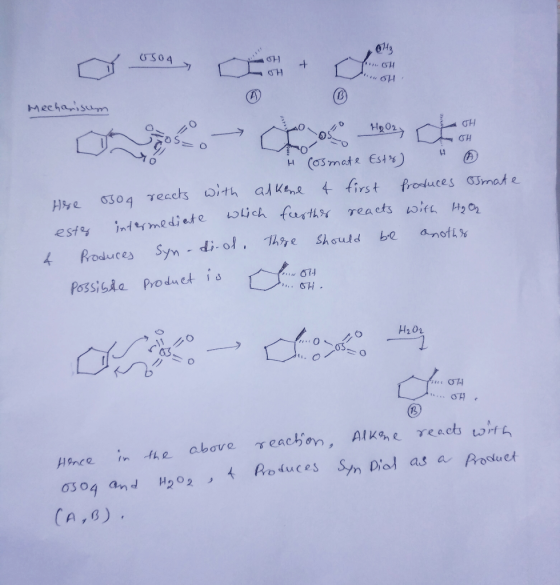
6. Predict the major product for the following reactions. PhCO3H OsO4, H202 H2O, H H20, H...
 6. Predict the major product for the following reactions. PhCO3H OsO4, H202 H2O, H H20, H Hz. Pt CH=CH2 CH3 dz 02 HO Cola CH3 H2 Pd CH3 HC H с – с KOH H CH3 СНаз, 1. O, CHCI2 2Zn, HOẶC
explain the reaction then make Fischer projections. COH 02 syn СОН Ohe ole ole ole Сс...
 explain the reaction then make Fischer
projections.
COH 02 syn СОН Ohe ole ole ole Сс Сон сон antt СОН
explain the reaction then make Fischer
projections.
COH 02 syn СОН Ohe ole ole ole Сс Сон сон antt СОН
Answer all parts of the questions Wower all parts. (a) 1,4-dihydroxynaphthalene can be converted to either...
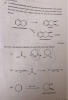 Answer all parts of the questions
Wower all parts. (a) 1,4-dihydroxynaphthalene can be converted to either the syn stereoisomers as shown below. Each conversion may require more For each conversion give reagents that formed. erica to either the syn-diol or the anti-diol clow. Each conversion may require more than one step. give reagents that may be used and any intermediates 1,4-dihydronaphthalene Syn-diol OH anti-diol HOH (Plus enantiomer) [8 marks] (b) Give a mechanistic explanation for each of the following reactions....
Answer all parts of the questions
Wower all parts. (a) 1,4-dihydroxynaphthalene can be converted to either the syn stereoisomers as shown below. Each conversion may require more For each conversion give reagents that formed. erica to either the syn-diol or the anti-diol clow. Each conversion may require more than one step. give reagents that may be used and any intermediates 1,4-dihydronaphthalene Syn-diol OH anti-diol HOH (Plus enantiomer) [8 marks] (b) Give a mechanistic explanation for each of the following reactions....
17 Identify the reagent for following conversion H ОН (A) OsO4 (B) KMnO, (C) Na2Cr2O7. H2SO4...
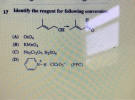 17 Identify the reagent for following conversion H ОН (A) OsO4 (B) KMnO, (C) Na2Cr2O7. H2SO4 (D) N-H CICros (PPC)
Key terms: reactions form predominately or exclusively one enantiomer Enantioselective Sharpless is the addition of a...
 Key terms: reactions form predominately or exclusively one enantiomer Enantioselective Sharpless is the addition of a single oxygen atom to an alkene to form an epoxide Reductive of an alkene forms an alkane by addition of H Oxidation Regioselective is the addition of two hydroxy groups to a double forming, a 1,2-diol or glycol Anti Oxidative cleavage of an alkene breaks both the o and n bonds of the double bond to form two carbonyl groups Reduction Dihydroxylation reactions form...
syn o-j-I BHO -H HH CH,CH.CH=CH Syn Arbor Anti? Br 5. Draw the product(s) of the...
 syn o-j-I BHO -H HH CH,CH.CH=CH Syn Arbor Anti? Br 5. Draw the product(s) of the following reaction. (4 pts) В, Draw the mechanism for the above reaction and briefly explain the bond breaking and forming steps (4 pts). (CH3 CH3 Breaks L 6. How many total products, including constitutional isomers and stereoisomers, are possible for th of the following alkyl bromide with ammonia (NH3)? 4 pts (CH3)2CHCHCH.CHCH
What is the product for the following reaction? OsO4, NMO acetone, H,0 ОН HO OS ОН...
 What is the product for the following
reaction?
OsO4, NMO acetone, H,0 ОН HO OS ОН НО
What is the product for the following
reaction?
OsO4, NMO acetone, H,0 ОН HO OS ОН НО
10.54 (...) The addition of H-X alkenes has been shown to add predominately via syn-addition, as...
 10.54 (...) The addition of H-X alkenes has been shown to add predominately via syn-addition, as shown below. н Br H-Br Two chemists disagreed on whether or not syn-addition would happen on terminal alkenes as well. Suggest an experiment through which you could resolve this dispute. H HCI syn or anti? 10.56 (...) When alkynes are treated with water and bromide, a bromoketone is produced. Provide a plausible arrow pushing mechanism, which accounts for the formation of this product. z...
Wame: cold KMnO4, HO-or 1. OsO4 2. NaHSO3 1. mCPBA 2. H+, CH2OH, H2O 1. mCPBA...
 Wame: cold KMnO4, HO-or 1. OsO4 2. NaHSO3 1. mCPBA 2. H+, CH2OH, H2O 1. mCPBA 2. NaOCH3, H2O h.
Identify the missing reagents 1 & 2 draw the final organic product(s) C Reagent 2 Reagent 1 Al NaNH3 1) oso4 2) Na...
 Identify the missing reagents 1 & 2 draw the final organic product(s) C Reagent 2 Reagent 1 Al NaNH3 1) oso4 2) NaHSO3, H20 CEC Incorrect Periodic acid causes oxidative cleavage of the diol, yielding two carbonyl compounds. HO Reagent 3 HIO4 OH Map dt
 6. Predict the major product for the following reactions. PhCO3H OsO4, H202 H2O, H H20, H Hz. Pt CH=CH2 CH3 dz 02 HO Cola CH3 H2 Pd CH3 HC H с – с KOH H CH3 СНаз, 1. O, CHCI2 2Zn, HOẶC
 explain the reaction then make Fischer
projections.
COH 02 syn СОН Ohe ole ole ole Сс Сон сон antt СОН
explain the reaction then make Fischer
projections.
COH 02 syn СОН Ohe ole ole ole Сс Сон сон antt СОН
 Answer all parts of the questions
Wower all parts. (a) 1,4-dihydroxynaphthalene can be converted to either the syn stereoisomers as shown below. Each conversion may require more For each conversion give reagents that formed. erica to either the syn-diol or the anti-diol clow. Each conversion may require more than one step. give reagents that may be used and any intermediates 1,4-dihydronaphthalene Syn-diol OH anti-diol HOH (Plus enantiomer) [8 marks] (b) Give a mechanistic explanation for each of the following reactions....
Answer all parts of the questions
Wower all parts. (a) 1,4-dihydroxynaphthalene can be converted to either the syn stereoisomers as shown below. Each conversion may require more For each conversion give reagents that formed. erica to either the syn-diol or the anti-diol clow. Each conversion may require more than one step. give reagents that may be used and any intermediates 1,4-dihydronaphthalene Syn-diol OH anti-diol HOH (Plus enantiomer) [8 marks] (b) Give a mechanistic explanation for each of the following reactions....
 17 Identify the reagent for following conversion H ОН (A) OsO4 (B) KMnO, (C) Na2Cr2O7. H2SO4 (D) N-H CICros (PPC)
 Key terms: reactions form predominately or exclusively one enantiomer Enantioselective Sharpless is the addition of a single oxygen atom to an alkene to form an epoxide Reductive of an alkene forms an alkane by addition of H Oxidation Regioselective is the addition of two hydroxy groups to a double forming, a 1,2-diol or glycol Anti Oxidative cleavage of an alkene breaks both the o and n bonds of the double bond to form two carbonyl groups Reduction Dihydroxylation reactions form...
 syn o-j-I BHO -H HH CH,CH.CH=CH Syn Arbor Anti? Br 5. Draw the product(s) of the following reaction. (4 pts) В, Draw the mechanism for the above reaction and briefly explain the bond breaking and forming steps (4 pts). (CH3 CH3 Breaks L 6. How many total products, including constitutional isomers and stereoisomers, are possible for th of the following alkyl bromide with ammonia (NH3)? 4 pts (CH3)2CHCHCH.CHCH
 What is the product for the following
reaction?
OsO4, NMO acetone, H,0 ОН HO OS ОН НО
What is the product for the following
reaction?
OsO4, NMO acetone, H,0 ОН HO OS ОН НО
 10.54 (...) The addition of H-X alkenes has been shown to add predominately via syn-addition, as shown below. н Br H-Br Two chemists disagreed on whether or not syn-addition would happen on terminal alkenes as well. Suggest an experiment through which you could resolve this dispute. H HCI syn or anti? 10.56 (...) When alkynes are treated with water and bromide, a bromoketone is produced. Provide a plausible arrow pushing mechanism, which accounts for the formation of this product. z...
 Wame: cold KMnO4, HO-or 1. OsO4 2. NaHSO3 1. mCPBA 2. H+, CH2OH, H2O 1. mCPBA 2. NaOCH3, H2O h.
 Identify the missing reagents 1 & 2 draw the final organic product(s) C Reagent 2 Reagent 1 Al NaNH3 1) oso4 2) NaHSO3, H20 CEC Incorrect Periodic acid causes oxidative cleavage of the diol, yielding two carbonyl compounds. HO Reagent 3 HIO4 OH Map dt
Most questions answered within 3 hours.
-
Where is the error in this code sequence?
String s1 = "Hello";
String s2 = "ello";...
asked 10 months ago -
Financial data for Joel de Paris, Inc., for last year
follow:
Joel de Paris, Inc.
Balance...
asked 10 months ago -
Consider this reaction:
Al2(SO4)3 (aq)+ BaCl3
(aq) Al2Cl6 (aq)- +
3BaSO4(s) . What is the...
asked 10 months ago -
Suppose that Savneet is considering increasing her
recent random sample from 20 car rentals to 40...
asked 10 months ago -
Trucks arrive at an unloading terminal at an average rate of 120
per hour.
Trucks arrive...
asked 10 months ago -
Why are methanol and ethanol completely soluble in water while
octanol is not very little soluble....
asked 10 months ago -
A facilities manager at a university reads in a research report
that the mean amount of...
asked 10 months ago -
When the CuSO4 is rehydrated by adding water to the anhydrous
compound, is this an endothermic...
asked 10 months ago -
A ray of sunlight is passing from diamond into crown glass; the
angle of incidence is...
asked 10 months ago -
A block of mass 0.249 kg is placed on top of a light, vertical
spring of...
asked 10 months ago -
how do the kidneys compensate in the presences of acidosis
a) trigger hyperventilate
b) reserve acid...
asked 10 months ago -
Question 501 pts
The rental rate of capital to the firm increases. Which of the
following...
asked 10 months ago