
Homework Answers
Problem-12
part-a
Average Velocity :- It is defined as the ratio of distance travelled to the time taken.
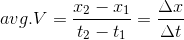
Therefore from t=0 to t=1 seconds the meaning of average velocity is that the distance travelled by the object during this 1 second is known as average velocity of the object in this time interval.
This does not describe velocity as function of time because this does not given us the instantaneous velocity at a particular time.
Part-b
Average acceleration:- Velocity over time elapsed
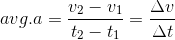
Therefore from t=2 to t=2 seconds the meaning of average acceleration is that the increase of the velocity of the object during this 1 second is known as average acceleration of the object in this time interval.
This does not describe acceleration as function of time because this does not given us the instantaneous acceleration at a particular time.
Add Answer to:
Question 12: a) What is the meaning of the average velocity, say between to O second...
For the following velocity graph, velocity is in m/s and time is in s. For the...
 For the following velocity graph, velocity is in m/s and time is in s. For the interval t 2s to t = 5s, find (a)[4 pts] the average acceleration, and (b)4 pts] the displacement Aæ. t 5 2 4 1 For the following described motion, draw a position-time, a velocity-time, and an acceleration-time graph on the grids provided: 1. Standing still at the 0.6 meter position for 1 second. 2. Walking away from the detector speeding up slowly and steadily...
What is the total distance traveled by the particle? What Velocity vs. Time Graphs Can Tell...
 What is the total distance traveled by the particle?
What Velocity vs. Time Graphs Can Tell You Constants A common graphical representation of motion along a straight line is the v vs. t graph, that is, the graph of (instantaneous) velocity as a function of time. In this graph, time t is plotted on the horizontal axis and velocity v on the vertical axis. Note that by definition, velocity and acceleration are vector quantities. In straight-line motion, however, these vectors...
What is the total distance traveled by the particle?
What Velocity vs. Time Graphs Can Tell You Constants A common graphical representation of motion along a straight line is the v vs. t graph, that is, the graph of (instantaneous) velocity as a function of time. In this graph, time t is plotted on the horizontal axis and velocity v on the vertical axis. Note that by definition, velocity and acceleration are vector quantities. In straight-line motion, however, these vectors...
A first course in differential equations: HW question chapter 5.1 Simple Harmonic Motion Please solve Problem 21 all parts, thanks 21. A 64-lb weight attached to the end of a spring stretches it 0.32...
 A first course in differential equations: HW question chapter
5.1 Simple Harmonic Motion
Please solve Problem 21 all parts, thanks
21. A 64-lb weight attached to the end of a spring stretches it 0.32 ft. From a position 8 in. above the equilibrium position the weight is given a down ward velocitv of 5 ft/s. (a) Find the equation of motion. (b) What are the amplitude and period of motion? 191 SECTION 5.1 Simple Harmonic Motion (c) How many complete...
A first course in differential equations: HW question chapter
5.1 Simple Harmonic Motion
Please solve Problem 21 all parts, thanks
21. A 64-lb weight attached to the end of a spring stretches it 0.32 ft. From a position 8 in. above the equilibrium position the weight is given a down ward velocitv of 5 ft/s. (a) Find the equation of motion. (b) What are the amplitude and period of motion? 191 SECTION 5.1 Simple Harmonic Motion (c) How many complete...
Please show all your work. 5) Acceleration is to velocity as velocity is to position . aaux"# r where vr įs th...
 Please show all your work.
5) Acceleration is to velocity as velocity is to position . aaux"# r where vr įs the instantaneous velocity. So the average acceleration is about how rapidly the instantaneous velocity is changing, and the sign tells about the direction of the change. At For the pendulum, you made estimates of the instantaneous velocity for ←2.05[s] and t= 2.5%]. Also, the average speed and average velocity estimates that you made at other times may be reasonable...
Please show all your work.
5) Acceleration is to velocity as velocity is to position . aaux"# r where vr įs the instantaneous velocity. So the average acceleration is about how rapidly the instantaneous velocity is changing, and the sign tells about the direction of the change. At For the pendulum, you made estimates of the instantaneous velocity for ←2.05[s] and t= 2.5%]. Also, the average speed and average velocity estimates that you made at other times may be reasonable...
A car with mass ? travels in the +?-direction on a straight and level road with a constant acceleration ?. The car starts moving at time = 0. Find the followings quantities of the car in terms of ?, ?, ?. (1) average velocity between time = 0 and ? (2) in
A car with mass ? travels in the +?-direction on a straight and level road with a constant acceleration ?. The car starts moving at time = 0. Find the followings quantities of the car in terms of ?, ?, ?. (1) average velocity between time = 0 and ? (2) instantaneous velocity at time = ? (3) ?-position at time = ? (4) Total work between time = 0 and ? (5) kinetic energy at time = ? (6)...
A. Write equations for the position, velocity, and acceleration of the mass as a function of...
 A. Write equations for the position, velocity, and acceleration of the mass as a function of time. These equations express what physicists call simple harmonic motion (SHM): B. In our equations above, we have assumed there is no damping (i.e. friction, air drag etc.) to decrease the amplitude of the motion. If you watch the motion of the mass for even a short amount of time, you do see the effects of damping. What should we include in our equations...
i just need the second image "from the previous problem" explained 17 The position of a...
 i just need the second image "from the previous problem"
explained
17 The position of a particle moving along the x axis is given in centimeters by x -9.751.50r3, where tis in seconds. Calculate (a) the average velocity during the time interval-2.00s to-3.00 s; (b) the instantaneous velocity at 2.00 s; (c) the instantaneous ve- locity at t-3.00s; (d) the instantaneous velocity at -2.50s; and (e) the instantaneous velocity when the particle is midway between its positions at t =...
i just need the second image "from the previous problem"
explained
17 The position of a particle moving along the x axis is given in centimeters by x -9.751.50r3, where tis in seconds. Calculate (a) the average velocity during the time interval-2.00s to-3.00 s; (b) the instantaneous velocity at 2.00 s; (c) the instantaneous ve- locity at t-3.00s; (d) the instantaneous velocity at -2.50s; and (e) the instantaneous velocity when the particle is midway between its positions at t =...
Given information: An object is moving with velocity (in feet per second) described by the function...
 Given information: An object is moving with velocity (in feet per second) described by the function v (t) = 4t + 1. We will reason about the object's position function, 8 (t). Question 1 How much does the position change over the time interval (0,4) Answer with a number only (units are feet) 36 Question 2 Question: Think back to the total change theorem. What additional Information would allow us to find a(4), the object's position at time t =...
What is the total distance traveled by the particle in meters? Thank you for your time....
 What is the total distance traveled by the particle in meters?
Thank you for your time.
What Velocity vs. Time Graphs Can Tell You A common graphical representation of motion along a straight line is the v vs. t graph, that is, the graph of (instantaneous) velocity as a function of time. In this graph, time t is plotted on the horizontal axis and velocity v on the vertical axis. Note that by definition, velocity and acceleration are vector quantities....
What is the total distance traveled by the particle in meters?
Thank you for your time.
What Velocity vs. Time Graphs Can Tell You A common graphical representation of motion along a straight line is the v vs. t graph, that is, the graph of (instantaneous) velocity as a function of time. In this graph, time t is plotted on the horizontal axis and velocity v on the vertical axis. Note that by definition, velocity and acceleration are vector quantities....
please explain the answer 1) Up until now we have always ignored air resistance. We should...
 please explain the answer
1) Up until now we have always ignored air resistance. We should now add it. Let us just think of simple 1-dimensional problem, dropping a ball of mass m from a height H but 2 with air resistance. We can model the air resistance as a force proportional to the velocity, fair = bv. The coefficient bis a constant. (For this problem you can use calculus textbooks or wolfram alpha to do the calculus.) What are...
please explain the answer
1) Up until now we have always ignored air resistance. We should now add it. Let us just think of simple 1-dimensional problem, dropping a ball of mass m from a height H but 2 with air resistance. We can model the air resistance as a force proportional to the velocity, fair = bv. The coefficient bis a constant. (For this problem you can use calculus textbooks or wolfram alpha to do the calculus.) What are...
 For the following velocity graph, velocity is in m/s and time is in s. For the interval t 2s to t = 5s, find (a)[4 pts] the average acceleration, and (b)4 pts] the displacement Aæ. t 5 2 4 1 For the following described motion, draw a position-time, a velocity-time, and an acceleration-time graph on the grids provided: 1. Standing still at the 0.6 meter position for 1 second. 2. Walking away from the detector speeding up slowly and steadily...
 What is the total distance traveled by the particle?
What Velocity vs. Time Graphs Can Tell You Constants A common graphical representation of motion along a straight line is the v vs. t graph, that is, the graph of (instantaneous) velocity as a function of time. In this graph, time t is plotted on the horizontal axis and velocity v on the vertical axis. Note that by definition, velocity and acceleration are vector quantities. In straight-line motion, however, these vectors...
What is the total distance traveled by the particle?
What Velocity vs. Time Graphs Can Tell You Constants A common graphical representation of motion along a straight line is the v vs. t graph, that is, the graph of (instantaneous) velocity as a function of time. In this graph, time t is plotted on the horizontal axis and velocity v on the vertical axis. Note that by definition, velocity and acceleration are vector quantities. In straight-line motion, however, these vectors...
 A first course in differential equations: HW question chapter
5.1 Simple Harmonic Motion
Please solve Problem 21 all parts, thanks
21. A 64-lb weight attached to the end of a spring stretches it 0.32 ft. From a position 8 in. above the equilibrium position the weight is given a down ward velocitv of 5 ft/s. (a) Find the equation of motion. (b) What are the amplitude and period of motion? 191 SECTION 5.1 Simple Harmonic Motion (c) How many complete...
A first course in differential equations: HW question chapter
5.1 Simple Harmonic Motion
Please solve Problem 21 all parts, thanks
21. A 64-lb weight attached to the end of a spring stretches it 0.32 ft. From a position 8 in. above the equilibrium position the weight is given a down ward velocitv of 5 ft/s. (a) Find the equation of motion. (b) What are the amplitude and period of motion? 191 SECTION 5.1 Simple Harmonic Motion (c) How many complete...
 Please show all your work.
5) Acceleration is to velocity as velocity is to position . aaux"# r where vr įs the instantaneous velocity. So the average acceleration is about how rapidly the instantaneous velocity is changing, and the sign tells about the direction of the change. At For the pendulum, you made estimates of the instantaneous velocity for ←2.05[s] and t= 2.5%]. Also, the average speed and average velocity estimates that you made at other times may be reasonable...
Please show all your work.
5) Acceleration is to velocity as velocity is to position . aaux"# r where vr įs the instantaneous velocity. So the average acceleration is about how rapidly the instantaneous velocity is changing, and the sign tells about the direction of the change. At For the pendulum, you made estimates of the instantaneous velocity for ←2.05[s] and t= 2.5%]. Also, the average speed and average velocity estimates that you made at other times may be reasonable...
 A. Write equations for the position, velocity, and acceleration of the mass as a function of time. These equations express what physicists call simple harmonic motion (SHM): B. In our equations above, we have assumed there is no damping (i.e. friction, air drag etc.) to decrease the amplitude of the motion. If you watch the motion of the mass for even a short amount of time, you do see the effects of damping. What should we include in our equations...
 i just need the second image "from the previous problem"
explained
17 The position of a particle moving along the x axis is given in centimeters by x -9.751.50r3, where tis in seconds. Calculate (a) the average velocity during the time interval-2.00s to-3.00 s; (b) the instantaneous velocity at 2.00 s; (c) the instantaneous ve- locity at t-3.00s; (d) the instantaneous velocity at -2.50s; and (e) the instantaneous velocity when the particle is midway between its positions at t =...
i just need the second image "from the previous problem"
explained
17 The position of a particle moving along the x axis is given in centimeters by x -9.751.50r3, where tis in seconds. Calculate (a) the average velocity during the time interval-2.00s to-3.00 s; (b) the instantaneous velocity at 2.00 s; (c) the instantaneous ve- locity at t-3.00s; (d) the instantaneous velocity at -2.50s; and (e) the instantaneous velocity when the particle is midway between its positions at t =...
 Given information: An object is moving with velocity (in feet per second) described by the function v (t) = 4t + 1. We will reason about the object's position function, 8 (t). Question 1 How much does the position change over the time interval (0,4) Answer with a number only (units are feet) 36 Question 2 Question: Think back to the total change theorem. What additional Information would allow us to find a(4), the object's position at time t =...
 What is the total distance traveled by the particle in meters?
Thank you for your time.
What Velocity vs. Time Graphs Can Tell You A common graphical representation of motion along a straight line is the v vs. t graph, that is, the graph of (instantaneous) velocity as a function of time. In this graph, time t is plotted on the horizontal axis and velocity v on the vertical axis. Note that by definition, velocity and acceleration are vector quantities....
What is the total distance traveled by the particle in meters?
Thank you for your time.
What Velocity vs. Time Graphs Can Tell You A common graphical representation of motion along a straight line is the v vs. t graph, that is, the graph of (instantaneous) velocity as a function of time. In this graph, time t is plotted on the horizontal axis and velocity v on the vertical axis. Note that by definition, velocity and acceleration are vector quantities....
 please explain the answer
1) Up until now we have always ignored air resistance. We should now add it. Let us just think of simple 1-dimensional problem, dropping a ball of mass m from a height H but 2 with air resistance. We can model the air resistance as a force proportional to the velocity, fair = bv. The coefficient bis a constant. (For this problem you can use calculus textbooks or wolfram alpha to do the calculus.) What are...
please explain the answer
1) Up until now we have always ignored air resistance. We should now add it. Let us just think of simple 1-dimensional problem, dropping a ball of mass m from a height H but 2 with air resistance. We can model the air resistance as a force proportional to the velocity, fair = bv. The coefficient bis a constant. (For this problem you can use calculus textbooks or wolfram alpha to do the calculus.) What are...
Most questions answered within 3 hours.
-
Where is the error in this code sequence?
String s1 = "Hello";
String s2 = "ello";...
asked 11 months ago -
Financial data for Joel de Paris, Inc., for last year
follow:
Joel de Paris, Inc.
Balance...
asked 11 months ago -
Consider this reaction:
Al2(SO4)3 (aq)+ BaCl3
(aq) Al2Cl6 (aq)- +
3BaSO4(s) . What is the...
asked 11 months ago -
Suppose that Savneet is considering increasing her
recent random sample from 20 car rentals to 40...
asked 11 months ago -
Trucks arrive at an unloading terminal at an average rate of 120
per hour.
Trucks arrive...
asked 11 months ago -
Why are methanol and ethanol completely soluble in water while
octanol is not very little soluble....
asked 11 months ago -
A facilities manager at a university reads in a research report
that the mean amount of...
asked 11 months ago -
When the CuSO4 is rehydrated by adding water to the anhydrous
compound, is this an endothermic...
asked 11 months ago -
A ray of sunlight is passing from diamond into crown glass; the
angle of incidence is...
asked 11 months ago -
A block of mass 0.249 kg is placed on top of a light, vertical
spring of...
asked 11 months ago -
how do the kidneys compensate in the presences of acidosis
a) trigger hyperventilate
b) reserve acid...
asked 11 months ago -
Question 501 pts
The rental rate of capital to the firm increases. Which of the
following...
asked 11 months ago